Nature & Outdoor Adventures
Tiny Habitat Watch: Observe Small Creatures Without Disturbing Them
 Facebook
 Pinterest
 X
X LinkedIn
 Reddit
 WhatsApp
 Telegram
 Bluesky
 Email
Email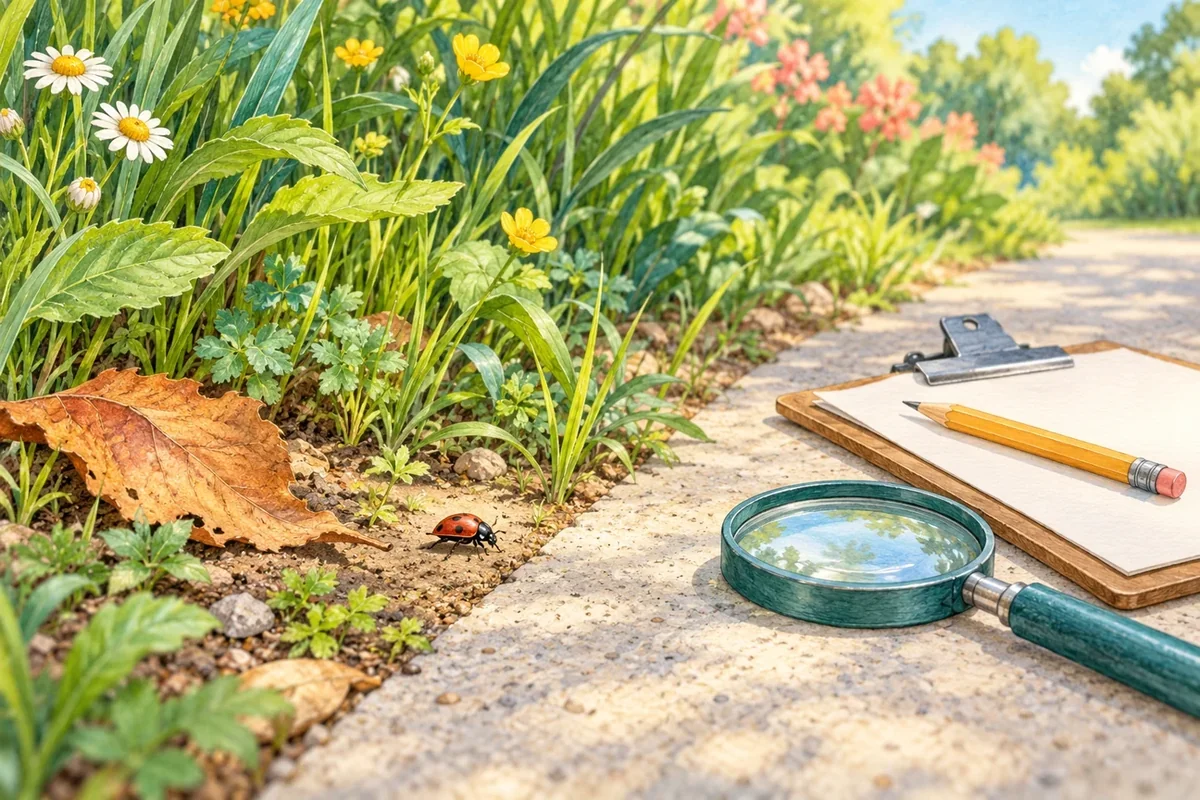
A small garden edge can be interesting even when nothing dramatic happens. Children watch one defined area, record its visible features, and notice how any small creatures move through it. This is an observation invitation, not a bug hunt with a required catch. An empty viewing period is still a record of that place at that time.
At a glance
| Suggested ages | 5–10 |
|---|---|
| Activity time | 20–30 minutes |
| Adult setup | 5–10 minutes |
| Participation | Individual or small group; watching, pointing, and partner assistance are welcome |
What you need
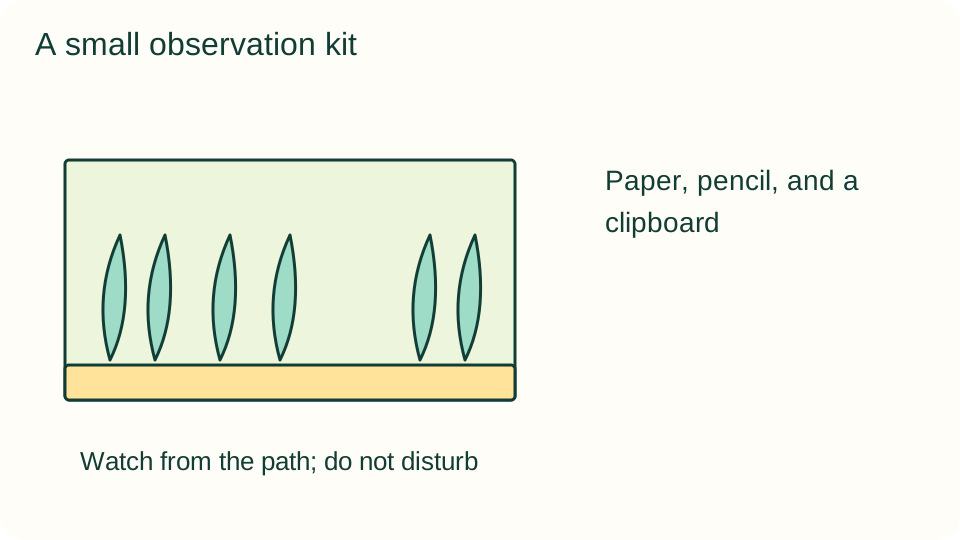
- Paper, pencil, and a clipboard
- An optional timer
- An optional handheld magnifier used only where an adult approves
- A familiar garden edge visible from a stable path
Get ready
An adult chooses an area that can be viewed without entering plants or disturbing wildlife. Stay clear of stinging insects, nests, animal waste, and unknown plants. Do not lift rocks or logs, handle creatures, or use jars and nets. A magnifier is optional; never direct it toward the sun or concentrate sunlight onto living things.
Try the activity
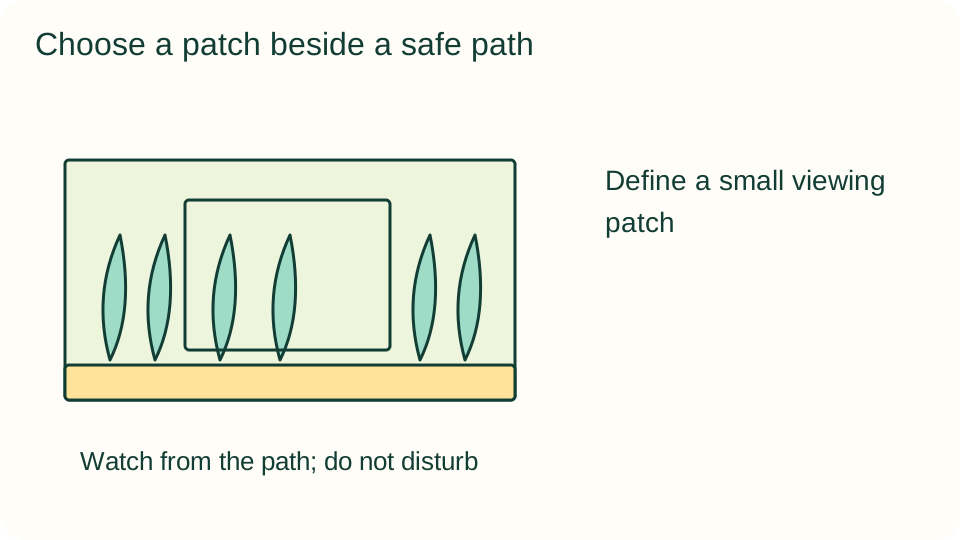
1. Define a small viewing patch
Select an area about the size of a small tray or larger if it is easier to see from the path. Identify its boundary using features already present, such as a leaf and a patch of grass. Do not add markers that change the habitat or require reaching into it.
2. Sketch the setting first
Draw a broad outline of the patch and include visible features such as soil, grass, or fallen leaves. Leave room for later notes. Point out which areas are partly hidden. A feature can be recorded without claiming it is an animal's home or knowing its name.
3. Watch without chasing
Observe quietly for an agreed short period, such as three to five minutes. Stay in the safe position and keep hands away from the patch. If a creature moves out of view, let it go. Do not follow it into vegetation or turn objects over to find it again.
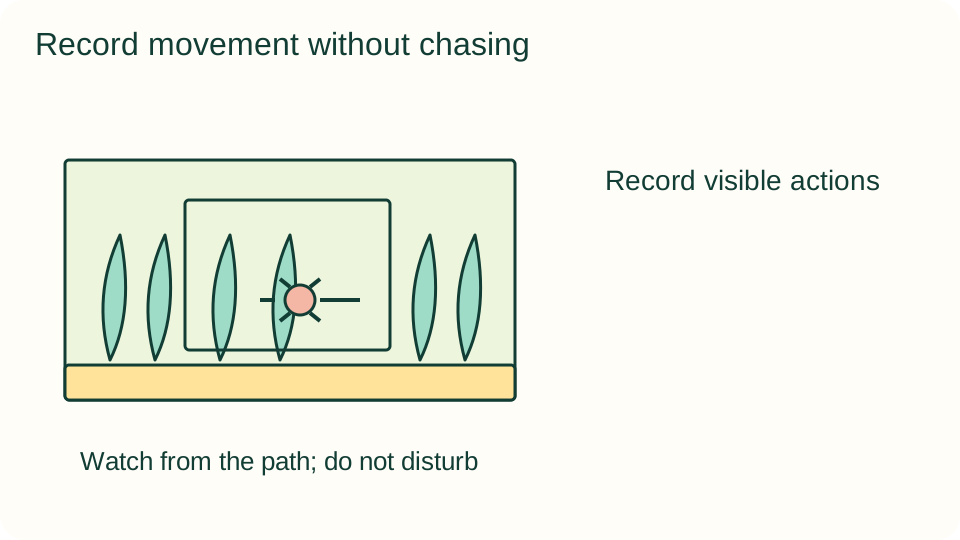
4. Record visible actions
Sketch or dictate what you actually saw: crossed the leaf, paused beside the grass, or disappeared behind an edge. Use an arrow for movement if helpful. Identification is optional. A child can call it a small crawling creature rather than guess a species from a brief glimpse.
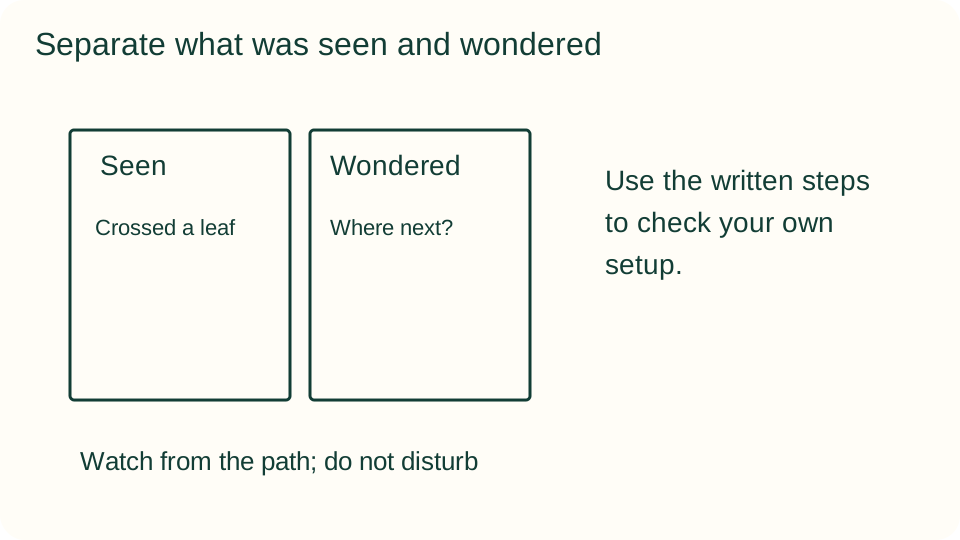
5. Separate observations and questions
Put a simple mark beside a question or an idea you could not confirm. For example, disappeared behind the leaf is an observation; lives under the leaf is a possible explanation. If nothing appeared, record that honestly along with the viewing time and visible habitat features.
6. Compare and finish gently
Compare notes with a partner who watched the same patch, or observe a second adult-approved patch from the path. Discuss differences in what was visible, not which observer found more animals. End without changing the setting, and choose one question that a future observation might help explore.
What children can explore
The activity encourages precise descriptions of a small area and its visible occupants. A brief watch cannot tell you everything living there or prove why an animal behaved a certain way. Ask what another viewing period could clarify, and what would remain unknown without further reliable information.
Make it work for your group
Offer a shorter watch and an adult-drawn outline for younger participants. Older children can use separate columns for seen and wondered. A seated participant can watch a reachable view without leaning or handling materials. If close observation is not possible, choose visible garden features rather than requiring tiny creatures.
At home and in the classroom
At home, return to a familiar garden edge with permission. In a classroom, limit the number of observers at each patch so the path stays clear and no one crowds wildlife. Rotate sketching and describing roles. Provide another drawing invitation for children who do not want to observe creatures.
Return to the observation
Keep the original record with any later notes so changes remain visible. Before returning outdoors, an adult checks permission, access, and current conditions again. Repeat only the parts that interest the child, and record what actually happens rather than recreating an expected result.
Helpful fixes and cleanup
If an insect approaches the group or a nest becomes apparent, an adult moves everyone away and chooses another location. Do not disturb the area to create a more interesting result. Gather every tool, leave natural materials in place, and wash hands after the outing, especially before eating.