Sensory & Quiet-Time Activities
Make a Calm Choices Board: A Quiet-Time Activity for Kids
 Facebook
 Pinterest
 X
X LinkedIn
 Reddit
 WhatsApp
 Telegram
 Bluesky
 Email
Email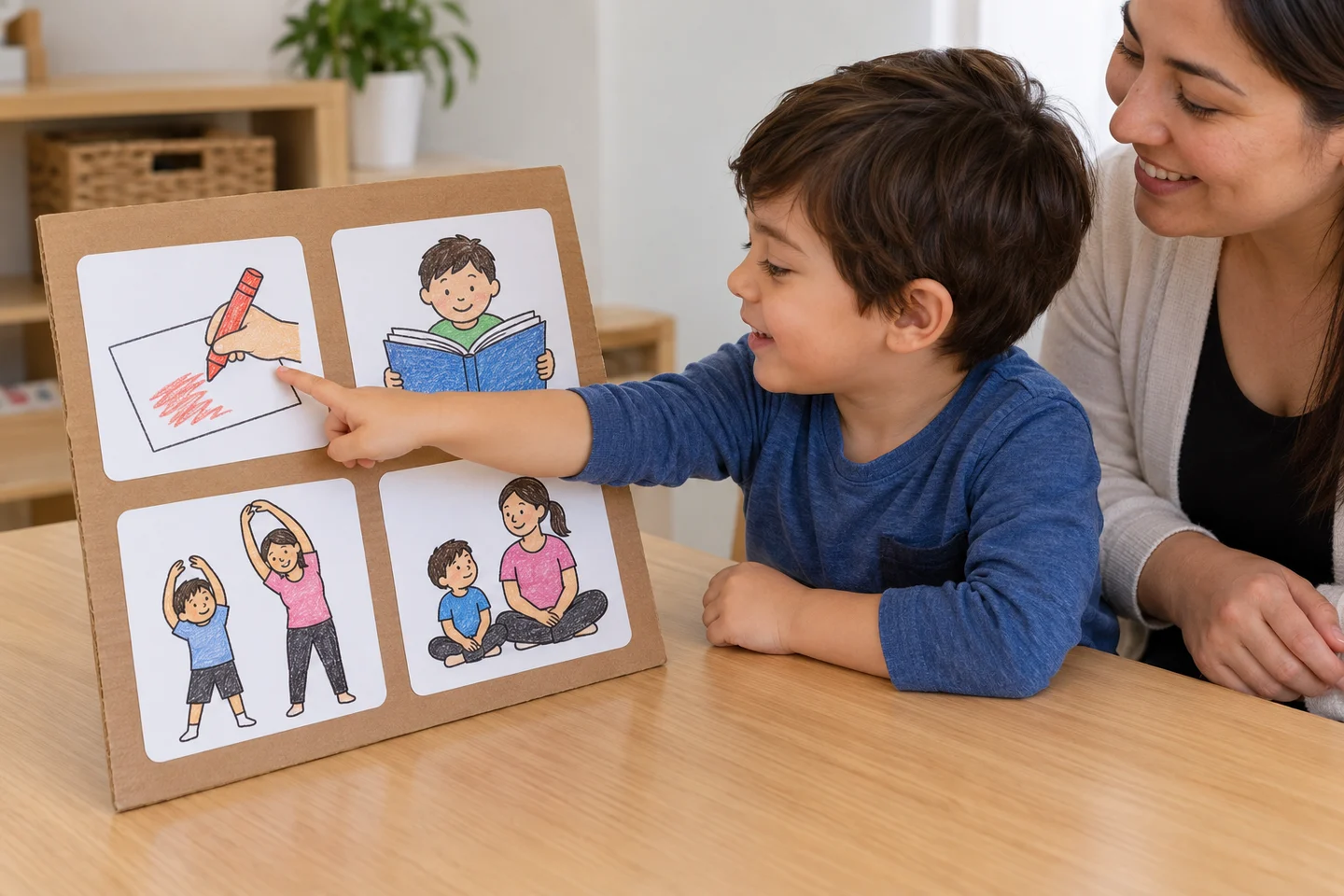
Sometimes a child knows they would like a different activity but cannot easily name it. A small picture board can offer familiar choices: draw, look at a book, stretch together, or sit with a grown-up.
Make the board during an ordinary, relaxed moment and choose the options together. It is a way to support communication and offer practical possibilities, rather than a promise that every choice will make every child calm.
At a glance
| Detail | Plan |
|---|---|
| Suggested ages | 4–9 |
| Preparation | About 5–10 minutes |
| Creating time | 20–30 minutes; practice takes a few minutes later |
| Group size | One child with an adult, or individual classroom boards |
| Mess level | Low |
What you need
- One sturdy paper or cardboard base.
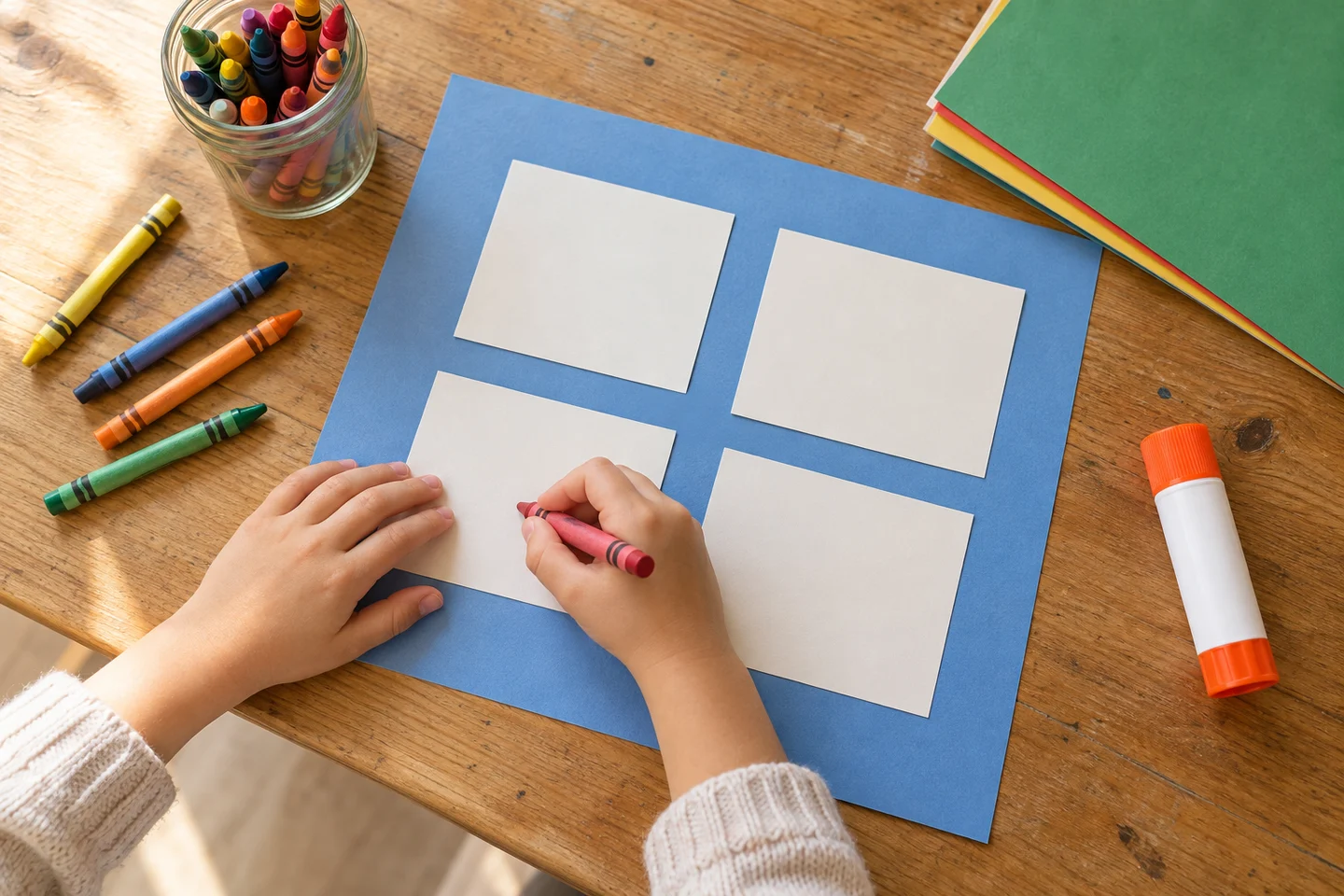
- Three or four large blank picture cards.
- Crayons, glue, and optional simple labels.
- The supplies for the activities you plan to offer.
For classroom use, make a board for a small space or prepare individual versions when children need different choices. Begin with activities that are familiar, available, and genuinely welcome in your setting.
Choose the options together
Ask which quiet activities the child enjoys. Try a book, drawing paper, a comfortable place to sit, or stretching beside an adult. Include company if that is helpful. Choose only three or four options so the board remains easy to look over.
Build and introduce the board
1. Draw recognizable pictures
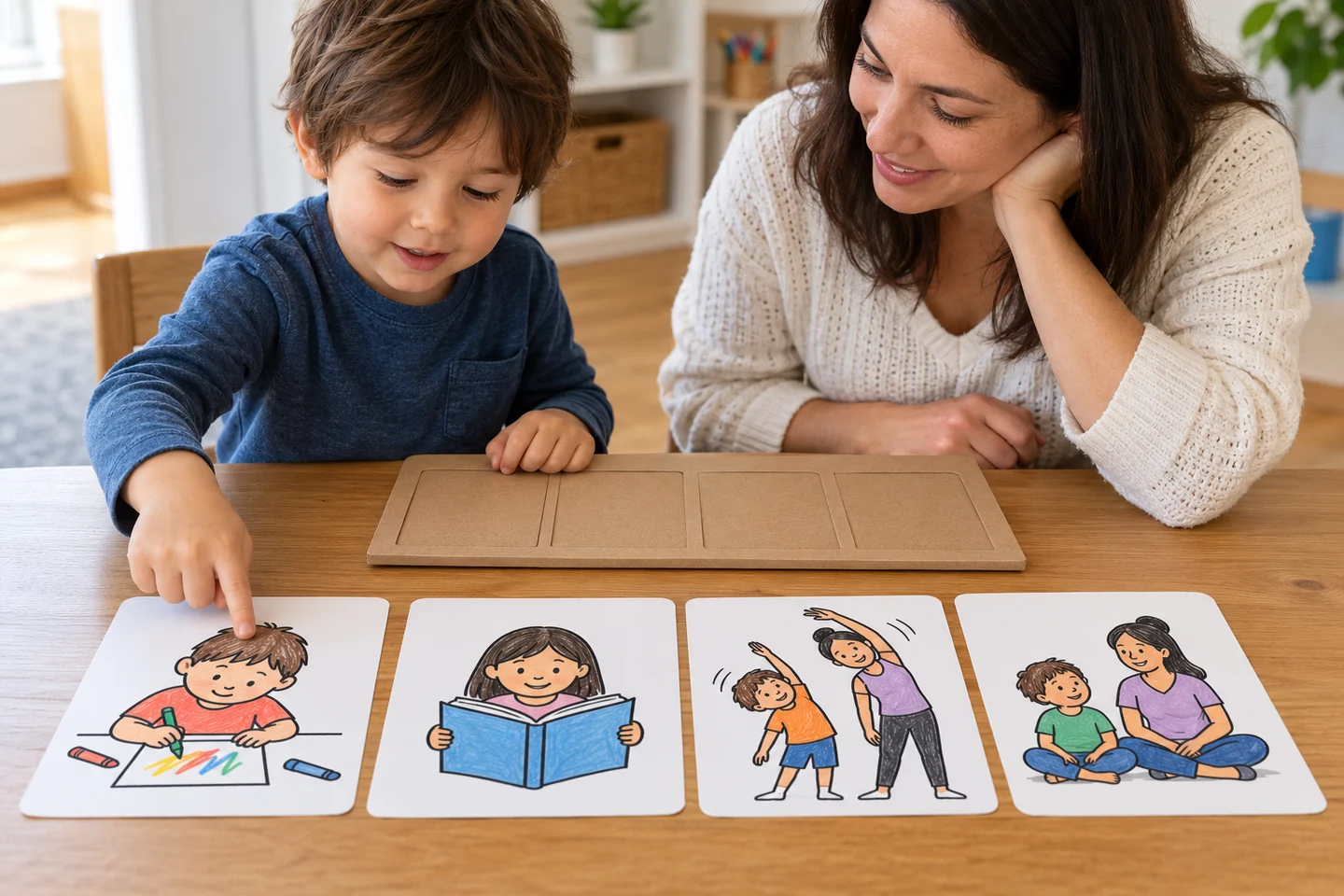
Sketch the actual materials or action: a crayon on paper, an open book, or two people sitting together. Ask what the child thinks each picture means. Redraw a confusing image before attaching it.
2. Arrange the choices
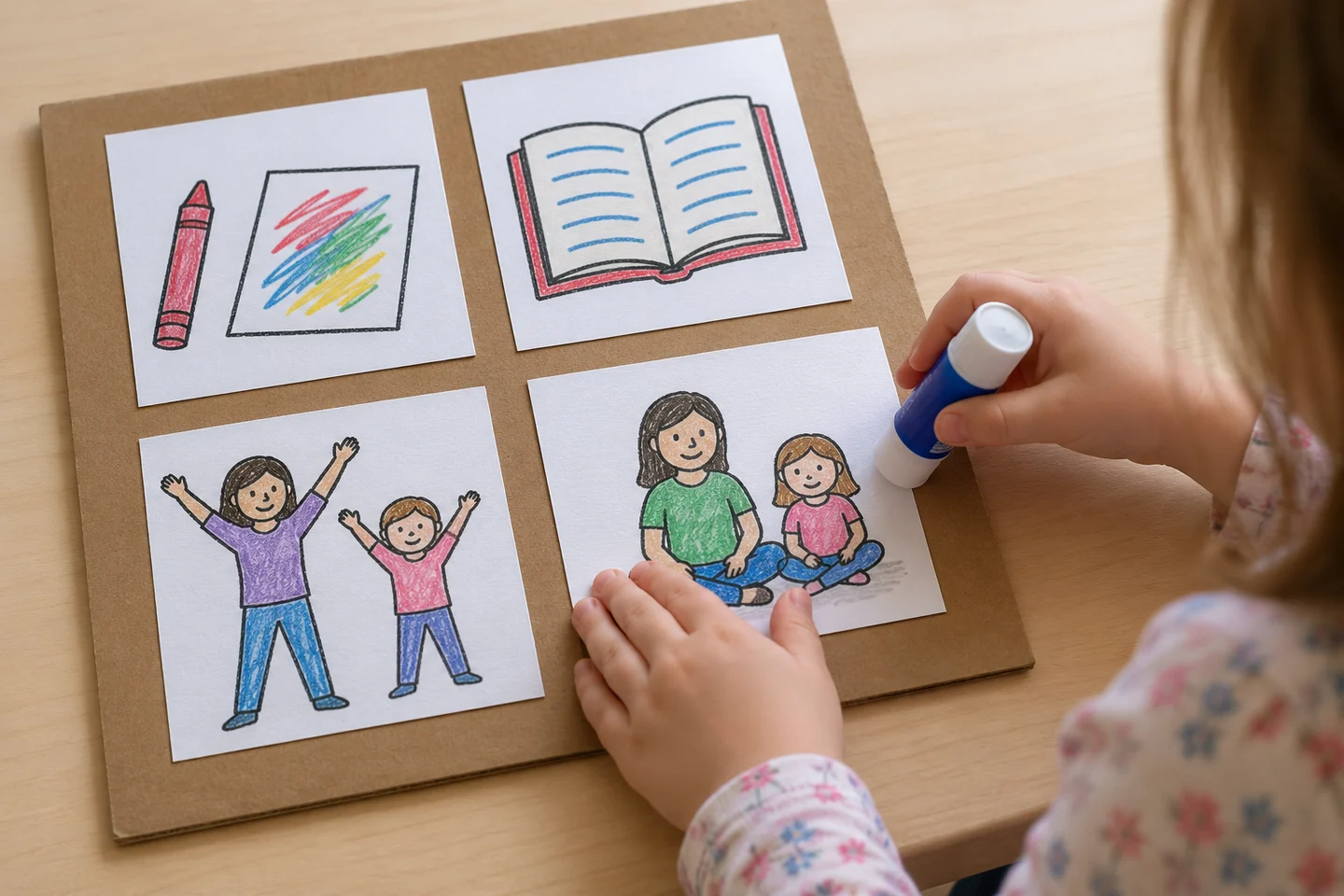
Leave space between the cards so pointing to one is clear. Add a short label in the language the child uses if useful. Glue the pictures flat and let the board dry.
3. Practice choosing
Show the board while everyone is relaxed. Model one choice: “I would like to read with you.” The child can point, look, speak, or use another familiar communication method.
4. Follow through
Provide the selected activity when possible. If an option is unavailable, explain briefly and offer another that is ready. The picture becomes useful when the choice leads to something the child recognizes.
5. Offer it gently later
During a difficult moment, bring a small number of options and stay nearby. A child may need comfort or support before being ready to choose. If they decline the board, respond to what they need rather than insisting on a selection.
6. Review the pictures
At another relaxed time, ask which choices were helpful. Replace unwanted or unclear pictures. Interests and needs change, so the board can change too.
What children can explore
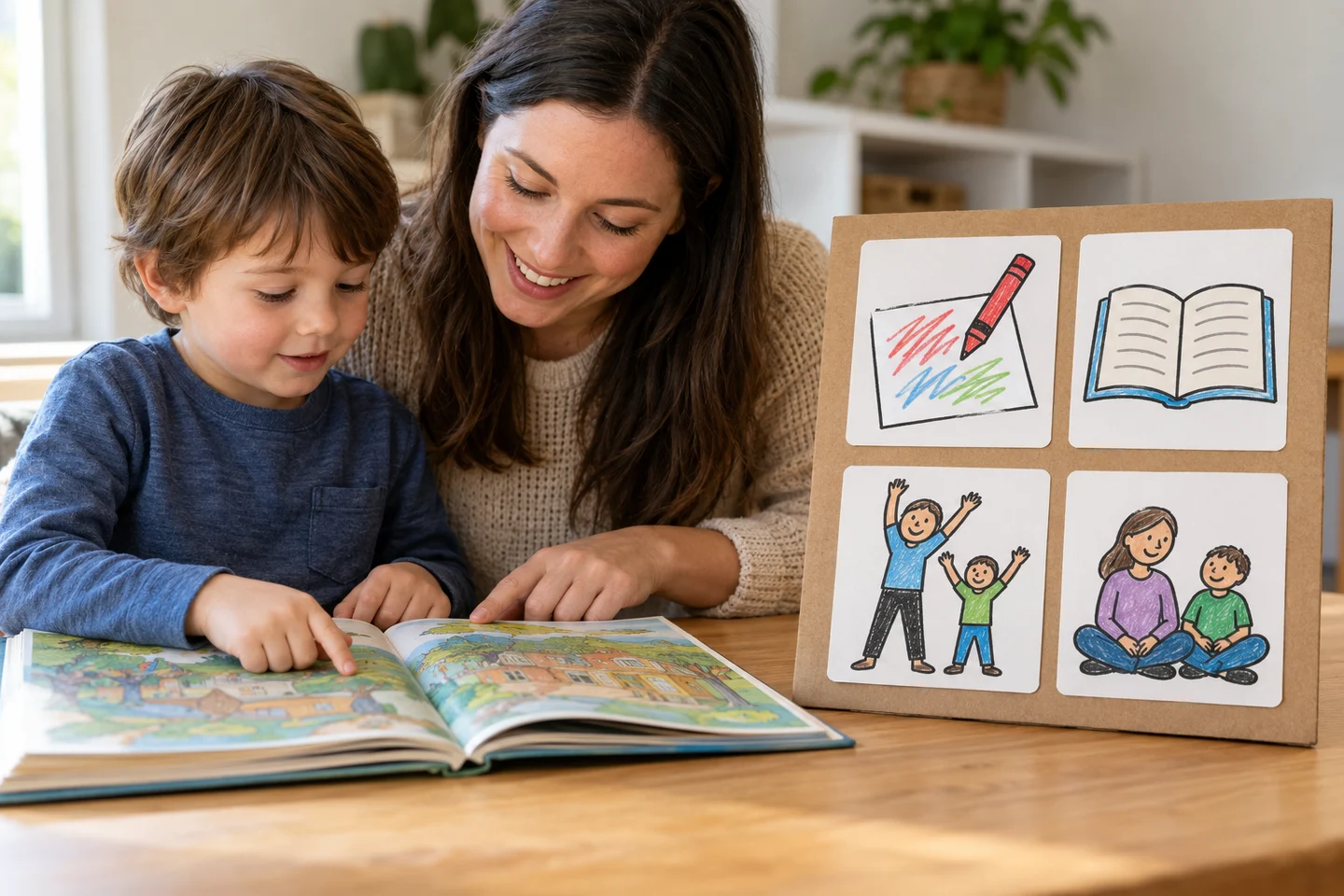
The board connects symbols with familiar activities and gives another way to communicate a preference. Ask, “Which picture would you like here?” or “Does this drawing help us understand your choice?” Keep the focus on the individual child.
At home and in the classroom
At home, place the board near its actual supplies. In class, coordinate with the child’s usual support arrangements and make clear which choices are available. Offer a quiet space as a welcome option rather than a place someone must go to earn reentry to the group.
Make it work for your group
Use fewer cards, bigger images, home-language labels, or photographs of materials without personal details. Some children prefer an adult to name two options aloud. The board can complement existing communication supports rather than replace them.
Helpful fixes and cleanup
A picture misunderstood? Revise it together. An option rarely available? Replace it with one you can offer. Too many choices? Start with two. Store the activity supplies nearby, check the board’s condition, and keep listening to what the child’s choices tell you.