Nature & Outdoor Adventures
Nature Color Hunt for Kids: Explore Outdoors Without Picking
 Facebook
 Pinterest
 X
X LinkedIn
 Reddit
 WhatsApp
 Telegram
 Bluesky
 Email
Email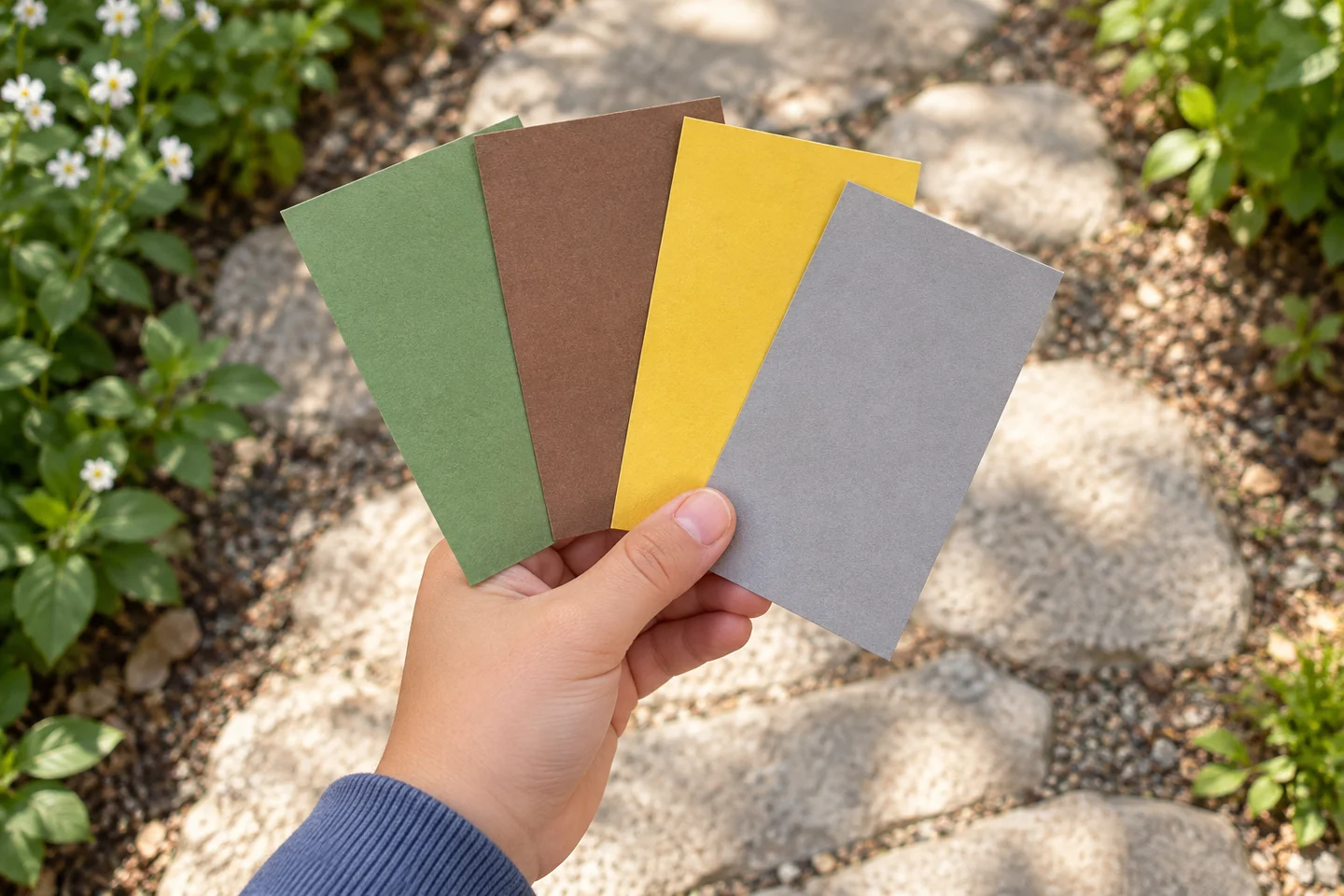
Green is not just one color. A pale leaf, dark grass, and moss on a wall can all look different. A nature color hunt invites children to notice those shades while leaving their discoveries right where they found them.
Bring a few paper swatches and explore a garden, school path, or view from a window. The aim is to look closely, compare, and share—not to collect plants or find a perfect match for every card.
At a glance
| Detail | Plan |
|---|---|
| Suggested ages | 4–9 |
| Preparation | 10–15 minutes, including checking the observation area |
| Exploring time | 20–30 minutes, or a 10-minute mini-hunt |
| Group size | Family group or classroom pairs |
| Mess level | Low |
What you need
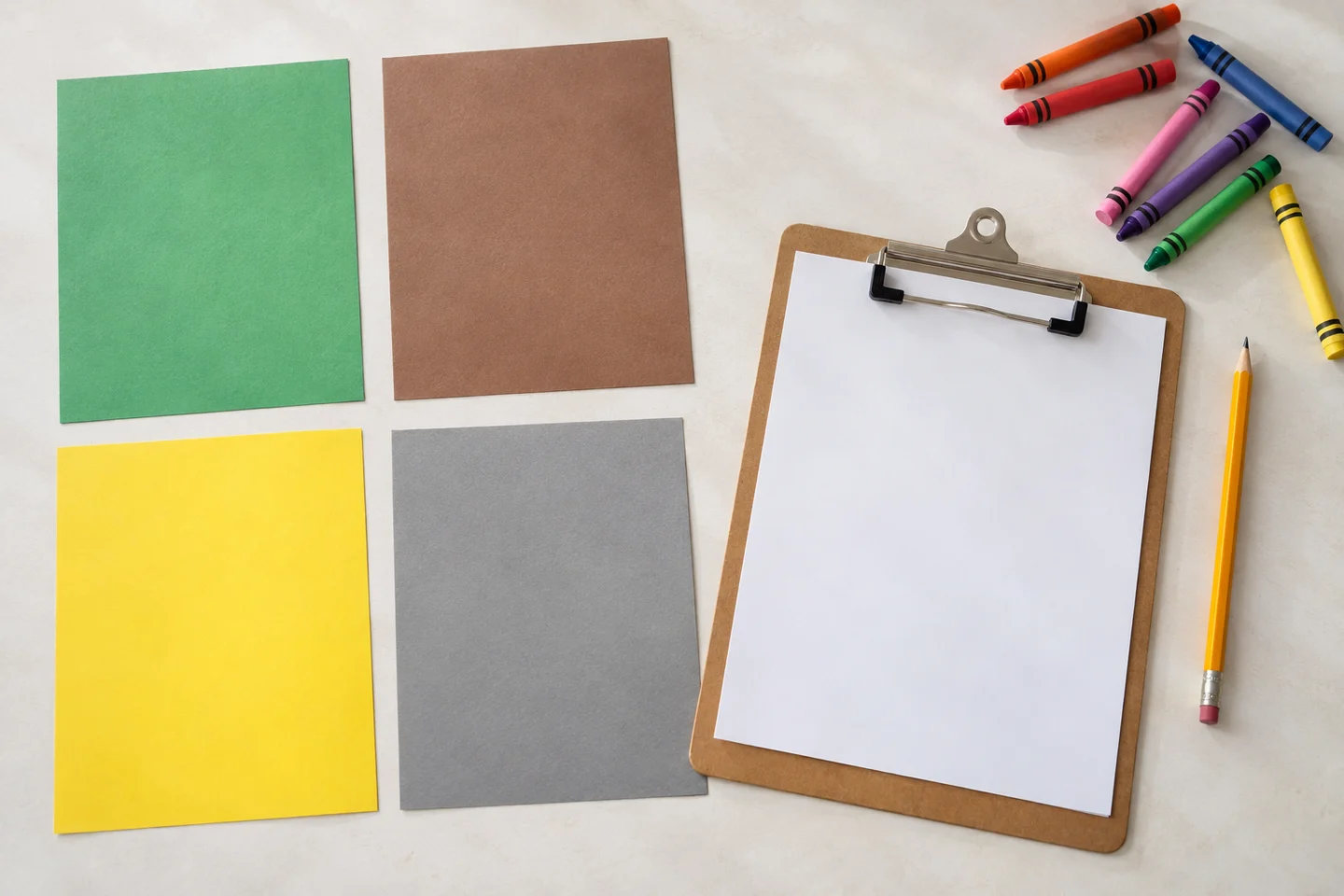
- Four to six paper color swatches.
- Recording paper and crayons or a pencil.
- A clipboard or firm drawing surface.
- Clothing and usual supplies suited to your outing.
Color your own swatches on paper or use colored scraps. Include shades likely to appear nearby. For 24 children in pairs, prepare 12 swatch sets and recording sheets. A brown or green shade often offers more to explore than a collection of only bright colors.
Get ready
Choose an accessible route or a small observation area and agree its boundaries. Look from paths and leave unfamiliar plants, fungi, and wildlife untouched. A seated spot can offer plenty of colors; no long walk is needed.
Look for nature’s colors
1. Compare the cards
Spread out the swatches and notice their differences. Ask, “Which is lighter?” or “Which would you like to look for first?” Color names help, but pointing and describing work too.
2. Find a possible match
Look around within the agreed area. A leaf, flower, bark patch, or stone might catch your child’s eye. Use a broad description if you do not know its name.
3. Compare without picking
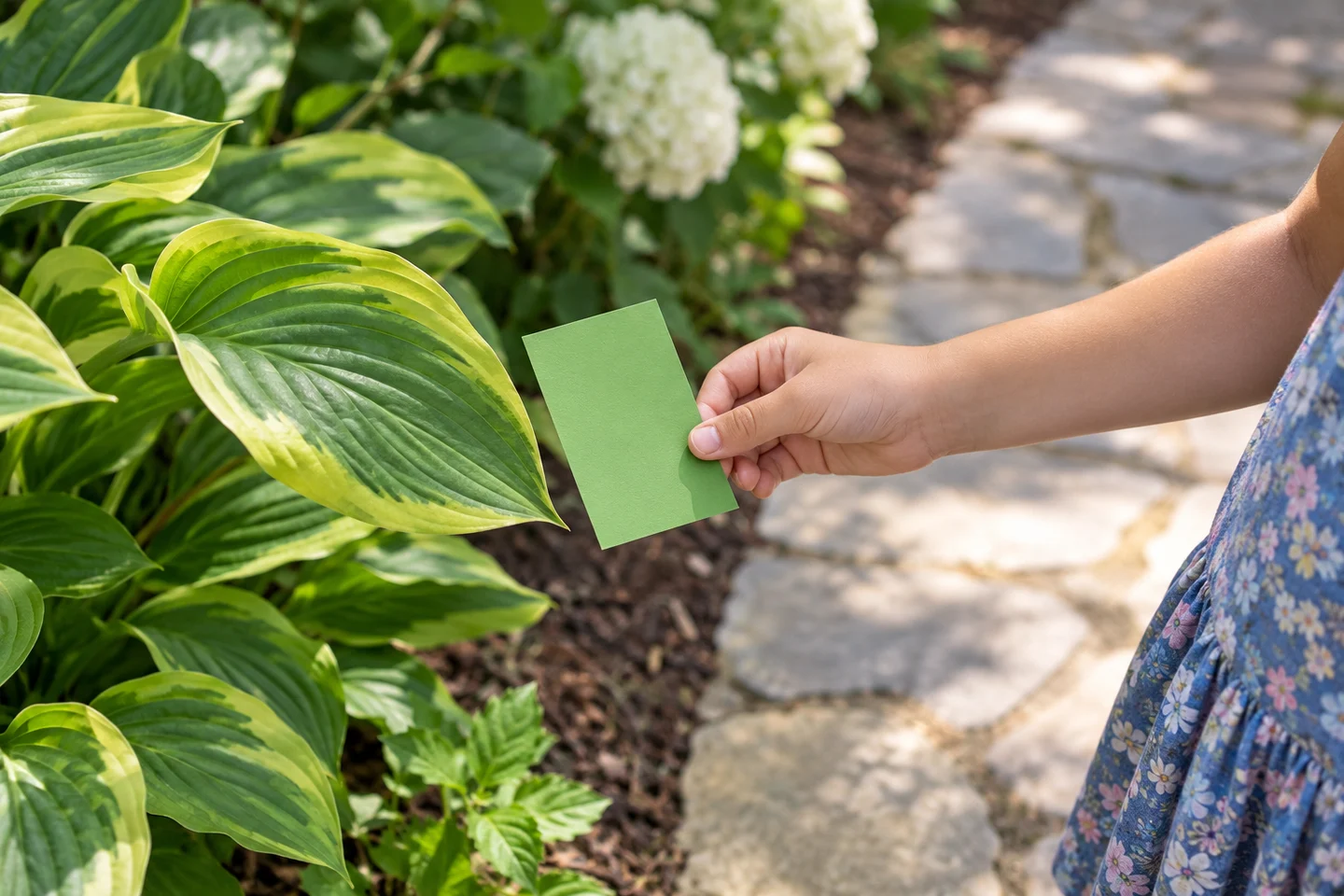
Hold the swatch in your line of sight near the subject. Ask what looks alike and what looks different. A card can be close in color without being an exact match.
4. Make a quick record
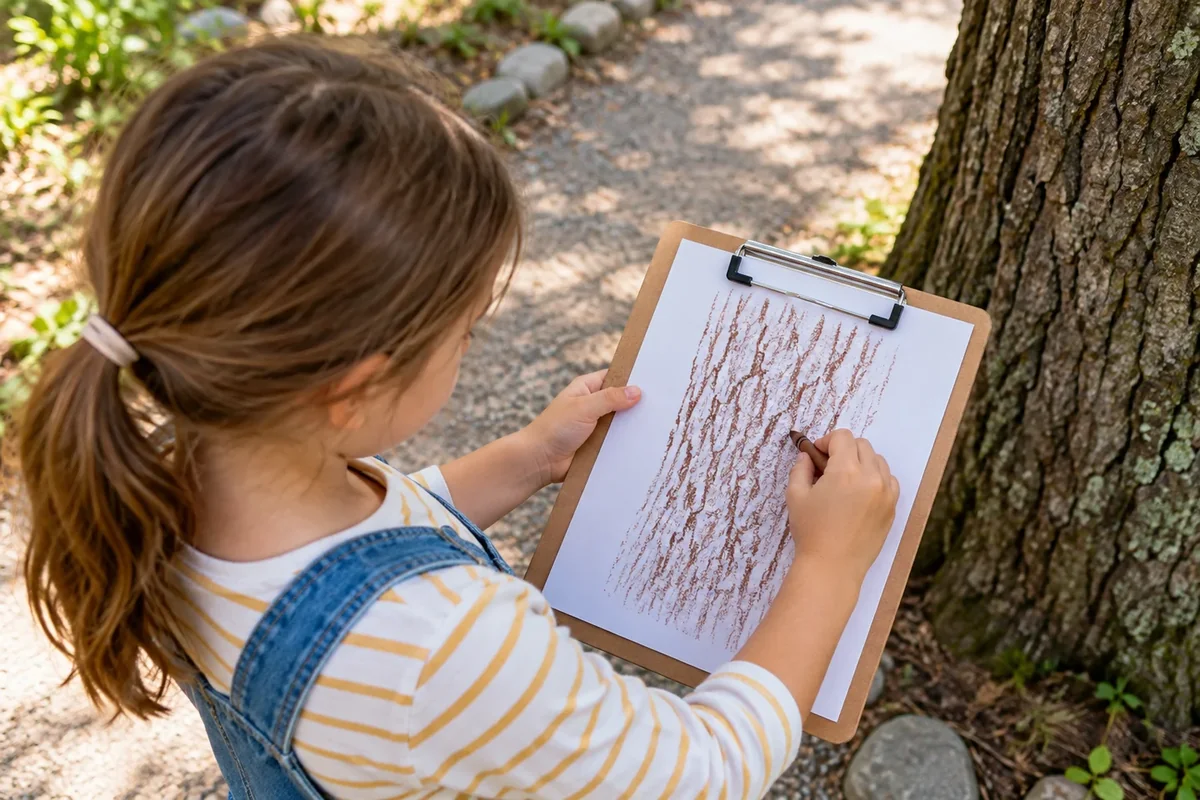
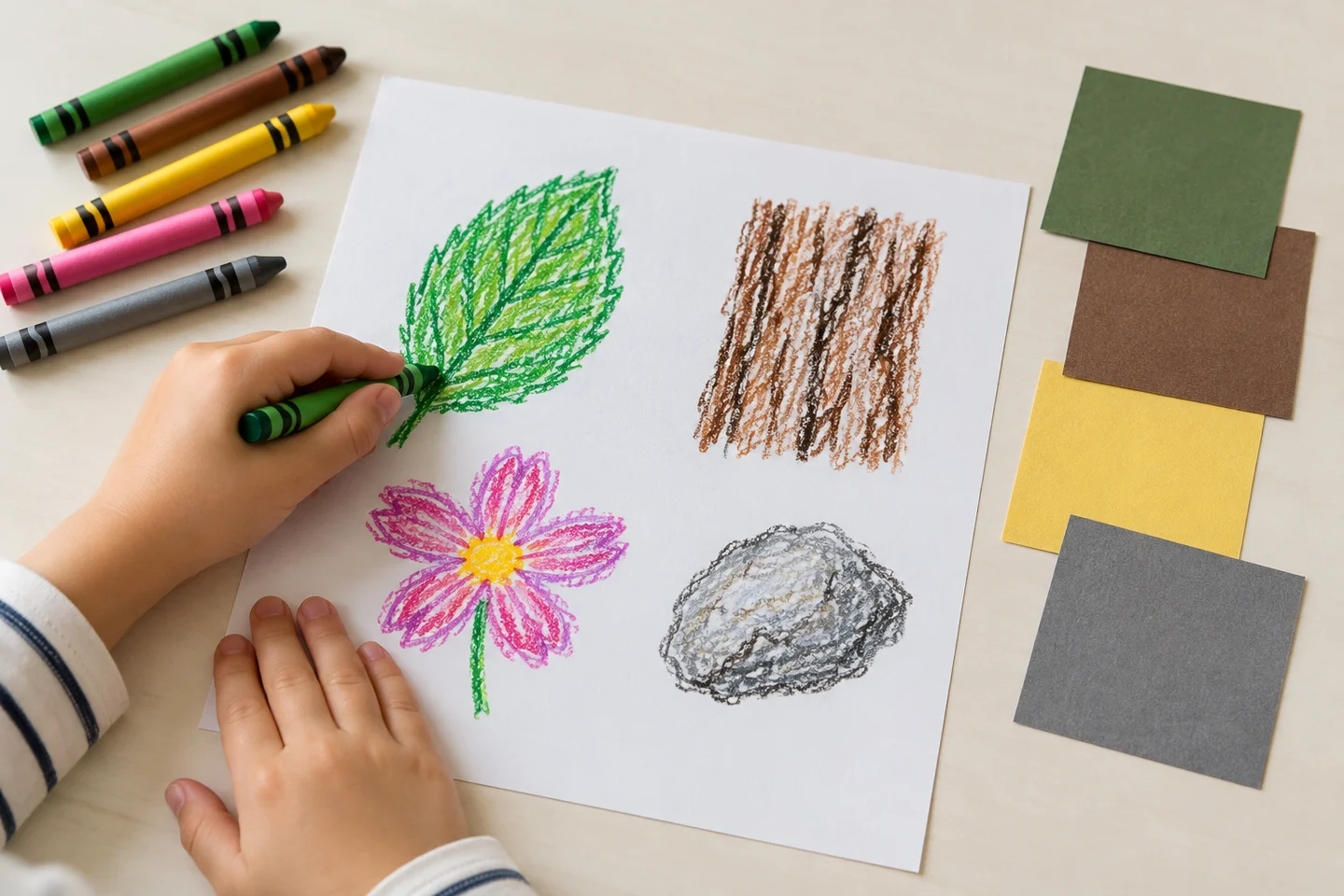
Draw the finding or add a color patch and a few words, such as “brown bark by the gate.” An adult can write a child’s description. Keep enough space to record another discovery.
5. Find a second shade
Look for another subject in the same color family. Compare the two: is one darker, duller, or more yellow? Shadows and light can change how a surface appears.
6. Share a favorite
Invite one discovery from each child or pair. A color you could not find is an interesting result, too. Gather your supplies and leave natural objects in place.
Save your discoveries
Copy this simple layout onto paper and add your own observations. Drawing or dictated notes work just as well as independent writing.
| Swatch or symbol | What we noticed | Where we saw it | Similar or different? |
|---|---|---|---|
What children can explore
The hunt gives practice in visual comparison, describing shades, and looking carefully at familiar surroundings. Ask, “How many greens can you notice from here?” or “What changes when the sunlight reaches that leaf?”
At home and in the classroom
At home, try three colors from a doorway or window. In class, pairs can swap the jobs of holding swatches and drawing. A color gallery of the records makes a follow-up conversation about everyone’s different discoveries.
Make it work for your group
Use fewer swatches, add written names or symbols, and let children compare light and dark rather than name colors. Older children might create a new swatch for a shade missing from the set.
Helpful fixes and cleanup
Few matches? Try shades that fit the setting or keep the unmatched card for another visit. Windy paper? Use a clipboard. Tiring walk? Continue from one seated spot. Return every card and drawing with the group, ready for another color hunt.