Nature & Outdoor Adventures
Wind Watch: Follow the Moving Air Outdoors
 Facebook
 Pinterest
 X
X LinkedIn
 Reddit
 WhatsApp
 Telegram
 Bluesky
 Email
Email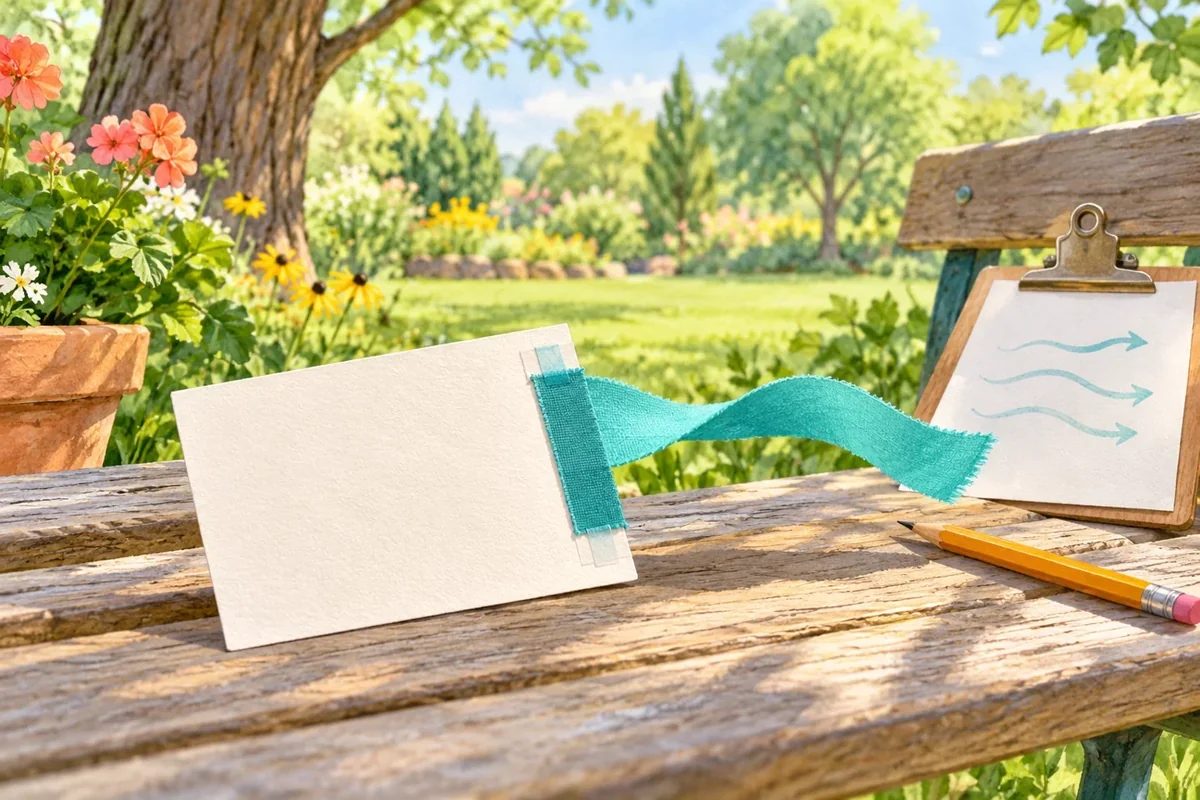
Air is not always easy to see, but its effects can be visible in grass, leaves, and a light fabric strip. Children compare those clues at two nearby places and sketch the movement they notice. The homemade indicator shows movement only; it is not a calibrated instrument and does not measure wind speed or provide a weather forecast.
At a glance
| Suggested ages | 5–10 |
|---|---|
| Activity time | 20–30 minutes |
| Adult setup | 10 minutes |
| Participation | Individual or small group; watching, pointing, and partner assistance are welcome |
What you need
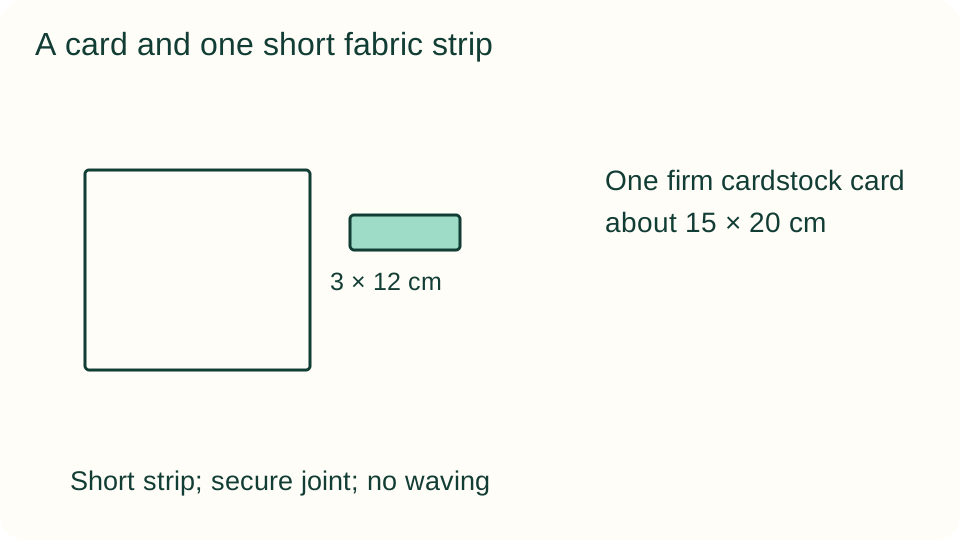
- One firm cardstock card about 15 × 20 cm
- One lightweight fabric strip about 3 × 12 cm, prepared by an adult
- Tape checked by an adult for a secure attachment
- Paper, pencil, and a clipboard
Get ready
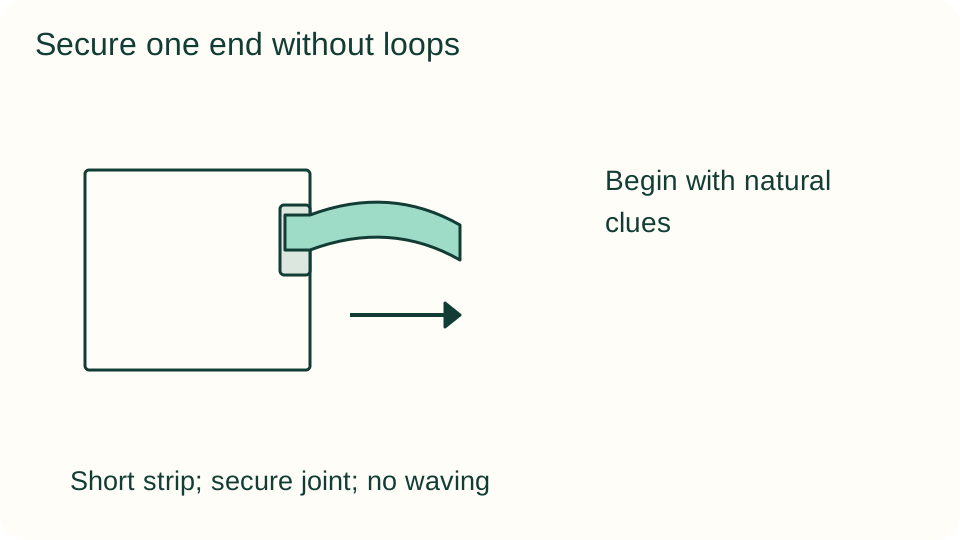
An adult tapes about 3 cm of one fabric end flat onto an edge of the card, leaving a short free section. Tug gently to check the joint and remove loose threads. Do not add sticks, loops, long strings, or balloons. Select two nearby accessible spots in gentle conditions, away from traffic, water, overhead hazards, and busy walkways.
Try the activity
1. Begin with natural clues
Stand or sit at the first agreed spot and notice leaves or grass without touching them. Describe whether movement is frequent, occasional, or not visible. Look at more than one feature. A moving branch is one clue, but movement alone does not show a precise wind speed.
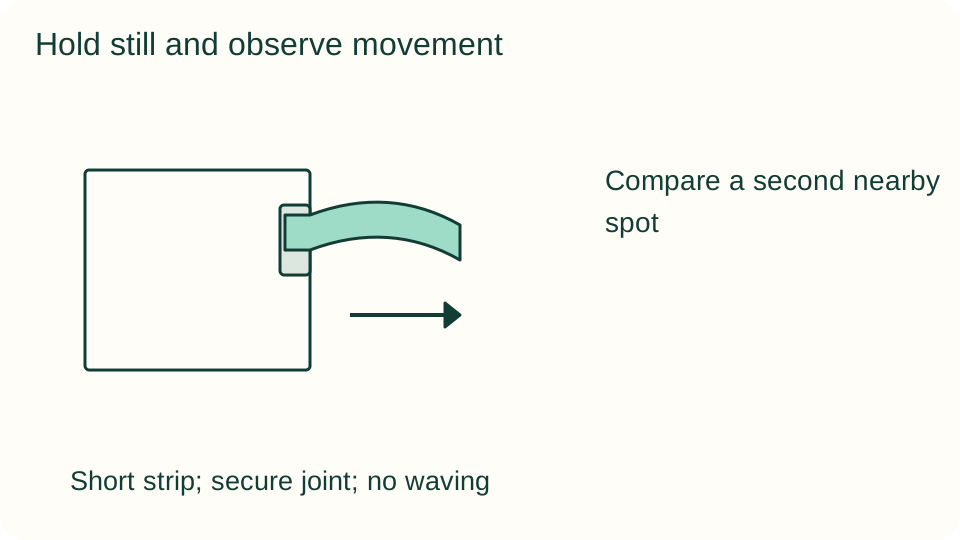
2. Hold the indicator steadily
Hold the card by its opposite edge so the fabric hangs freely away from the face. Keep it at a comfortable height and avoid swinging it. Give it a moment to settle after moving your hand. An adult can hold it while the child watches and describes what happens.
3. Record the local movement
Draw the card and an arrow showing where the free fabric moved relative to a nearby landmark. If it droops or changes direction, record that too. Use descriptions such as toward the gate instead of compass directions unless the group has a reliable way to establish them.
4. Compare a second nearby spot
Move together to the second safe spot, keeping the same card and approximate holding height. Watch the fabric again without waving it. Compare movement with nearby plants. A place beside a wall may behave differently from an open area, but do not assume the cause from one brief observation.
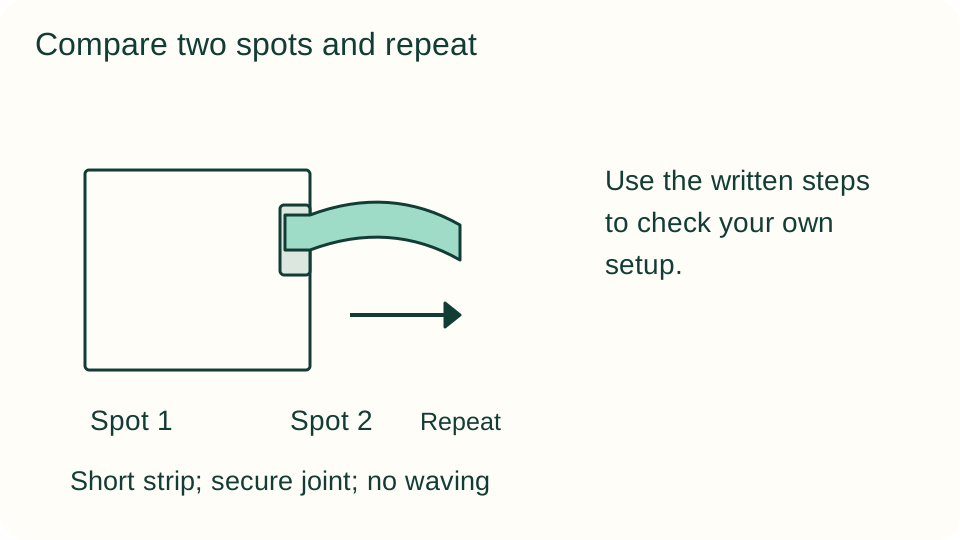
5. Repeat one observation
Return to the first spot if the route remains suitable. Watch for another short period and add the result beside the first note. Was the movement similar, different, or inconsistent? Keep all observations rather than selecting only the moment that best fits an expected answer.
6. Explain what the record shows
Compare the two locations and the repeat visit. Describe visible movement and any uncertainty. Ask whether hand movement, changing air, or the local surroundings might have affected the indicator. Choose one observation to repeat another day without turning the homemade setup into a wind-speed test.
What children can explore
The card makes a small piece of fabric available for close observation. Its weight, position, and attachment can affect how it moves. Trees, walls, and changing conditions may also matter. Encourage children to describe these limitations alongside their discoveries rather than rank places by a claimed numerical wind speed.
Make it work for your group
Younger children can point toward a landmark while an adult draws the arrow. Older participants can record times and compare several short intervals at the same location. A seated child can observe from two positions within one accessible area. If fabric is uncomfortable, use only visible leaves and grass as clues.
At home and in the classroom
At home, choose two familiar places close enough to supervise easily. In a classroom, use one adult-prepared indicator and rotate holder, observer, and recorder. Keep the group behind the holder with room for the fabric to move. Do not create a running or flying-material competition around the observation.
Return to the observation
Keep the original record with any later notes so changes remain visible. Before returning outdoors, an adult checks permission, access, and current conditions again. Repeat only the parts that interest the child, and record what actually happens rather than recreating an expected result.
Helpful fixes and cleanup
Postpone the activity during strong winds, storms, or unsafe heat and cold. If the fabric loosens, stop and secure it indoors rather than let it become litter. Bring the entire indicator and drawing kit back with you. Store it flat and check the attachment before any later use.