STEM & Discovery
Make a Pretend Ice Cream Shop: Counting, Patterns, and Creative Play
 Facebook
 Pinterest
 X
X LinkedIn
 Reddit
 WhatsApp
 Telegram
 Bluesky
 Email
Email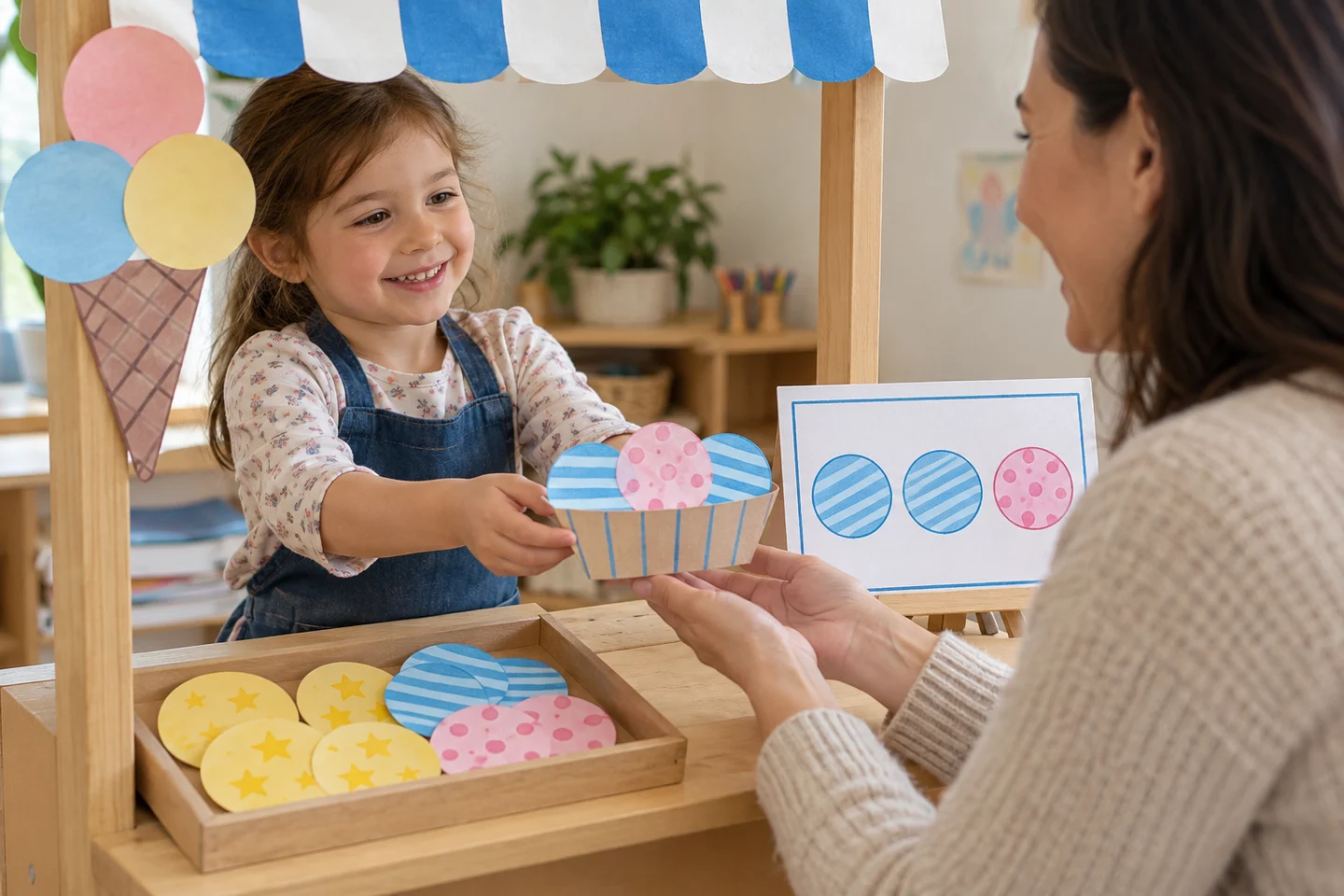
Today’s special might be a striped scoop, a starry scoop, or a flavor called moonberry. A pretend paper ice cream shop turns counting and matching into imaginative play without using food.
Children become customers and shopkeepers, follow picture orders, and invent their own menu. Large paper pieces keep the setup simple and reusable.
At a glance
| Detail | Plan |
|---|---|
| Suggested ages | 4–8 |
| Preparation | About 15 minutes |
| Activity time | 25–40 minutes |
| Group size | Two to four children per shop |
| Mess level | Low |
What you need
- Twelve large paper scoops in three groups of four.
- Paper cones or bowls.
- Blank cards for picture orders.
- Crayons, a supply tray, and optional paper for a shop sign.
Give each scoop group a color and a distinguishing pattern, such as stripes, dots, or stars. For 24 children in six groups, prepare six sets of scoops, cones, and order cards. Adults can cut large shapes in advance, or children can draw scoops on rectangles.
Get ready
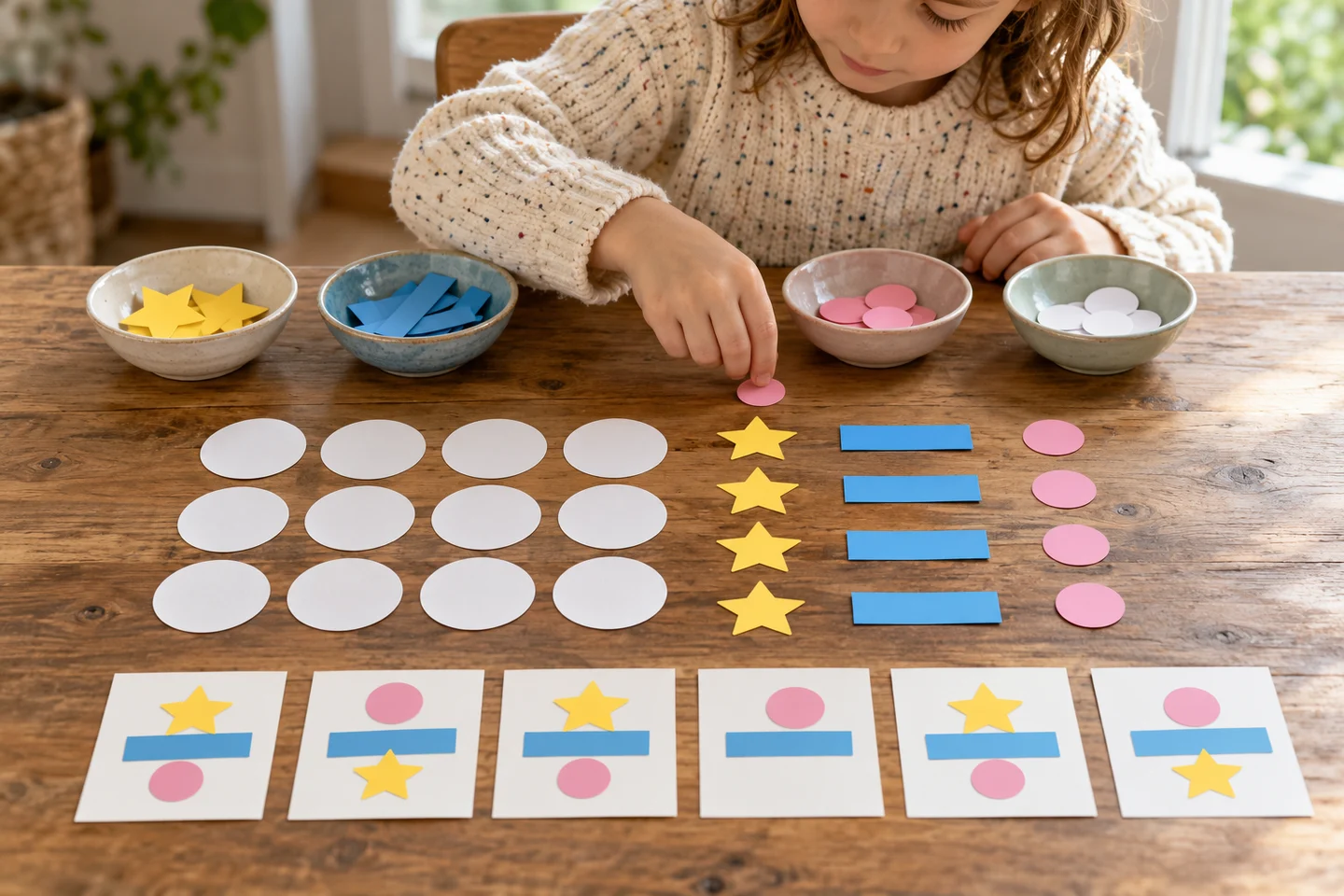
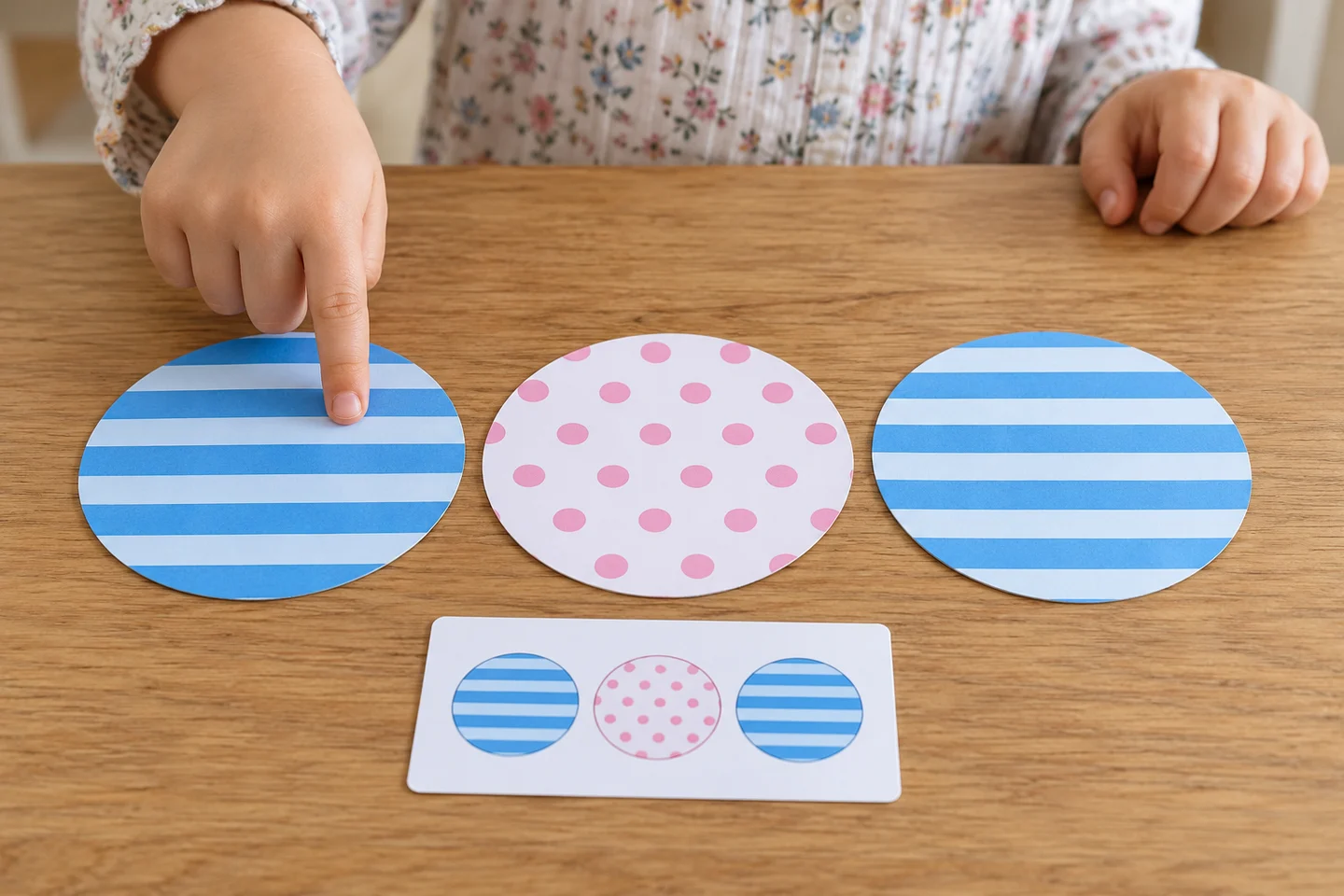
Make a few orders with one to three scoops pictured clearly. Try two striped scoops and one dotted scoop on a card. Lay the matching paper pieces in the supply tray and name the patterns together. Children can invent flavor names for their shop.
Open the shop
1. Make a little menu
Display a sample of each scoop type. Ask what the flavors could be called and write the names beside the pictures if wanted. Picture clues let children participate without reading independently.
2. Choose an order
The customer picks a card and shows it to the shopkeeper. Look at the requested scoops together. The shopkeeper can describe or point to each one before serving.
3. Match the pieces
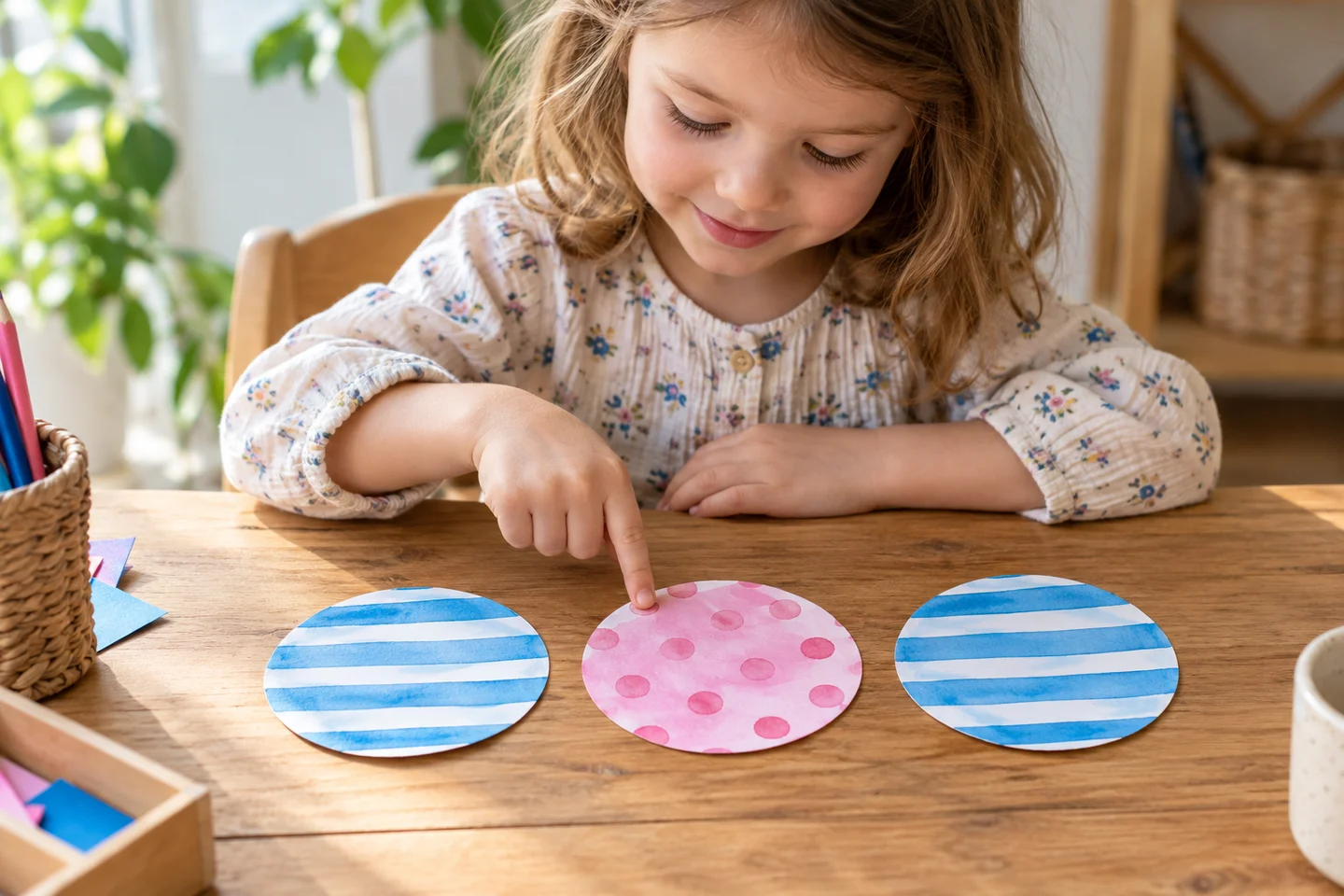
Place a paper scoop beside each corresponding picture on the card. For two striped and one dotted scoop, collect exactly those three pieces. Then transfer them to a cone or bowl.
4. Count the whole order
Touch each scoop once while saying a number. Ask, “How many scoops altogether?” The final number tells the size of the group when each piece has been counted once.
5. Check and swap roles
Compare the serving with the card. Add a missing scoop or return an extra one together. Put the pieces back after pretend eating and let another child become the shopkeeper.
6. Try a pattern special
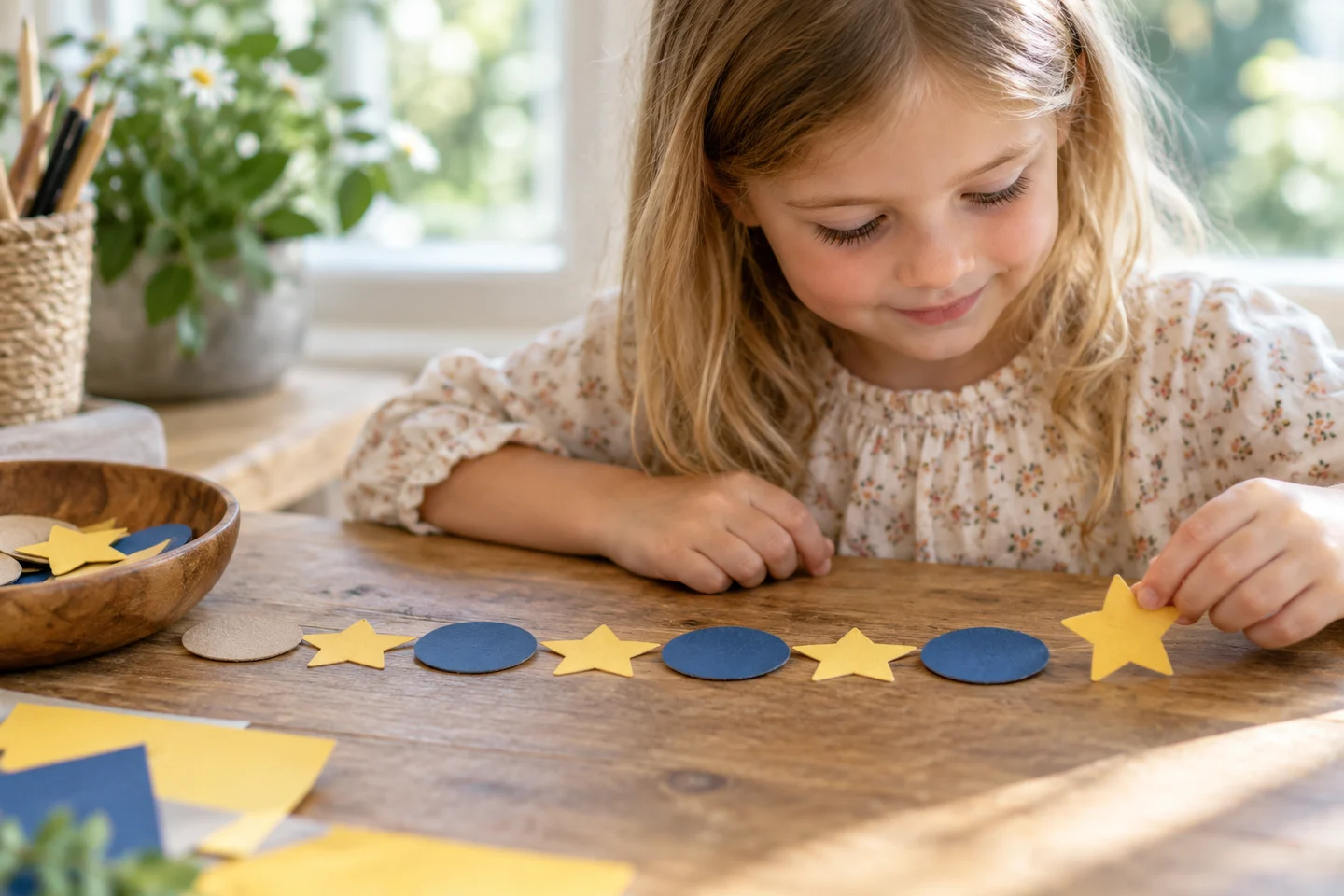
Arrange star, circle, star, circle and invite the next scoop. Name the repeating pair together. Children can make another pattern order once that first rule feels familiar.
What children can explore
Picture orders connect one-to-one matching, counting, and following a short sequence. Pattern menus add another kind of noticing. Ask, “How did you know which piece to choose?” or “What repeats in this special?”
At home and in the classroom
At home, swap customer and shopkeeper roles with a grown-up or sibling. In groups of four, one pair can serve while another designs orders, then rotate. Keep the play cooperative so checking a serving feels like helping the shop run smoothly.
Make it work for your group
Begin with one-scoop cards, use large shapes, or let a partner move the pieces. Older children can compare two orders, find the total scoops served, or design a menu with a more complex repeating unit.
Helpful fixes and cleanup
Confusing colors? Use the pattern labels too. Too many pieces? Set out fewer scoop types. Counting skips a scoop? Move each one into a new row as it is counted. Store the orders and scoops in separate envelopes, ready for the next grand opening.