Hanukkah
Eight Nights of Hanukkah Family Memories
 Facebook
 Pinterest
 X
X LinkedIn
 Reddit
 WhatsApp
 Telegram
 Bluesky
 Email
Email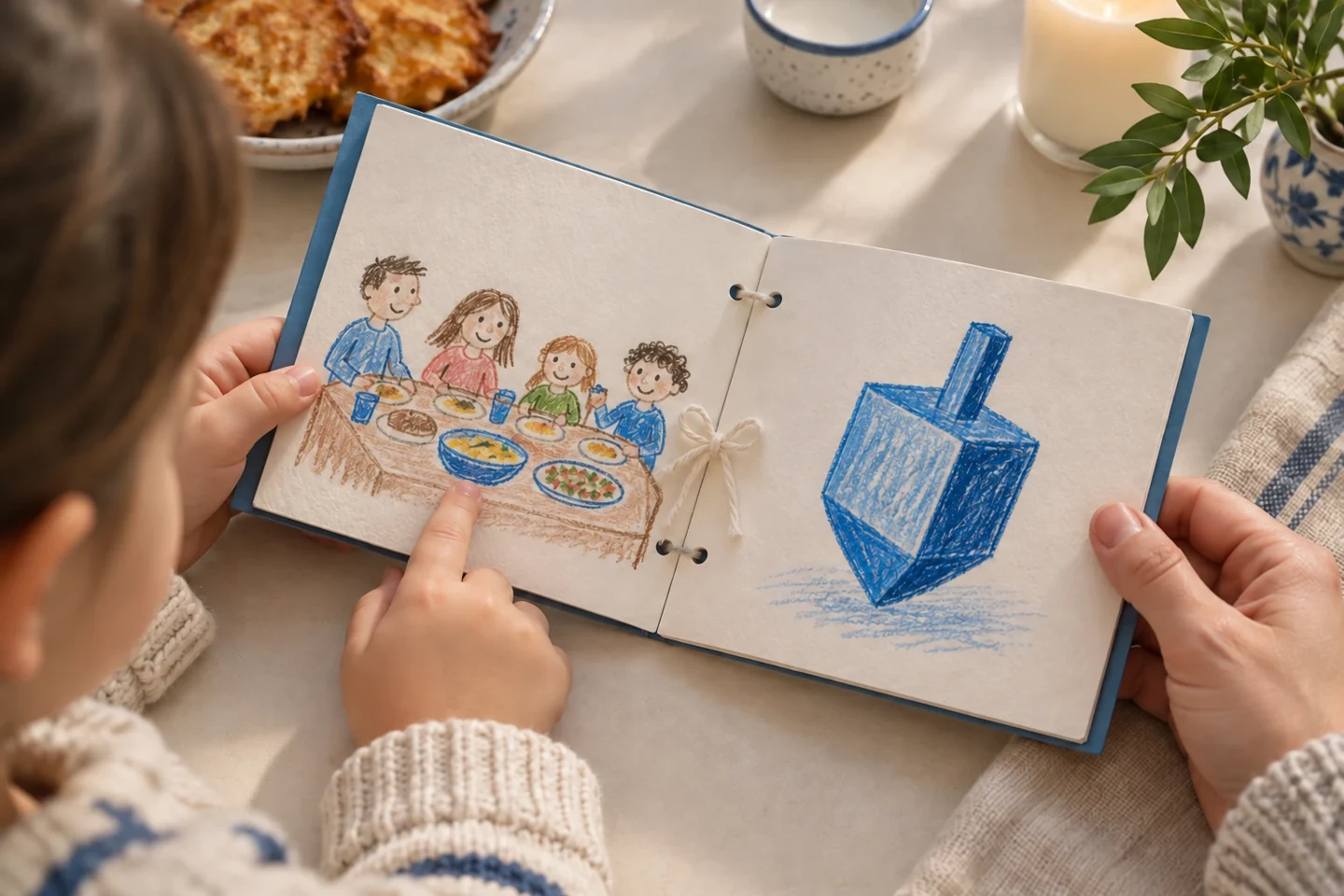
Your activity at a glance
| Suggested ages | 4–10 |
|---|---|
| Activity time | 20 minutes to prepare; 5–10 minutes per entry |
What you need
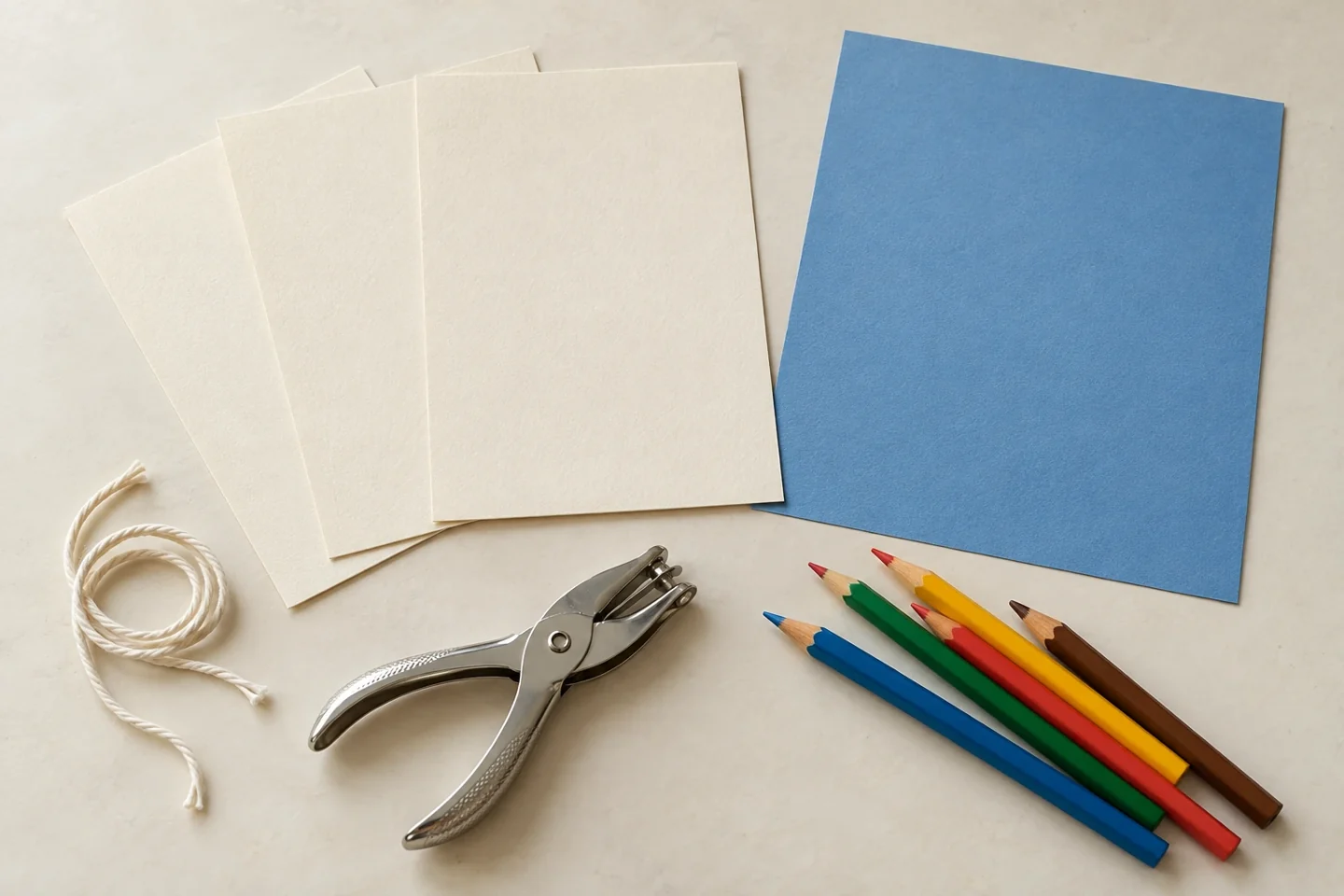
- 3 sheets of paper folded in half to make 12 booklet pages
- 1 cardstock cover
- Crayons or colored pencils
- Hole punch and short cotton string
- Pencil for dictated notes
Save one small memory from each night
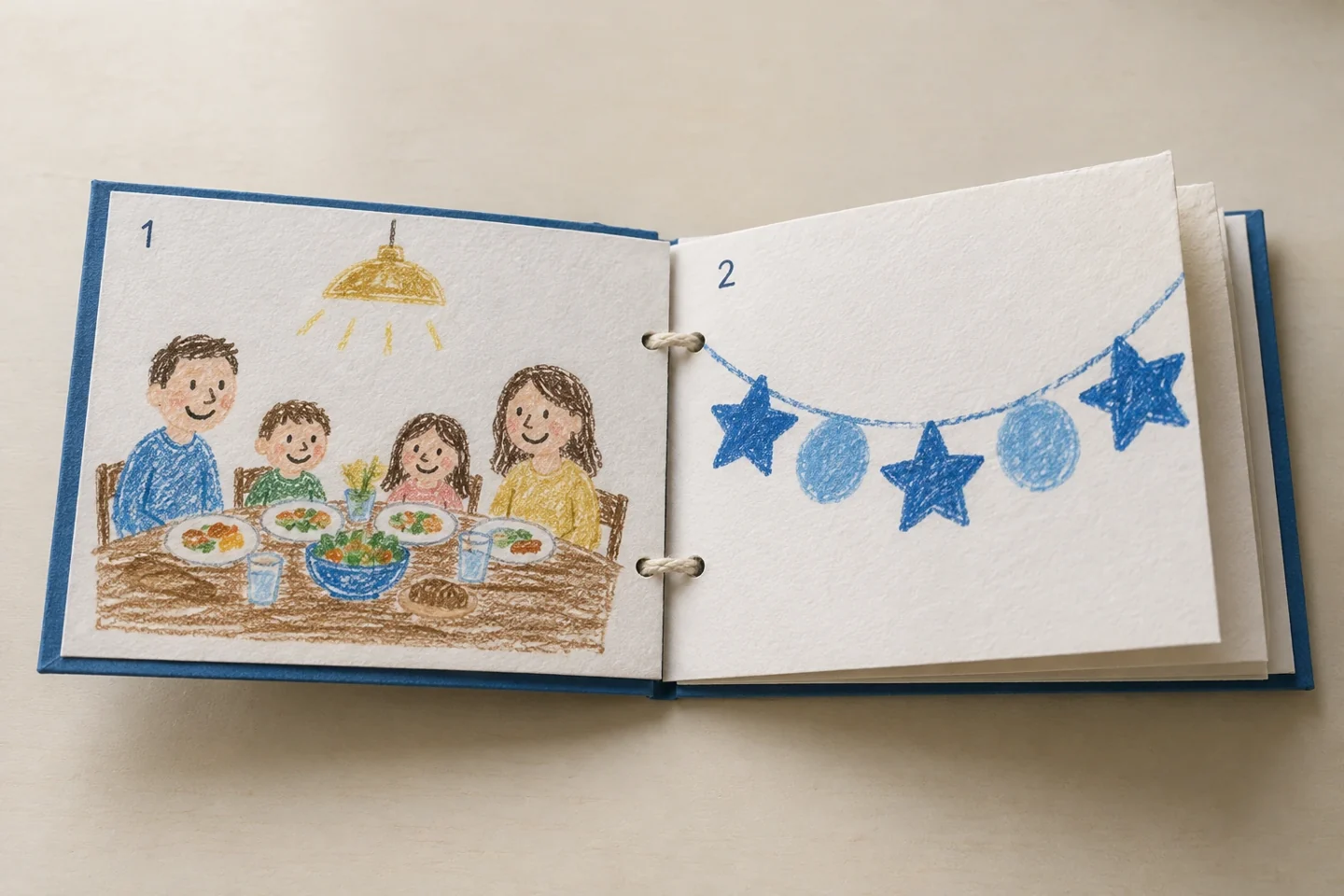
A small memory book leaves room for one drawing or note from each of Hanukkah’s eight nights. Children might record a game, a shared meal, a visit, or something they noticed during the evening. The book does not require eight elaborate activities or gifts. It simply provides a place to remember the celebrations your household actually observes, using the child’s own words and pictures.
Before you begin
Three folded sheets create twelve pages, enough for a title, eight night entries and spare drawing space. Fold and count the pages together before binding. Set out a pencil for an adult scribe, and explain that the child can remember any small moment they enjoyed. A single drawing can be a complete entry.
Let’s make it, step by step
1. Prepare eight entry spaces
Fold three paper sheets in half and nest them together, giving twelve pages when both sides are counted. Use the first as a title page, reserve the next eight for the nights, and keep the remaining pages for a final drawing or extra notes. Count each page face together before decorating so every entry has its own space.
2. Add a sturdy cover
Fold cardstock around the paper stack and line up the edges. Decorate the front with a simple Hanukkah-inspired drawing or a family-chosen design. If a menorah is drawn, keep eight holiday lights and a separate shamash; the cover can also use a plain patterned border.
3. Bind the book
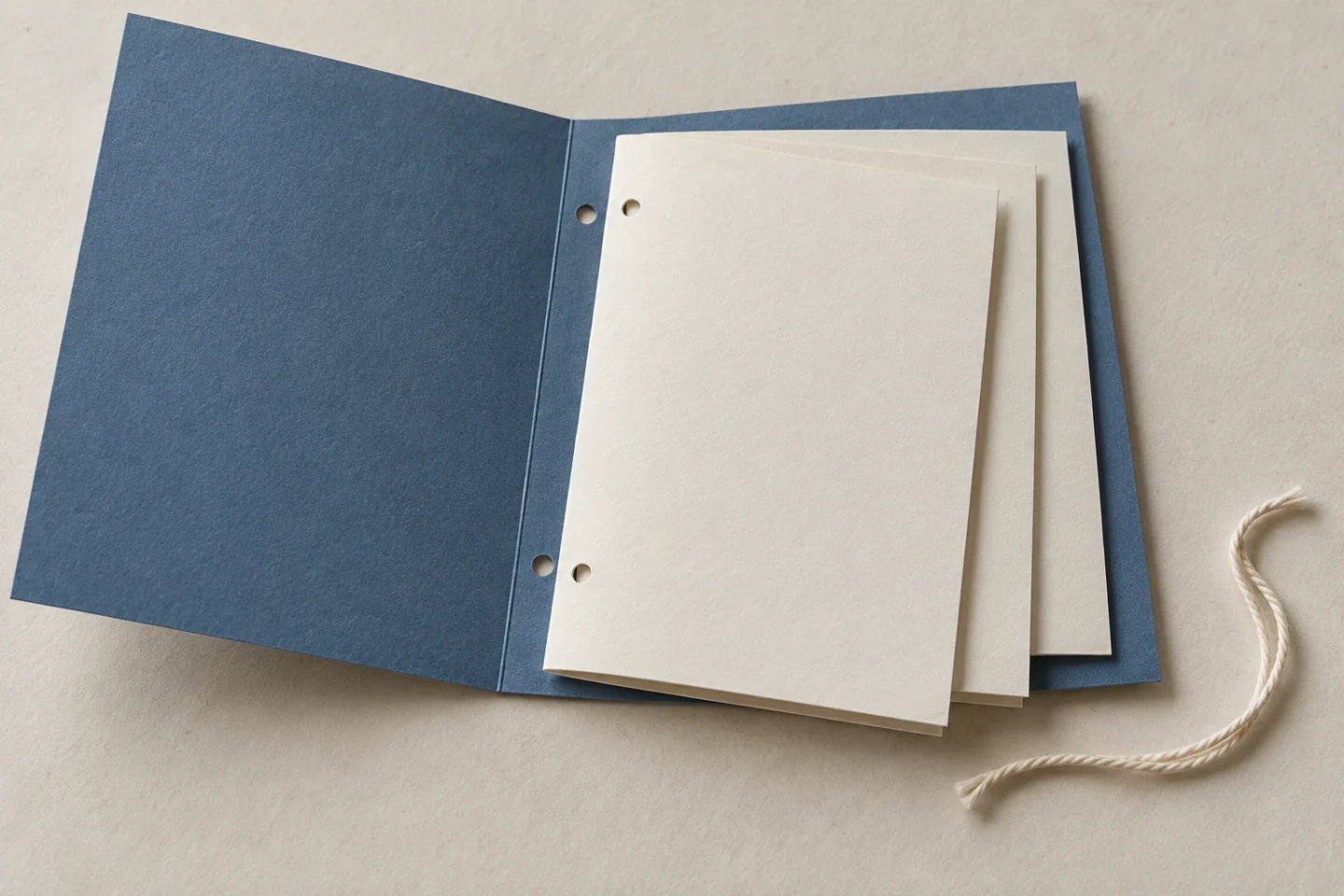
Punch two holes near the fold with adult help and thread a short piece of string through them. Tie a loose bow so pages can turn. Keep the string ends short. Alternatively, an adult can staple the fold and cover the staple backs securely with tape.
4. Mark the entry order
Number the eight entry pages from one to eight. These numbers identify the nights, not a required calendar-year label. Leave each page mostly blank for a large drawing. Add a small line at the bottom only if the child wants written words.
5. Choose one remembered moment
After a celebration, ask what the child would like to remember. It may be an ordinary detail: a song, a plate on the table, a game turn, or someone’s smile. Avoid directing every entry toward the same activity or expecting an impressive answer.
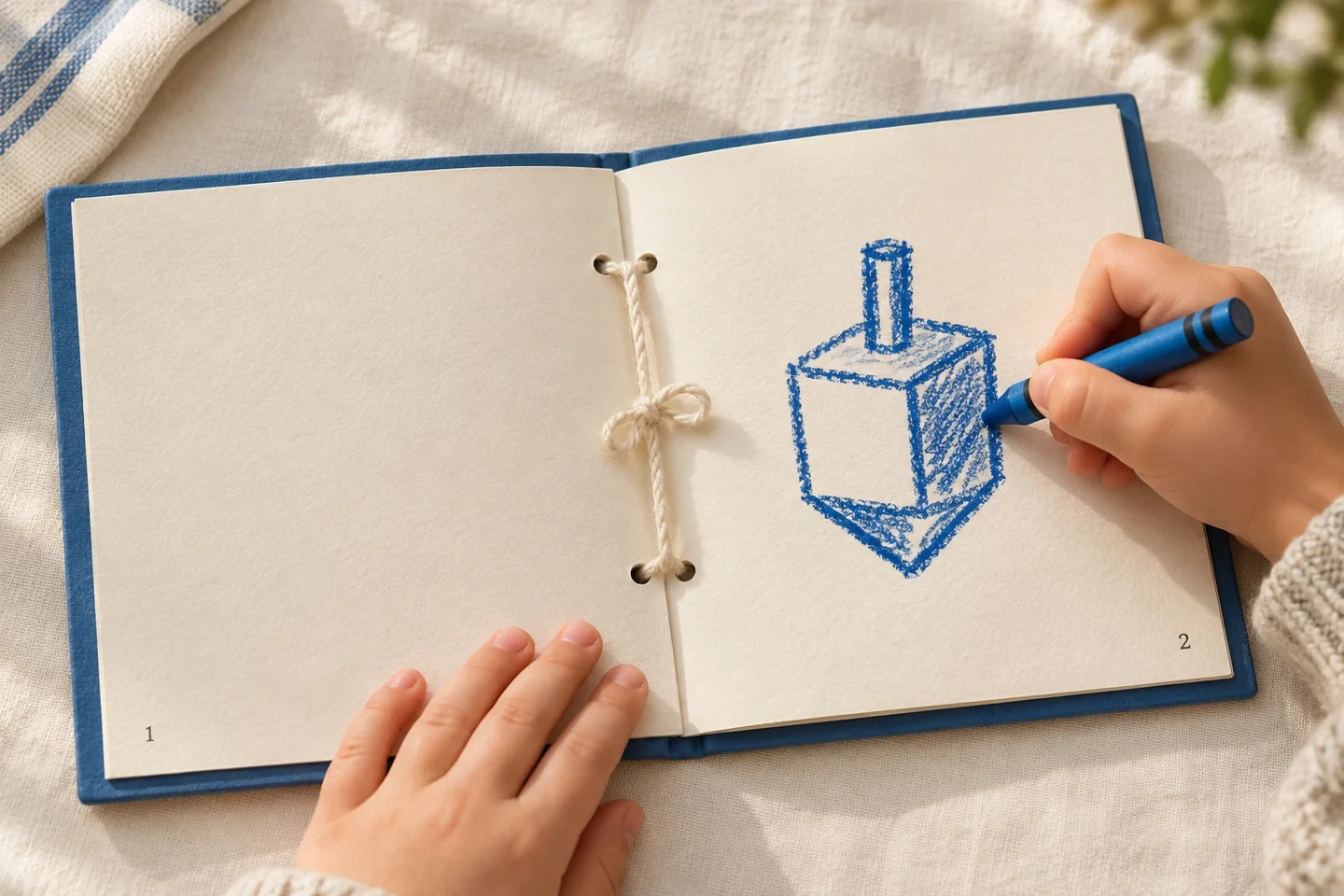
6. Draw and dictate
Let the child draw first, then offer to write one sentence they dictate. Repeat their words back to check the meaning. An older child may write independently. Keep the entry short enough to feel enjoyable at the end of an already busy evening.
7. Continue flexibly
Return to the next page on another night. If an entry is missed, the child can recall it later or leave a space. The booklet is a keepsake, not an attendance record. Drawings do not need to document candle-lighting if the child prefers another memory.
8. Read it together
After the holiday, look through the eight spaces and invite the child to tell you about favorite details. Add a final page with one thing they hope to do again. Store the book with other family keepsakes or on a shelf where it can be revisited.
Talk, notice, and learn together
Ask what happened first and what the child remembers most clearly. Looking back through the page sequence supports storytelling and noticing change over time. A dictated sentence also shows how a spoken idea can become writing without requiring the child to produce spelling they have not yet learned.
Make it work at home or in a classroom
Younger children can use one large sheet per night in a folder, with an adult recording their words. Older children can include longer notes or small paper keepsakes. In an educational setting, use this as an optional family-directed project rather than asking every child to report personal holiday observance.
Helpful fixes and cleanup
If pages become crowded, add a folded insert or let the child continue on the spare pages. If a drawing is unfinished, leave it rather than completing it for them. Keep damp craft items or food out of the booklet; a drawing of a memory is easier to preserve than an unsuitable object.
A useful way to extend the activity
Keep the booklet within reach but separate from food and candle-lighting areas. A child can make a quick sketch on scrap paper during the evening and transfer it later. If they tell a long story, record one sentence they choose rather than compressing the memory into an adult summary. The spare pages can hold an extra drawing that does not fit a single night.