Hanukkah
Make a Hanukkah Picture-Matching Game
 Facebook
 Pinterest
 X
X LinkedIn
 Reddit
 WhatsApp
 Telegram
 Bluesky
 Email
Email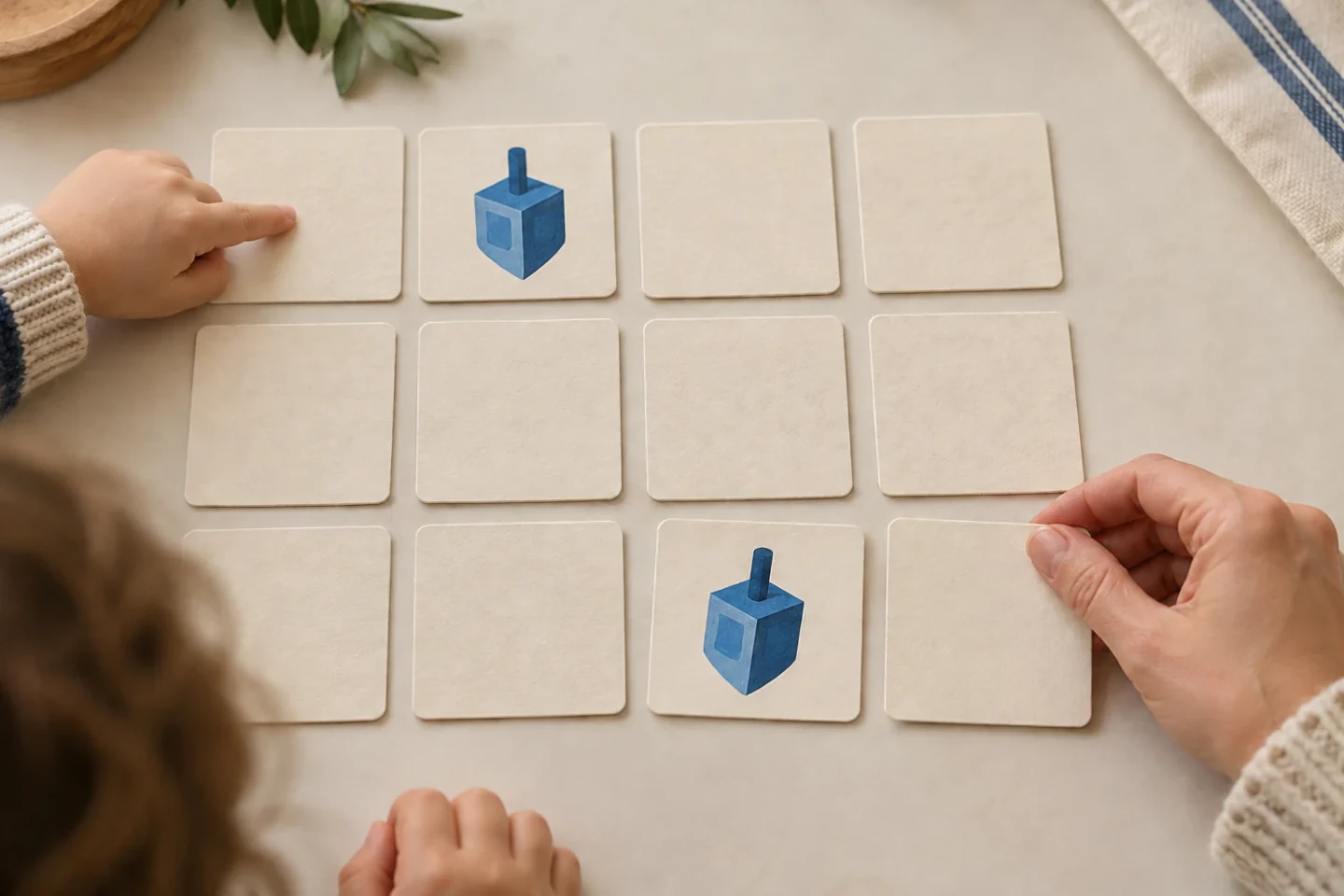
Your activity at a glance
| Suggested ages | 4–9 |
|---|---|
| Activity time | 30 minutes to make; 10–15 minutes to play |
What you need
- 12 equal cardstock squares approximately 3 × 3 inches
- Crayons or colored pencils
- Ruler, pencil, and scissors
- 1 opaque envelope or small box
- Optional plain paper for matching card backs
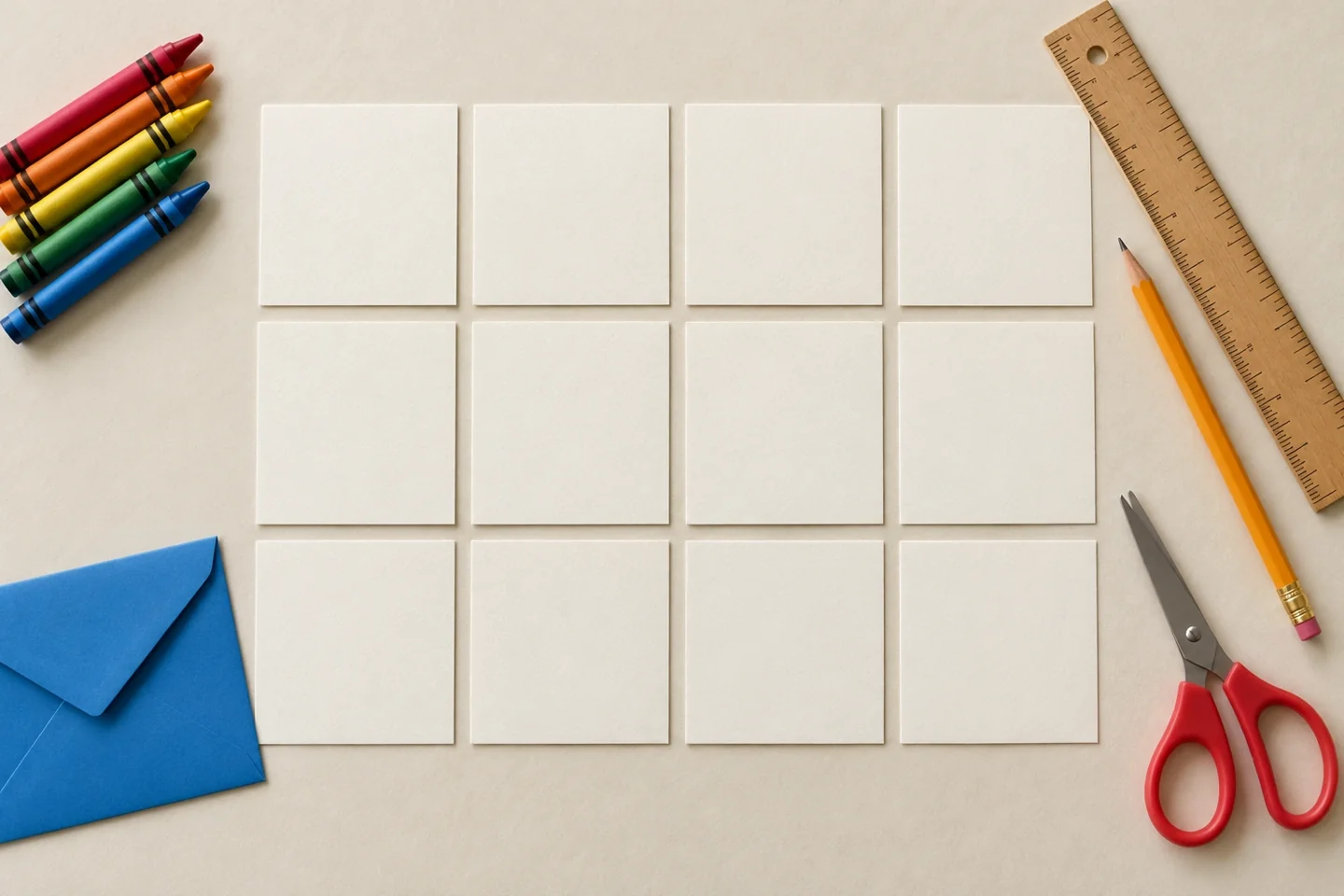
Draw six pairs for a memory game
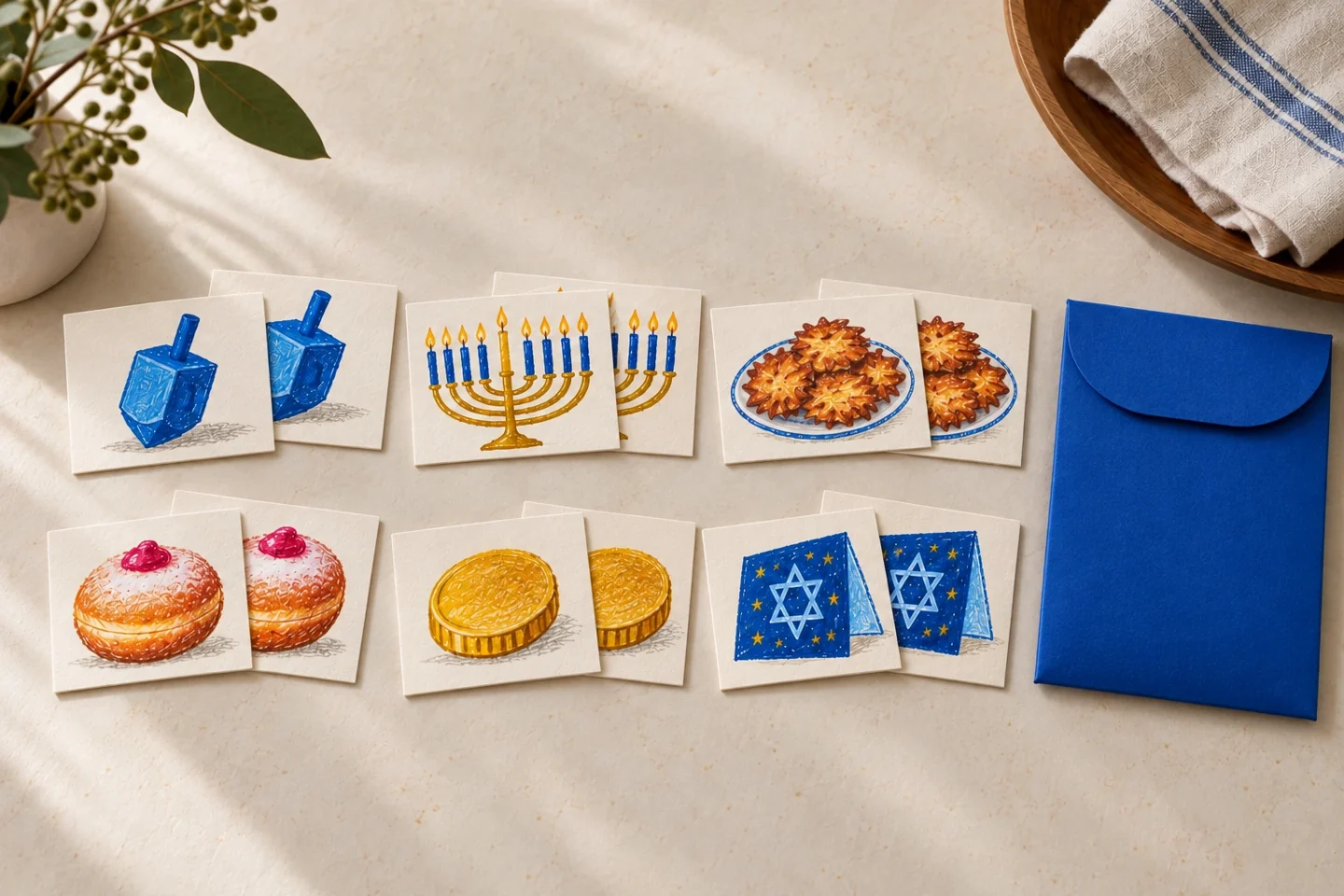
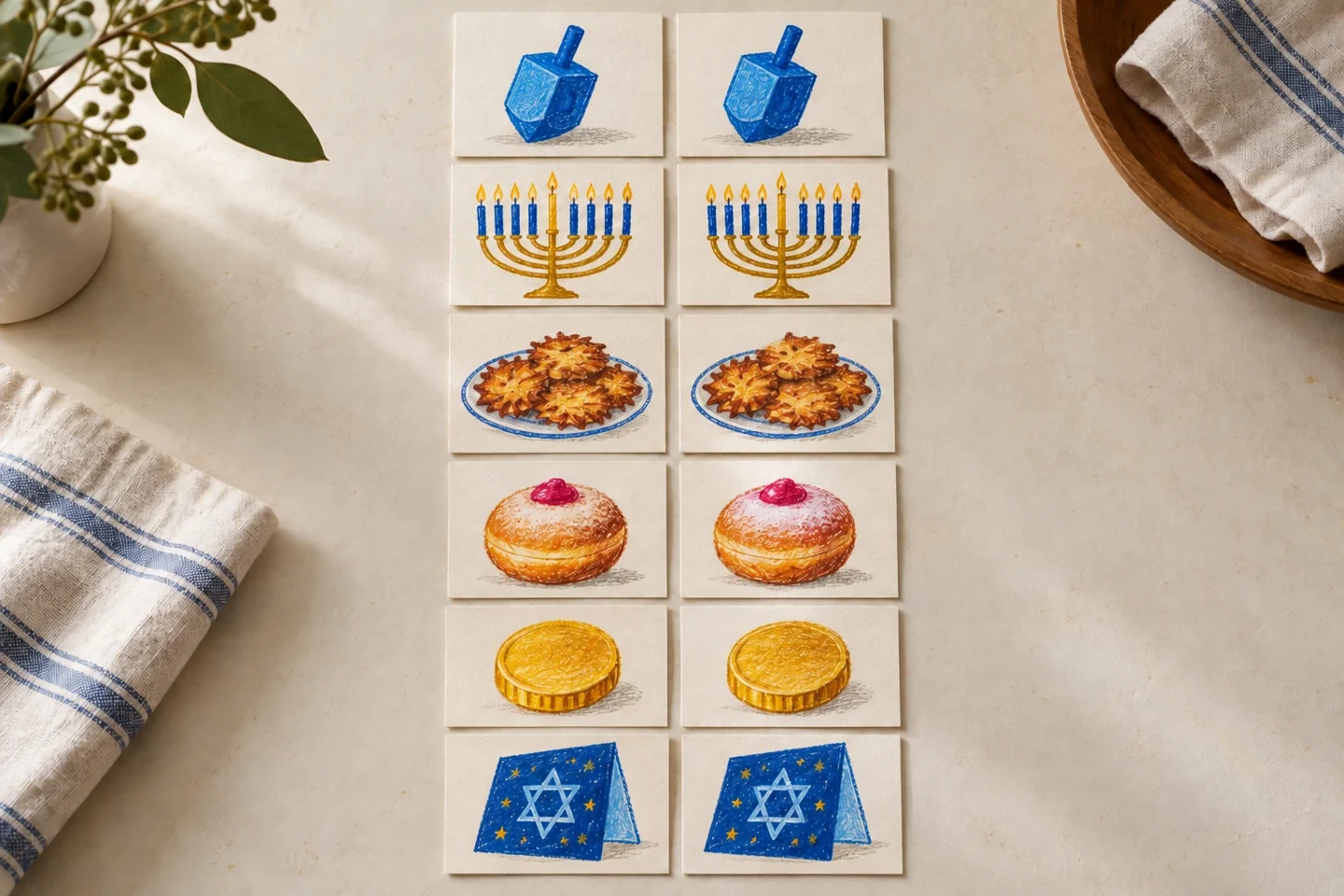
Six pairs of pictures make a manageable Hanukkah memory game. Children turn over two cards at a time, look for a matching pair, and remember where pictures appeared. The illustrations can show a dreidel, a nine-light menorah, a plate of latkes, a jelly doughnut, chocolate gelt, and a holiday greeting card. Introduce unfamiliar pictures first so the game is about finding pairs rather than guessing what a drawing means.
Before you begin
Prepare twelve sturdy cards with identical backs. For this sample, use a dreidel, nine-light hanukkiah, latke on a plate, wrapped gift, songbook and chocolate gelt coin: draw each twice. Briefly name these holiday-associated objects; gifts and music vary among families. Let children inspect all six pairs before hiding the pictures.
Let’s make it, step by step
1. Prepare equal cards
Cut twelve cardstock squares approximately 3 inches across. Check that their backs look alike and the same color faces upward. If drawing marks show through thin paper, glue a plain backing onto every card, not only the ones that are easy to identify.
2. Select six picture pairs
Choose six clear Hanukkah-associated images and explain their connection briefly. Keep the images visually distinct. A latke drawing should not look identical to a coin; use a small plate or different outline to help children tell the pictures apart.
3. Draw each picture twice
Make two matching copies of each image. Exact artistic duplication is not necessary, but the main shape and colors should match. If drawing a menorah, use eight holiday lights and a separate shamash in both copies. Keep lettering out unless it is verified.
4. Check all six pairs
Lay the twelve cards face up and find the pairs together. Confirm that every picture has exactly one partner. Let children name or point to the objects. This preview helps younger players learn the game images before they need to remember hidden positions.
5. Arrange the game
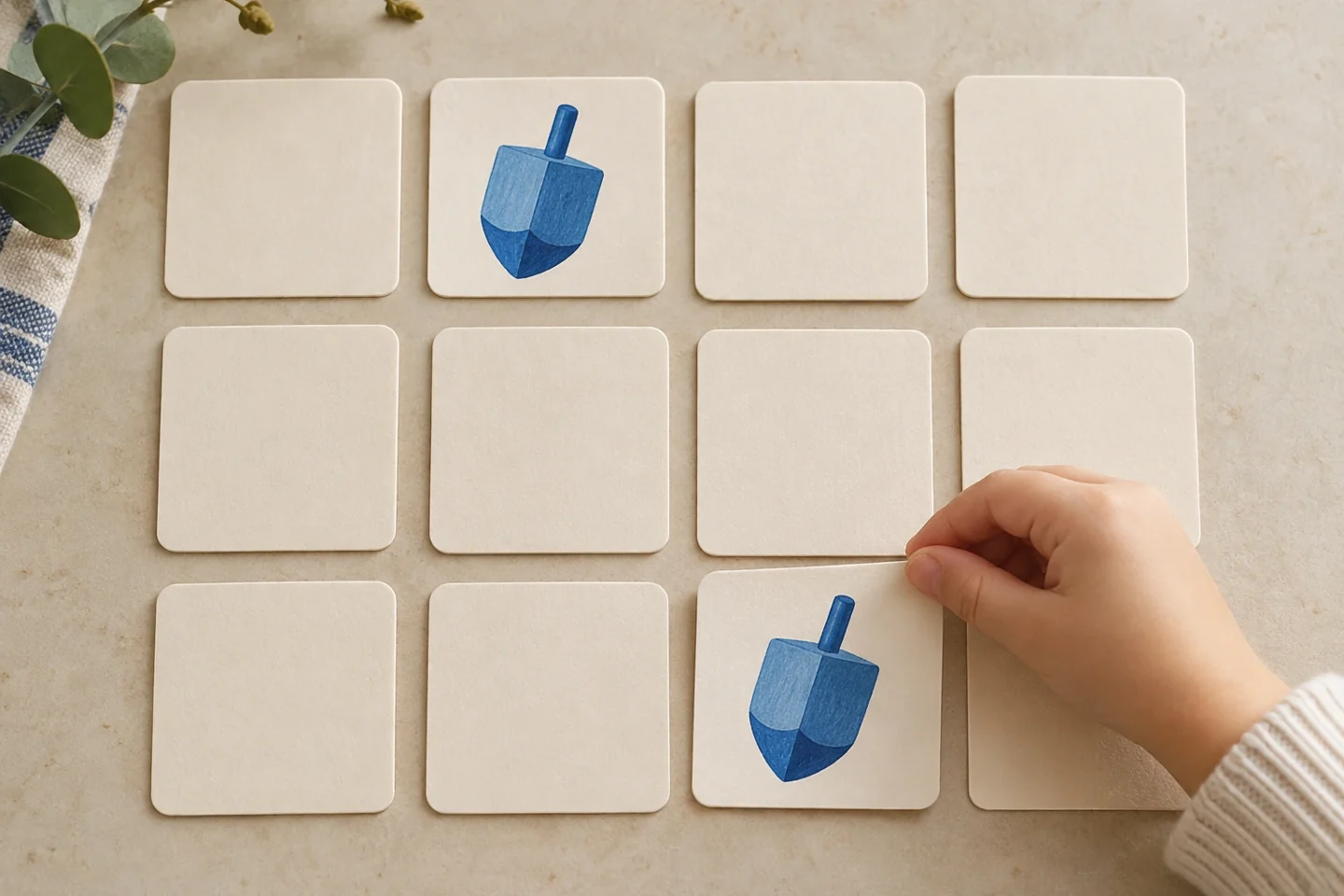
Shuffle the cards and place them face down in three rows of four. Leave a small gap between cards so each can be lifted without disturbing its neighbor. Explain that cards return to the same places after an unsuccessful turn.
6. Take a first turn
Turn over two cards and let everyone see them. If they match, keep the pair beside the player or in a shared completed pile. If they differ, name the pictures, turn them back over, and leave their positions unchanged.
7. Continue with a chosen rule
Choose before play whether a match earns another turn. For a simple cooperative version, everyone takes one turn in order and works toward finding all pairs together. Children can share a remembered location without being pressured to compete.
8. Finish and reset
When all pairs are found, count the six completed pairs and the twelve individual cards. Shuffle for another round or store the set. Keep a small picture list in the box so a lost card can be recreated without changing the collection.
Talk, notice, and learn together
Ask how two cards make one pair and how six pairs make twelve cards. The game encourages visual comparison and remembering locations. Holiday explanations should remain brief and accurate; not every family observes the same food or gift customs, and the drawings are examples rather than a universal checklist.
Make it work at home or in a classroom
Younger children can begin with three pairs face up, then try six hidden cards. Older children can add more pairs after the first set is familiar. In a classroom, use small groups and a shared completion pile so players can help one another track the remaining matches.
Helpful fixes and cleanup
If card backs reveal clues, cover all backs consistently. If similar drawings cause confusion, add a distinguishing detail to both copies. Store the cards dry and flat. Replace damaged pieces in pairs when their backs or thickness would otherwise make them recognizable.
A useful way to extend the activity
Create a simple card inventory in the storage box: six picture names with a small sketch beside each. Before putting the game away, children can match the pairs against that list. This practical checking task makes it clear whether all twelve cards are present. Keep the inventory separate from play so it does not become an accidental clue about the hidden card positions.