Spring & Easter
Build a Cardboard Flower Shop for Pretend Play
 Facebook
 Pinterest
 X
X LinkedIn
 Reddit
 WhatsApp
 Telegram
 Bluesky
 Email
Email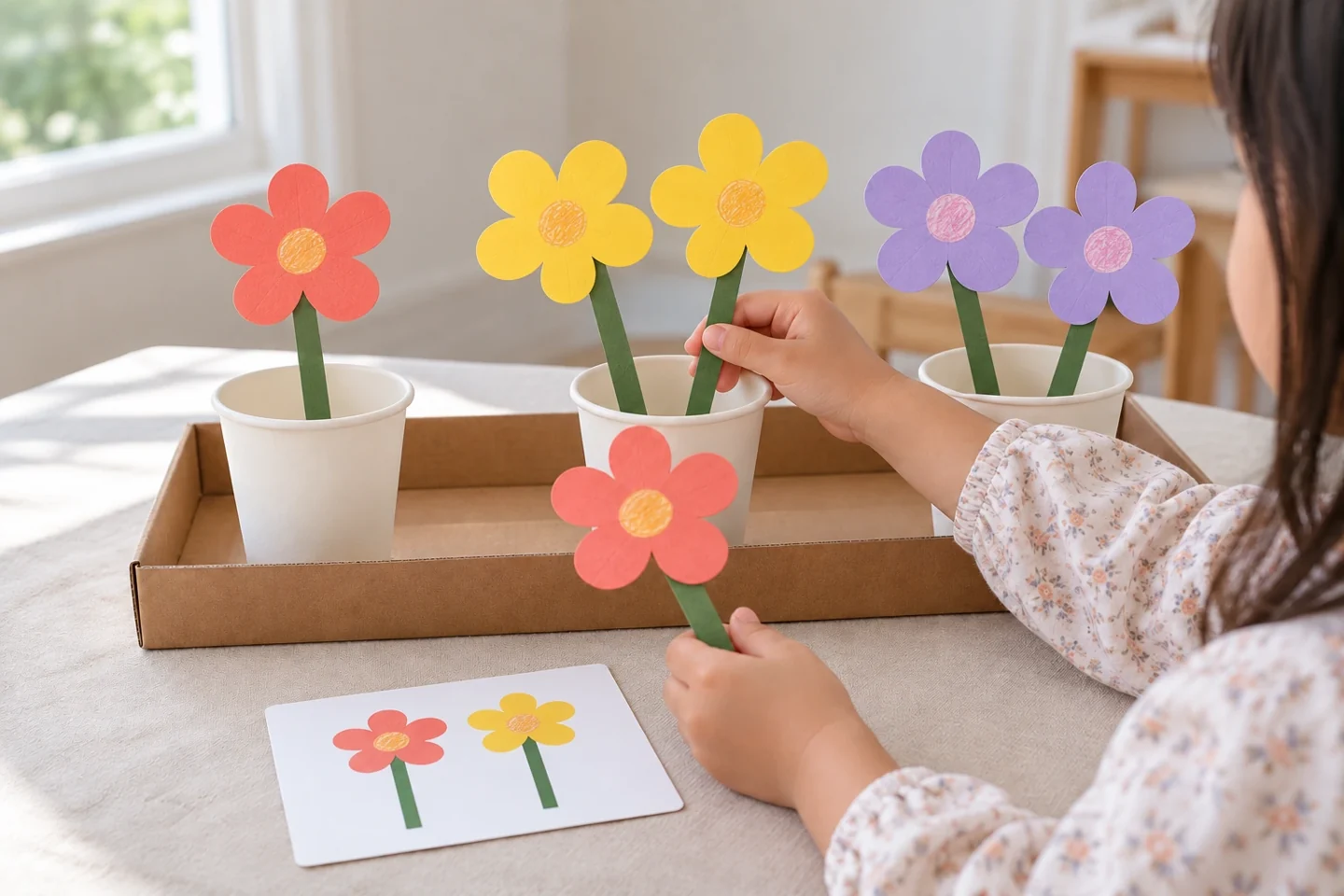
Your activity at a glance
| Suggested ages | 5–10 |
|---|---|
| Activity time | 45 minutes plus play |
What you need
- One clean shallow cardboard box, about 25 × 20 cm, used flat as a display tray
- 3 colored sheets for six flower heads about 7 cm across
- 6 cardboard stem strips, each about 15 × 2 cm, and one sheet of green paper
- 3 wide paper cups; 2 white sheets for a sign and three picture order cards
- Glue stick, clear tape, crayons, pencil, ruler, and child-friendly scissors
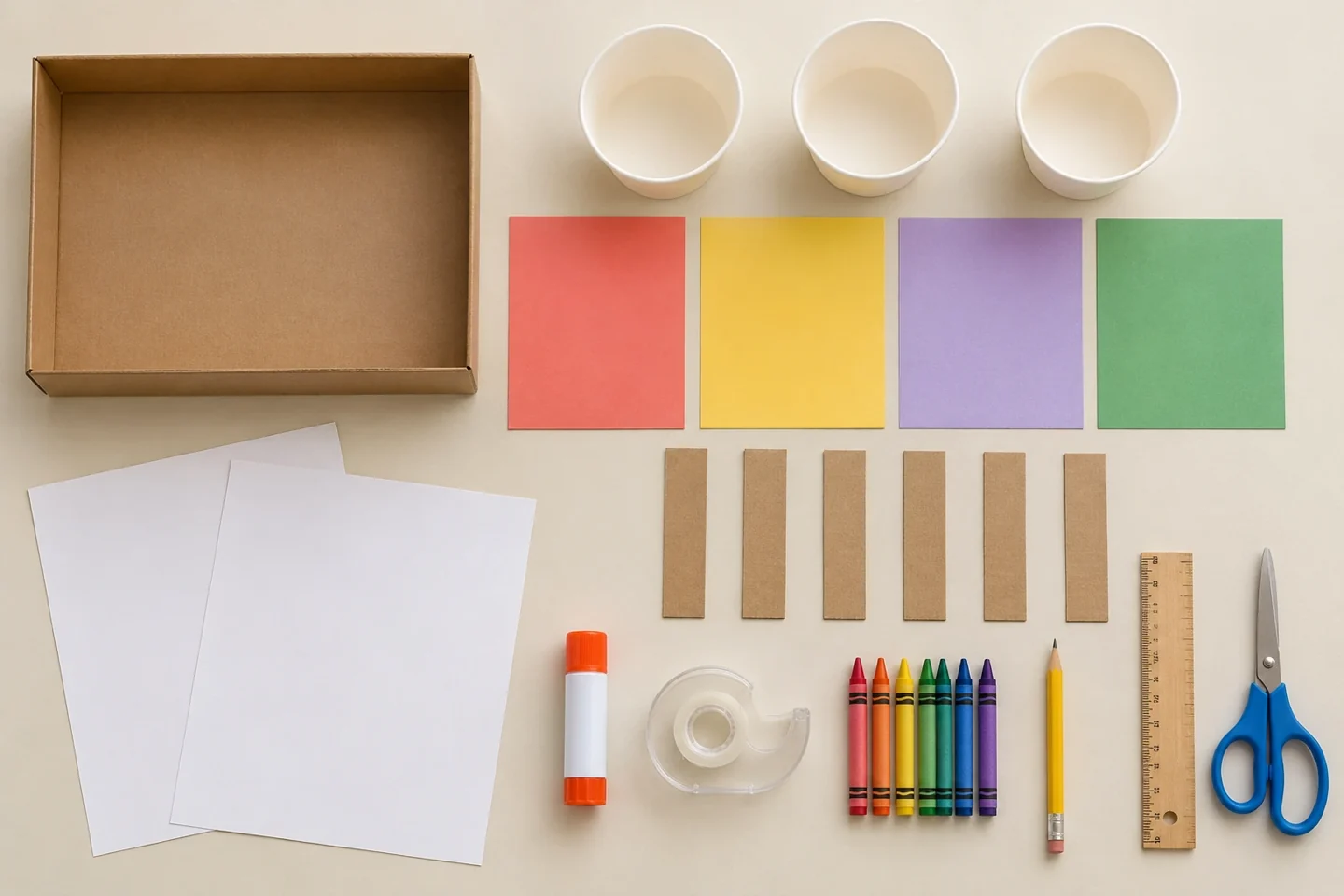
Open a tiny flower shop
Turn a shallow box into a tiny flower shop where children can sort bouquets, take pretend orders, and invent conversations. The shop uses six flat paper flowers, so the build stays manageable and the play can start without a complicated bouquet craft. Children decide whether to organize by color, flower shape, or the number of stems in each order.
Get ready together
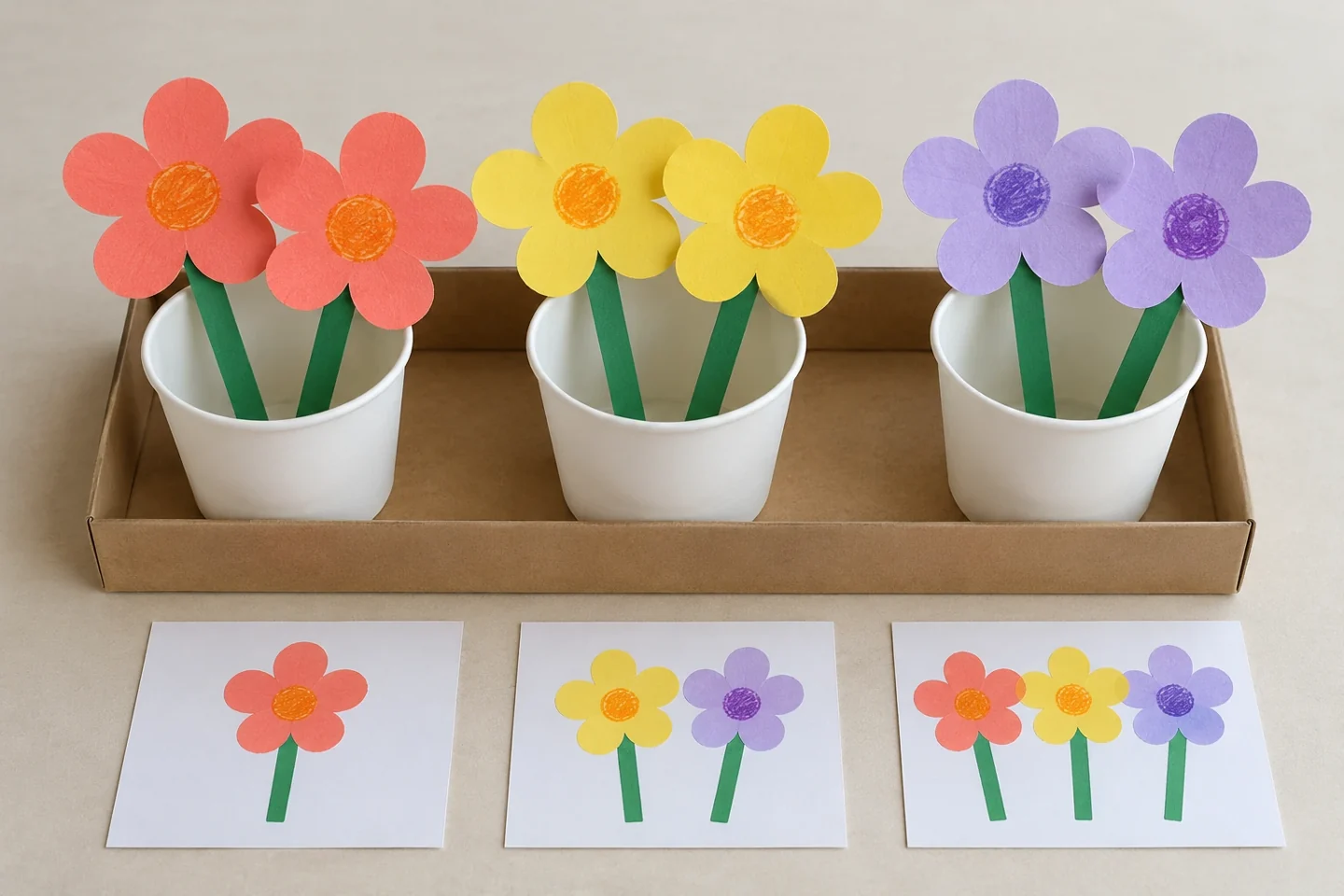
Choose a shallow clean box and use it flat as a display tray. An adult checks for staples, rough edges, and loose tape before children decorate it. Prepare six broad flower heads and six firm cardboard stems, with three wide paper cups for the display. Picture orders need only show flower shapes and quantities, so children can use them without reading. Keep the flowers removable; the play depends on choosing stems and returning them to their places.
Make it step by step
- Lay the clean shallow box flat as a shop display tray. An adult removes any staples and tapes rough edges. Decorate the outer sides, keeping the inside level so the cups can stand steadily.
- Draw and cut six flower heads about 7 cm across: two coral, two yellow, and two lavender, or choose three colors you have. Broad petal shapes are easier to cut and attach. Leave the backs undecorated.
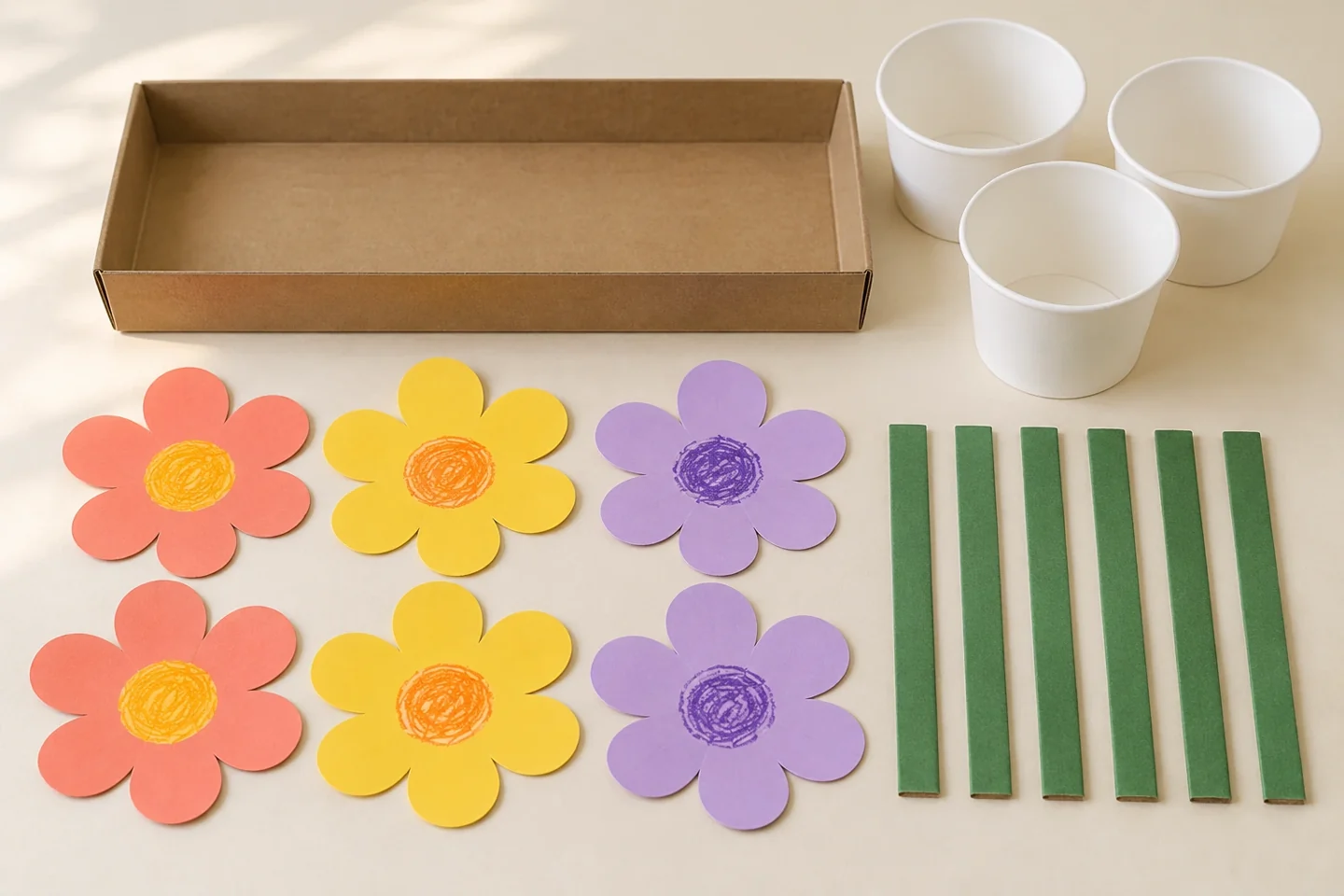
Prepare six flower heads and firm cardboard stems before joining them. - Wrap six 15 × 2 cm cardboard stem strips with green paper. Overlap each flower head and stem by about 2 cm on the back. Secure with two crossing strips of tape. Test one flower in a cup before assembling the other five; trim the stem if it tips.
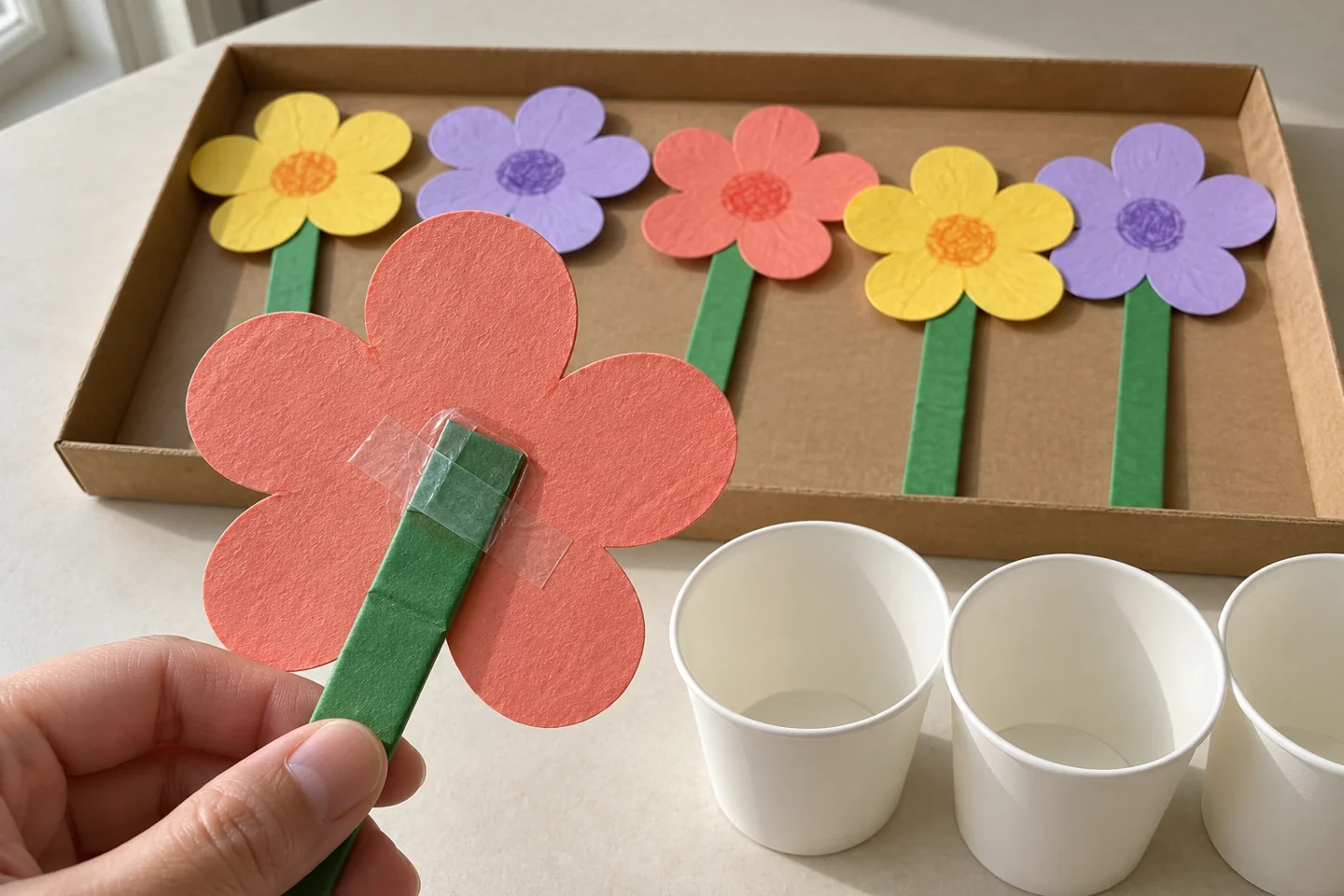
Overlap the head and stem, then reinforce the back with crossing tape strips. - Put two flowers in each of three cups. Arrange the cups inside the display tray and make a paper shop sign. Add simple picture order cards showing one, two, or three flowers.
- Take turns being the shopkeeper and customer. Request a color or quantity, count out a bouquet, and return the flowers to their cups when the next order begins.
Try it, notice it, talk about it
Build one flower together before making the remaining five. Tape its head to the upper end of a green-paper-covered stem and reinforce the back so it survives several orders. Test it in a cup and shorten the stem if it tips. Once all six flowers stand securely, group them by color or shape. Invite children to explain the shop’s arrangement before introducing orders. A clear starting layout makes it easier to notice which flowers were selected and where they should return after a sale.
How can the shopkeeper check an order? What happens if a requested color is unavailable? Invite polite alternatives and let the customer revise the order. Count how many flowers remain after making a bouquet without turning the conversation into a timed quiz.
Make it work for your children
For classroom play, give a pair one shop and rotate customer and shopkeeper roles after two orders. A third child can draw the next order card or help check a bouquet. At home, a family member can request two flowers of a chosen color and let the child offer an alternative if that color is unavailable. Older children can handle two conditions, such as three flowers including one yellow flower. Younger children can start with a single pictured flower, then count two stems when ready.
If a flower tips its cup, shorten the stem or use a wider container. The flat tray keeps the shop steady without a standing counter. Younger children can choose and count prepared flowers; older children can draw order cards with two conditions, such as three flowers including one yellow flower.
Finish and tidy up
Add new order cards rather than rebuilding the shop each time. A blank card allows customers to invent a request, and a small return tray keeps loose flowers off the floor. Ask the shopkeeper how to check the order and how many stems remain in the display; keep this within the pretend conversation. Store the flower heads flat or upright in a box deep enough to avoid bending them. Keep the tray intact if you plan another opening, and clip the order cards together for the next opening.