Spring & Easter
A Spring Sound and Color Hunt for Kids
 Facebook
 Pinterest
 X
X LinkedIn
 Reddit
 WhatsApp
 Telegram
 Bluesky
 Email
Email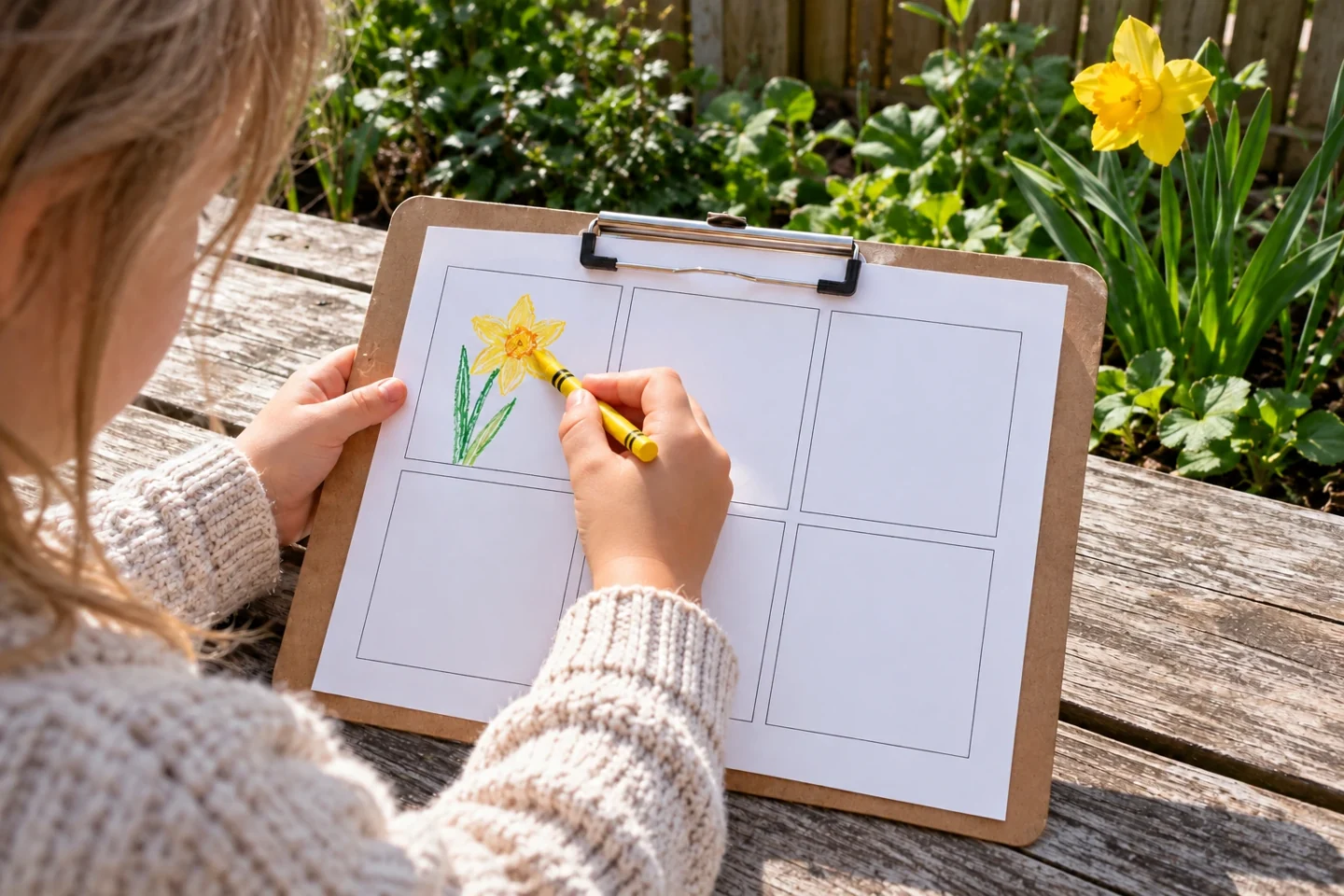
Your activity at a glance
| Suggested ages | 4–9 |
|---|---|
| Activity time | 20–30 minutes |
What you need
- One clipboard or firm backing
- One full-size sheet divided into 6 boxes
- Pencil, ruler, and crayons or colored pencils
- Optional reusable picture prompts for colors and sounds

Slow down and notice spring
A short spring walk can become a quiet discovery game when children look for colors and pause to listen. This hunt gathers observations, not flowers, feathers, or living creatures. A few drawn marks are enough to record a discovery, and there is no need to find every possible color or identify every bird sound.
Get ready together
Choose a familiar route with clear boundaries, or use one comfortable window, porch, or garden seat. Divide a recording page into six boxes but do not prefill every target; children should be able to record discoveries that actually occur. Agree on a quiet listening signal and a stopping place before leaving. A clipboard helps outdoors, while a firm book can support the paper indoors. Leave natural objects where they are, and explain that observations rather than collected treasures are the goal.
Make it step by step
- Choose a familiar accessible route or a comfortable observation spot. Draw six recording boxes on one page and leave them blank so children can record what they actually notice.
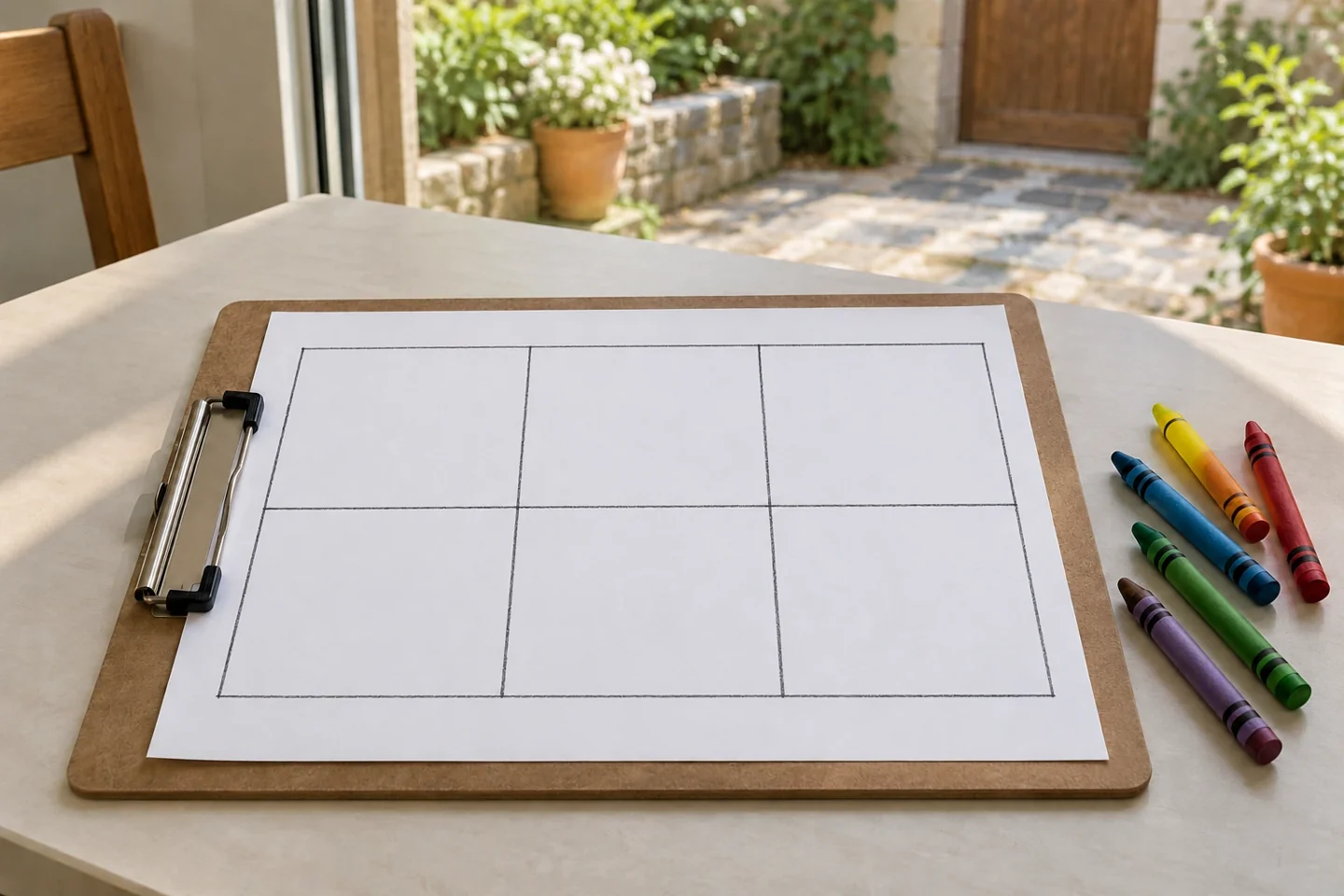
Six boxes leave room for three color discoveries and three sound observations. - Begin with a color search. Find one visible color, describe where it appears, and add a small matching mark or drawing to the first box. Leave plants and natural objects in place.
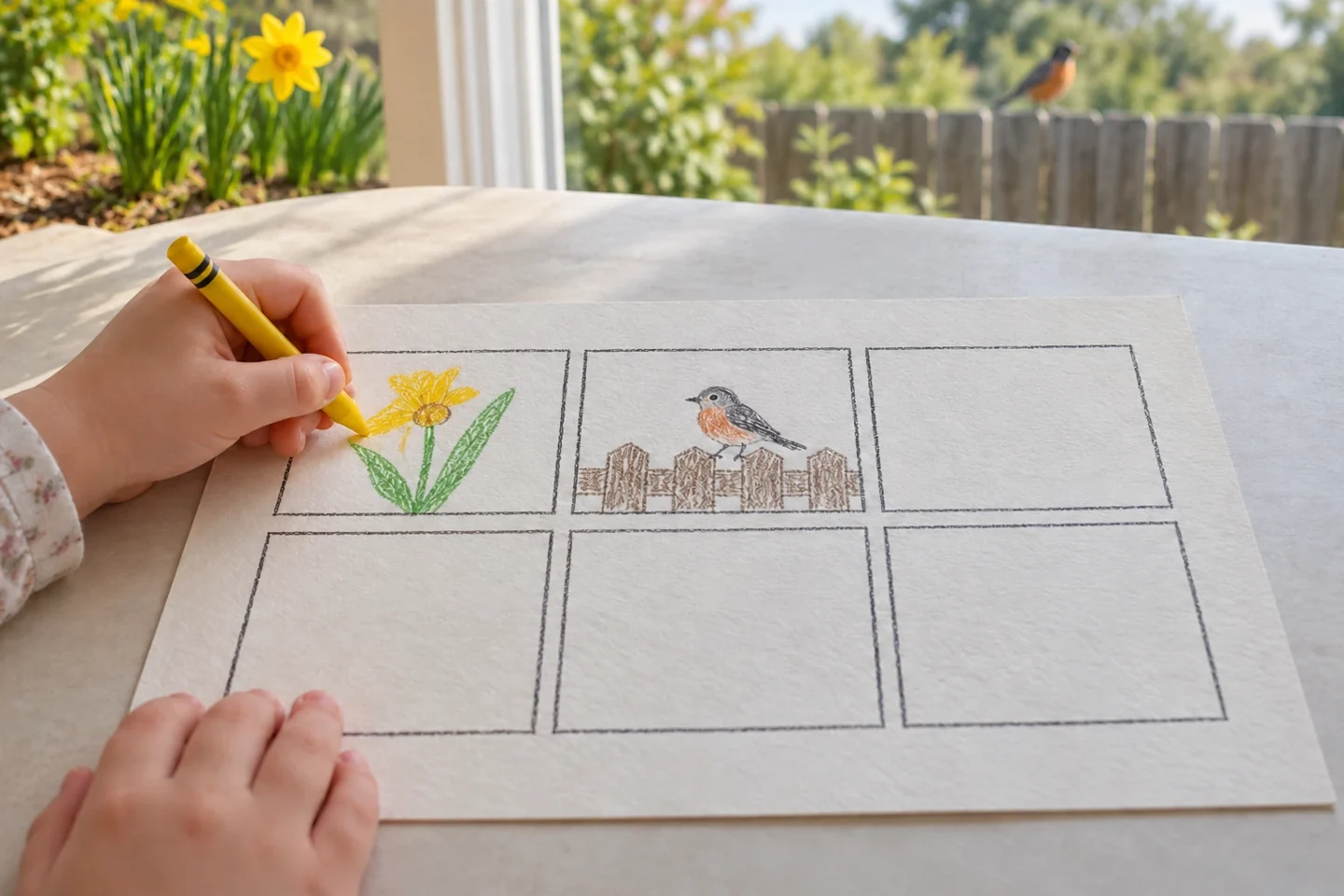
Draw a visible discovery, then pause and record something you hear. - Pause safely for about thirty seconds and listen. Children can point toward a sound, describe it, or draw the source if they can see it. An unidentified sound can be recorded as a question.
- Repeat the color-and-sound pair twice more, making three color discoveries and three sound observations across the six boxes. You can reuse a color or record another example of the same sound. Compare a nearby sound with a distant one from your comfortable spot; there is no need to walk toward its source.
- Return to the starting spot and review the page. Add a sentence or dictated note about the most interesting discovery. Keep the record for comparison on another spring day.
Try it, notice it, talk about it
During each pause, listen for about thirty seconds before sharing. Children can raise a finger when they notice something, then take turns describing it after the quiet interval. A sound that cannot be identified can be drawn as a question mark with a descriptive note such as high chirps or steady humming. Avoid supplying an animal name unless someone can identify it reliably. For colors, point to the source and draw a small matching mark; two greens may differ in brightness or shade.
What helped you notice that sound? Did two green objects look exactly alike? Which observation could we check again tomorrow? Leave room for uncertainty rather than guessing an animal name just to fill the page.
Make it work for your children
At home, keep the route short enough that the recording remains enjoyable. In a classroom, use small groups with an adult choosing each stopping point; children can rotate the clipboard role. A stationary observation spot works well when walking is difficult. Include visible movement for a child who cannot hear a sound, or shape and texture descriptions for a child who cannot distinguish a color. The shared task is careful noticing, and different children may record different evidence from the same place.
A window or sheltered porch works well when a walk is not practical. For children who cannot hear a particular sound, include visible movement such as rustling leaves; children who cannot distinguish a color can describe texture, brightness, or shape. Adults choose the route and maintain the group’s agreed boundaries.
Finish and tidy up
Review the observations at the starting point before adding further details from memory. Ask which discovery could be checked on another day and which may have been temporary. Keep uncertain identifications marked as uncertain. Store the completed page in a folder with another blank six-box sheet ready for a return visit. Wipe the clipboard if it was placed outdoors, return drawing tools to their container, and wash hands after the outing. A brief review helps turn a pleasant walk into a record children can revisit.