Summer & Patriotic Days
Labor Day Community Helpers Match-Up
 Facebook
 Pinterest
 X
X LinkedIn
 Reddit
 WhatsApp
 Telegram
 Bluesky
 Email
Email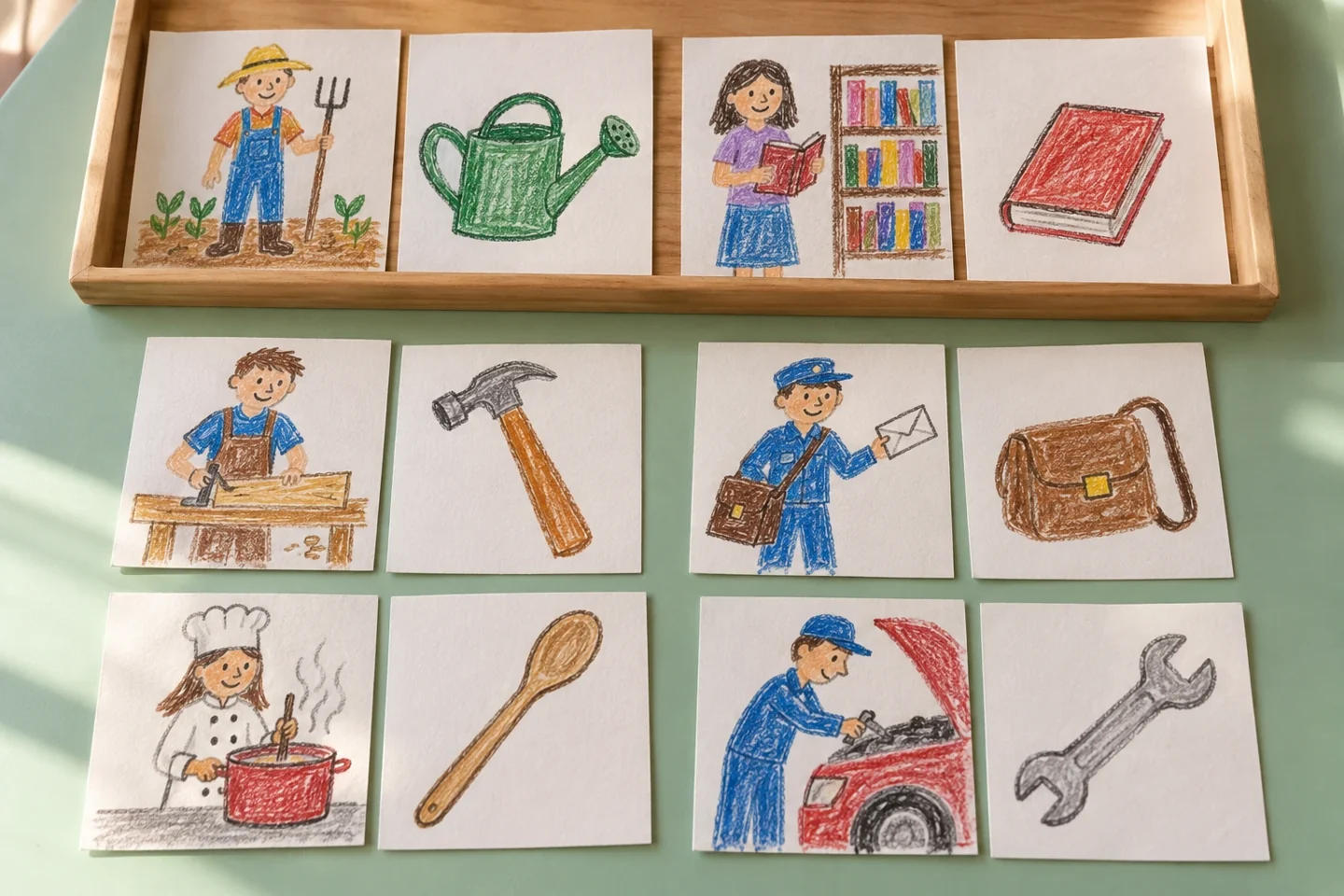
Your activity at a glance
| Suggested ages | 5–9 |
|---|---|
| Activity time | 30–40 minutes |
What you need
- 12 index cards or cardstock rectangles
- Pencil and colored pencils
- Paper for extra drawings
- A small tray for organizing cards
A little project with room for your ideas
Labor Day recognizes the contributions and achievements of American workers. A picture matching game gives young children a concrete starting point for that idea: who grows food, repairs equipment, delivers letters, or helps us find books? Children create pairs of worker and tool cards, then explain the connections. The emphasis is on understanding useful work, rather than guessing what a job looks like from a uniform alone.
Before you begin
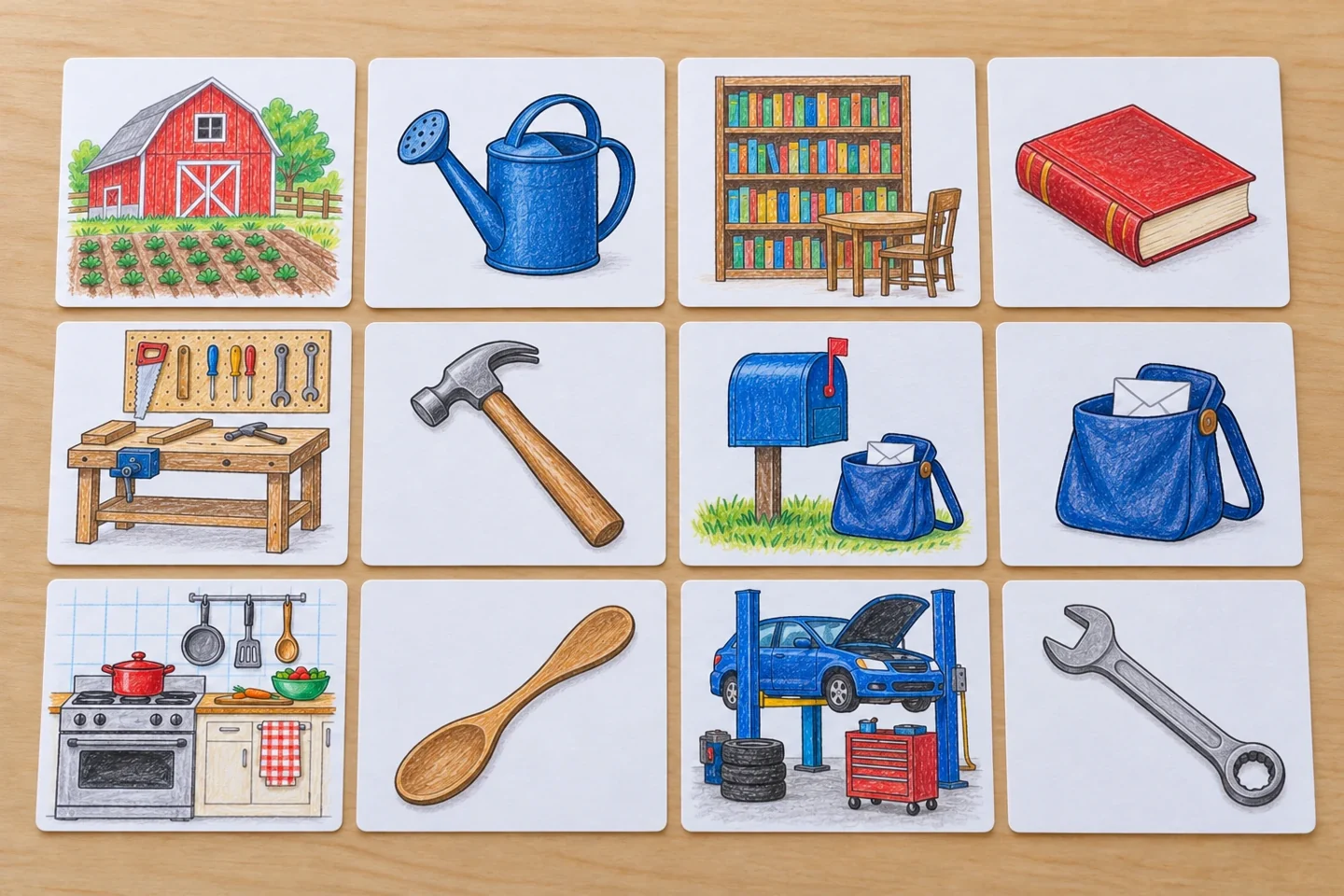
Choose six familiar jobs such as farmer, librarian, carpenter, postal worker, cook, and mechanic. Make one card for each job and one for a relevant tool or object. Examples include a watering can, book, hammer, mailbag, mixing spoon, and wrench. Keep the pictures simple and discuss that real workers usually use more than one tool.
Make it step by step
- Draw the worker cards. Draw a person doing each job or draw the setting where that work happens. A library shelf can stand for librarian if drawing people feels difficult. Add the job name underneath if useful. Do not require specific clothing, gender, or appearance for a match; focus on the work being done.
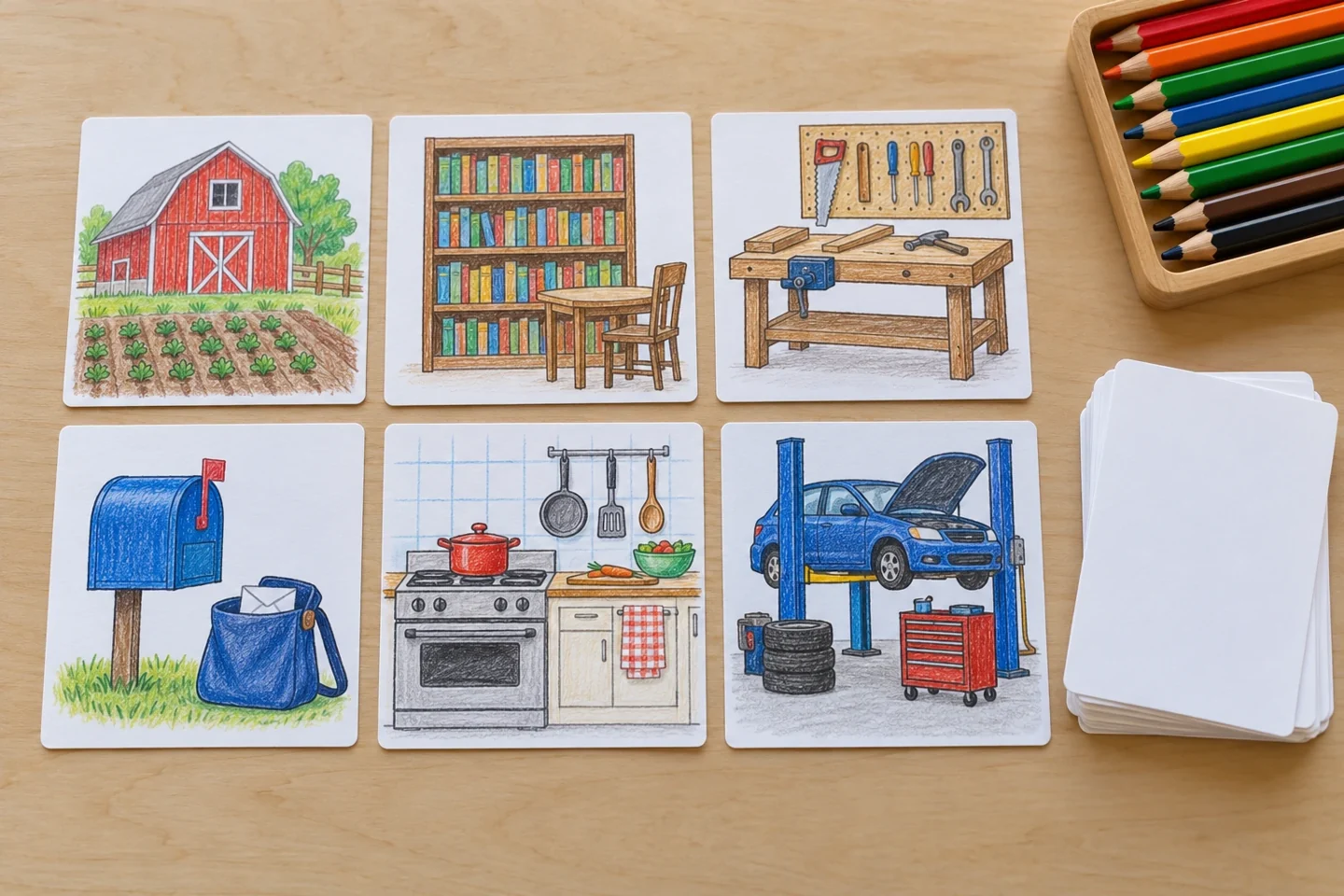
Draw the work settings first, then add one useful object on a separate card. - Draw the tool cards. Use a separate card for each tool or work object. Make its outline clear enough to recognize. Ask why that object might be useful. If two jobs could use the same tool, that is a good discussion rather than an error to hide.
- Match face-up first. Arrange all cards face-up and pair a worker with a tool. Explain each choice aloud: A mechanic might use a wrench to turn a fastener. Offer help with unfamiliar vocabulary. Accept a different sensible match if the child can explain the connection accurately.
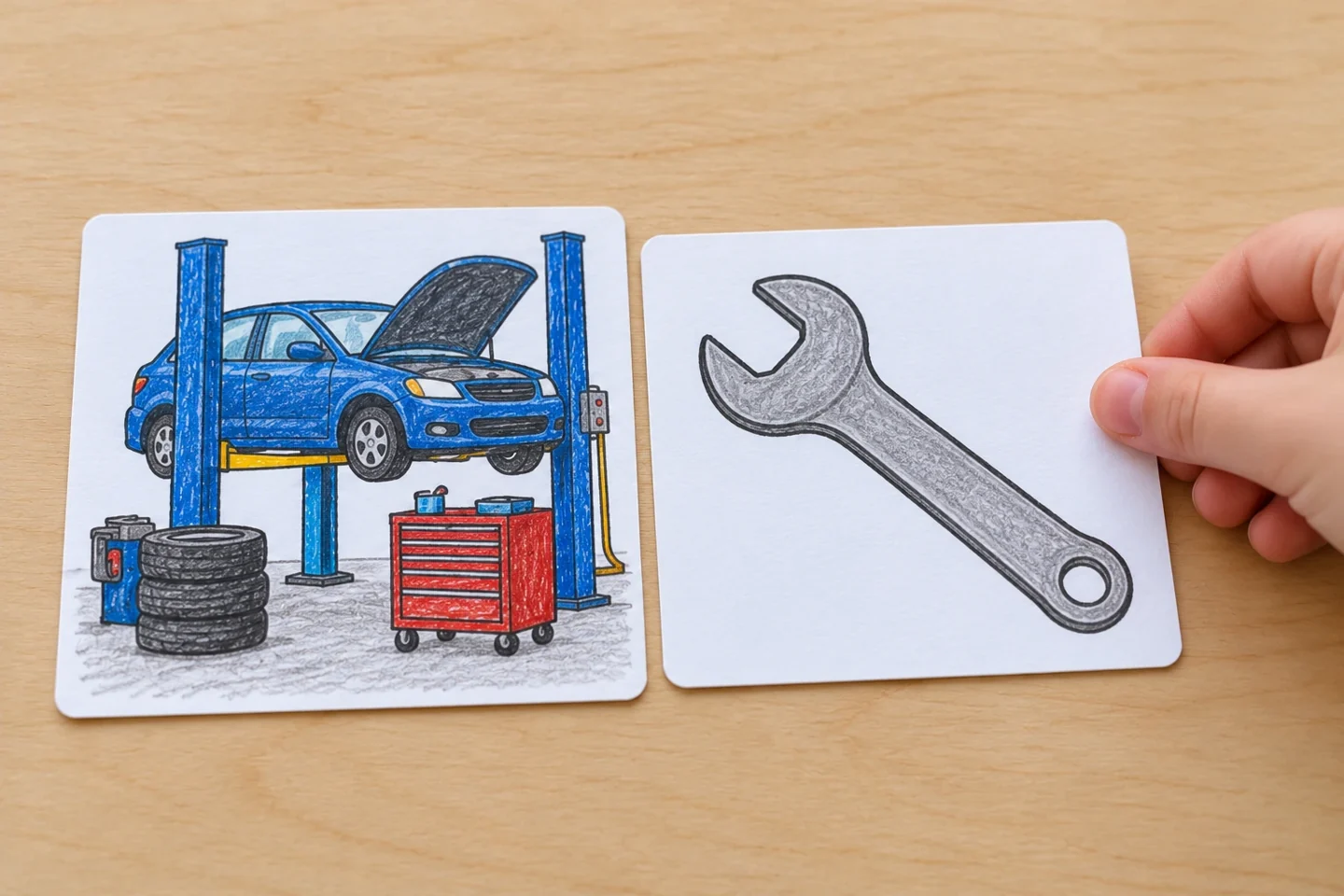
Explain how the wrench helps the mechanic before keeping the pair. - Try a memory version. Choose three or four established pairs, shuffle them, and lay them face-down. Turn over two cards at a time. Keep a matched pair only after explaining how the pictures connect. Reducing the number of pairs keeps the game manageable and gives more room for conversation.
- Invent a new pair. Ask which worker has not appeared yet. Make two new cards together for that job and an appropriate object. Children might choose a bus driver and bus, or cleaner and mop. Finish by naming one example of work that helped your own day go smoothly.
Notice, talk, and explore
Ask, “What might happen if this job did not get done?” and “What else would this worker need?” These questions move beyond a single tool and help children see connections among jobs. Explain that people often work together and that a familiar worker’s tasks may be broader than the one shown on the card.
Make it work at home or in class
At home, use jobs children have observed nearby without sharing anyone’s private workplace information. In class, groups can contribute different pairs to a shared set, checking pictures and explanations before playing. Older children can create several tools per worker and explain overlaps. Keep the cards in an envelope, replacing unclear drawings as new understanding grows.
Treat overlapping matches as useful clues
A cook and a farmer might both use a measuring tool, and a carpenter and a mechanic may both use a wrench. Ask how the tool is used instead of insisting there is only one answer. For the memory version, choose pairs that have already been agreed upon so the rules remain understandable. Drawing an object in use can make a confusing card clearer. If one job is unfamiliar, pause the game and describe a concrete task. The holiday conversation can remain brief: workers contribute many kinds of effort that help a community run.
Cleanup and storage
Count the cards into matching pairs before putting them away. Return drawing tools to their containers and store the game in an envelope or small box. Keep additional worker ideas on a separate slip so you can add new pairs without mixing unfinished cards into the playable set.
Keep the creativity going
Choose one matched pair to discuss after the game. What else might the worker do, and who might they work alongside? Children can add a second object card when they learn another accurate detail. Keep the original simple match so beginners can still play, and use the extra cards for discussion rather than making every turn more complicated. A story about everyday community life can offer another setting in which to notice useful work. Ask which jobs appear in the pictures and which may happen outside the scene. The next conversation can grow from a real question rather than another round of guessing.