Summer & Patriotic Days
Build a Reusable-Container Boat and Test It
 Facebook
 Pinterest
 X
X LinkedIn
 Reddit
 WhatsApp
 Telegram
 Bluesky
 Email
Email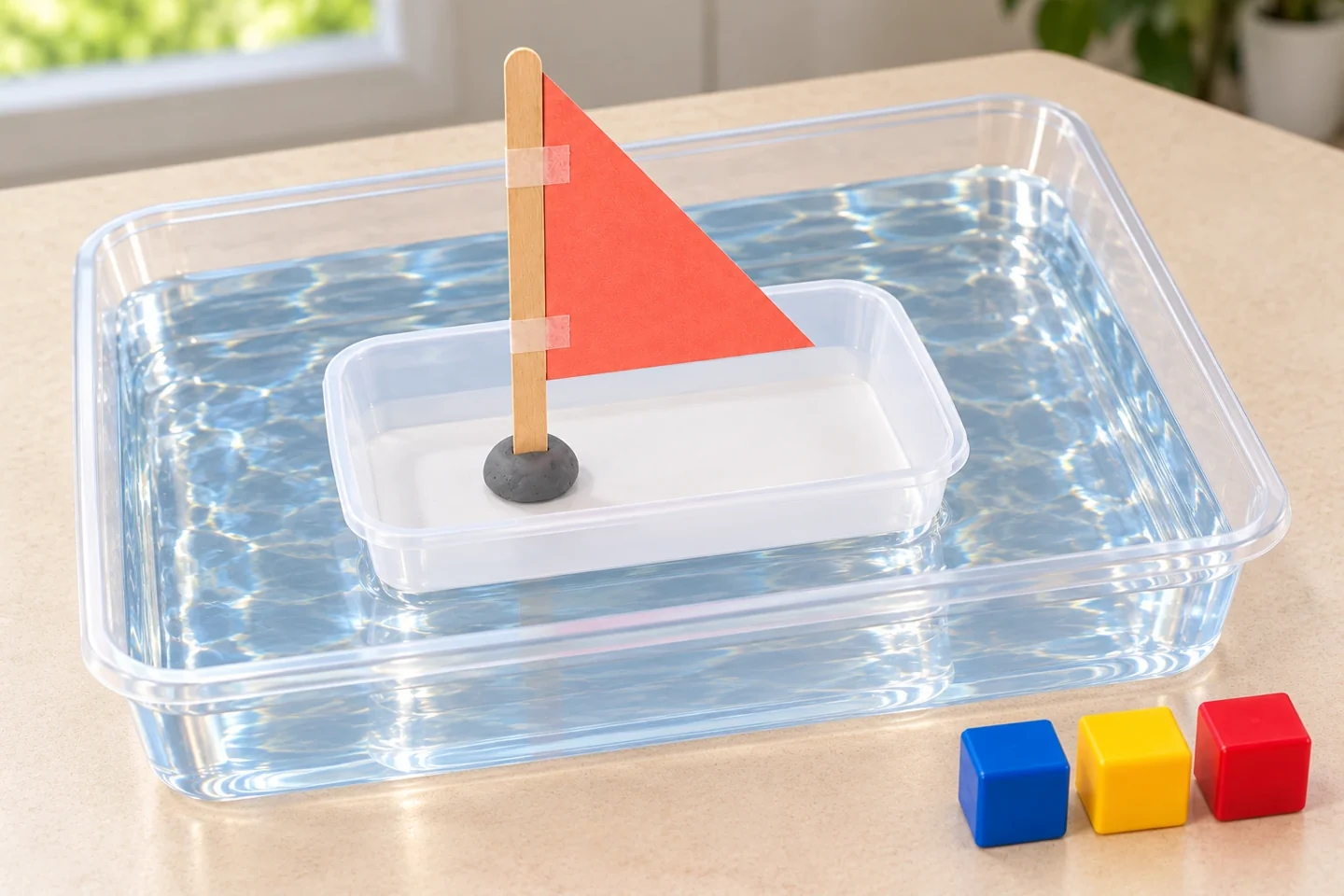
Your activity at a glance
| Suggested ages | 5–10 |
|---|---|
| Activity time | 35–45 minutes |
What you need
- 1 clean shallow plastic food container, roughly 15–20 cm long
- 1 craft stick
- Small portion of reusable modeling clay, starting with a ball about 2 cm across
- 1 small piece of cardboard, about 8 × 10 cm
- Masking tape
- Pencil
- Shallow water tray and towel
- 3 similarly sized reusable plastic blocks
- Child scissors with adult help for cutting the cardboard
- 1 sheet of paper and pencil for recording the load positions
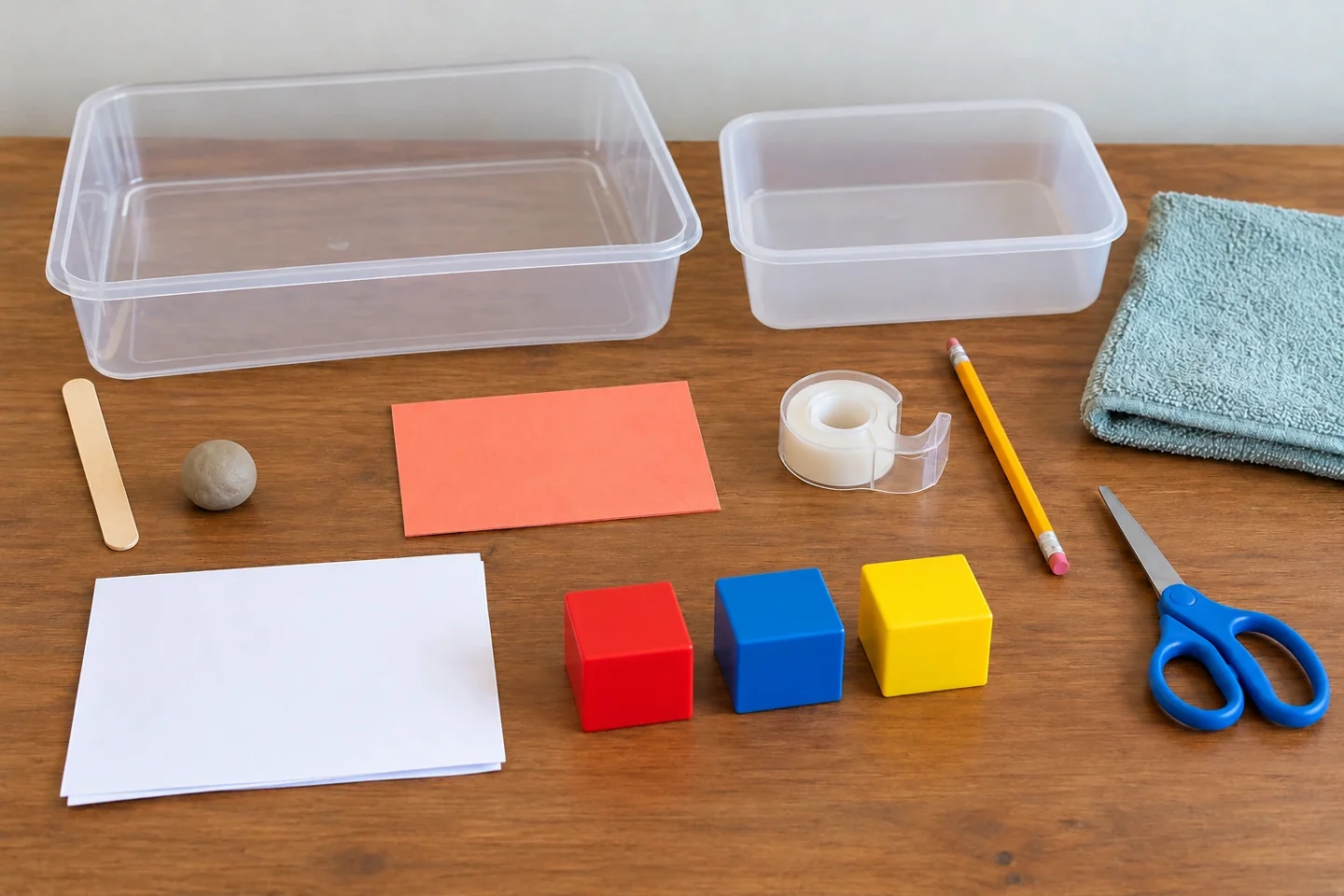
A little project with room for your ideas
A little boat can lead to a surprisingly thoughtful experiment. This design uses a clean reusable container as the hull and a removable cardboard sail above the water. Children can explore how moving a small load changes the way the boat sits. The container avoids the fiddly waterproofing that a cardboard hull would need, while the sail still offers a satisfying construction step.
Before you begin
Choose a container with smooth edges and no holes. An adult checks it first and fills a shallow tray with only a few centimeters of water on a stable table. Keep an adult beside the water throughout, and empty it immediately after the activity. This is a tabletop test, never a pond, bath, or pool activity. Have a towel ready for drips.
Make it step by step
- Build the sail. Draw a triangle on the cardboard and cut it out. Keep it about 8 cm tall so the mast is not top-heavy. Tape the triangle to the upper half of a craft stick with two small tape strips. The sail will be decorative in this still-water investigation; it does not need to propel the boat. Mark the triangle before cutting, using the full 8 cm side as its height and up to 10 cm for the base. A broad, low sail helps the small hull stay balanced.
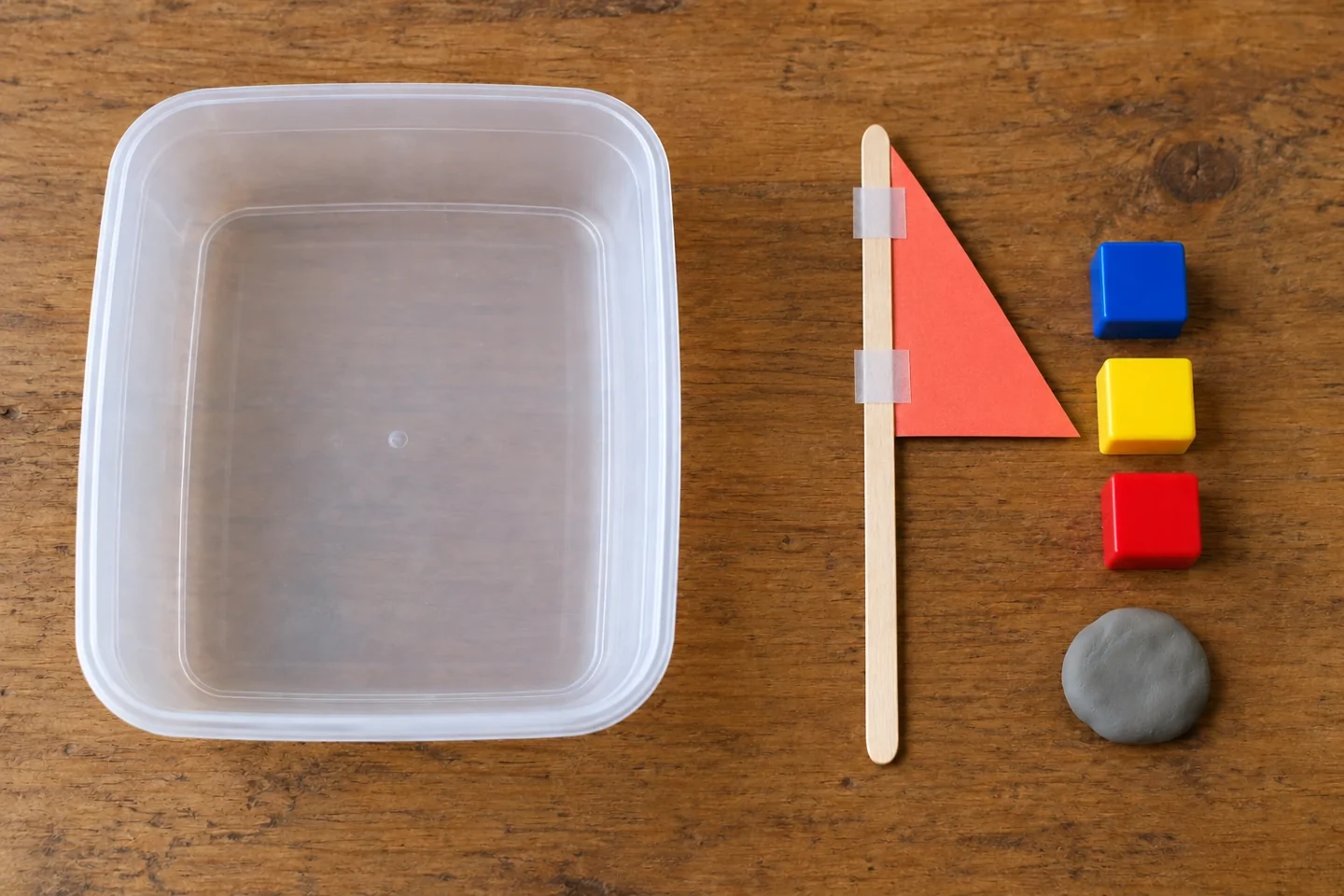
Tape the small sail to the stick while both pieces lie flat. - Set up the mast. Press modeling clay into the center of the container’s base. Flatten the clay into a low pad about 3 cm wide. Push the lower end of the craft stick into the clay and check that it stands upright. The clay also adds weight, so use only enough to hold the mast. Leave open space around it for the test blocks.
- Test the empty boat. Lower the container gently into the tray and release it. Observe whether it sits level or leans. If it tips, move the clay closer to the center or reduce the height of the mast. Describe what you changed before repeating the test. An imperfect first attempt gives you something useful to investigate.
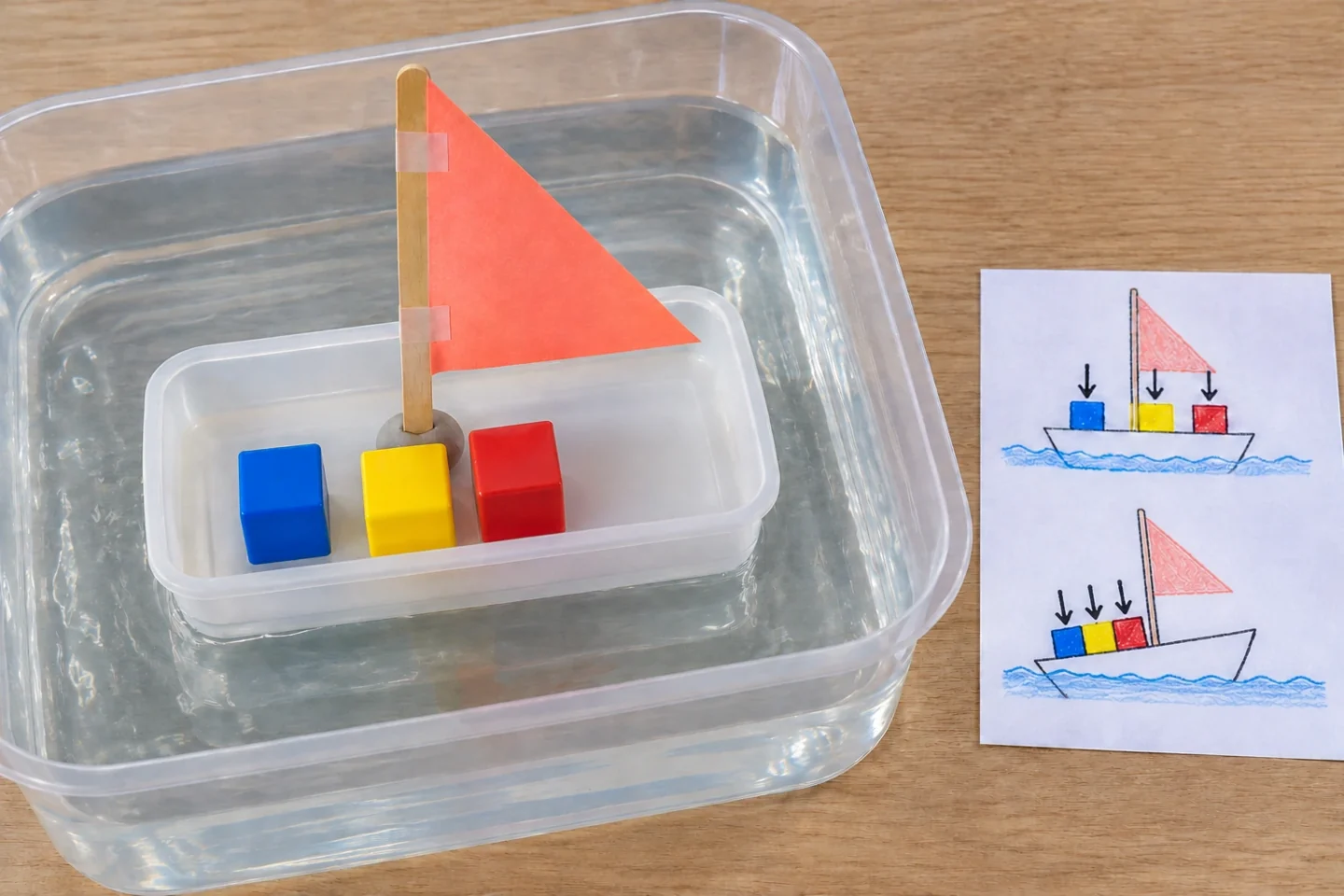
- Add a load gradually. Put one plastic block near the center and observe the hull. Add a second, then a third, without pushing down on the boat. Compare the water level against its side before and after loading. Stop before water enters the container; a boat does not need to sink to demonstrate a change.
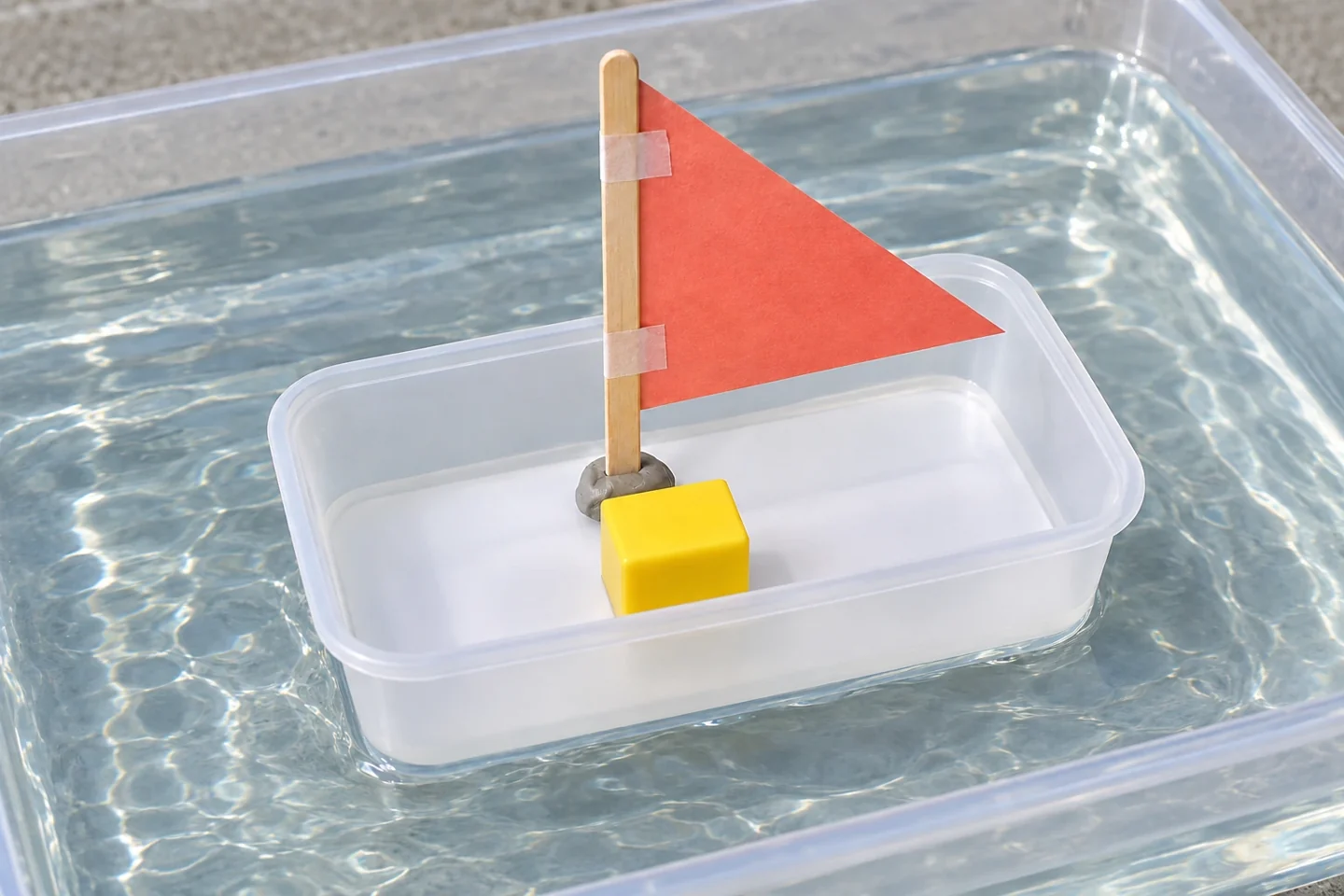
Add one block at a time and watch the waterline below the rim. - Move the same load. Keep the number of blocks constant and move them toward one side. Does that side sit lower? Return them to a balanced arrangement and compare. Remove everything, dry the hull, and draw two simple side views showing where the load was placed. Talk about the observations without assuming every container will behave identically.
Notice, talk, and explore
The investigation centers on balance, load, and floating. Ask, “What stayed the same when we moved the blocks?” and “Which change helped the boat sit more evenly?” Water supports the hull through buoyancy, while placing weight unevenly can make it lean. The sail is a model feature, so separate that decoration from the evidence gathered in the tray.
Make it work at home or in class
At home, test two differently shaped containers using the same blocks. In class, work in small supervised groups with one tray per adult-led station; keep everyone else designing sails at a dry table. Younger children can watch one block being moved. Dry the container and blocks for reuse, remove damp cardboard, and wash hands after handling clay.
When the mast leans
A leaning mast may need a wider clay base or a shorter stick, not extra water. Make one change at a time and test again with no blocks aboard. The cardboard sail should stay above the rim so it does not soak up water. If it becomes damp, replace it after the test and note why it got wet. Containers vary in shape and wall height, so compare observations rather than promising a particular carrying capacity. Avoid small coins or loose tiny weights; the large reusable blocks provide a clearer, easier-to-handle load for young experimenters.
Cleanup and storage
An adult empties the water tray immediately. Remove the sail and clay, wipe the tray, and dry the reusable container and blocks. Keep the cardboard sail only if it stayed dry; store it separately so it does not trap moisture against the hull.
Keep the creativity going
After the tray is emptied, sketch the boat arrangement that seemed most balanced. Include the mast and the positions of the blocks so someone else could recreate the test. If your child wants another challenge, compare two containers next time while keeping the blocks the same. Avoid adding several new features at once, since it becomes harder to explain a result. Counting blocks, comparing quantities, and describing position can also continue away from water in a suitable math activity book. Choose pages that fit your child’s current confidence, and keep the conversation connected to the observations they actually made in their boat test.