Summer & Patriotic Days
Make a Patriotic Paper Windsock
 Facebook
 Pinterest
 X
X LinkedIn
 Reddit
 WhatsApp
 Telegram
 Bluesky
 Email
Email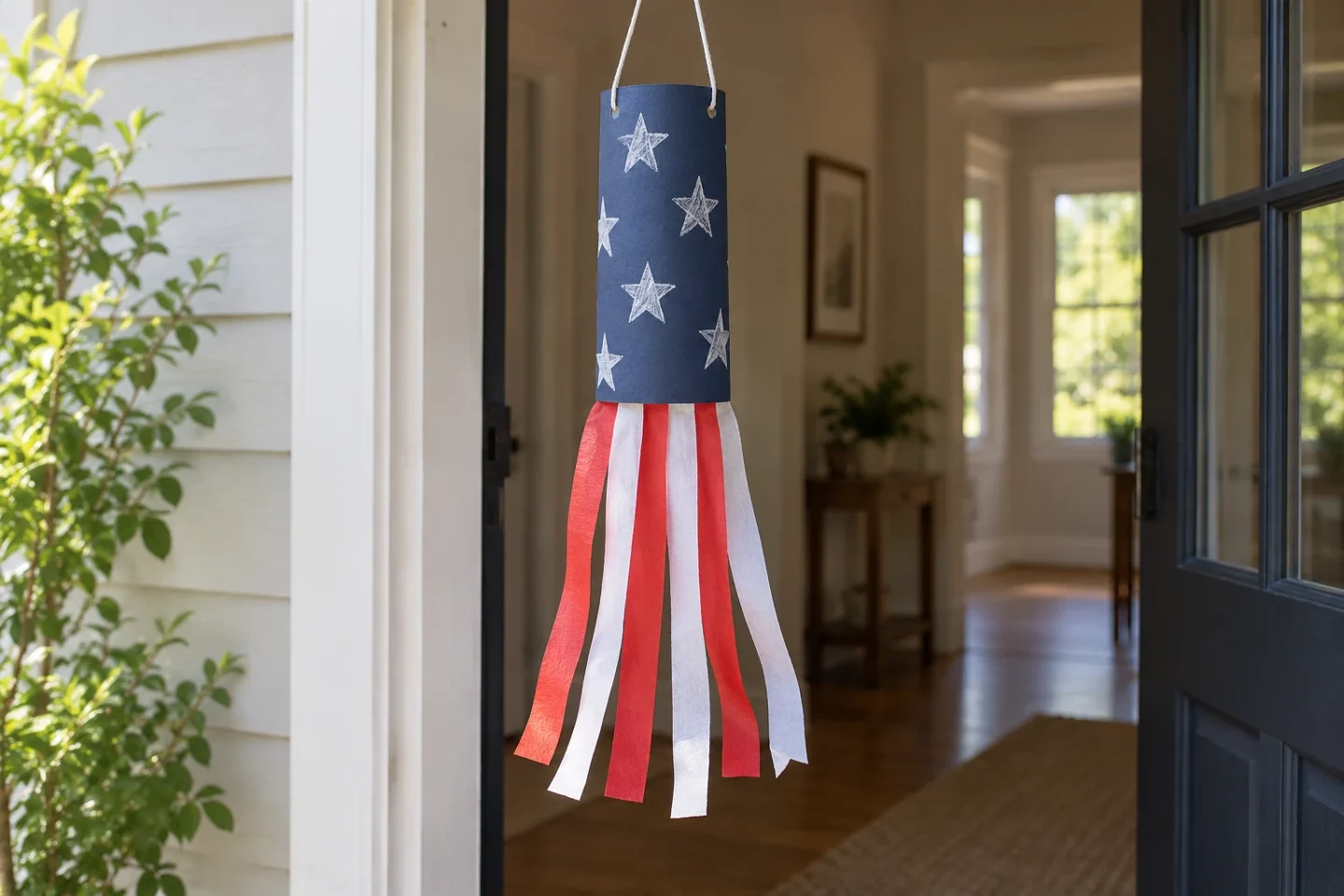
Your activity at a glance
| Suggested ages | 5–10 |
|---|---|
| Activity time | 30 minutes |
What you need
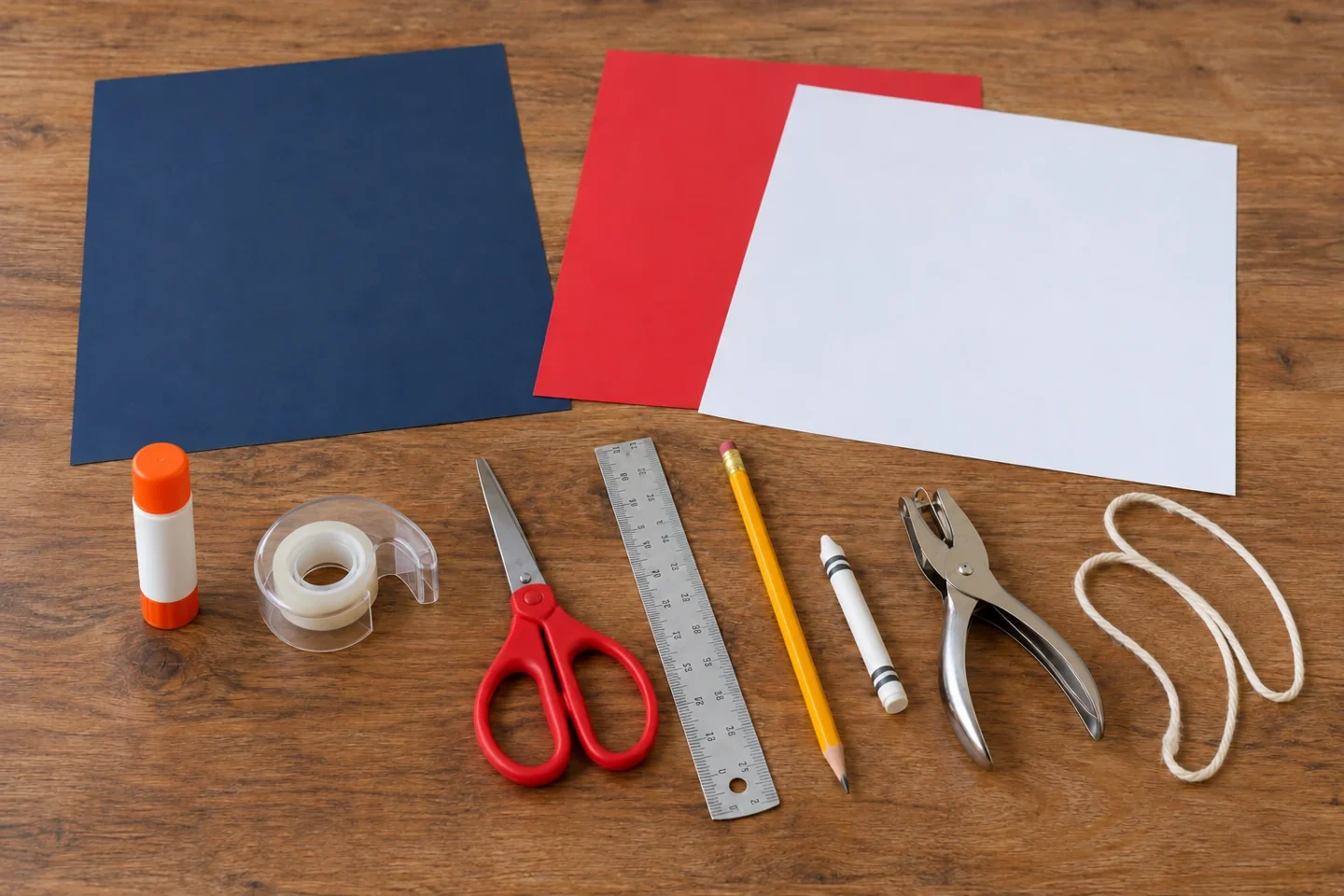
- 1 sheet of navy cardstock, 8½ by 11 inches
- 1 red and 1 white lightweight paper sheet, each at least 25 by 20 cm
- Glue stick and clear tape
- Child scissors, ruler and pencil
- White crayon for drawn stars or dots
- Hole punch with adult help
- 45 cm cotton string
A little project with room for your ideas
This windsock begins as a flat sheet of paper and becomes a colorful cylinder with fluttering streamers. It is a good project for children who enjoy making a decoration that moves. Red, white, and blue suit Independence Day, and the same construction works in any colors for a summer gathering. Because it is paper, choose an indoor window or a sheltered dry spot for the finished display.
Before you begin
Cut six strips from lightweight paper, each about 2 cm wide and 25 cm long: three red and three white. An adult can prepare strips for younger makers. Set the navy sheet landscape on the table. Keep one short edge clear by about 2 cm because that area will overlap when the cylinder is joined.
Make it step by step
- Decorate the cylinder sheet. Draw simple stars and dots with the white crayon onto the outside of the navy sheet. Keep the bottom edge visible so it is easy to attach the streamers later. Decide which long edge will become the bottom. Avoid heavy decorations that could make the paper sag.
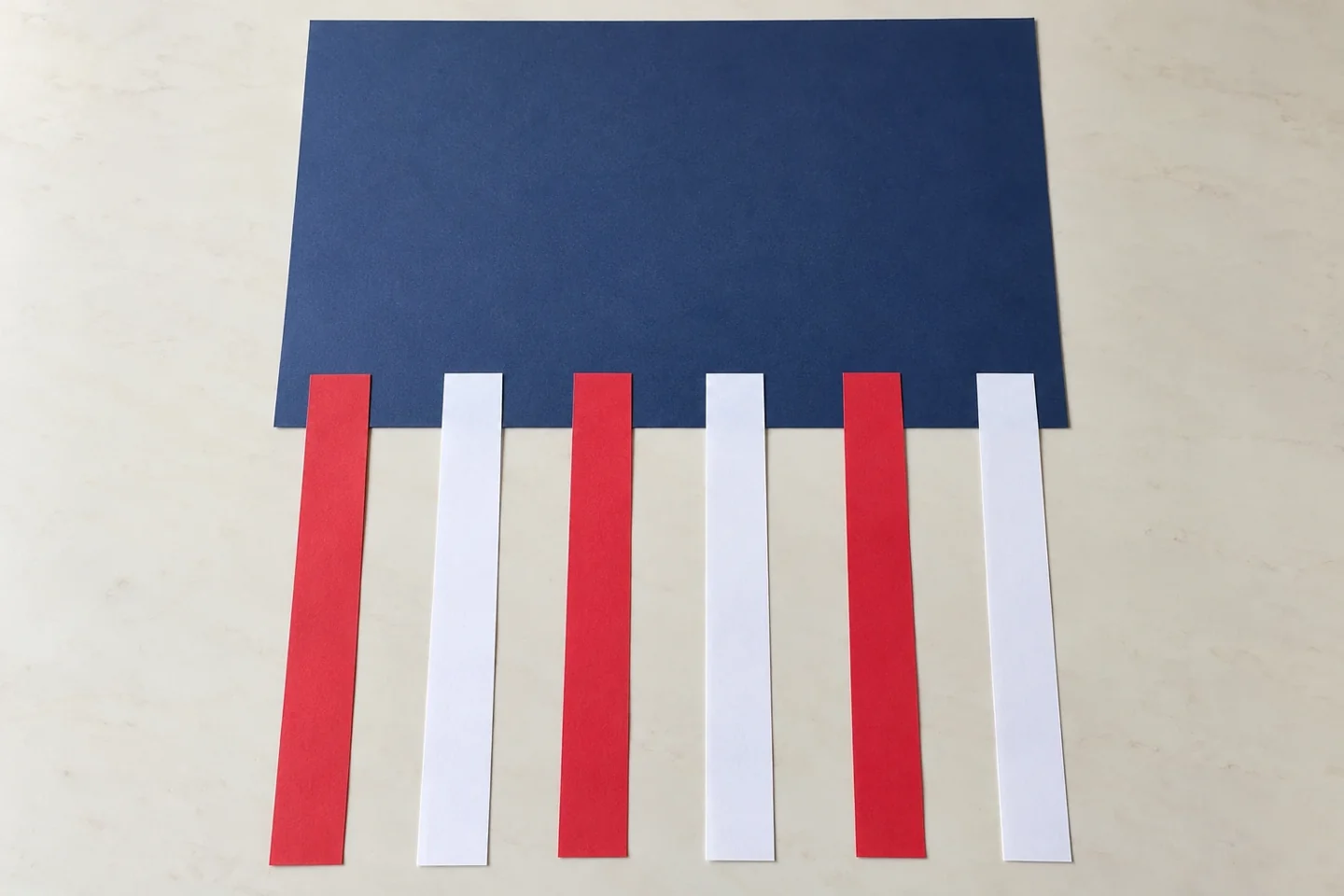
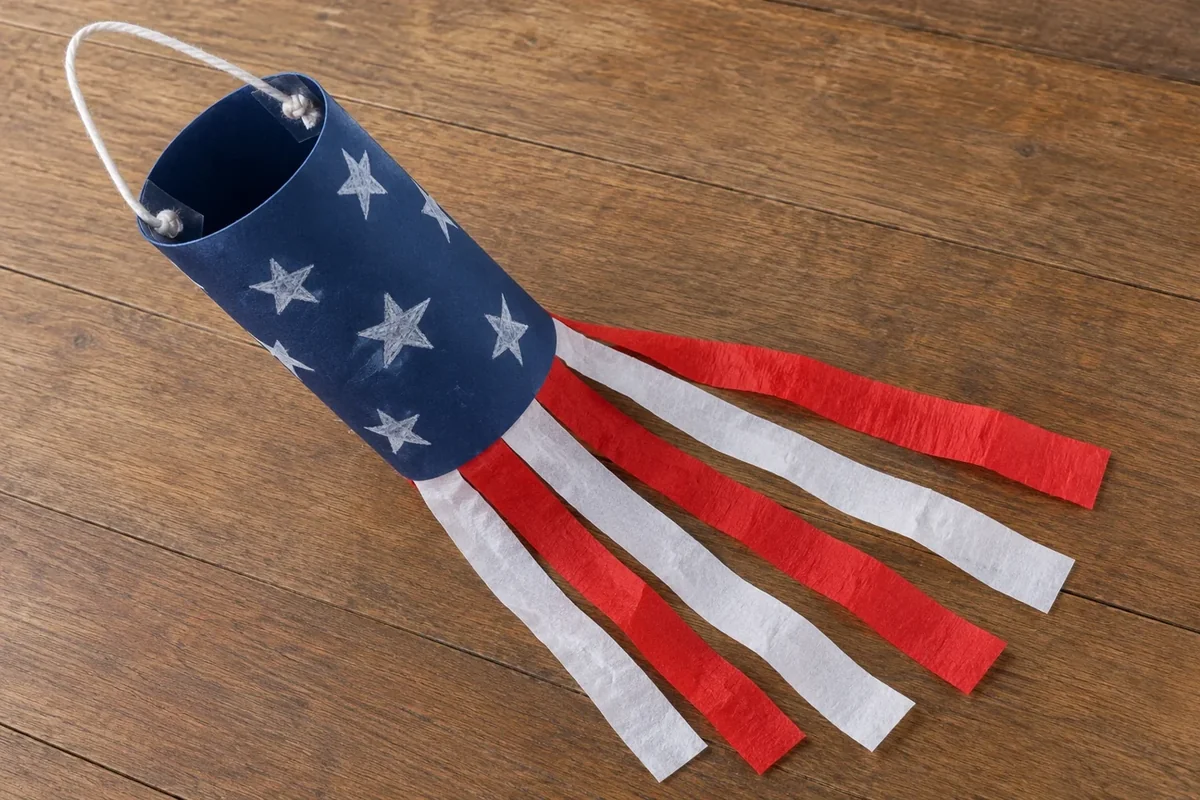
Alternate three red and three white strips before attaching their ends. - Arrange the streamers. Turn the decorated sheet face down. Lay the six strips along the bottom long edge, alternating red and white. Space them evenly and overlap their upper ends onto the navy sheet by about 2 cm. Check that the strips hang in the same direction rather than crossing one another.
- Attach and reinforce. Glue each overlapping end to the navy sheet. Add a small piece of tape over each joint on the inside. Gently lift the sheet to see whether every strip stays attached. If one falls away, reinforce its end before joining the cylinder; it is much easier to reach now.
- Roll the cylinder. Bring the short edges together to make a tube. Overlap them by about 2 cm and tape along the seam inside and outside. Do not roll it tightly like a straw: the large opening is part of the windsock’s shape. Check that the streamers move freely beneath it.
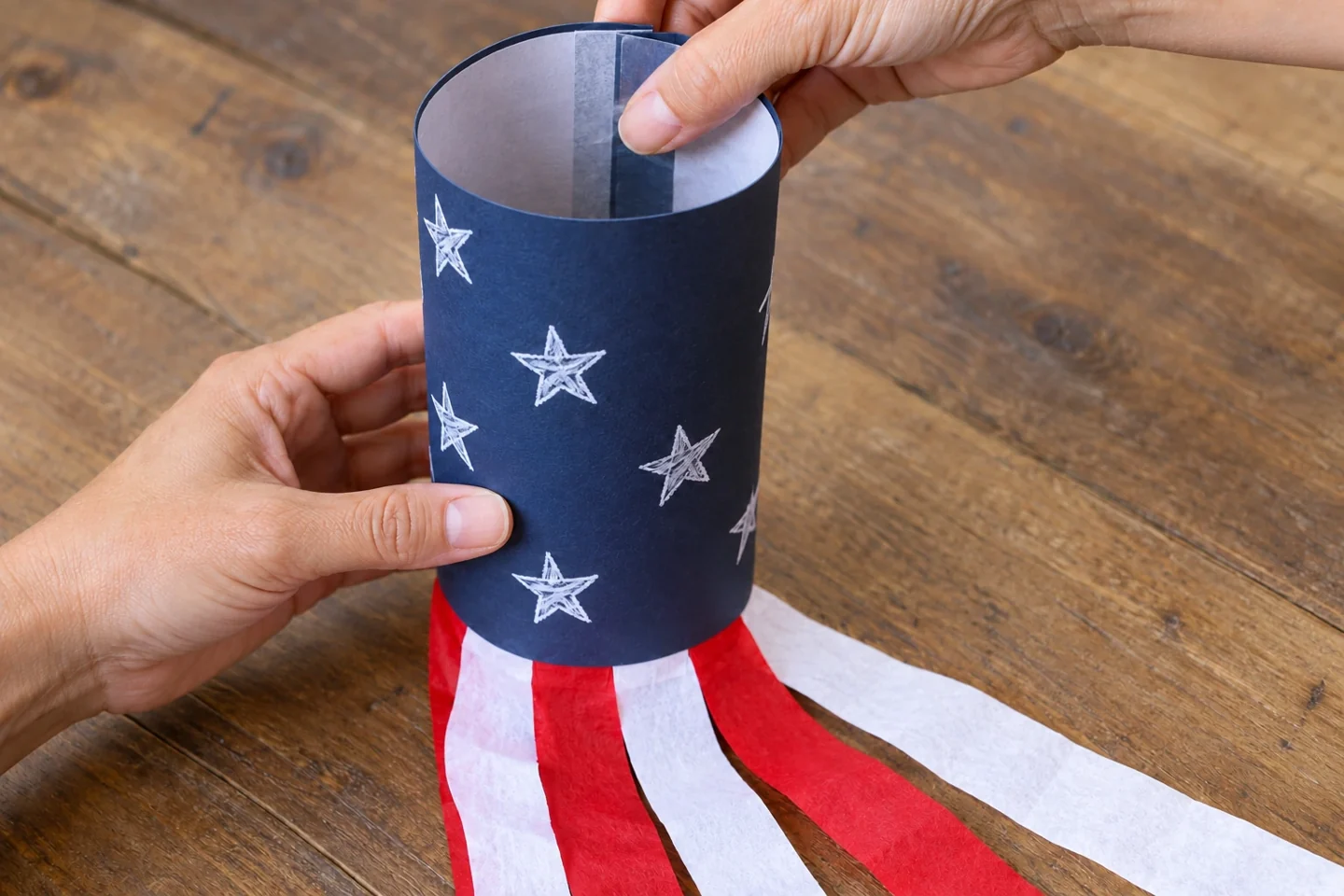
Join the short edges with a broad overlap and tape the seam. - Add the hanging loop. An adult puts a small tape patch near each of two opposite points on the upper rim, then punches a hole through each patch about 1½ cm below the edge. Thread one end of the 45 cm string through each hole and tie both ends securely, leaving a handle-like loop. Hang out of reach of young children, away from heat and window-blind cords. Use gentle movement from a hand fan or wave a sheet of paper nearby and watch which strips lift first.
Notice, talk, and explore
Ask children to predict how the flat rectangle will look once rolled. Compare a cylinder with a cone and notice the two circular openings. The streamers offer a simple opportunity to observe moving air, although this paper craft is not a calibrated weather instrument. Describe what you see rather than estimating wind speed.
Make it work at home or in class
At home, hang one in a sheltered doorway for a short celebration and bring it indoors afterward. In class, let each child decorate a sheet while adults handle punching and display strings. If space is limited, use half-size sheets and shorter strips. Store the cylinder upright with its streamers untangled; replace damp paper instead of trying to preserve a damaged decoration.
Help the streamers move freely
If the strips tangle, shorten them together and separate them gently before hanging. Very wide strips can overlap around a small cylinder, so use fewer strips for a half-size windsock. A seam that opens usually needs tape on both sides of the overlap; extra glue alone may take too long to hold the curved paper. Check the upper hanging holes after display and take the decoration down if the rim starts tearing. The craft is meant for gentle movement in a dry, sheltered place. Strong wind and rain will quickly damage ordinary paper.
Cleanup and storage
Gather the paper offcuts and close the glue. Take the windsock down before wet weather and inspect the hanging holes for tearing. Stand the cylinder upright in a dry cupboard with its streamers hanging freely, or lay it carefully where the strips will not snag.
Keep the creativity going
Before storing the windsock, notice which parts changed when the air moved. Did the cylinder turn, did the streamers lift together, or did one strip catch on another? Children can draw that moment or explain a modification they would try. A red, white, and blue project can also begin a conversation about an upcoming Independence Day gathering and the people you expect to see there. A shared American-themed story or coloring book offers a quieter follow-up after the construction work. Let your child choose the next activity rather than assuming every craft needs an extra lesson once it is finished.