Summer & Patriotic Days
Create a Summer Adventure Passport
 Facebook
 Pinterest
 X
X LinkedIn
 Reddit
 WhatsApp
 Telegram
 Bluesky
 Email
Email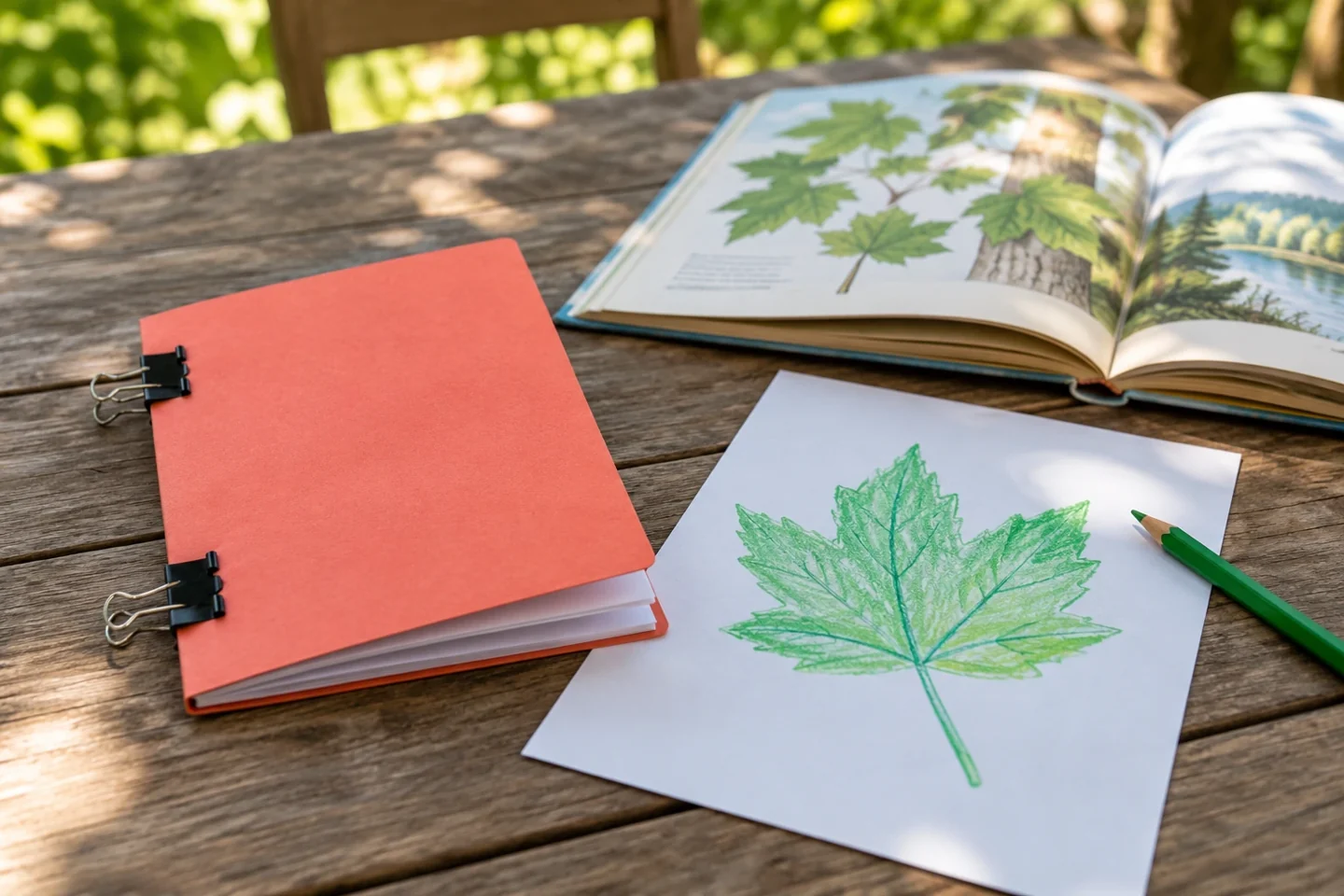
Your activity at a glance
| Suggested ages | 5–11 |
|---|---|
| Activity time | 25 minutes, then short entries |
What you need
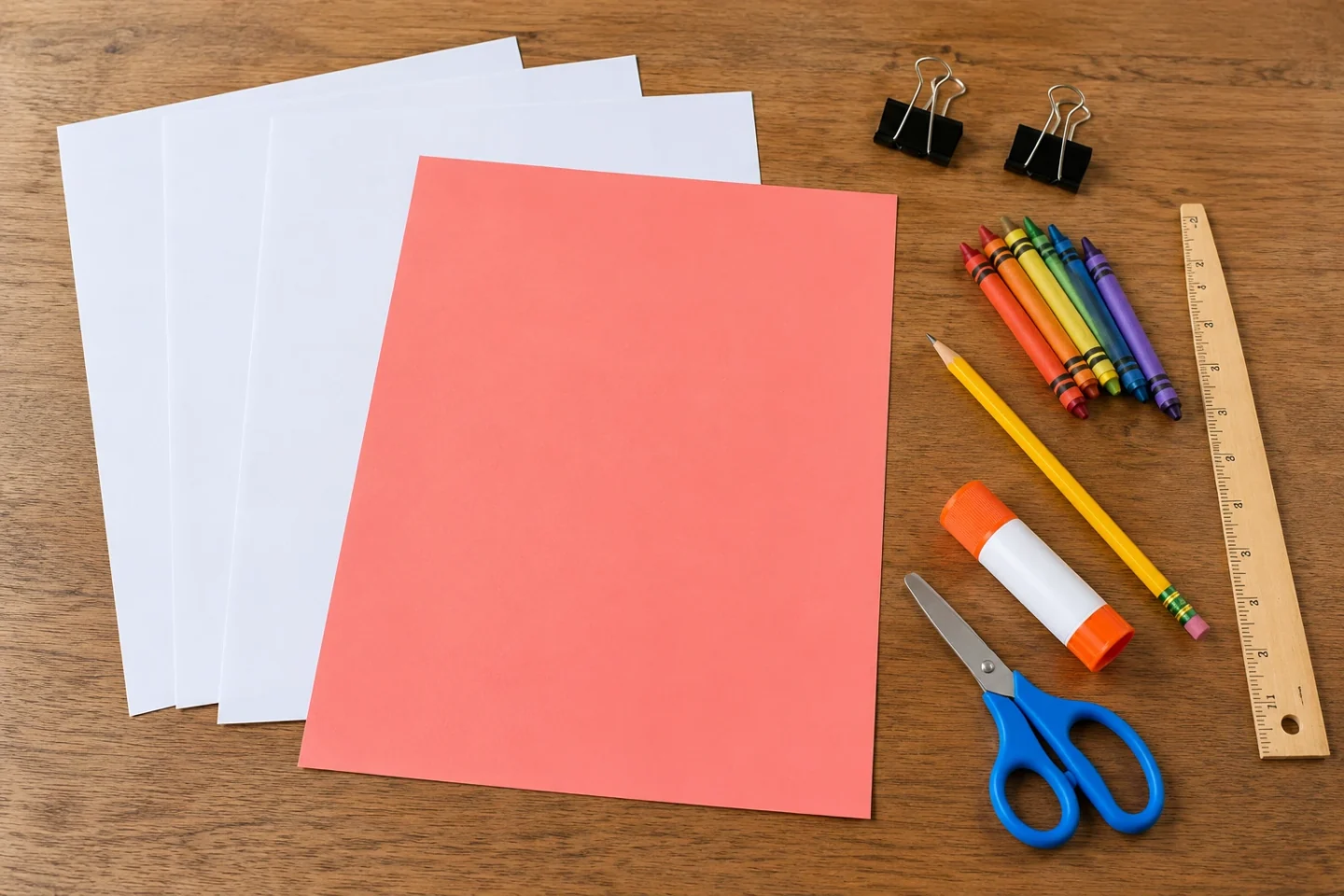
- 3 sheets of plain paper
- 1 sheet of colored paper for the cover
- Crayons or pencils
- Glue stick
- 2 binder clips for temporary binding
- Child scissors
- Optional ruler
A little project with room for your ideas
A summer adventure does not have to involve a long trip. Finding an unusual leaf on a walk, borrowing a new library book, or inventing a backyard game can all earn a place in this homemade passport. Children build a little booklet and fill it gradually with drawings, descriptions, and personal symbols. It becomes a record of things they actually enjoyed, rather than a checklist they need to finish.
Before you begin
Use three letter-size sheets (8½ by 11 inches) and a matching cover sheet. Bring the two short edges of each sheet together and crease across the middle, making pages about 8½ by 5½ inches. Nest the three folded sheets: each contributes four page sides, so the booklet has twelve inside page sides. Fold the colored cover around them. An adult places two medium binder clips along the folded edge for storage. Remove the clips while drawing or turning pages, then replace them afterward; the nested pages can stay loose while you work.
Make it step by step
- Design a cover. Choose a name such as My Summer Adventures, or invent one together. Draw a symbol that represents the kind of adventures you like: a walking shoe, book, pencil, or picnic basket. There is no need to copy a real passport or include personal identifying information. Add only a first name if you want to mark ownership.
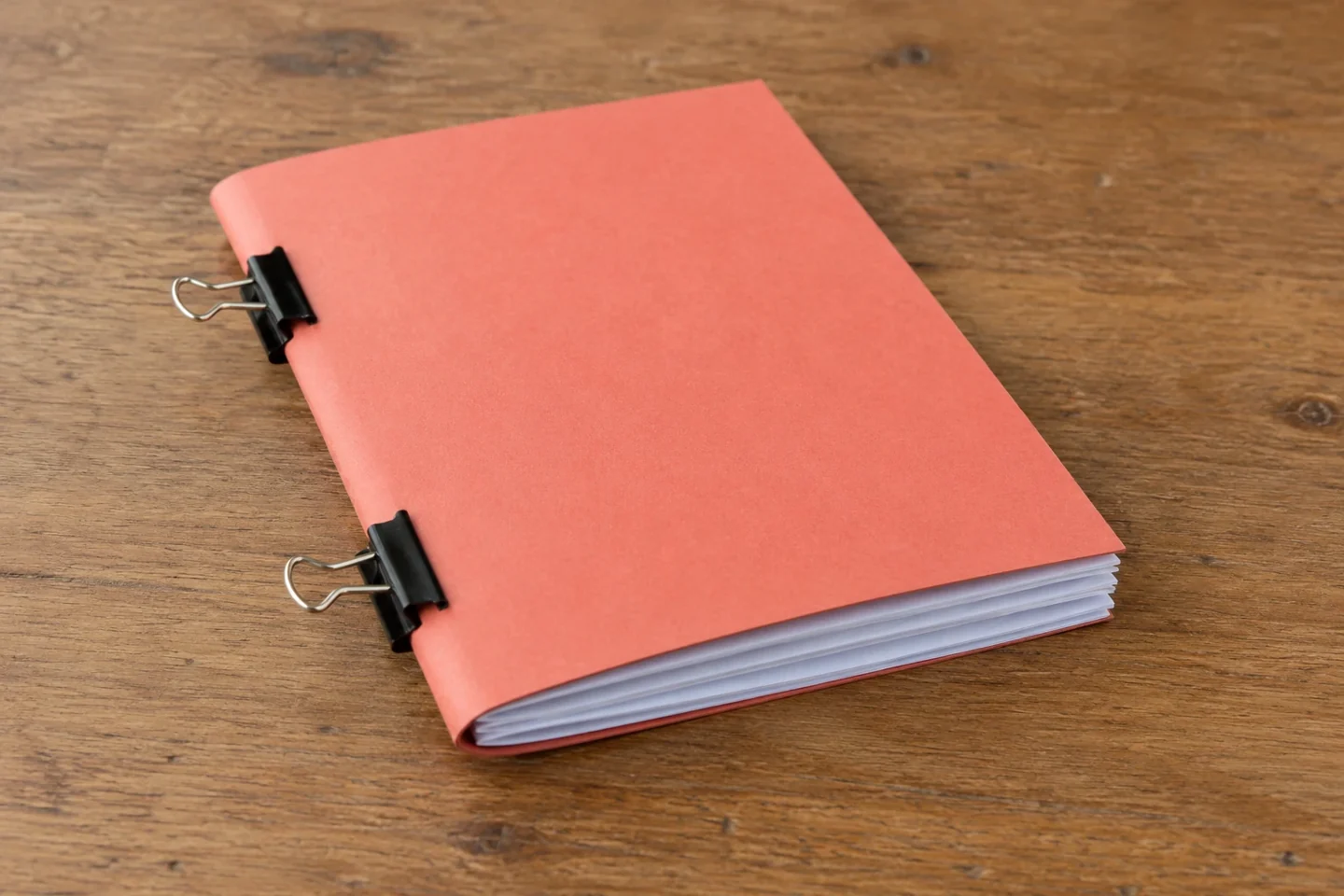
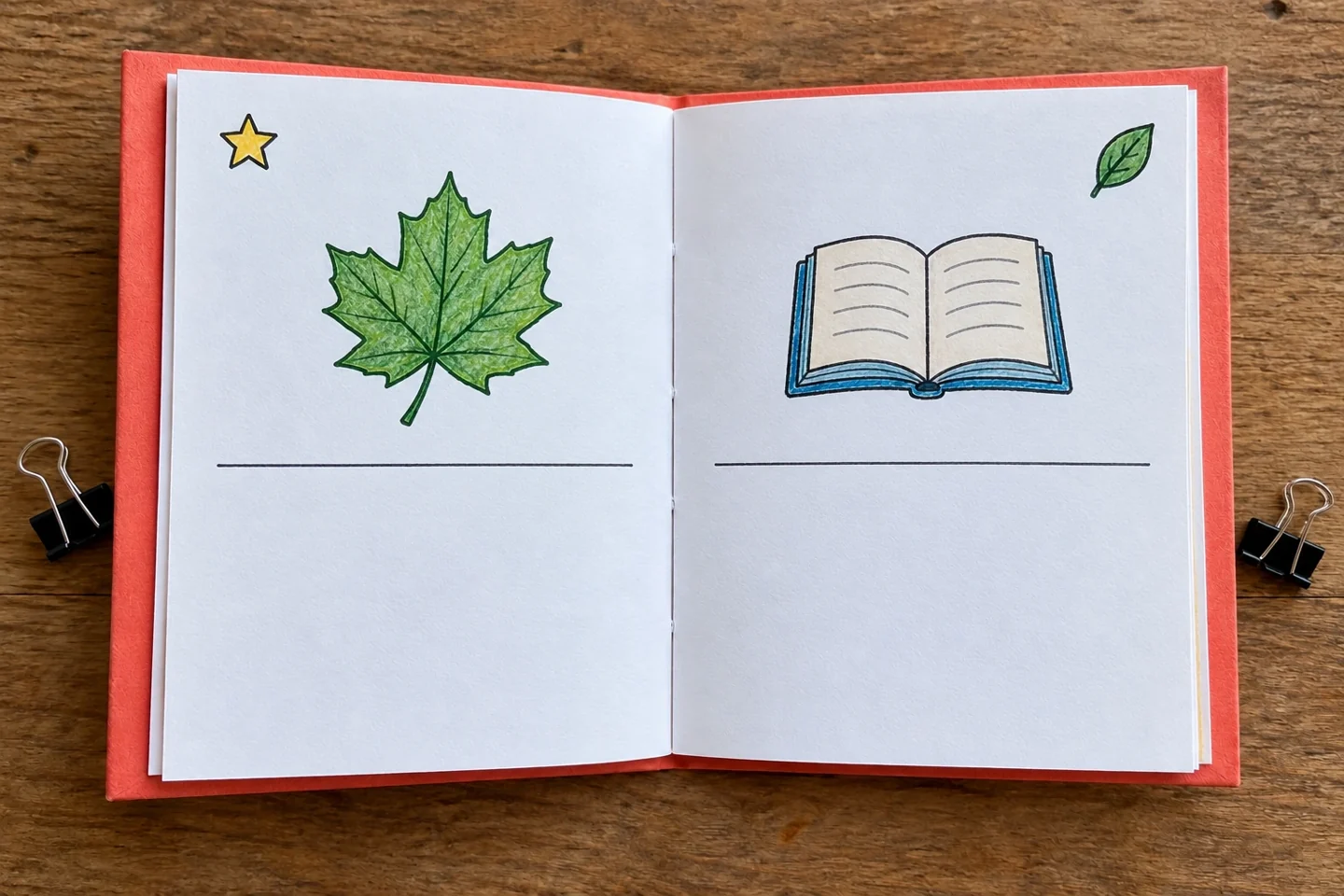
Nest the folded pages before adding the cover; the clips come off while you draw. - Choose roomy entry spaces. Open the booklet and draw a light dividing line across each page. Use the upper space for a picture and the lower space for one or two sentences. Leave the first page for ideas you might try, but keep those ideas flexible. An unexpected discovery can be more interesting than something planned.
- Make the first entry. Record a real activity you have just completed. Draw one particular detail instead of trying to illustrate the entire day. A child who visited the library might draw the animal on a book cover. Ask what happened and write their exact description if they prefer dictating to writing.
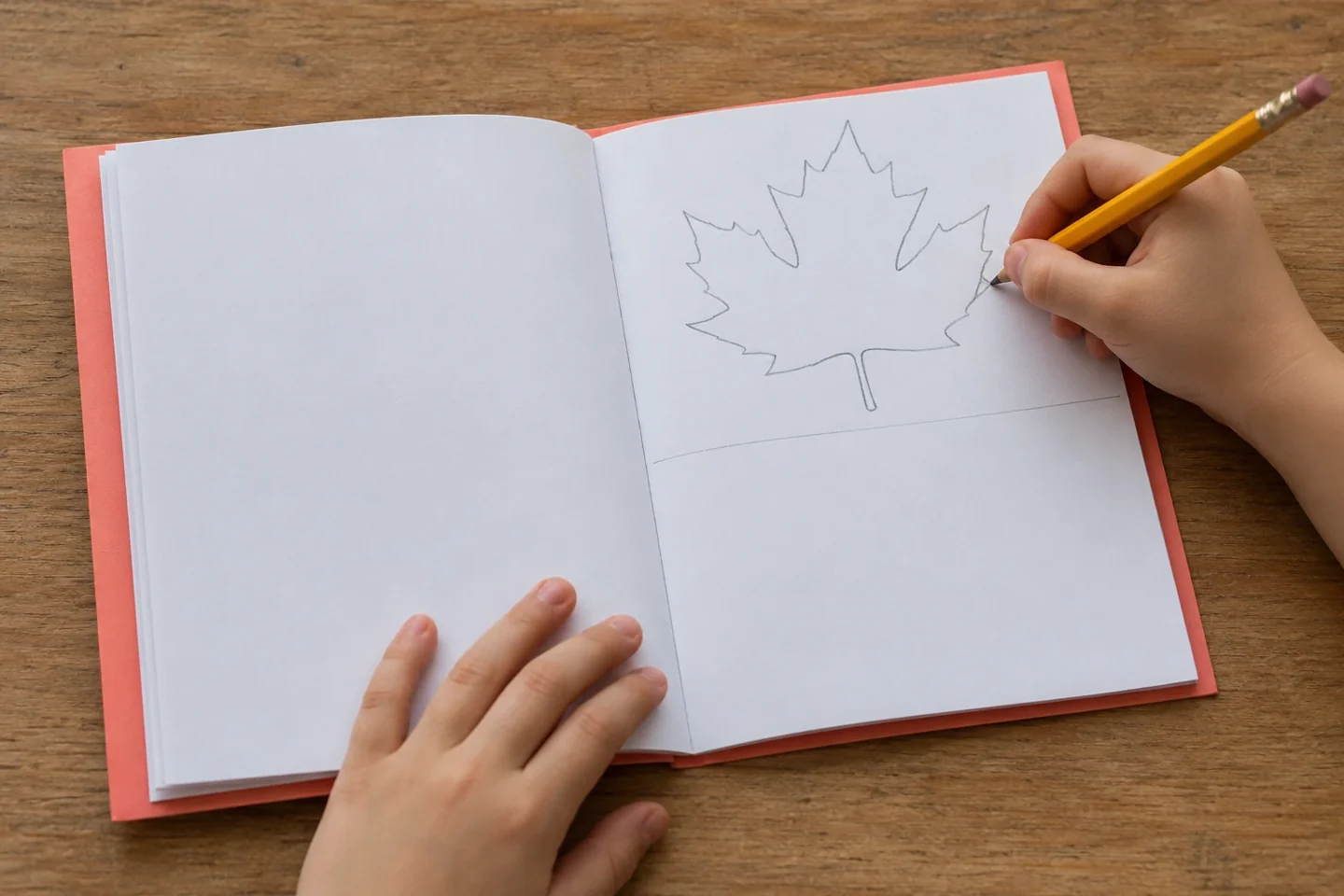
Draw one particular detail, leaving room for a short message below. - Add an original symbol. Make a simple mark in the corner of the entry: a star for a new discovery, a book for reading, or a leaf for being outdoors. Choose your own small set of symbols. These marks help children sort and compare experiences later without turning the passport into a scoring system.
- Return and reflect. Keep the booklet with drawing supplies and add an entry after an activity when the memory is fresh. After several entries, look back together. Pick one thing you would repeat and one question you would like to investigate. A blank page is available space, not a missed assignment.
Notice, talk, and explore
Prompts such as “What did you notice that you had not noticed before?” invite specific observations. Compare two entries: which happened indoors, which used tools, and which involved another person? Children practice selecting details, sequencing events, and communicating a memory through pictures and words.
Make it work at home or in class
At home, give the passport a regular shelf spot so it is easy to find. In a classroom or summer program, offer five minutes of drawing after an outing and let children choose whether to share. Younger children can use one drawing per page; older children can add a map or a question for next time. Remove binder clips before storing loose pages in a folder.
Keep the booklet easy to use
If twelve page sides feel like too much, begin with one folded sheet and a cover. A small booklet that children return to is more useful than a thick one they avoid. Binder clips can make pages difficult to turn; remove them briefly while drawing, then have an adult replace them. Glue collage pieces completely flat so they do not catch on the next page. If a child says they have nothing to record, look together at a recent drawing or borrowed book. Offer a memory prompt, then accept their choice rather than filling the passport for them.
Cleanup and storage
Return pencils to their container and put spare paper in a folder. An adult removes loose binder clips when younger children are nearby. Store the passport flat in a drawing folder or on a dry shelf, with its cover protecting the entries.
Keep the creativity going
Once several pages are filled, invite your child to choose an adventure to tell as a short story. What happened first, what was surprising, and what would they do again? They might draw one additional scene or ask another person what they remember. Keep those details with the passport rather than replacing the original entry; both perspectives can be interesting. A shared picture book offers another chance to notice how a small everyday experience becomes a story. The Cozy Little Wonder Library can provide a next reading choice, while the passport keeps a special place for your child’s own summer memories.