Summer & Patriotic Days
Make a Summer Postcard Set
 Facebook
 Pinterest
 X
X LinkedIn
 Reddit
 WhatsApp
 Telegram
 Bluesky
 Email
Email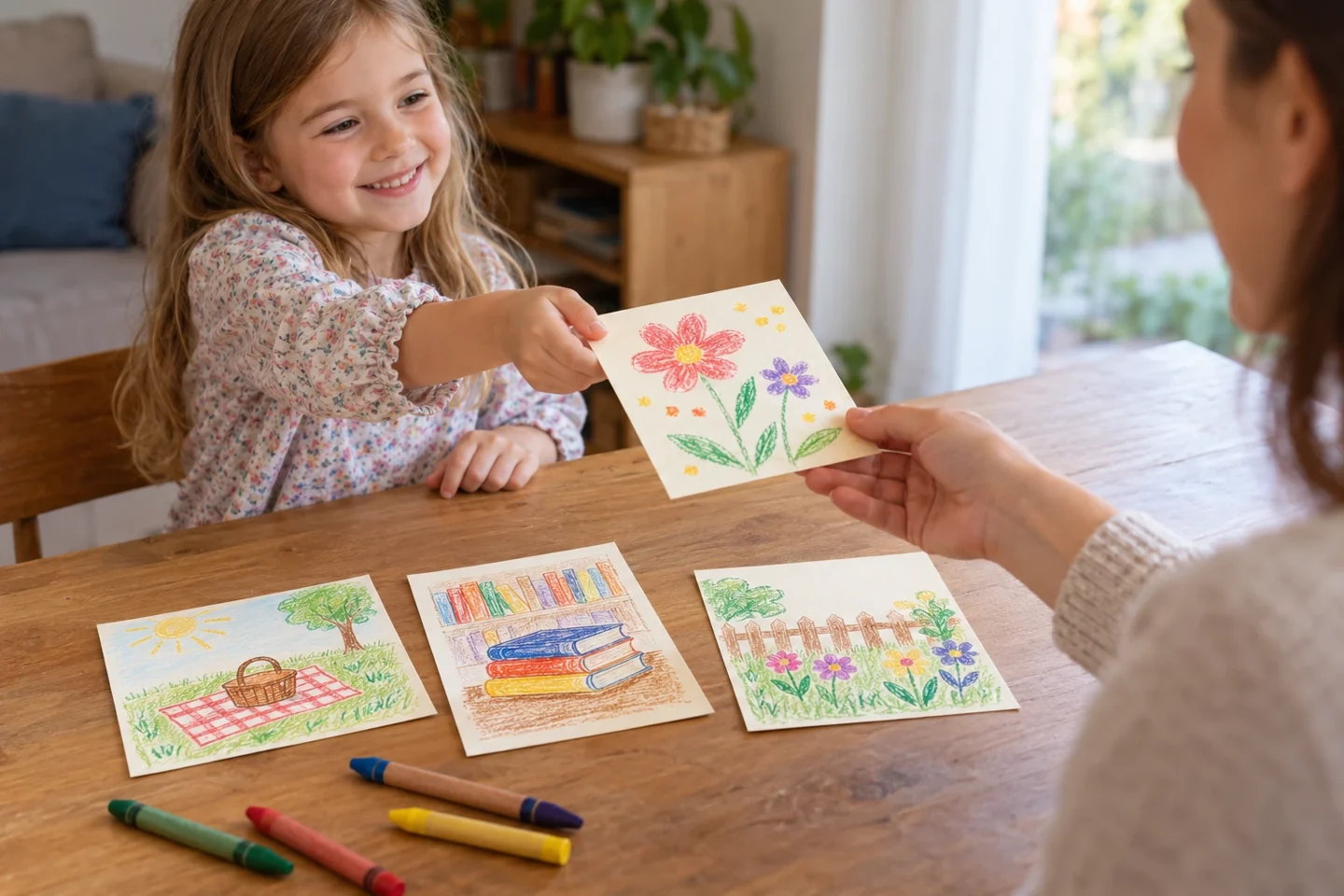
Your activity at a glance
| Suggested ages | 5–11 |
|---|---|
| Activity time | 30–40 minutes |
What you need
- 2 letter-size cardstock sheets (8½ by 11 inches)
- Pencil and crayons or colored pencils
- Ruler
- Child scissors
- Glue stick optional
- Scrap colored paper optional
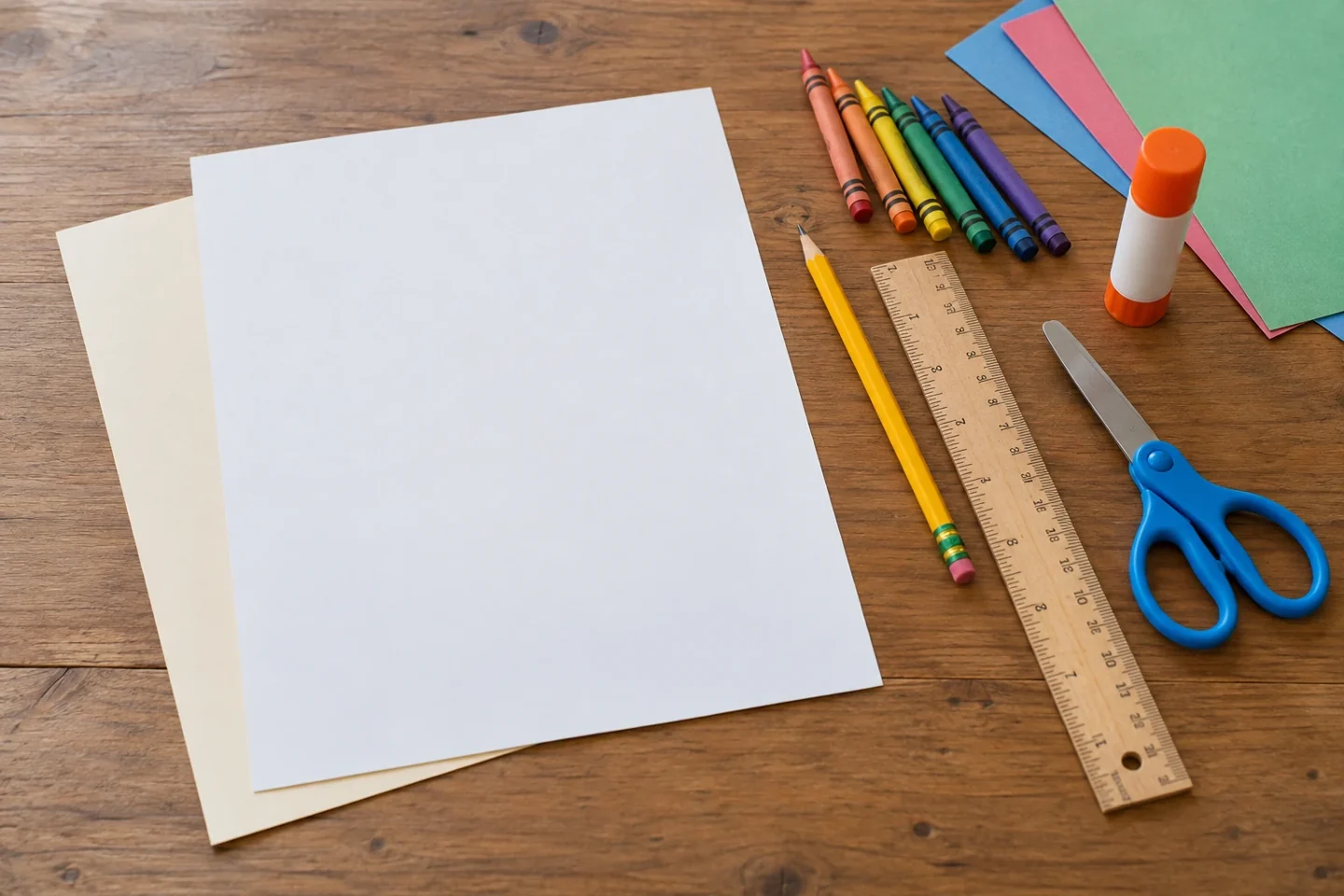
A little project with room for your ideas
A postcard is a small space with a clear purpose: share one scene and one message. Children can draw a place they visited, something they noticed at home, or an imaginary summer destination. Turning that drawing into a note gives the artwork an audience. These handmade cards can be delivered within a family or classroom without needing an address or a trip to the post office.
Before you begin
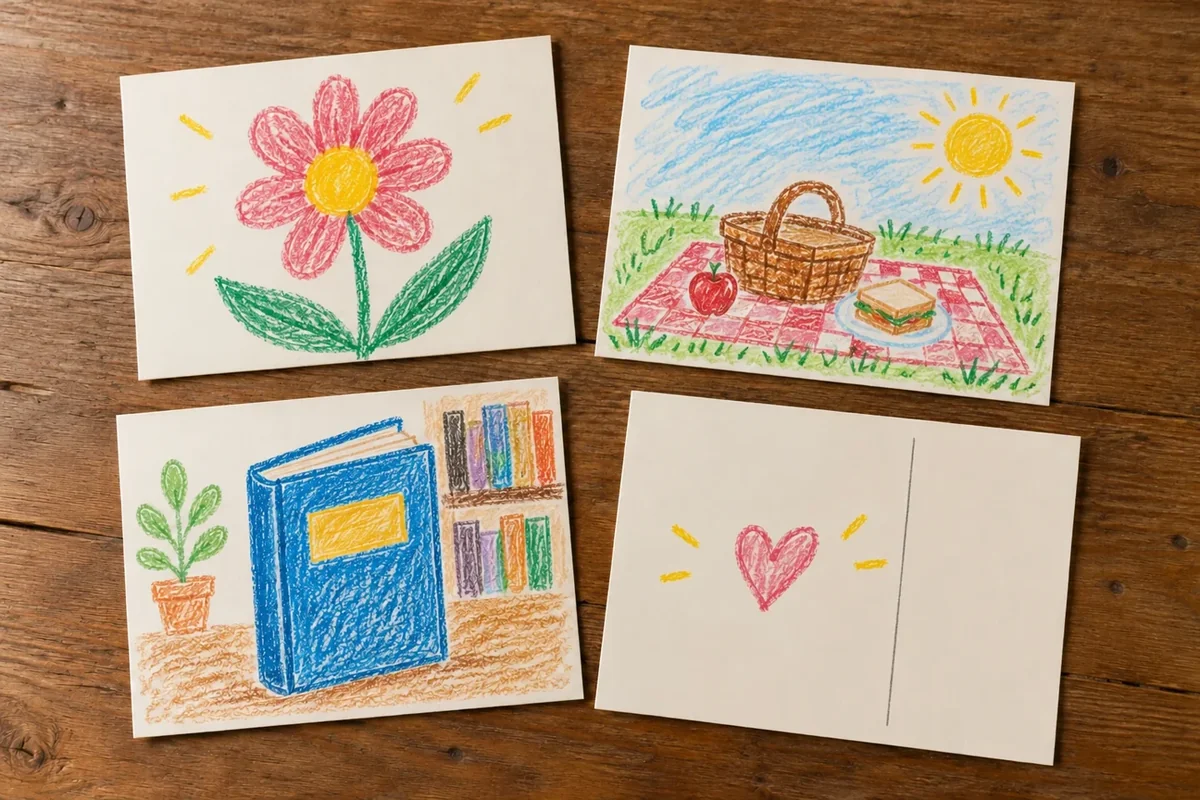
Mark two 10 by 15 cm rectangles on each cardstock sheet, then cut them out to make four cards. Save the remaining cardstock for smaller drawings. An adult can mark the lines or prepare the blanks for younger children. Put a tiny pencil dot on the message side so makers can flip between front and back easily. These cards are designed for hand delivery within a family or class. If you decide to mail one, an adult can check the postal requirements separately before addressing it.
Make it step by step
- Pick one scene. Choose a single subject for the picture side: a picnic blanket, a library book, a garden flower, or an imagined beach. Talk about what detail makes that scene memorable. Trying to include every event from a whole holiday can crowd the card; one clear moment is enough.
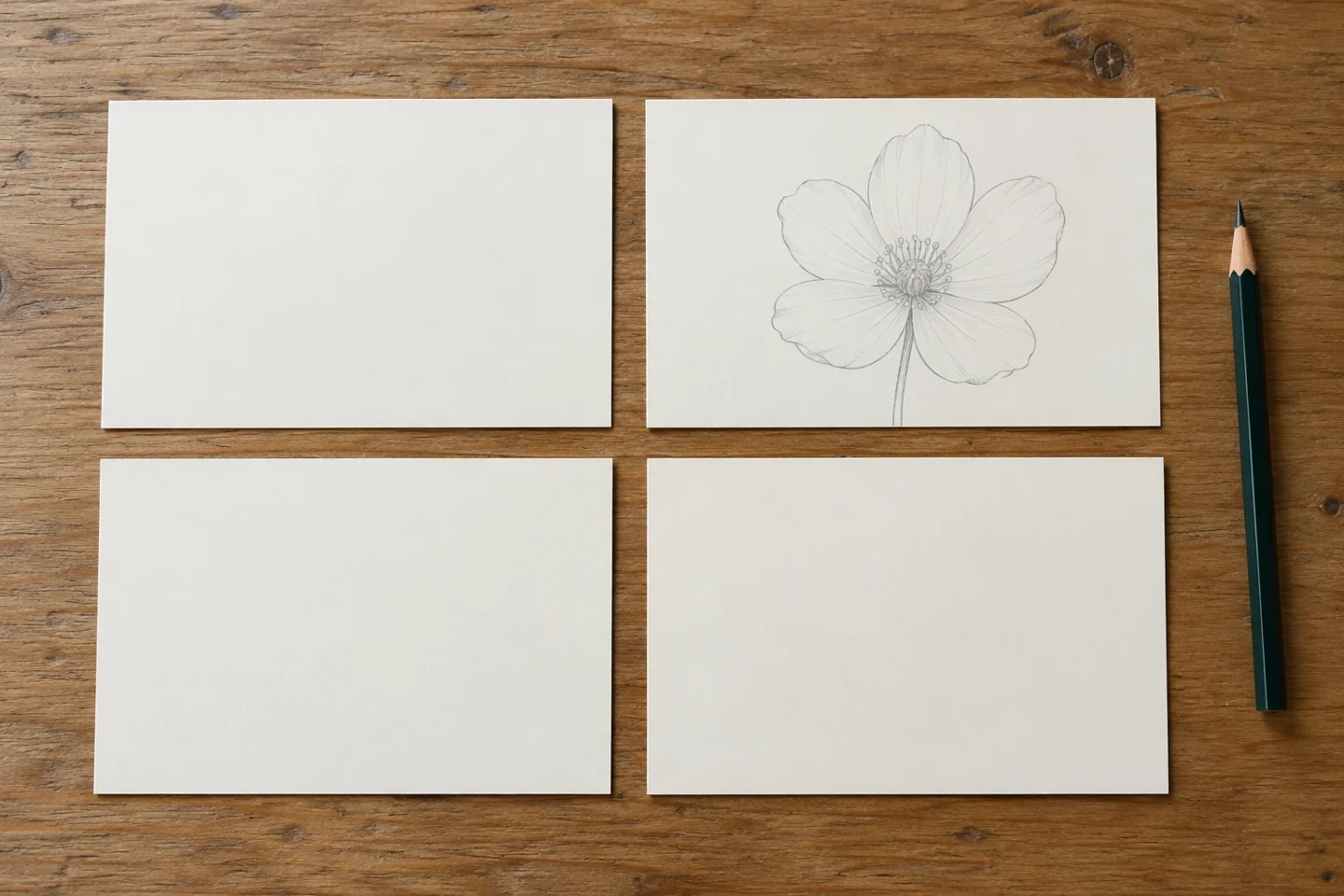
Begin with four matching blanks and one large picture shape. - Plan the picture. Sketch the largest shape first and add two or three supporting details. Leave a little space around the edge so the picture does not feel squeezed. Children can use collage scraps instead of drawing, but keep layers flat so the card is easy to hold and turn over.
- Add color thoughtfully. Use color to make the main subject stand out. A bright umbrella might sit against pale blue sky, or a green leaf against a warm background. Ask which part the child wants the reader to notice first. There is no requirement to reproduce the actual colors perfectly.
- Write a short message. Turn the card over and divide the back into a message area and a recipient area. Write a greeting and one particular observation, such as I saw tiny purple flowers beside our steps. Younger children can dictate while an adult writes their words. Add a first name as a signature if desired.
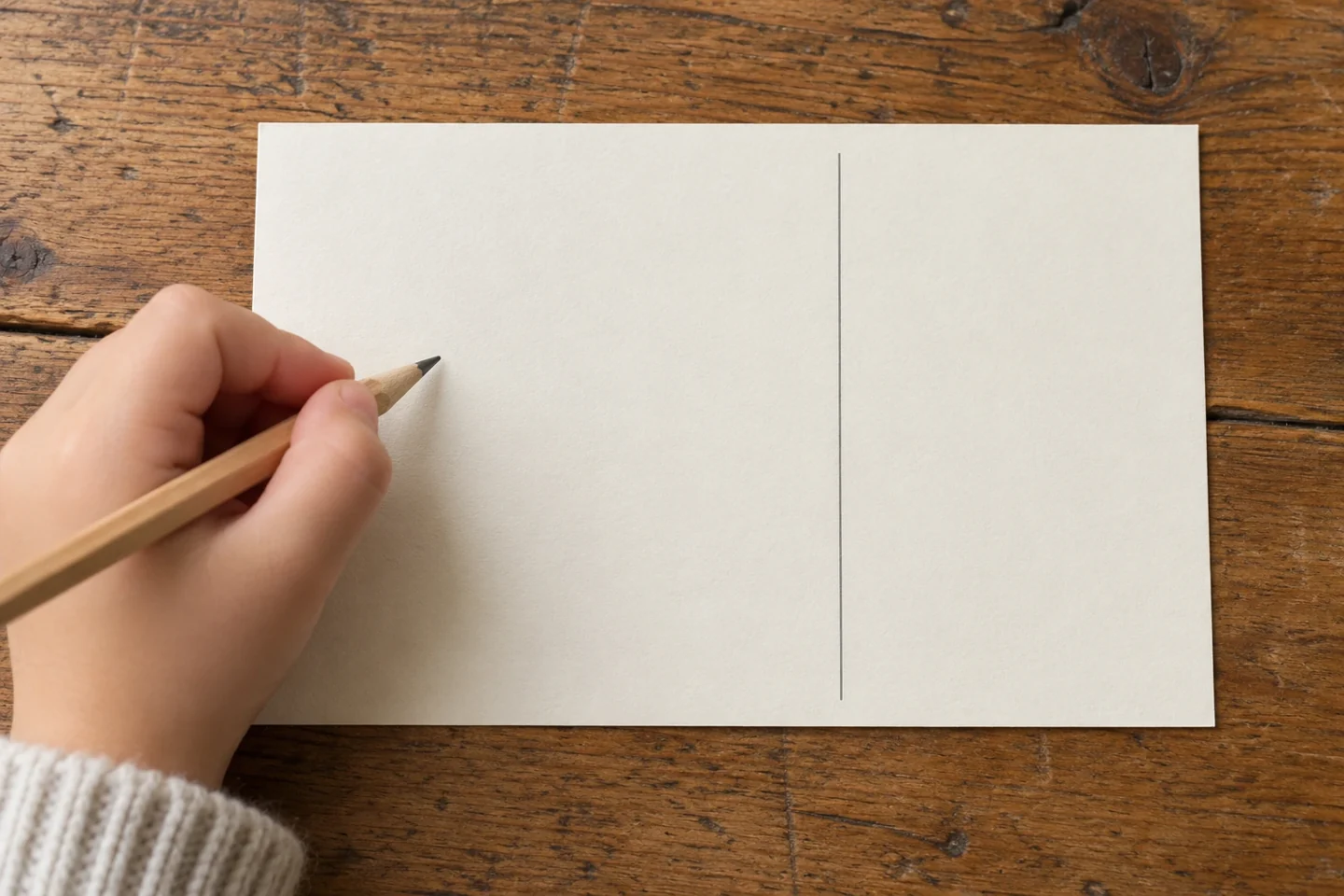
A divider leaves room for both the message and the recipient. - Share and respond. Give the card to its recipient or place classroom cards in individual paper mailboxes. Read the message together and invite a response. Keep one card for your own summer collection. If you make several, vary the subject rather than copying the same picture each time.
Notice, talk, and explore
Talk about how a picture and a sentence can work together. Ask, “What does the drawing show that the message does not?” and “What would you like to ask the person who receives this?” The activity offers drawing, purposeful writing, and a manageable way to describe an experience.
Make it work at home or in class
At home, send an indoor postcard to someone in another room. In class, pair students or let them choose a familiar recipient without publicly displaying personal information. Older children can create a fictional place and write from its point of view. Keep spare blanks in a small envelope and collect paper offcuts for later collage work.
Give the message enough room
If the drawing has taken over both sides, attach a plain paper rectangle to the back for the message. A crowded sentence can also become two shorter sentences, or an adult can write the child’s dictated words on a separate slip. Let the child decide whether to add that slip. Check that glued corners are flat before sharing a collage card. Hand-deliver the cards or tuck them into an envelope for a keepsake exchange. Children can exchange a reply postcard and notice how receiving a question gives them an idea for what to write next.
Cleanup and storage
Save clean cardstock scraps for smaller drawings and put scissors away. Let glued collage pieces dry completely before stacking the postcards. Store unsent cards in a paper envelope and keep returned replies with the original card if the child wants to preserve the exchange.
Keep the creativity going
Save a blank card for a reply. A recipient might ask about the flower, book, or imagined place in the first drawing, giving the child a real reason to make another message. If several cards become a collection, arrange them by subject and notice which details appear more than once. Children can turn a favorite postcard into a longer story with a beginning and an ending. Shared reading offers another way to explore how pictures and words work together. Choose a story from the Cozy Little Wonder Library, then return to the postcards whenever your child has another small moment they want to share.