STEM & Discovery
Sink or Float Activity for Kids: Predict, Test, and Compare
 Facebook
 Pinterest
 X
X LinkedIn
 Reddit
 WhatsApp
 Telegram
 Bluesky
 Email
Email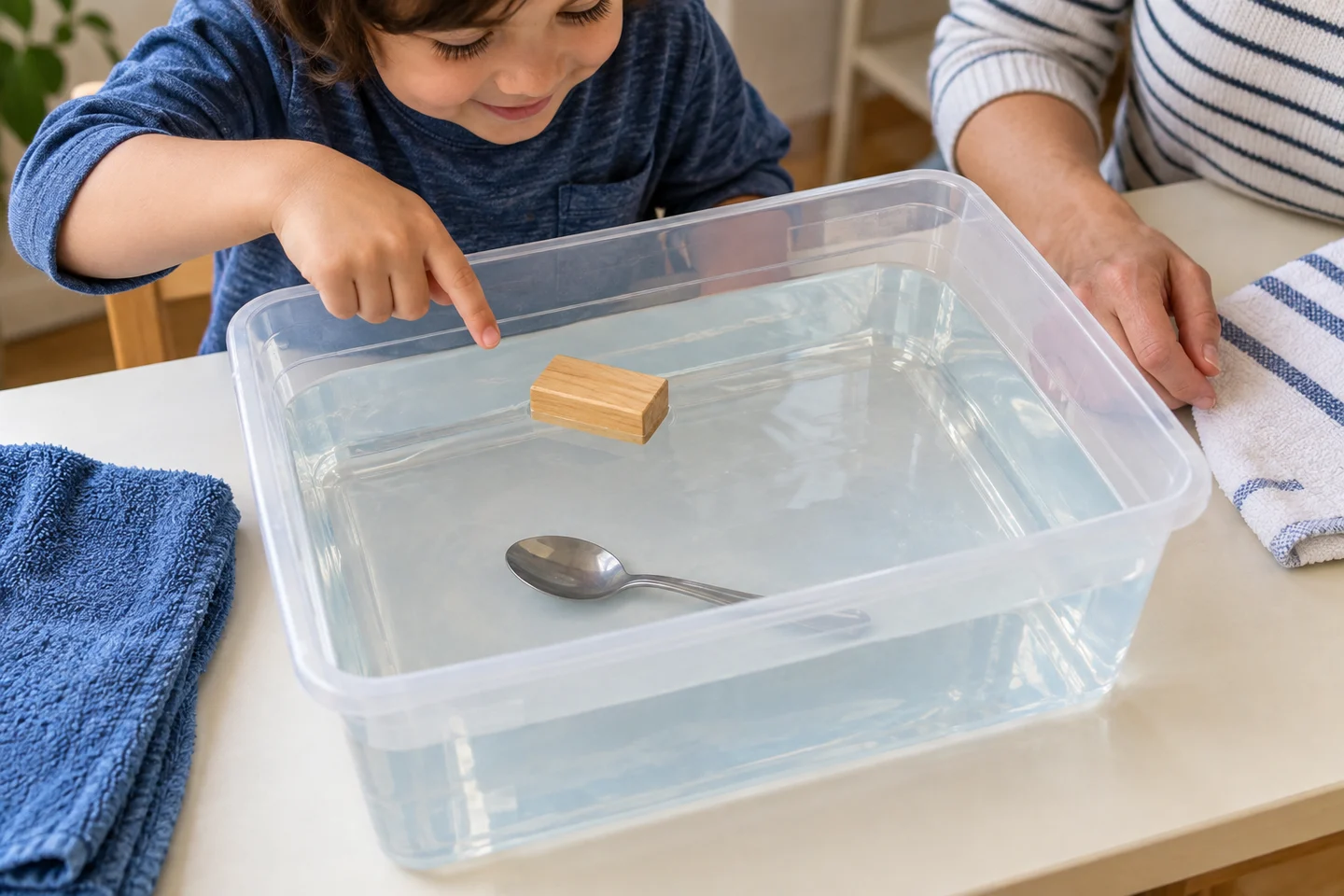
Will a wooden block stay at the surface? What happens to a metal spoon? A small water tray lets children predict, test, and talk about the results they actually see.
The surprises are part of the fun. A prediction gives children an idea to explore, and changing that idea after a test is a useful part of learning.
At a glance
| Detail | Plan |
|---|---|
| Suggested ages | 4–8 with direct adult supervision |
| Preparation | About 10 minutes; 15–20 minutes for classroom stations |
| Investigation time | 20–30 minutes |
| Group size | One child or supervised groups of four |
| Mess level | Moderate; plan for splashes |
What you need
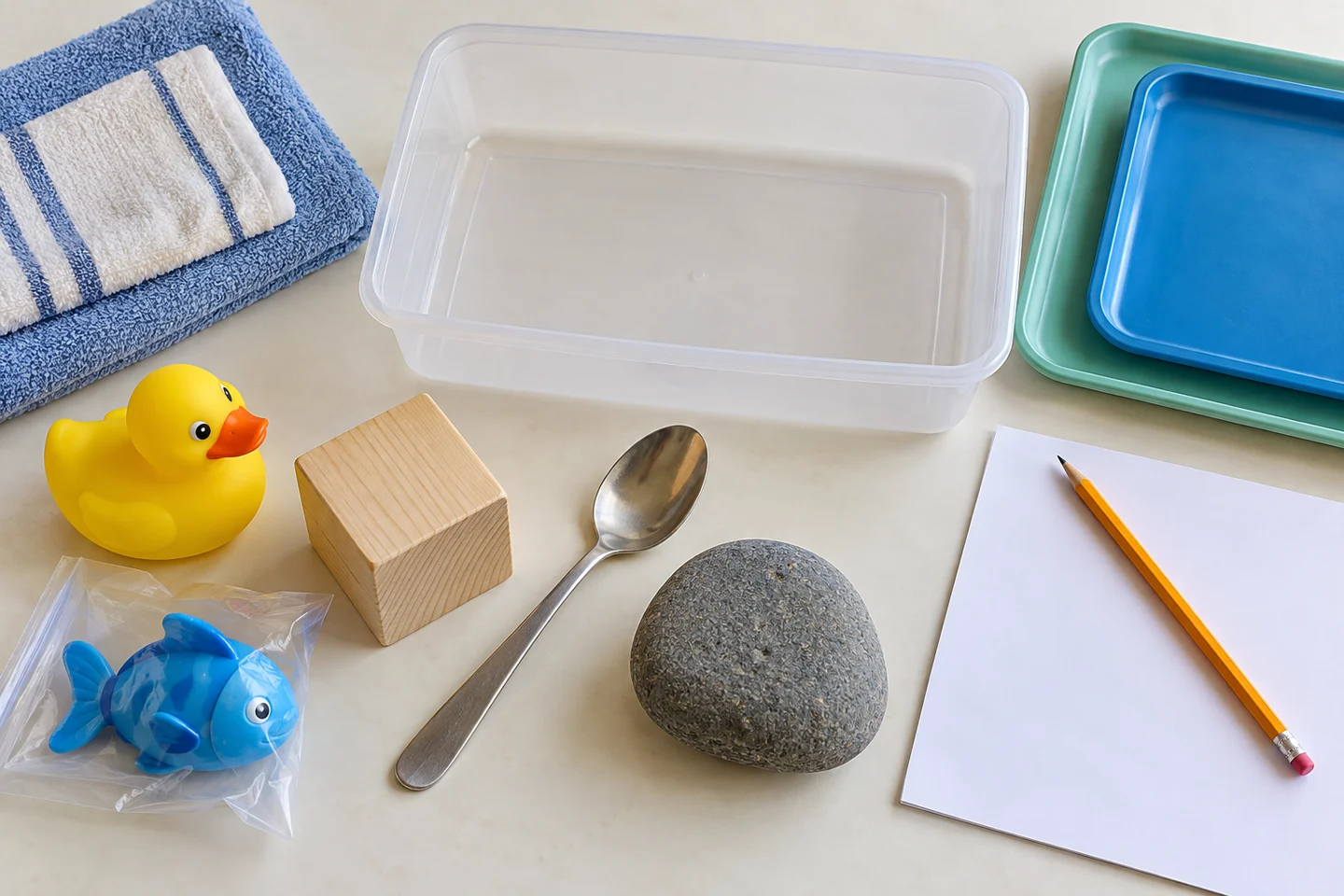
- One broad, stable water container.
- Six large, washable objects that tolerate water.
- Two towels and two dry holding trays.
- Recording paper and a pencil.
- Fresh tap water.
Try a large wooden block, metal spoon, solid rubber toy, or sealed plastic object without removable pieces. An adult may select a smooth stone too large to mouth. Leave out glass, electronics, batteries, sharp items, and small loose parts. For 24 children, use supervised groups of four and rotate through the stations adults can watch continuously.
Get ready
Put the container on a low, stable surface. Add enough water for your selected objects to float clear of the bottom, while keeping the setup shallow and directly supervised. Place one tray for dry objects and one for tested objects. Keep paper beyond the splash area and towels close by.
Predict, test, and compare
1. Look at one object
Notice its shape and material. Ask, “What do you think it will do in the water?” Children can say float, sink, or not sure, then offer a reason if they have one.
2. Save the prediction
Draw the object above or below a water line, or write a word. A younger child can point to a symbol while an adult records the choice.
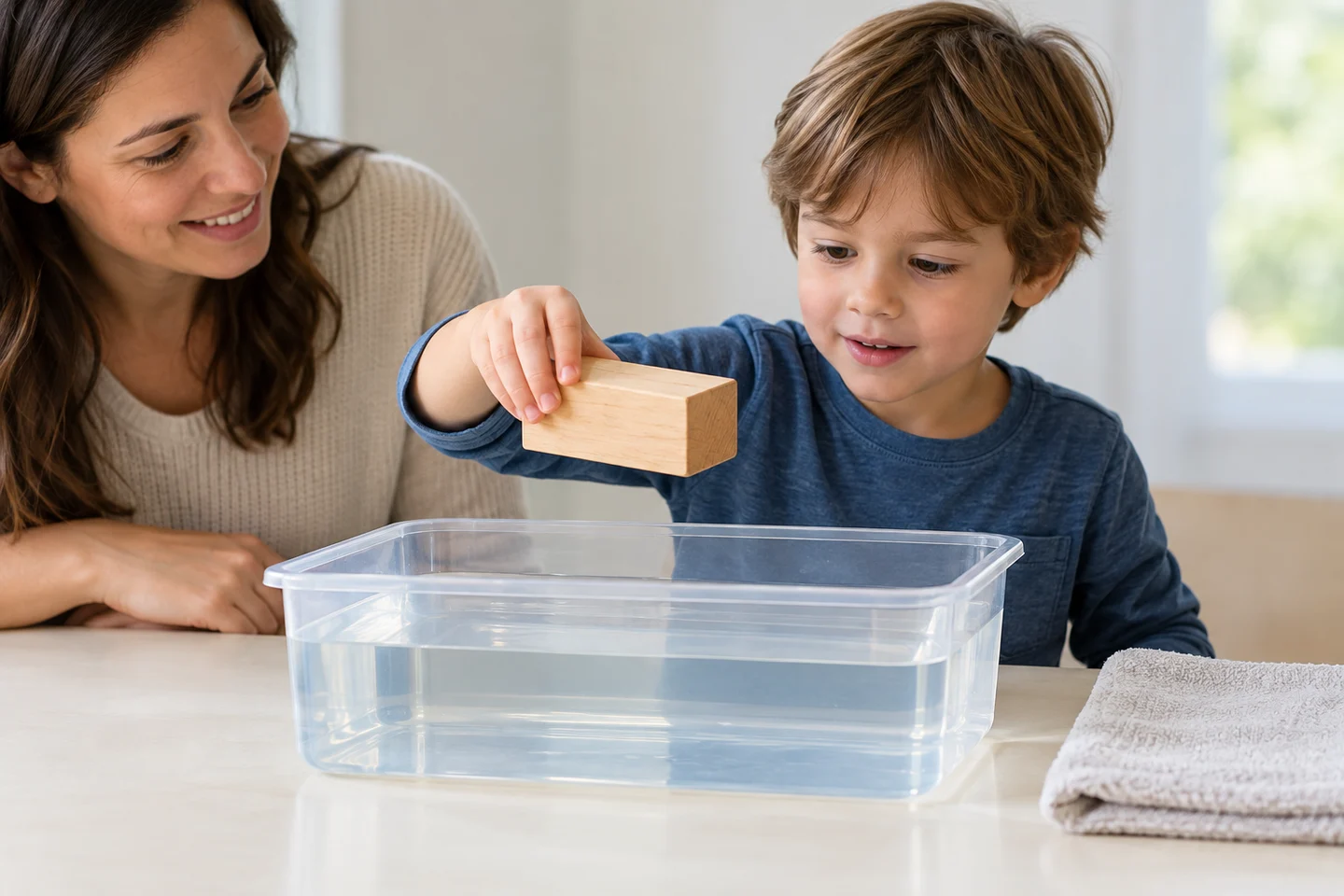
3. Place it gently
Release the object without pushing it underwater. Watch whether it stays at the surface, settles below, or changes as it takes on water. A partly submerged object is still floating if water supports it clear of the bottom.
4. Describe what happened
Try phrases such as “stayed at the top” or “rested on the bottom.” Note a changing result if the object absorbs water. Leave room for observations that take more than one word.
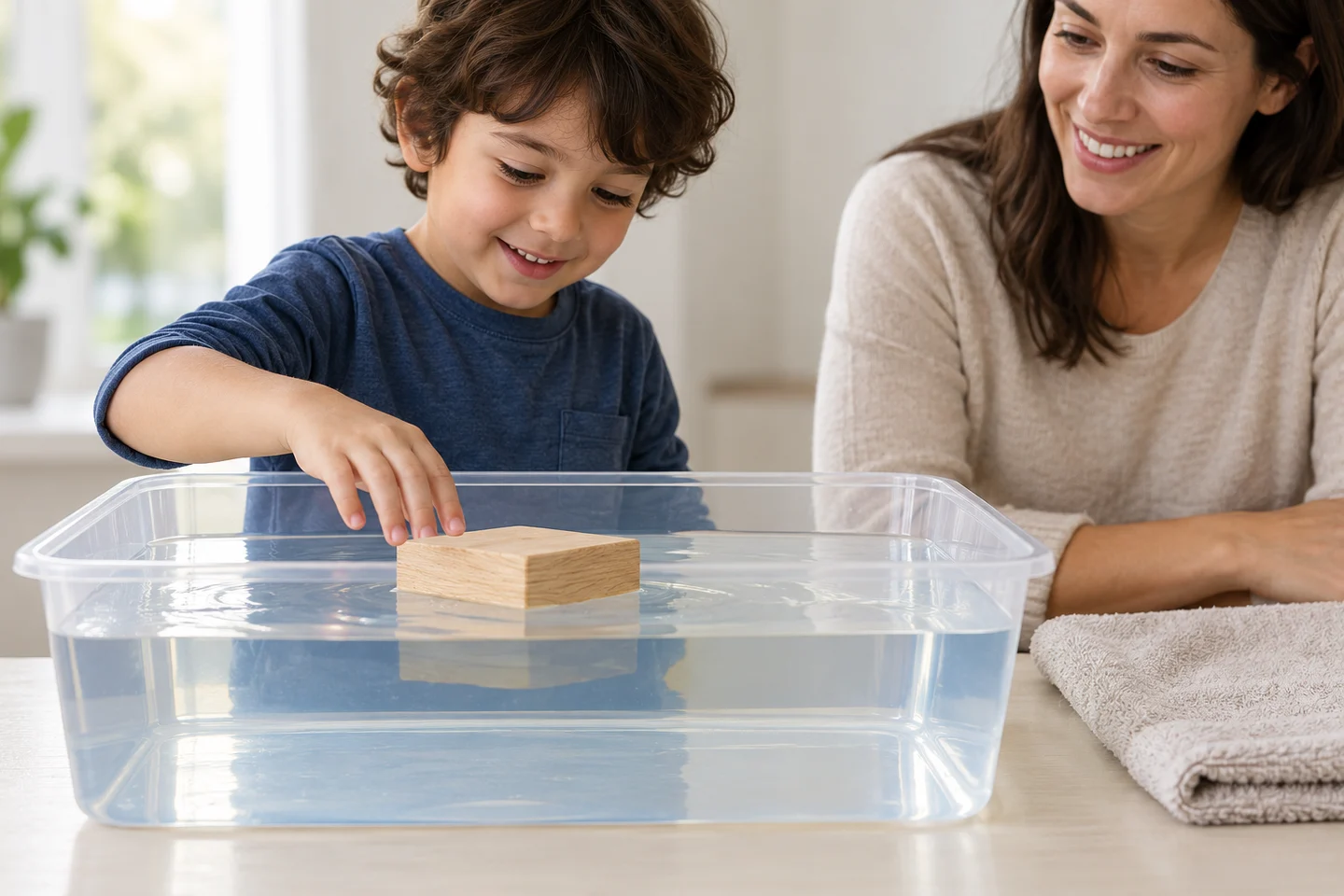
5. Test another object
Move the tested item to its tray and let the water settle. Use the same gentle placement for the next object so the comparison is easier to follow.
6. Revisit a surprise
Choose one object to test again. If you turn it a different way, note that change. Ask what your child would like to investigate next rather than rushing to explain every result.
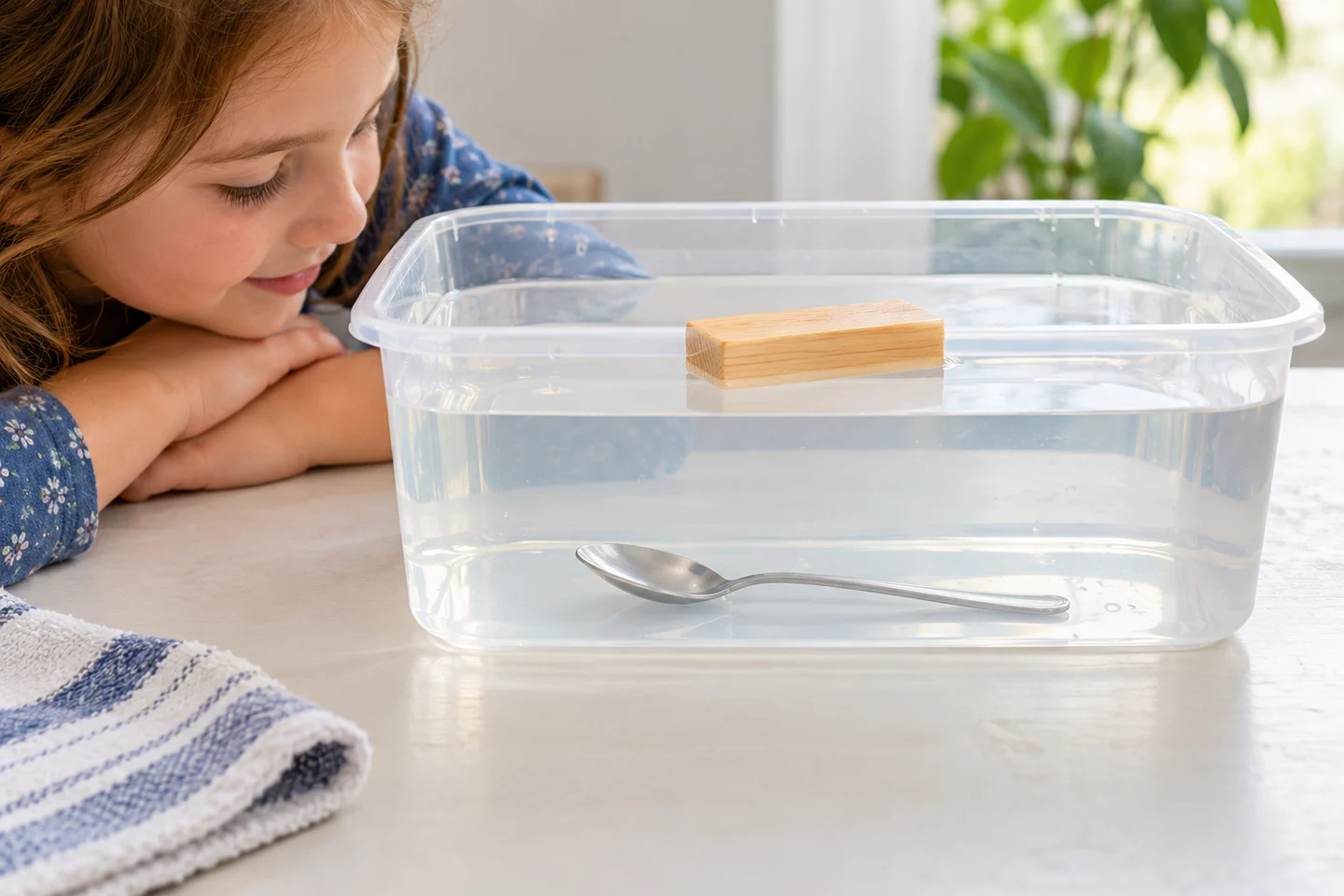
Save your discoveries
Copy this simple layout onto paper and add your own observations. Drawing or dictated notes work just as well as independent writing.
| Object | Prediction | What happened? | Something we noticed |
|---|---|---|---|
What children can explore
Water pushes upward on an object, and floating depends on its weight and the water it displaces. Shape and trapped air can matter, too. A large object may float while a smaller one sinks, so the tests give children more useful information than a simple “heavy things sink” rule.
At home and in the classroom
At home, start with four objects for a shorter investigation. In class, rotate placing, observing, and recording roles. Keep adult supervision focused on every active water station; the other groups can predict or draw while waiting.
Make it work for your group
Use large picture symbols, adult placement, or clear verbal descriptions. Children can participate entirely by observing. Older children can compare similar-size objects made from different materials and discuss what is alike or different.
Helpful fixes and cleanup
If an object touches the bottom while apparently floating, check the container’s depth and width. Pause between tests when waves make observation difficult. An adult empties the water promptly, dries spills, and cleans the objects. Store containers empty between sessions.