Learning Through Play
Alphabet Scavenger Hunt: Letter and Sound Activities for Home or Classroom
 Facebook
 Pinterest
 X
X LinkedIn
 Reddit
 WhatsApp
 Telegram
 Bluesky
 Email
Email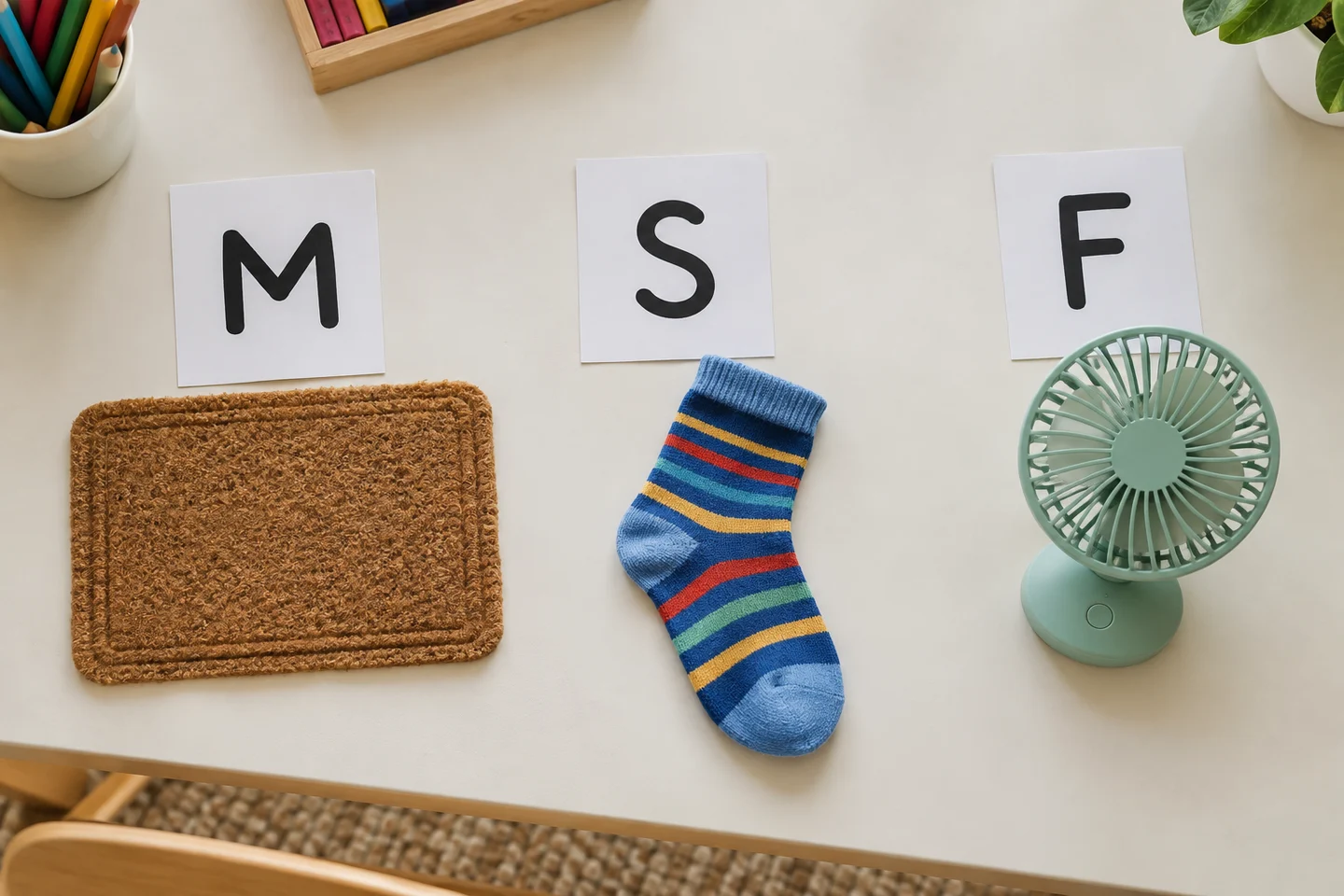
A letter on a book cover, a matching card beside a toy, or a word that starts with a familiar sound—an alphabet hunt can take several playful forms. The trick is to choose one kind of hunt at a time so children know what they are looking for.
Start small with three to five letters or a handful of pictures. A shelf, tabletop, or classroom corner can hold a whole adventure without searching every letter in the alphabet.
At a glance
| Detail | Plan |
|---|---|
| Suggested ages | 4–7; choose the task by current experience |
| Preparation | About 10 minutes at home; 15–20 minutes for a class |
| Activity time | 15–25 minutes |
| Group size | One child, pairs, or small-group stations |
| Mess level | Low |
What you need
- Three to five large letter cards.
- Matching cards, familiar books, or a few adult-selected picture or object targets.
- Paper and crayons for optional recording.
- Envelopes or trays for keeping sets together.
For 24 children, prepare six small sets for groups of four. Make matching cards in the same case and style for beginners. Choose large, safe objects for a sound hunt, and agree which words you will use to name them.
Choose your hunt
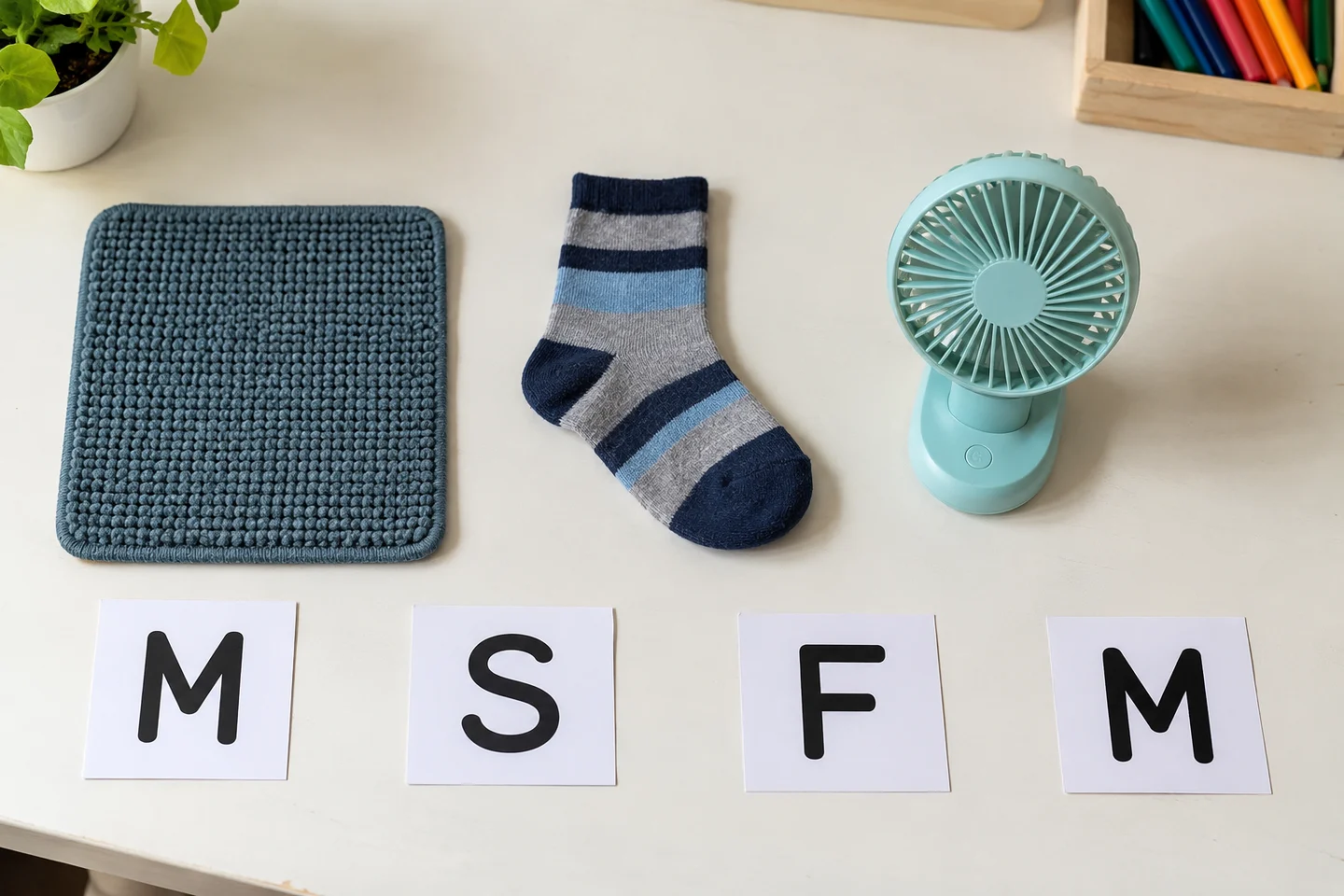
For a matching hunt, children look for the same letter shape. For a letter-name hunt, they find and name a target letter. For a beginning-sound hunt, they find a picture or object whose spoken name starts with the chosen sound. Pick the version that fits the group’s current learning.
Let the hunt begin
1. Show one example
Hold up a target and demonstrate the task. For matching, place an M card beside another M. For a sound hunt, say “mat,” stretch the first /m/ sound, and connect it with the letter. One clear example makes the game easier to follow.
2. Set a search area
Place targets within reach on a table, shelf, or part of the room. Use a clear boundary and keep children away from climbing or opening storage. A seated tabletop search works just as well.
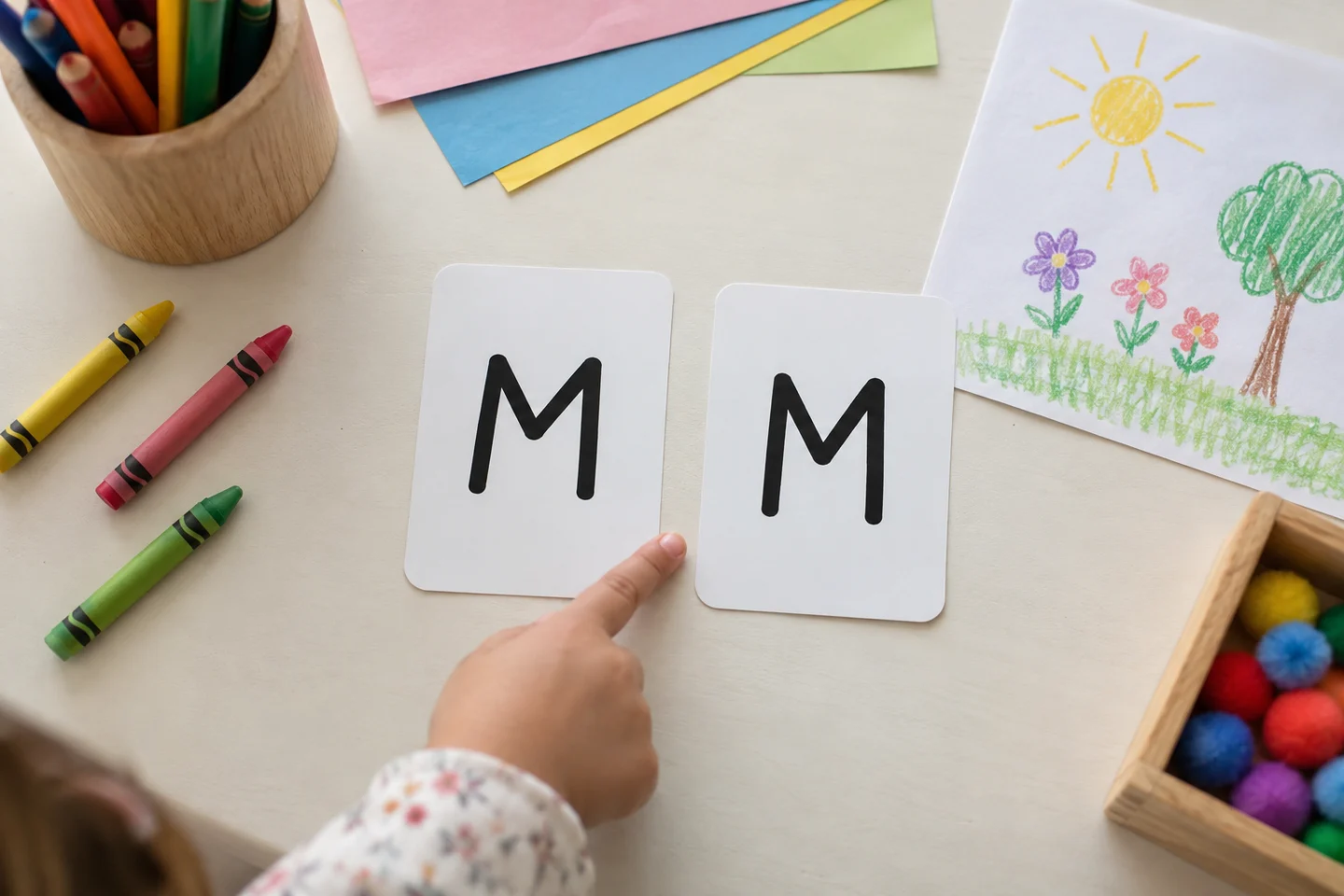
3. Find and describe
Invite a child or pair to look for one target. Ask what helped them choose it. In a sound hunt, say the object’s name together before listening to its beginning; the same picture may have several possible names.
4. Record a discovery
Place a matching card beside the target, draw the object, or make a tally. Children can point or dictate instead of writing. Keep the record as simple as the game needs.
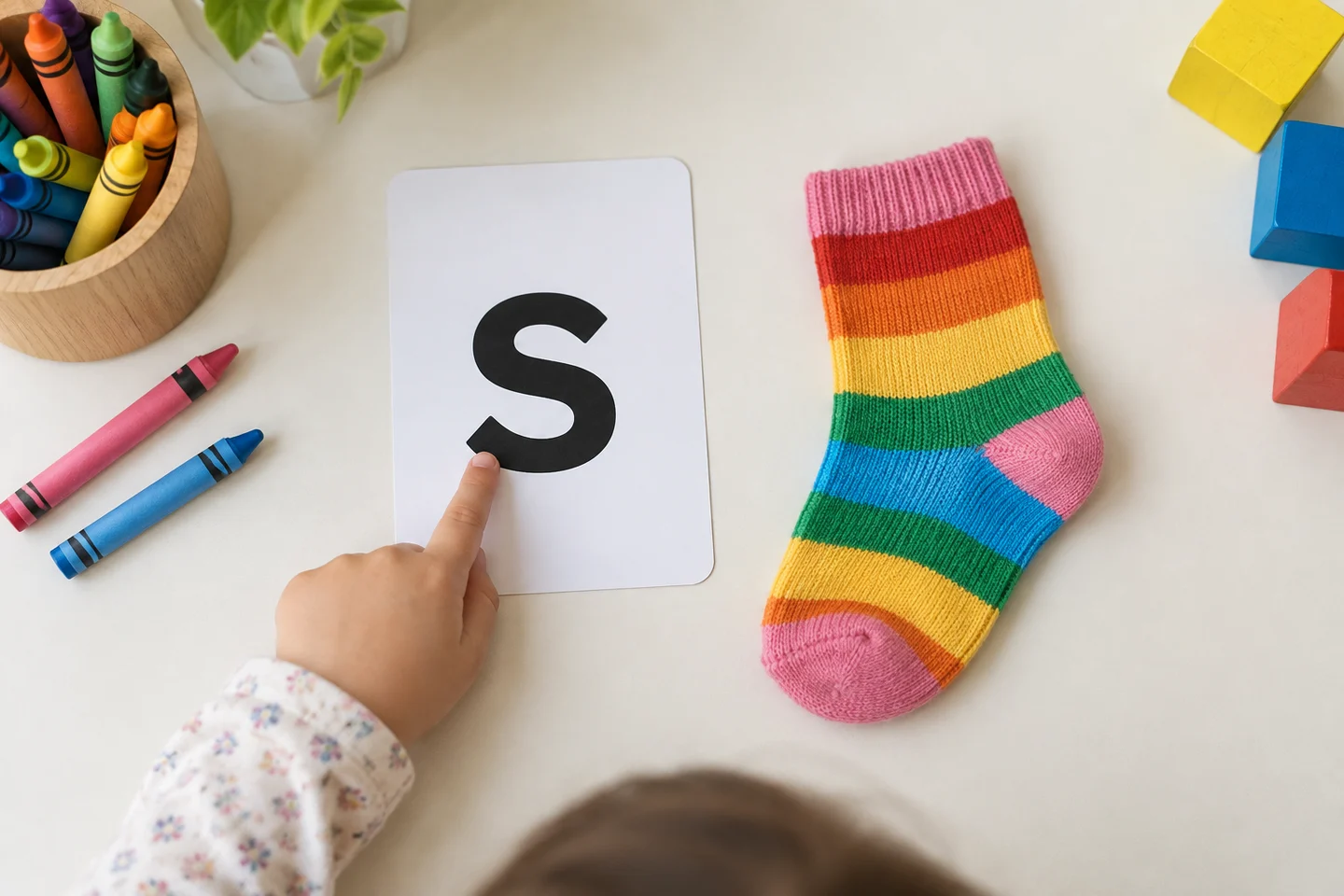
5. Check together
Look at the letter shapes, say the names, or listen to the selected words again. If a choice does not fit, model the example and offer another try with fewer options. The hunt stays friendly when help is part of the game.
6. Add one new challenge
Introduce another letter, a lowercase partner, or a different target after the first round. Keep the other parts familiar so children can enjoy noticing the new feature.
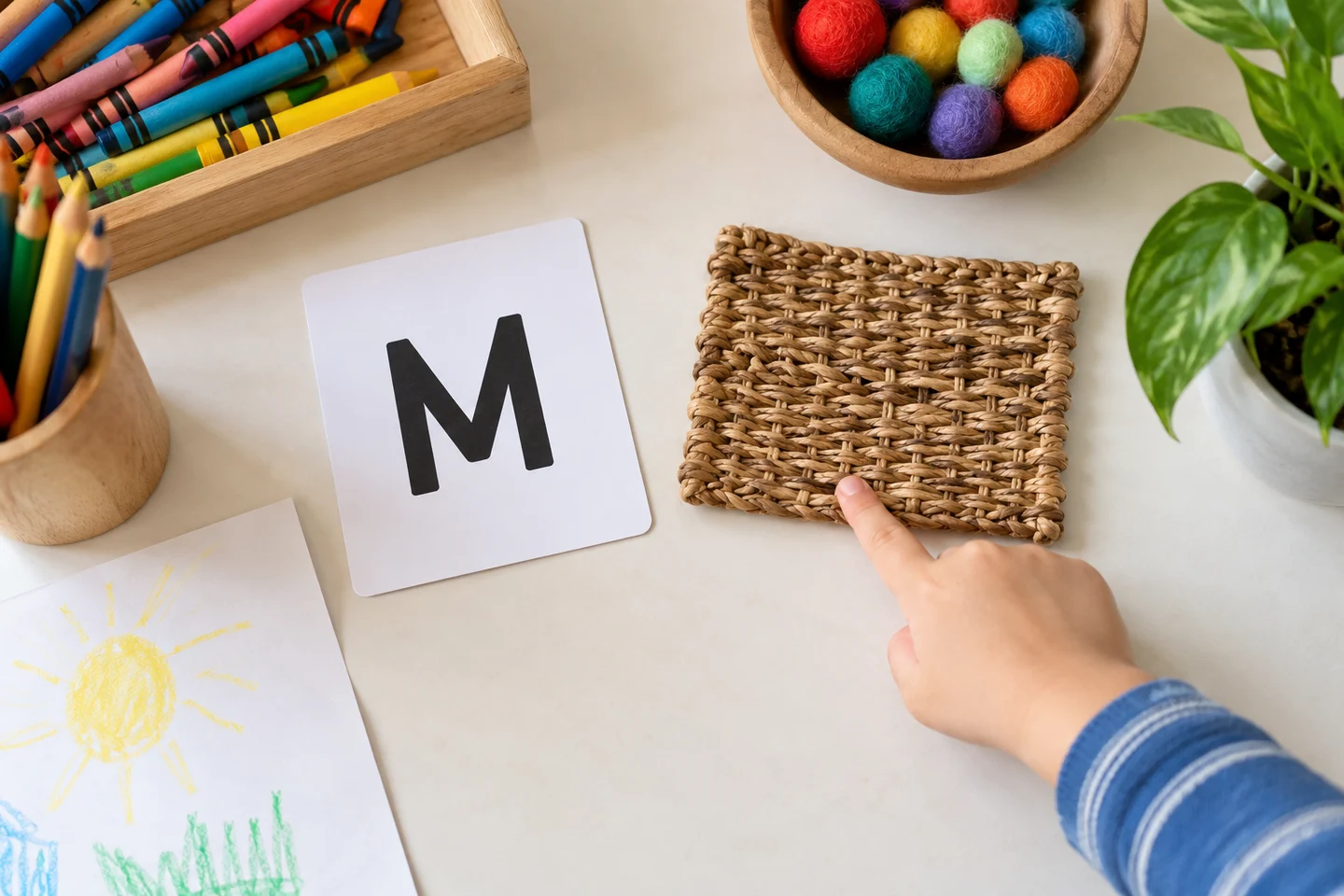
What children can explore
Matching shapes, naming letters, and hearing beginning sounds are different skills. Choose prompts that fit the game you are playing: “Do these look the same?” “What is this letter called?” or “What sound do you hear first?”
At home and in the classroom
At home, use a few books and familiar objects. In class, rotate finding and recording roles within small groups. Keep matching, naming, and sound materials in separate envelopes so the next session is easy to set up.
Make it work for your group
Try larger print, high-contrast cards, two choices, or partner support. For multilingual children, agree on the language for a sound round and welcome other words they know. Older children can find several words with the same beginning sound.
Helpful fixes and cleanup
If the hunt becomes guessing, return to one example and reduce the choices. If print styles confuse matching, use identical prepared cards first. Collect targets and save the sets for another short hunt.