Learning Through Play
Apple Math Without Food: Sorting, Counting, and Pattern Games
 Facebook
 Pinterest
 X
X LinkedIn
 Reddit
 WhatsApp
 Telegram
 Bluesky
 Email
Email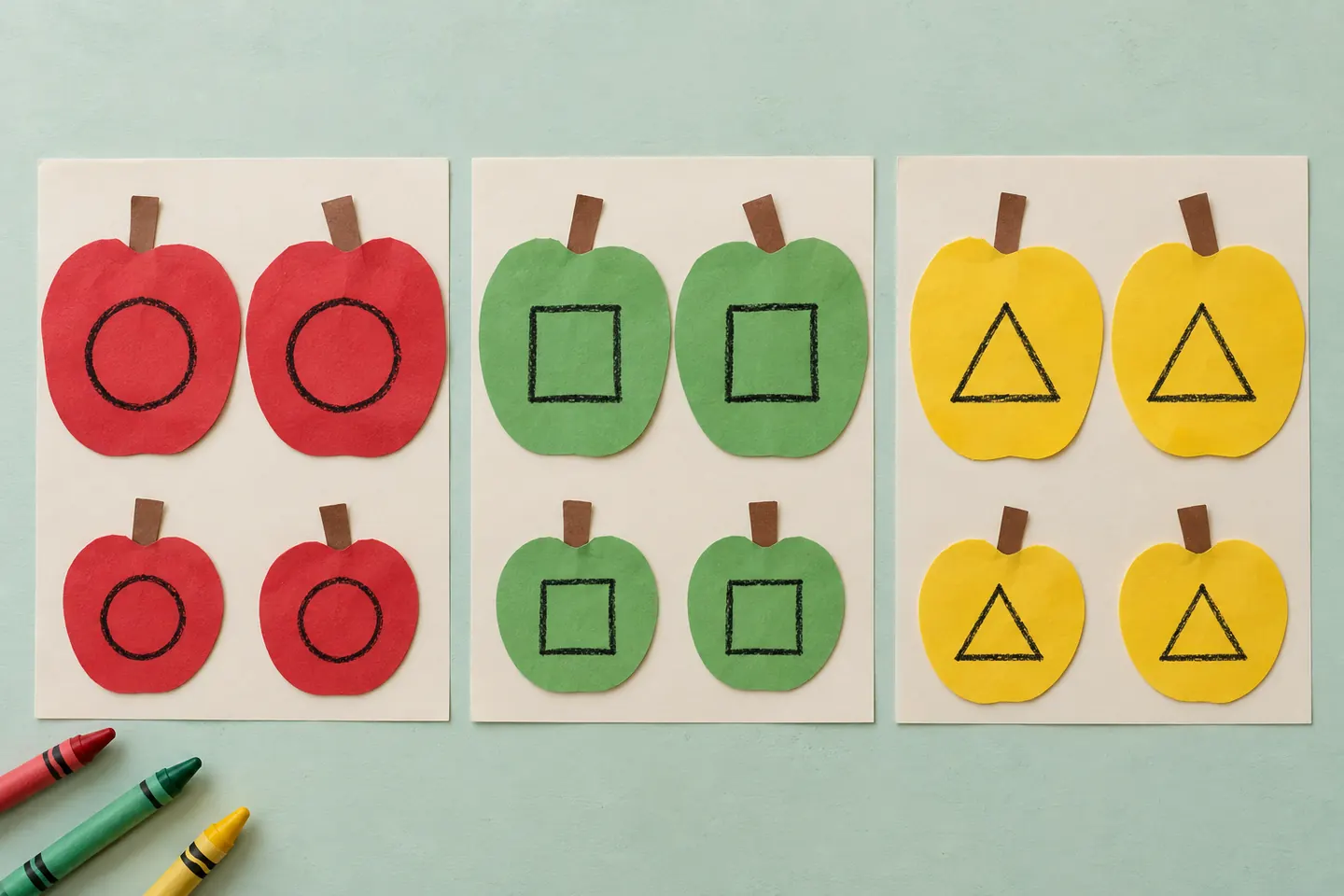
Twelve paper apples can become several different math games. Children sort them, count them, compare groups, and make repeating patterns—all with pieces they can move and rearrange.
The apples are made from paper, so the activity is easy to save and use again. Start with one short game and add another when the child is ready.
At a glance
- Suggested ages: 4–8; adjust the number of pieces to the child.
- Preparation: About 15 minutes for one reusable set; play for 15–25 minutes.
- Group size: One child, a pair, or a classroom math center.
What you need
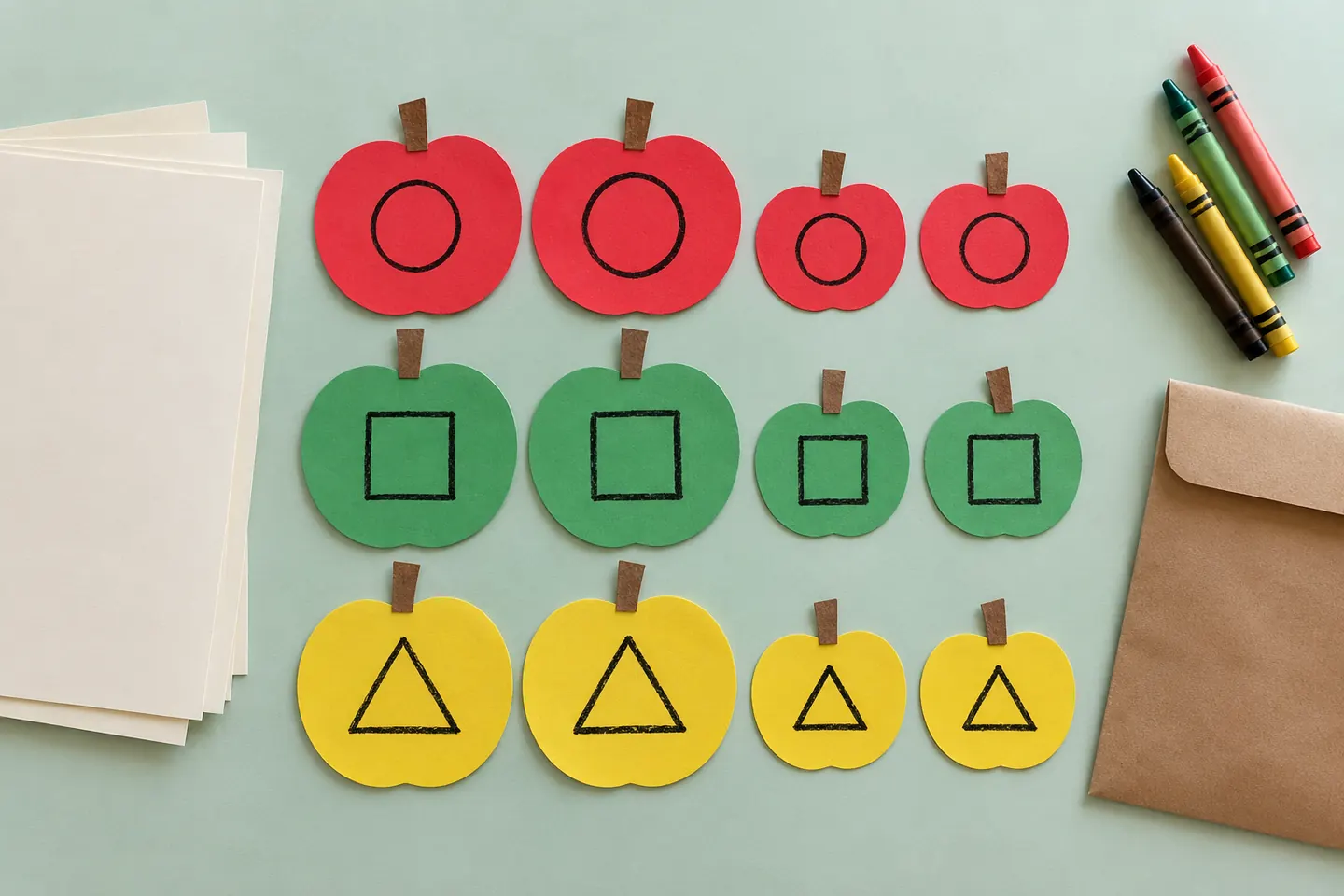
- Twelve paper apples: four red, four green, and four yellow.
- Within each color, two large apples about three inches across and two smaller apples about two inches across.
- Two or three paper sorting mats.
- Crayons and a storage envelope.
Draw a circle on each red apple, a square on each green apple, and a triangle on each yellow apple. These labels offer another way to distinguish the color groups. For 24 children in pairs, prepare 12 sets—144 apples—or rotate through six shared sets.
Get ready
Mix the pieces and explain the rule for the first game only. Keep the other possibilities for later. The collection has six large and six small apples, with both sizes represented in every color.
Try the apple games
1. Sort by color
Make red, green, and yellow groups. Use the symbol labels to check choices when helpful. Ask what is the same about the pieces in one group; sizes can vary because color is the current rule.
2. Count a group
Choose one color and move its apples onto a mat one at a time. Say one number for each piece. Ask how many are there altogether, then rearrange the four apples and count again.
3. Compare two groups
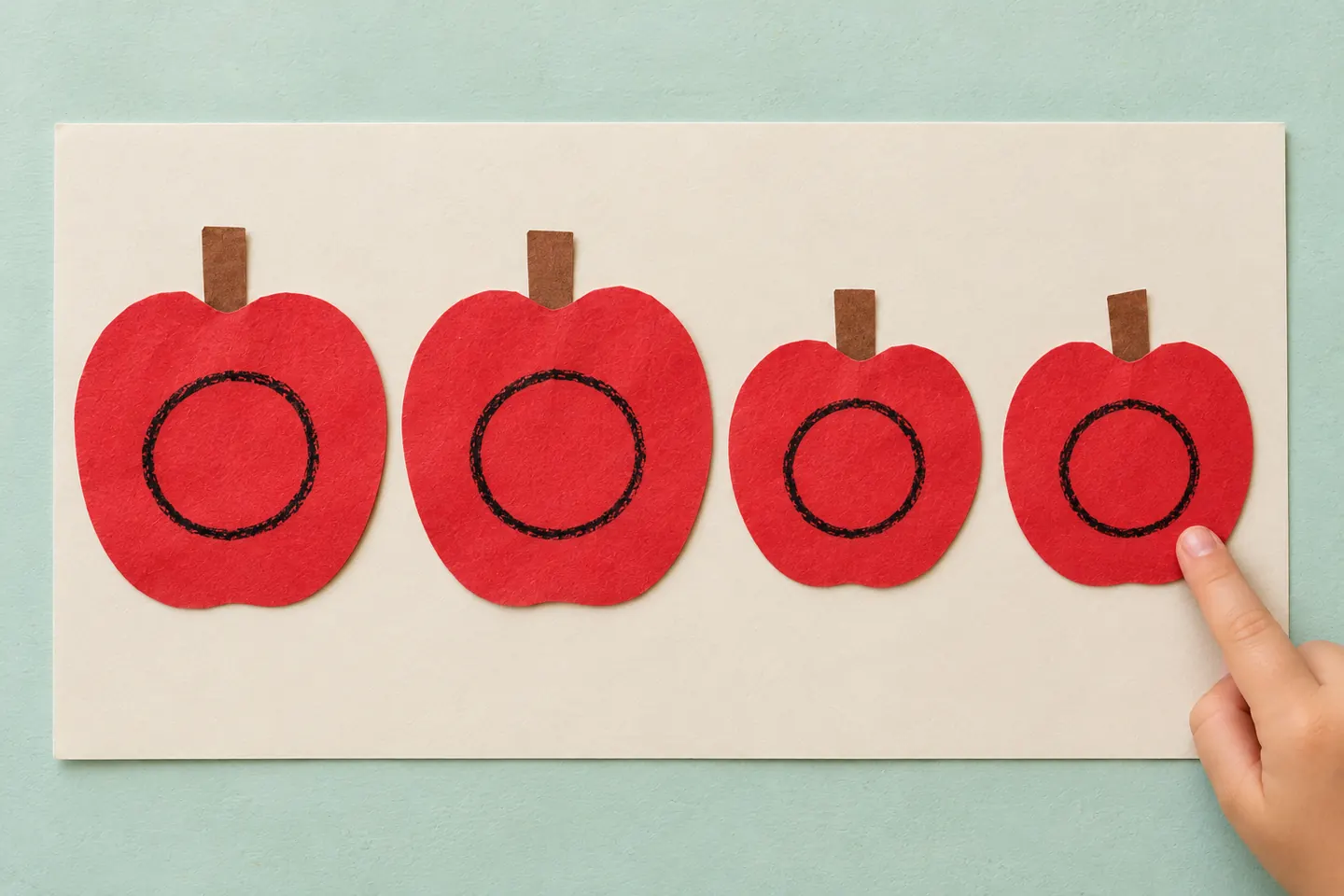
Put red and green apples in paired rows. Match one red with one green: each group has four. Remove one green apple and compare again. Which row now has an unmatched piece? Return it before the next game.
4. Change the sorting rule
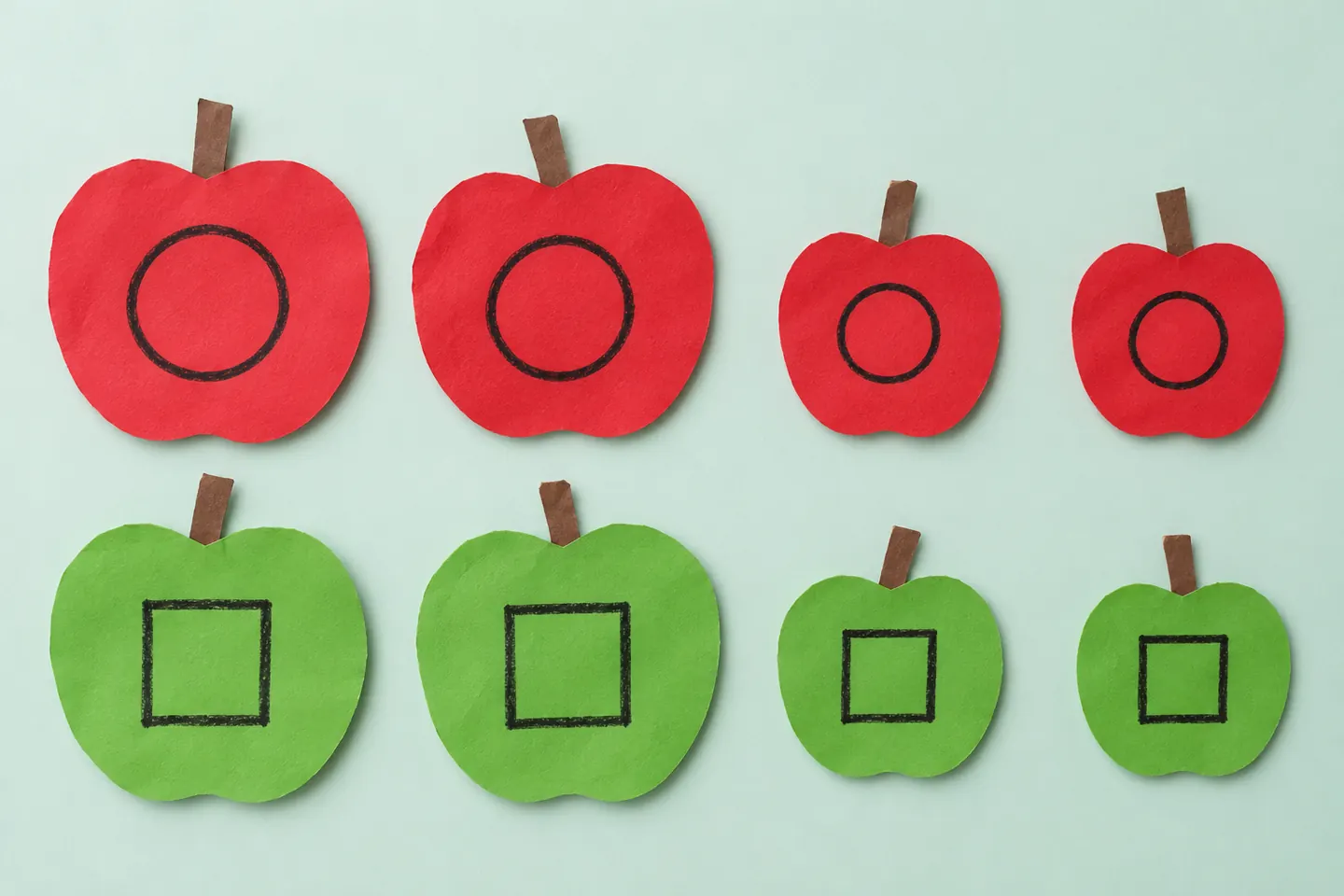
Mix all twelve and sort by size. Count six large and six small apples. Notice that the same red apple now sits with other large apples rather than every red apple.
5. Make a two-part pattern
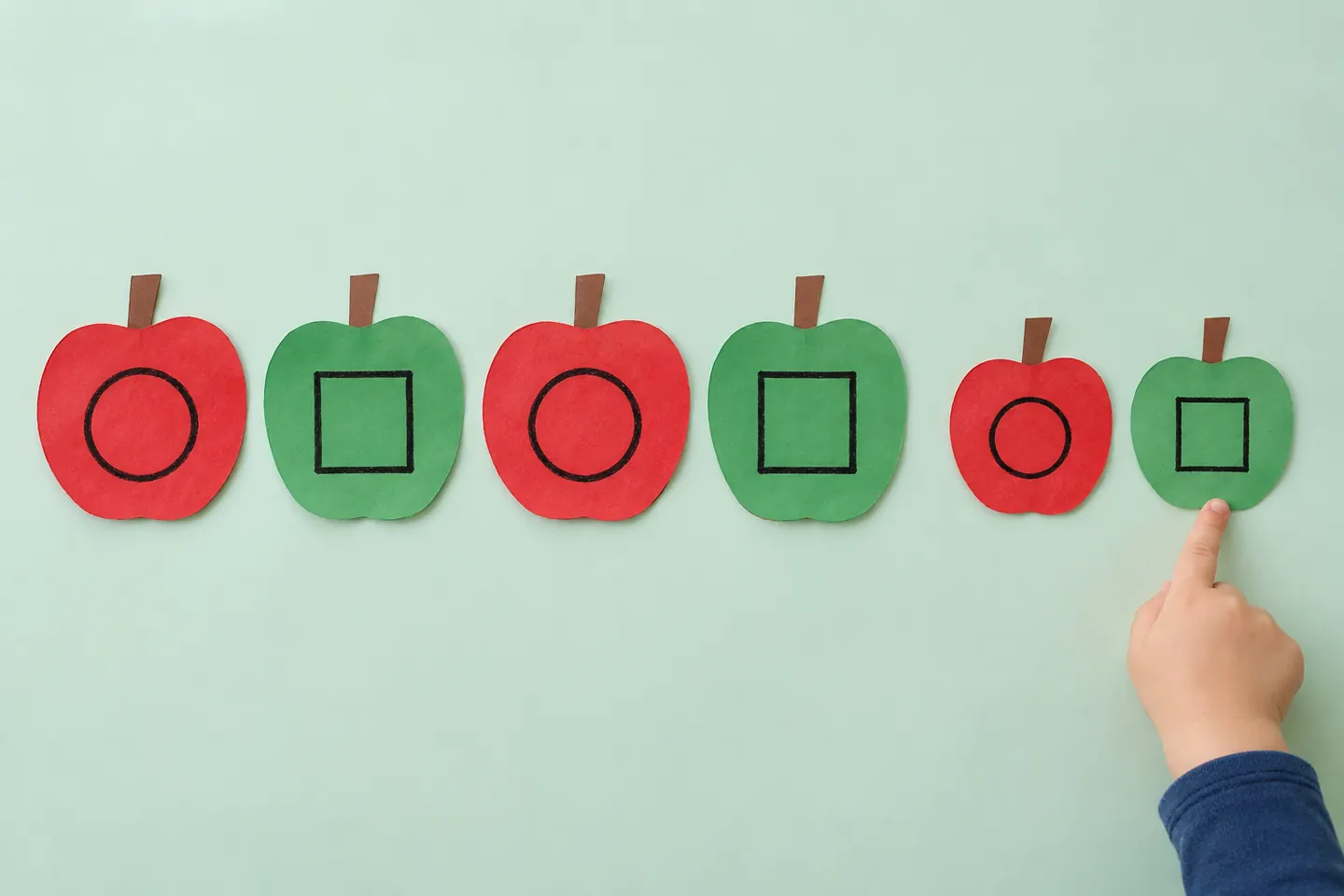
Use three red and three green pieces for red, green, red, green, red, green. Say the repeating pair aloud. Remove a piece from the middle and invite the child to fill the gap.
6. Try a new repeating unit
Use all four reds and four greens for red, red, green, green repeated twice. Or make red, green, yellow repeated four times with all twelve pieces. Explain that color is the pattern rule even when the pieces vary in size.
What children can explore
Moving each apple connects counting words with objects. Paired rows make equal and unequal groups visible, and sorting shows that more than one rule can organize the same collection. Ask, “Which rule are we using?” or “What part repeats?”
At home and in the classroom
At home, begin with six pieces and one game. In class, pairs can alternate arranging and explaining. Keep the collection organized in an envelope so another short center session needs little preparation.
Make it work for your group
Offer fewer colors, larger pieces, or pointing instead of speaking. Use symbols alongside colors. Older children can invent a sorting rule, explain a pattern, or find different ways to split twelve into two groups.
Helpful fixes and cleanup
Counting a piece twice? Move counted apples into a new row. Pattern unclear? Name the repeating unit and show two complete copies. Sorting mixed up? Restate one rule. Count the pieces back into their envelope and save the game for another day.