Learning Through Play
School-Day Sequence Cards: A Playful Back-to-School Activity
 Facebook
 Pinterest
 X
X LinkedIn
 Reddit
 WhatsApp
 Telegram
 Bluesky
 Email
Email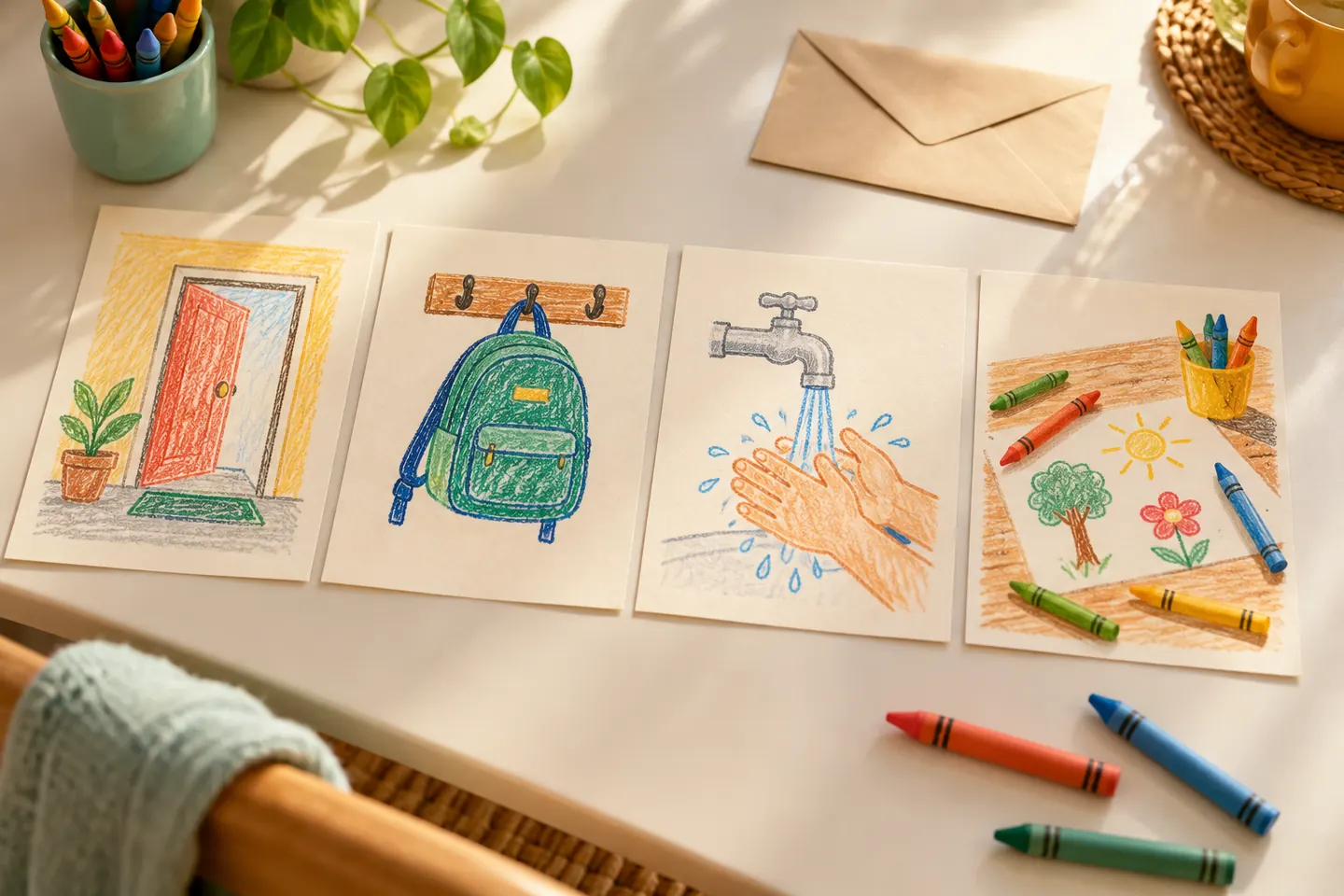
A few pictures can help children tell the story of a school day: arrive, put away a bag, wash hands, and choose an activity. Sequence cards make a familiar routine something they can see, arrange, and act out.
Use the order that actually fits your child or classroom. The activity works best when pictures connect with real events and there is room to ask questions about what happens next.
At a glance
- Suggested ages: 4–7, with adult drawing or writing help.
- Preparation: 10–15 minutes; play for 15–25 minutes or revisit briefly over several days.
- Group size: One child, a pair, or a small classroom group.
What you need
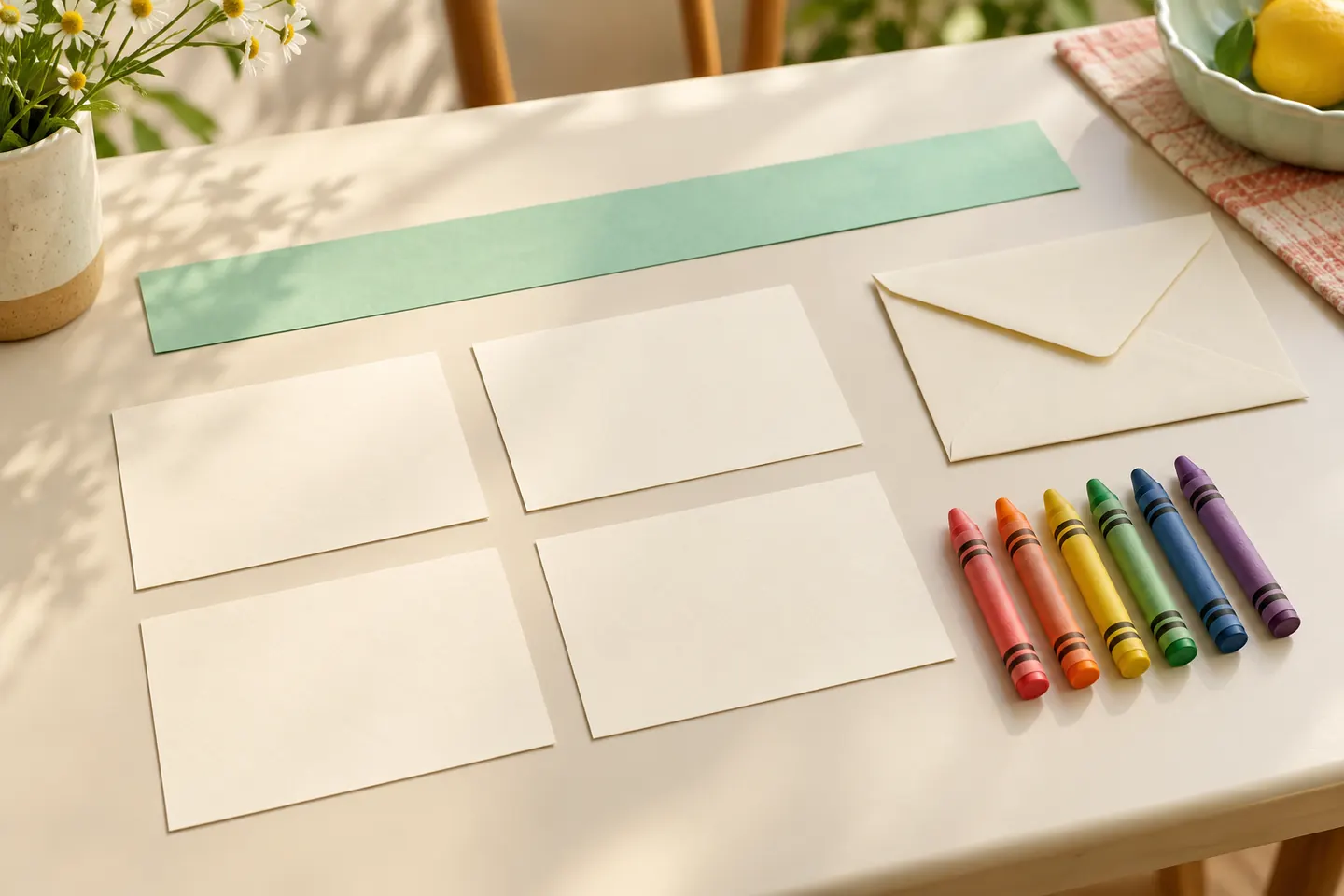
- Four to six large blank cards.
- Crayons or markers.
- Clear table space or a long paper strip.
- An envelope for storage.
For 24 children in six groups, prepare six sets of four cards for a routine your class follows, plus one demonstration set. Adults can cut clean reused card in advance. No magnets or small fasteners are needed.
Choose a short routine
Start with four events, such as entering, putting away a bag, washing hands, and choosing an activity. Check the actual order with the setting. Simple, recognizable pictures are more helpful than lots of decorative detail.
Put the day in order
1. Draw one event per card
Show the important action or object: a bag, tap, book, or activity table. Ask your child what each picture means. Adjust an image that is hard to recognize.
2. Tell the sequence
Lay the cards in a consistent direction and describe them: “First we arrive. Next we put the bag away.” Point as you speak so the pictures connect with the words.
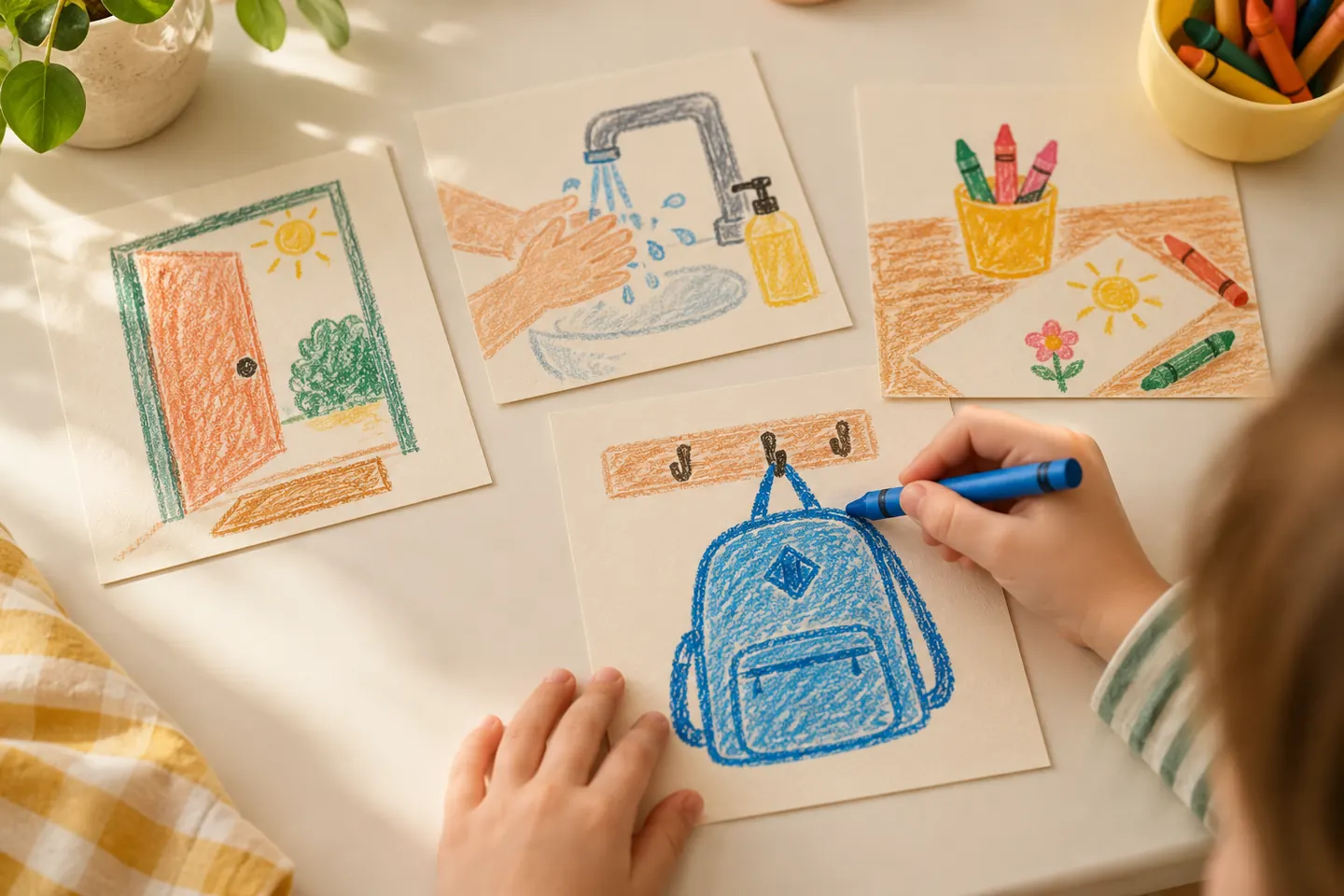
3. Rebuild it together
Mix the cards and invite the child to find the first event. Add one at a time. If needed, offer two choices and ask which happens next. Refer back to the real routine when a part is unfamiliar.
4. Act out the pictures
Pretend to enter, put away a bag, wash hands, and choose a book. Follow along with a finger on the cards. A puppet or imaginary character can act out the sequence instead.
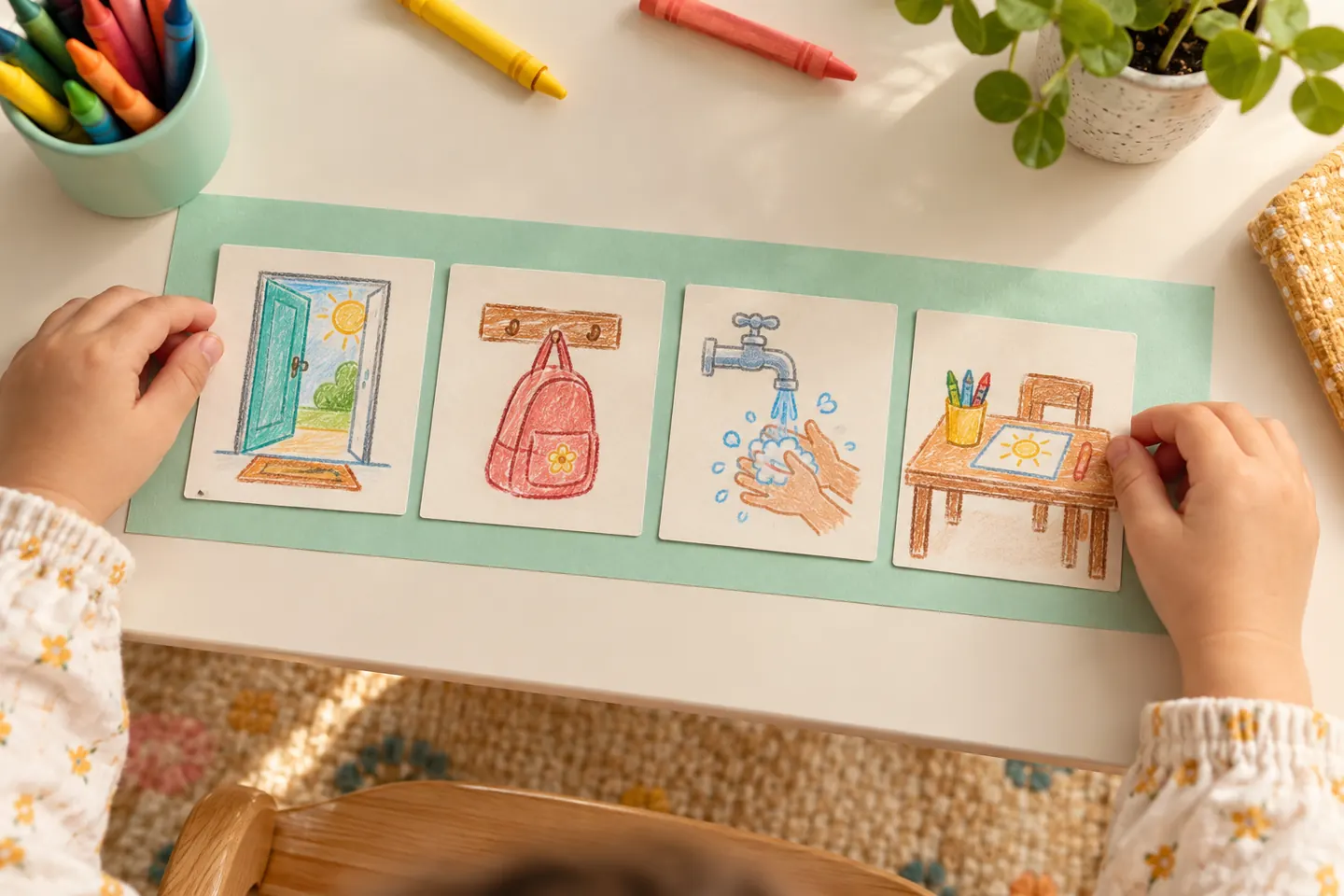
5. Introduce one change
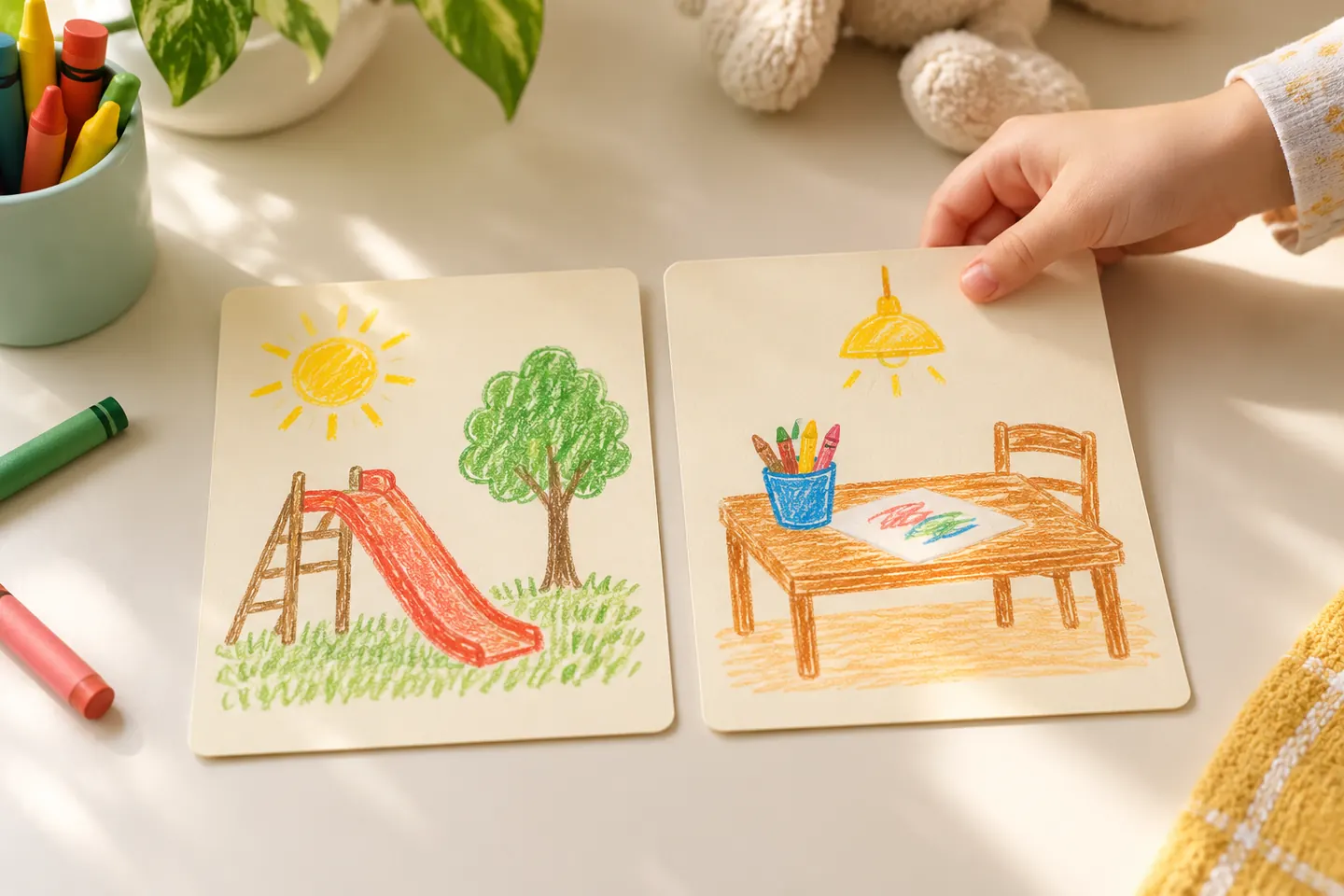
Try a believable change, such as indoor play when the playground is closed. Add a replacement card and explain which event changes. Leave the other cards where they belong.
6. Add a question card
Offer a blank card for something the child wants to know, such as who helps at lunch. Draw it together, then seek an accurate answer from the school or relevant adult.
What children can explore
Arranging cards connects picture recognition, event order, and words such as first, next, and after. Ask, “What happens before this?” or “Which picture changes today?” Acting out the sequence gives another way to connect it with experience.
At home and in the classroom
At home, try a morning or arrival routine. In class, use the cards for a short small-group activity and revisit them when an actual routine changes. Personal sets can reflect differences in children’s schedules rather than assuming everyone has the same day.
Make it work for your group
Use two or three cards, larger pictures, home-language labels, or pointing instead of speaking. Older children can draw a later part of the day or explain where a new event would fit.
Helpful fixes and cleanup
Pictures confused? Simplify the drawings and check their meaning together. Order uncertain? Review the actual routine rather than guessing. Too many events? Shorten the sequence. Keep each set in its envelope so it is ready for another telling of the day.