Learning Through Play
Summer Postcards for Kids: A Drawing and Writing Activity
 Facebook
 Pinterest
 X
X LinkedIn
 Reddit
 WhatsApp
 Telegram
 Bluesky
 Email
Email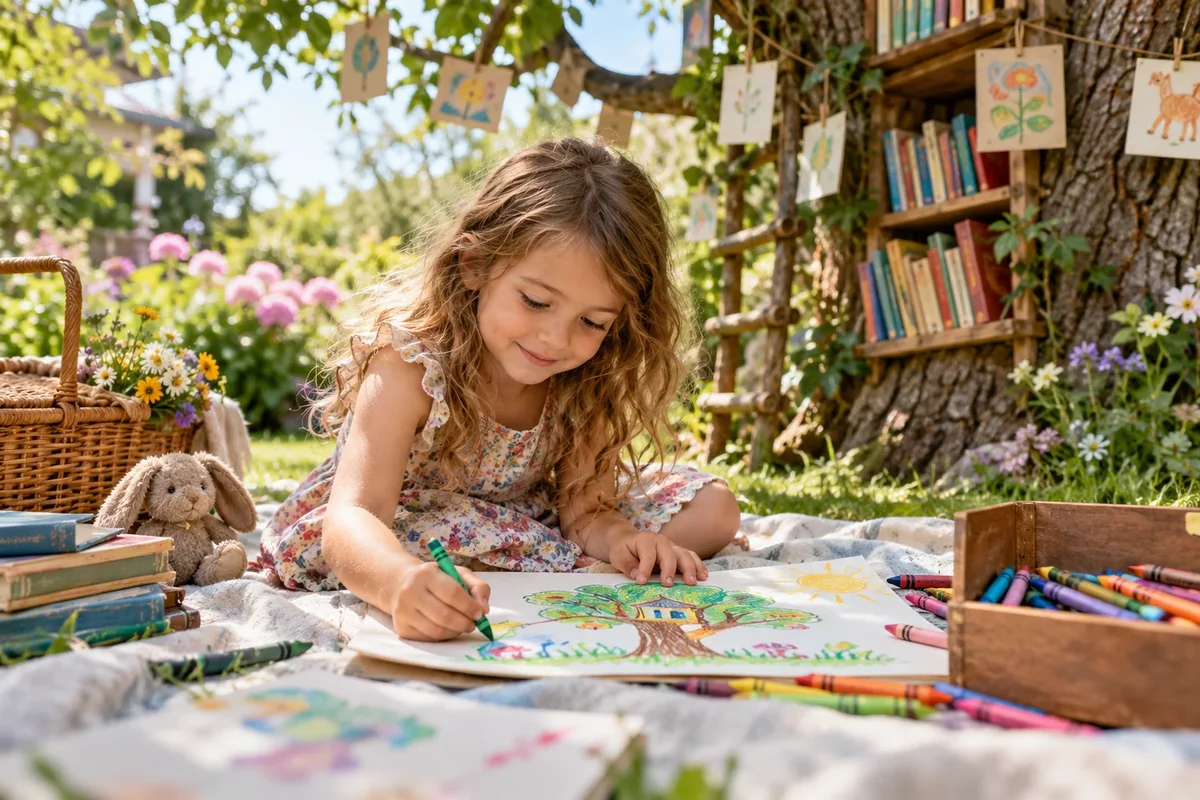
A postcard can share a tiny story: a sunny afternoon, a pretend trip to the moon, or a drawing made for someone special. Children illustrate one side and add a short message on the other.
Hand delivery and a classroom post box make this activity easy to enjoy without postage. Real mailing is an optional extra that adults can arrange after the creative work is finished.
At a glance
| Detail | Plan |
|---|---|
| Suggested ages | 4–10 |
| Preparation | About 5–10 minutes |
| Activity time | 25–35 minutes |
| Group size | Individuals, pairs, or a classroom post office |
| Mess level | Low |
What you need
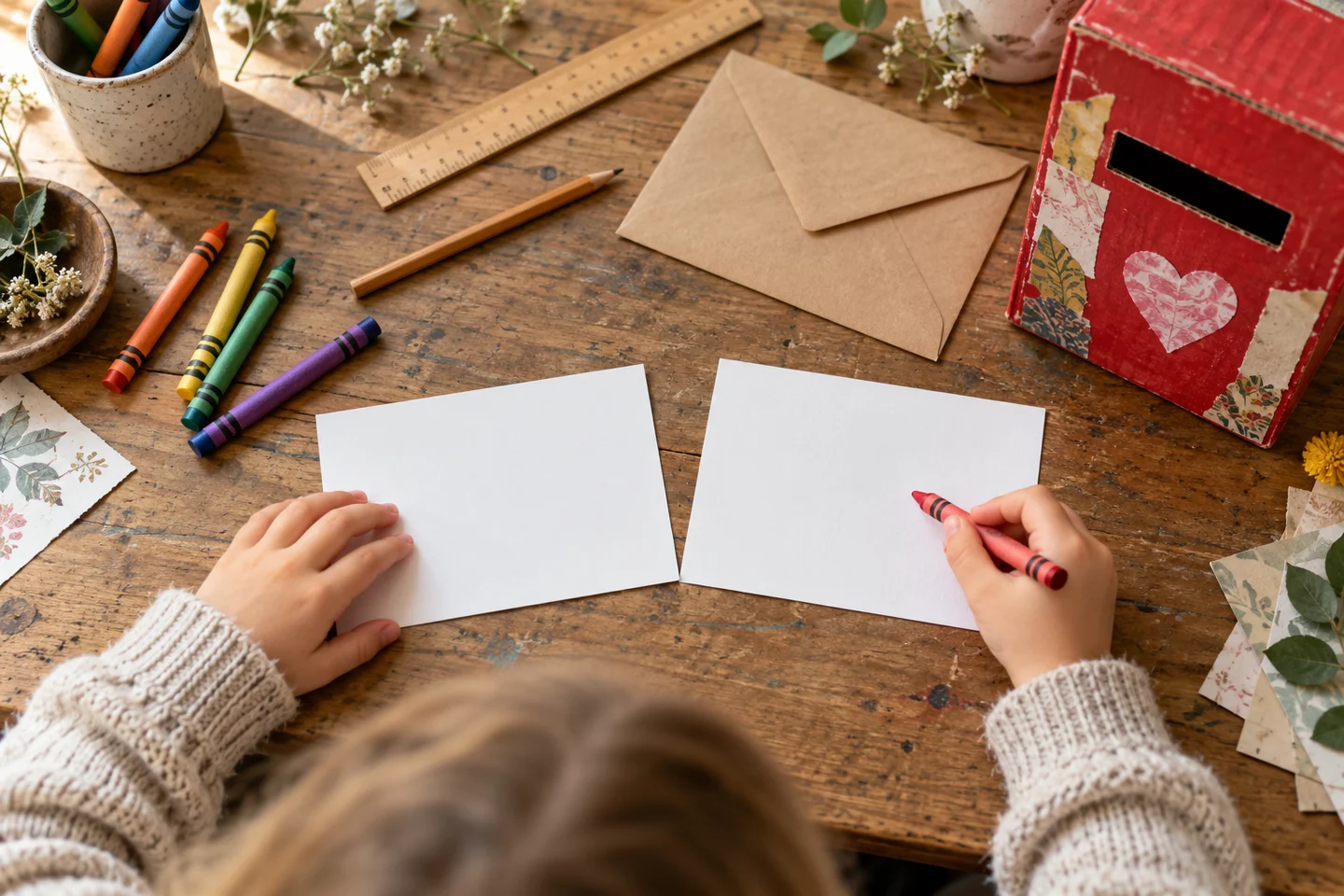
- Two blank cards, about 4 × 6 inches, per child.
- Crayons or colored pencils.
- A pencil and ruler.
- An optional envelope.
- A reused box for classroom delivery if wanted.
For 24 children, gather 48 cards plus spares and shared drawing supplies. Larger cards work well for hand delivery. If mailing, an adult checks current postal requirements and postage for the actual card; dimensions, thickness, and attachments can affect what is accepted.
Choose something to share
Ask who the card is for and what the child would like to tell them. An everyday moment works as well as a holiday. A pretend journey should be presented as an invented adventure so the recipient can enjoy the story as intended.
Create a postcard
1. Draw the front
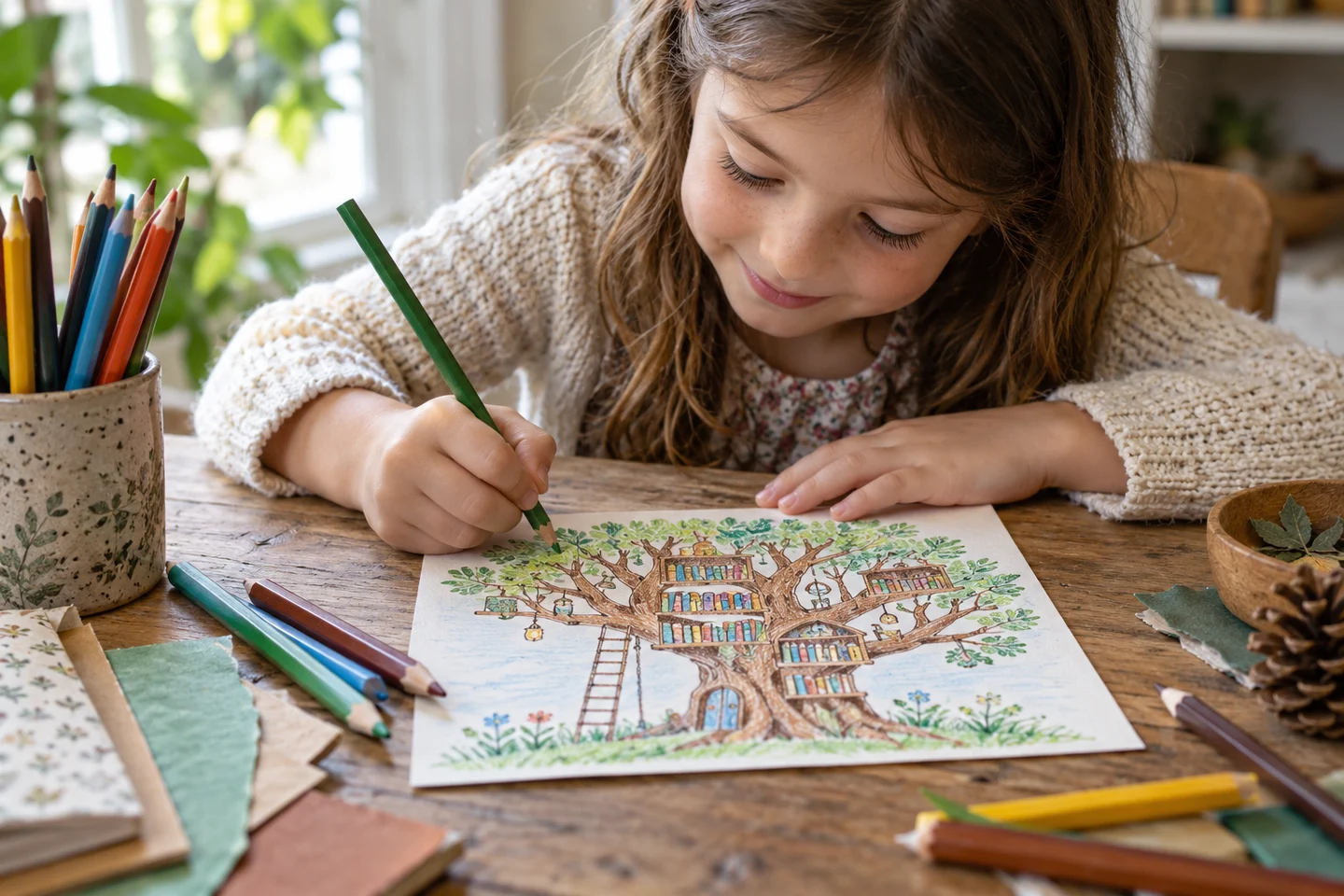
Use one side for a picture of the place, event, or idea. Add details that matter to the message. Crayons keep the card flat and ready to turn over without waiting for paint to dry.
2. Plan the back
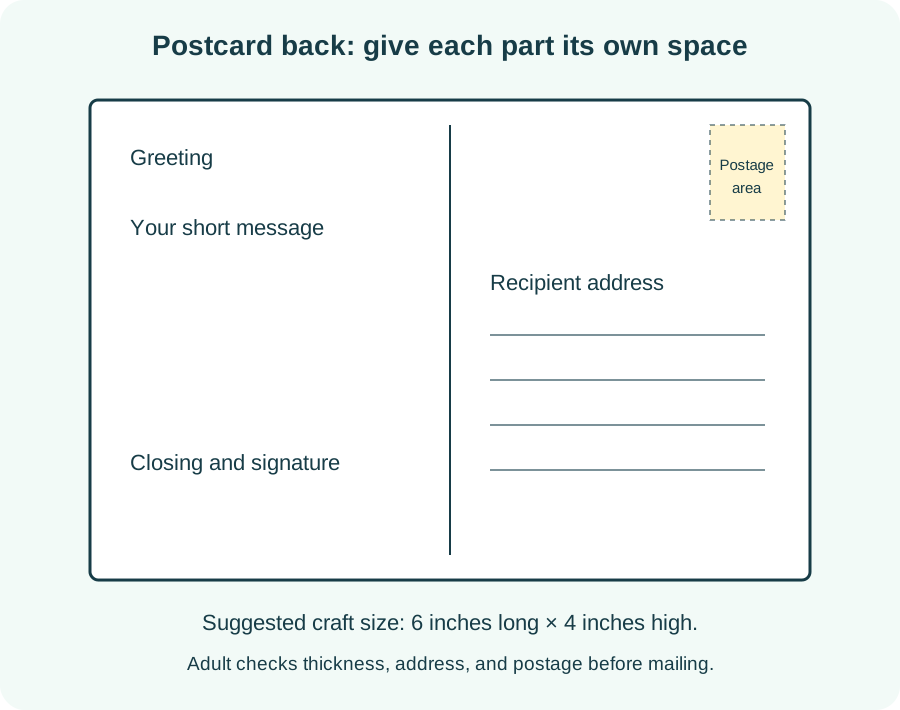
Turn the card landscape and draw a vertical line near the middle. The left side holds the message; the right side is for the recipient details. Leave the upper-right area clear if the card will be mailed.
3. Start with a greeting
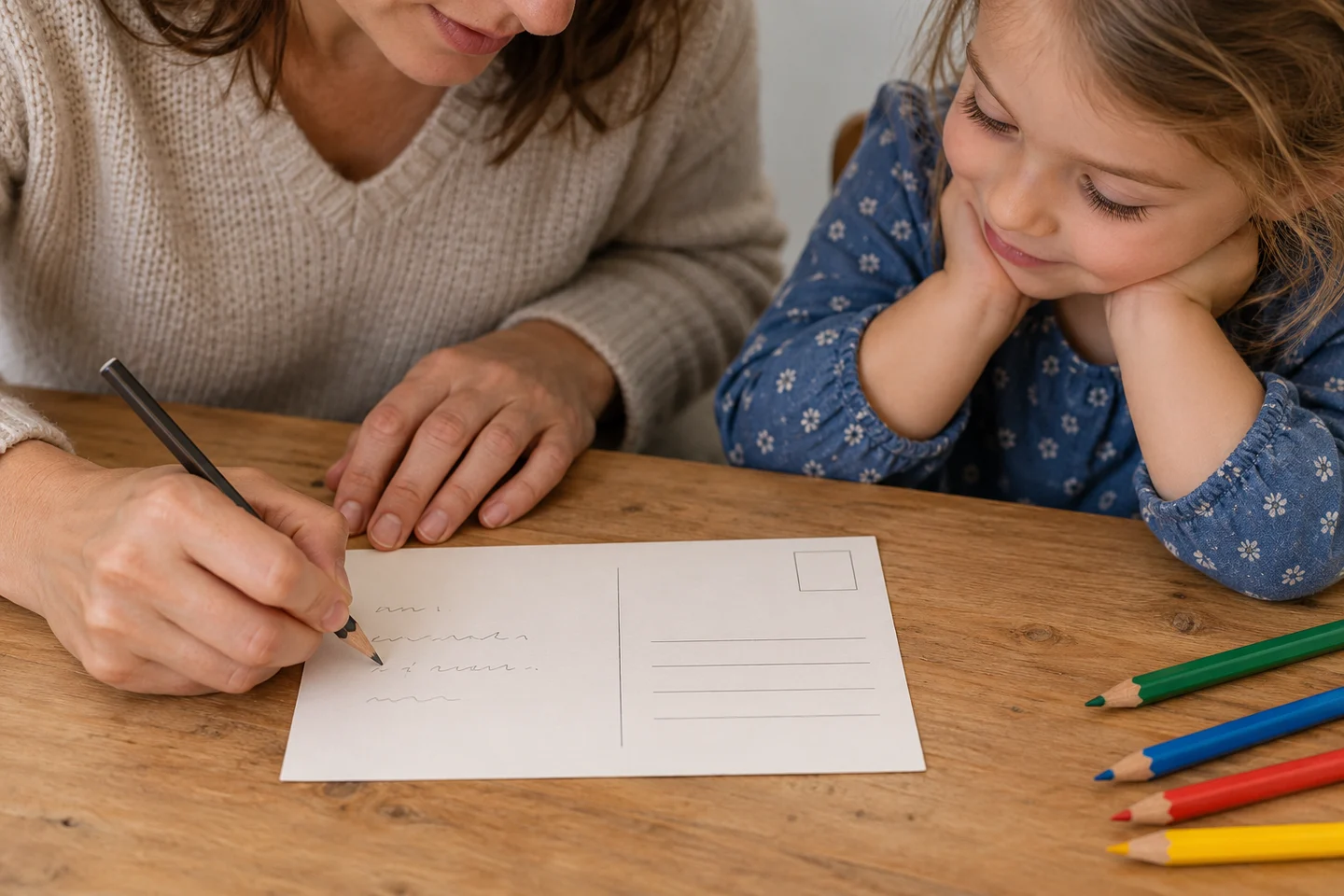
Try “Hello, Grandma!” or another greeting the child chooses. Adults can write from dictation or provide a model. A young child can add marks, a drawing, or a few familiar letters.
4. Add one detail
Share something noticed, enjoyed, or imagined. “We saw a blue bird by the gate” gives the reader a clear moment. End with a name or chosen signature.
5. Read it together
Ask, “Will they know what the picture shows?” Add a detail if wanted. Help with spelling when useful while keeping the child’s voice and ideas.
6. Deliver the card
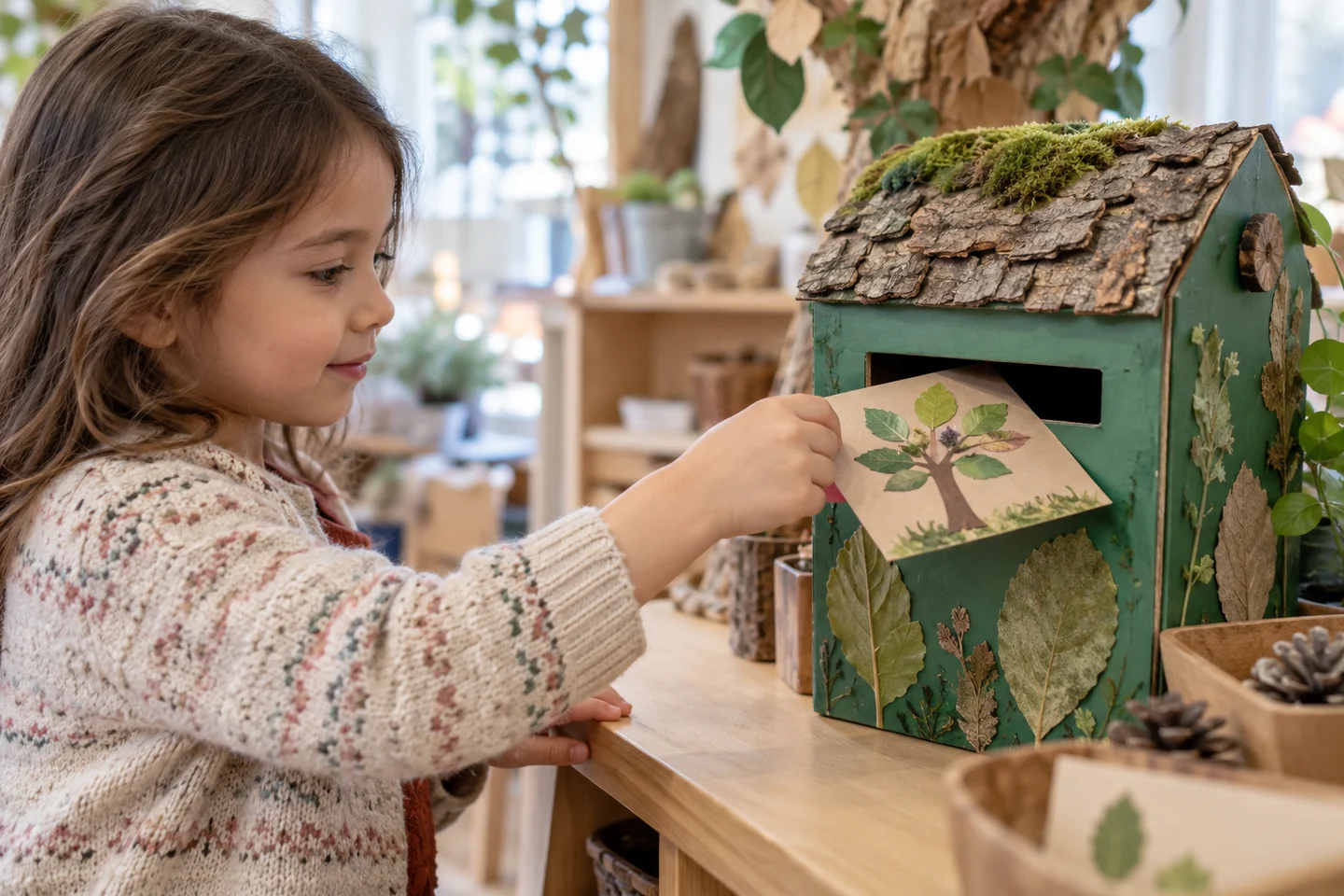
Hand it over, place it in a classroom post box, or give it to an adult for mailing. Adults add real addresses privately; a classroom version can use agreed names and classroom locations.
A message to try
“Hello, Sam! I made a garden with three purple flowers today. One has square petals. What would you put in your garden? From Alex.” A short message can include a detail and a question without filling every inch of the card.
What children can explore
Postcards give writing and drawing a real audience. Ask, “What will your reader want to know?” or “Which detail helps them picture it?” Dictation lets children practice composing a message before independent writing is comfortable.
At home and in the classroom
At home, make a card for someone nearby or save a pair for later. In class, create a simple delivery box and make sure everyone who wants to receive a card has an opportunity. Children can send one to the class as a whole.
Helpful fixes and cleanup
Message space small? Use a shorter sentence or a larger hand-delivered card. Child not ready to write? Record their words. Mailing uncertain? Use an envelope or hand delivery after adult checks. Store unused blanks together and keep personal addresses off classroom displays.