STEM & Discovery
Sound Detective: Compare Homemade Paper Instruments
 Facebook
 Pinterest
 X
X LinkedIn
 Reddit
 WhatsApp
 Telegram
 Bluesky
 Email
Email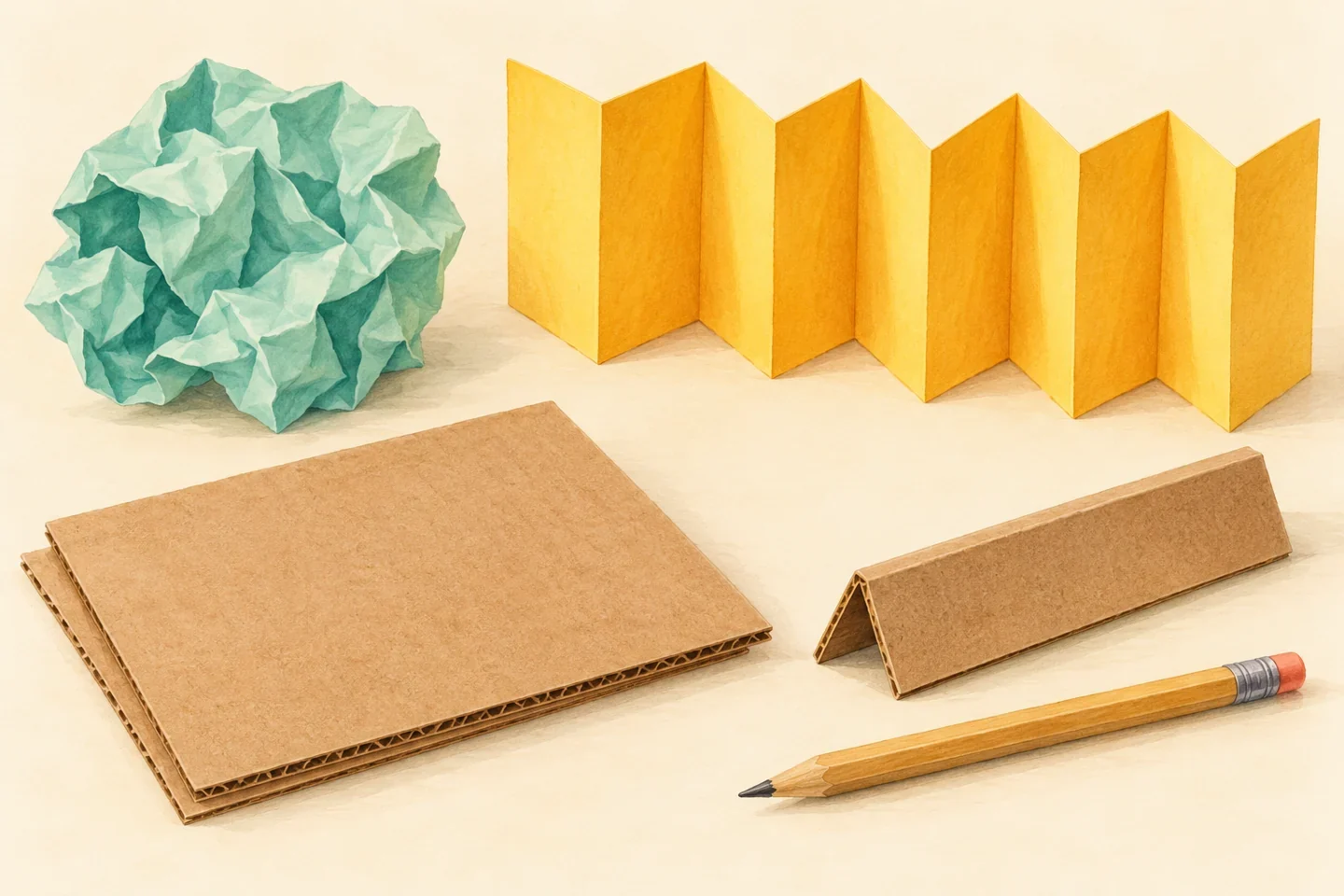
Paper and cardboard can produce different sounds when moved in different ways. Children create three simple sound-making surfaces and compare gentle actions. This is a modest-volume investigation, not a challenge to make the loudest noise. Listening is optional: someone can watch the movements, draw the materials, or choose a different activity without needing to justify that choice.
At a glance
| Suggested ages | 5–9 |
|---|---|
| Activity time | 20–35 minutes |
| Adult setup | 5 minutes |
| Participation | Individual or small group; watching, pointing, and partner assistance are welcome |
What you need
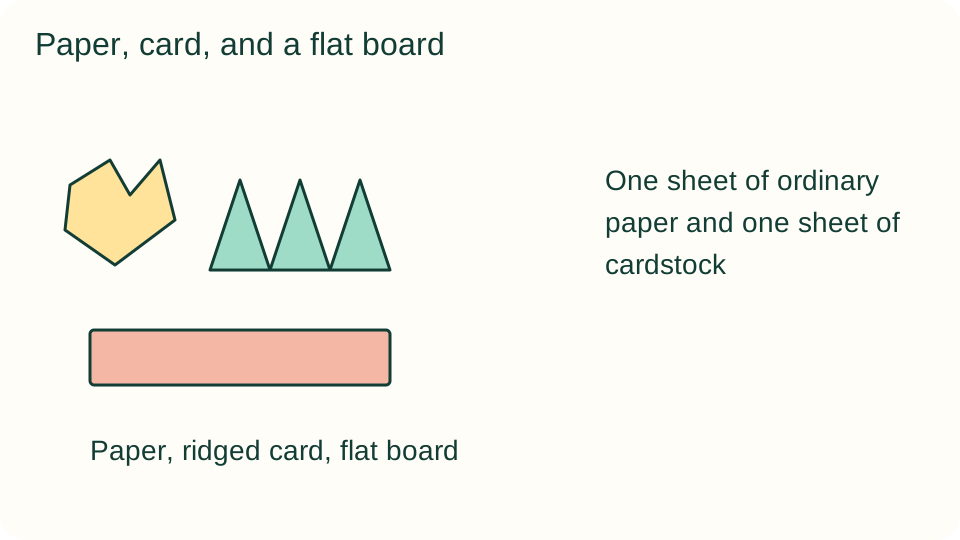
- One sheet of ordinary paper and one sheet of cardstock
- A clean flat cardboard rectangle about 15 × 20 cm
- A folded cardboard rubbing strip, pencil, and recording paper
Get ready
Check cardboard edges and remove staples. Agree on gentle movements and a clear stop signal before starting. No objects go near ears, and no striking people or furniture is allowed. Provide a quieter nearby activity for anyone who does not want to hear the comparison.
Try the activity
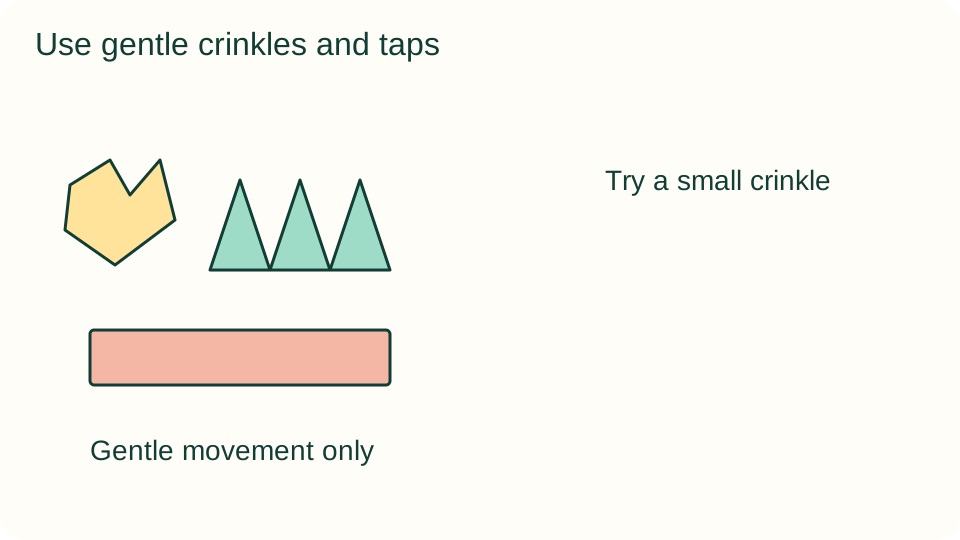
1. Try a small crinkle
Hold the ordinary paper with both hands and bend just one corner back and forth. Listen from a comfortable distance, if wanted. Describe the sound using ordinary words such as soft, crackly, or brief. Avoid assigning a right answer to another child's description.
2. Make paper ridges
Fold the cardstock into broad accordion folds about 2 cm apart. Lay it on the table with its ridges visible. Draw a folded cardboard strip gently across two or three ridges. The movement should stay slow enough that participants can see what makes the repeated sound.
3. Explore a tapping surface
Place the flat cardboard rectangle on the table. Tap it lightly with a fingertip, then place a folded scrap of paper beneath it and repeat. Keep taps gentle and similar. Ask whether the sound seems different without insisting that every setup must produce a noticeable change.
4. Compare one action
Choose either crinkling, scraping, or tapping and repeat it three times. Keep the movement as similar as possible. A child can draw three marks for the repeated events or indicate whether each seemed the same or different; exact sound measurements are unnecessary.
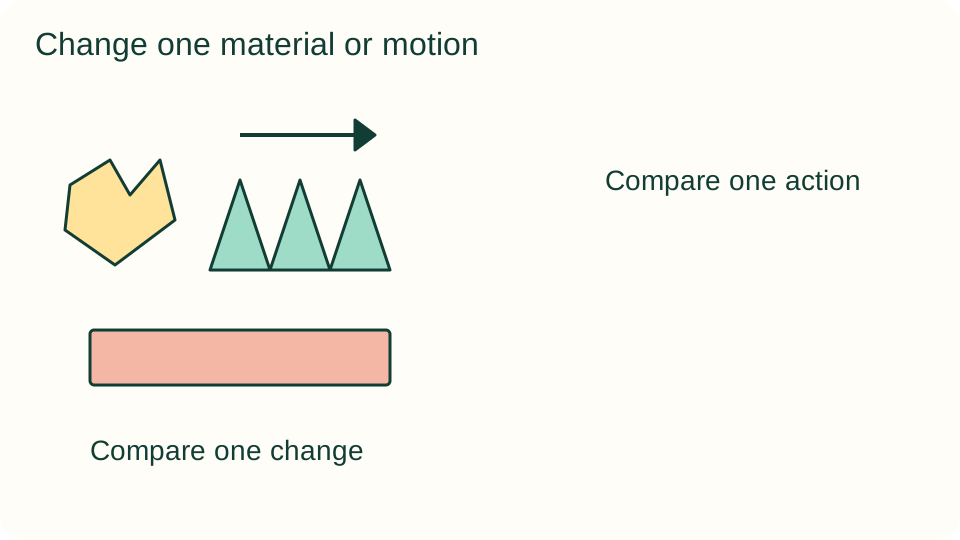
5. Change one feature
For the ridged surface, try slower versus slightly faster scraping while keeping the material the same. Alternatively compare ordinary paper and cardstock crinkles using the same small movement. Do not change both speed and material and then claim which caused the difference.
6. Share an observation
Invite participants to point to the material, demonstrate a silent motion, draw a sound symbol, or explain what they heard. Use the agreed stop signal when everyone has had enough. Keep the demonstration brief rather than extending it until every child performs.
What children can explore
Sound comes from vibrations that can travel through materials and air. Some movements are visible, but this setup does not measure pitch or loudness accurately. Comparing descriptions is still useful. Ask which action produced repeated events and which produced one short event, allowing different listening experiences.
Make it work for your group
Prepare the folded surface for children who want to focus on observation. Offer only one familiar material at first. Older participants can devise a simple symbol key for crinkle, tap, and scrape, then record a short sequence without turning it into a loud group performance.
At home and in the classroom
Use one small sound station at a time, away from quiet work. Partners can switch operator and observer between test sets, with either role allowed to remain silent. At home, tell other people before beginning so an unexpected scraping sound does not interrupt their activities.
Save your discoveries
Copy a simple record onto paper: what you changed, what stayed the same, and what happened. Drawings, pointing to a sketch, or notes dictated to an adult work as well as independent writing. Record the actual observations, including trials that did not go as expected.
Helpful fixes and cleanup
If sounds are uncomfortable, stop rather than increasing distance and requiring continued participation. A rough scraper can be refolded to make a smooth edge. Flatten and store the ridged card if wanted, recycle torn paper, and return the space to its normal sound level.