Learning Through Play
Make a Story With Picture Cards: A Creative Storytelling Activity
 Facebook
 Pinterest
 X
X LinkedIn
 Reddit
 WhatsApp
 Telegram
 Bluesky
 Email
Email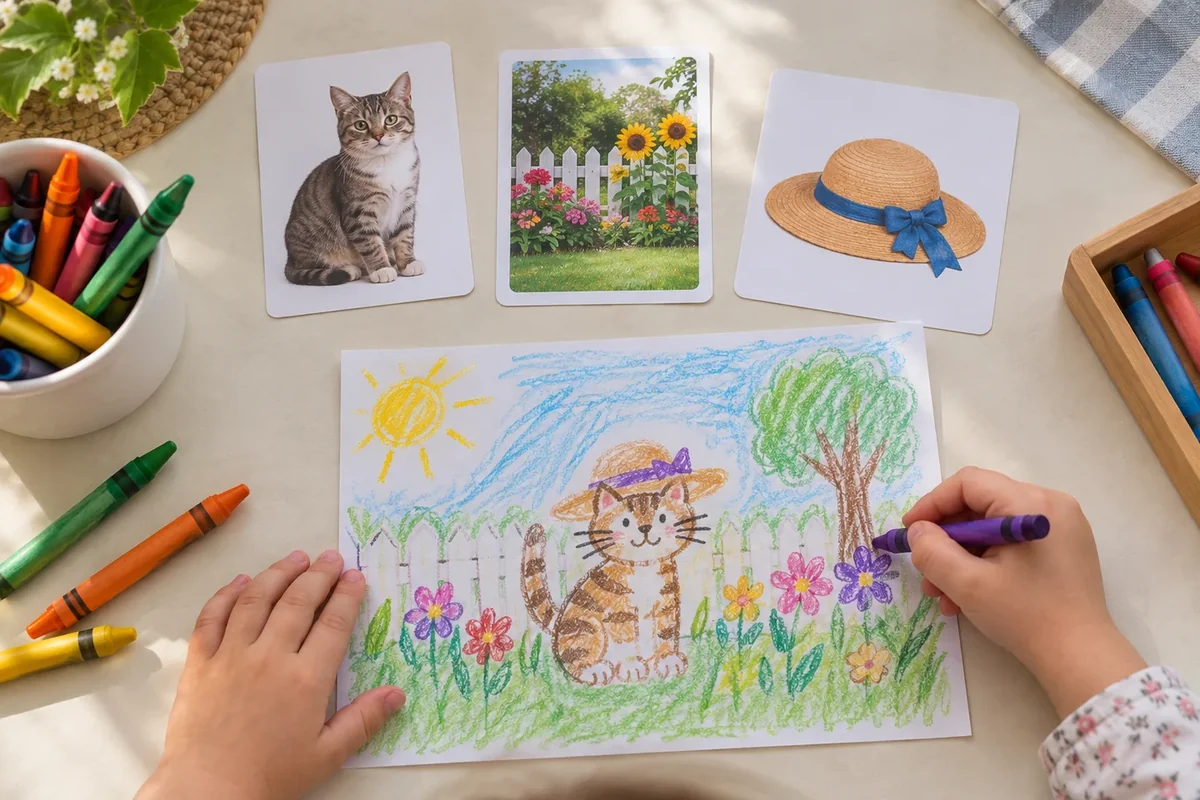
What happens when a cat, a park, and a mysterious parcel appear in the same story? Picture cards give children a few starting ideas, then leave the adventure up to them.
This is an easy storytelling activity for a kitchen table, reading corner, or small classroom group. Children can speak, draw, act, or dictate their story; independent writing is optional.
At a glance
| Detail | Plan |
|---|---|
| Suggested ages | 5–9 |
| Preparation | About 15 minutes, or make cards during the session |
| Story time | 25–35 minutes |
| Group size | One storyteller, a pair, or small groups |
| Mess level | Low |
What you need
- About 12 blank cards or pieces of sturdy paper.
- Crayons and a pencil.
- Drawing paper for recording a story.
- Three envelopes or trays for sorting cards.
Make three small collections: characters, places, and events. Four cards in each collection are plenty to begin. For 24 children, prepare eight sets for groups of three, or let groups draw their own cards before telling stories.

Get ready
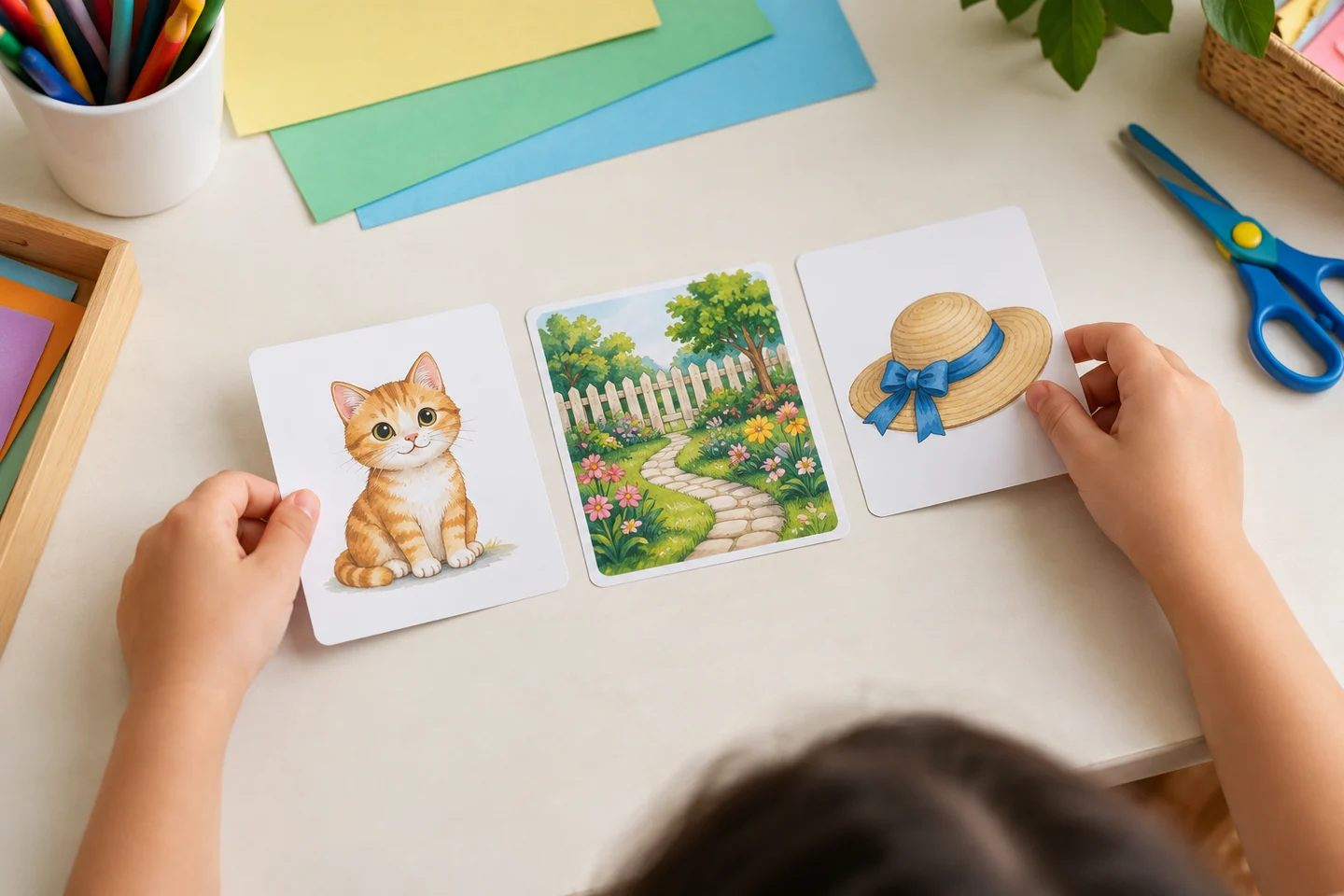
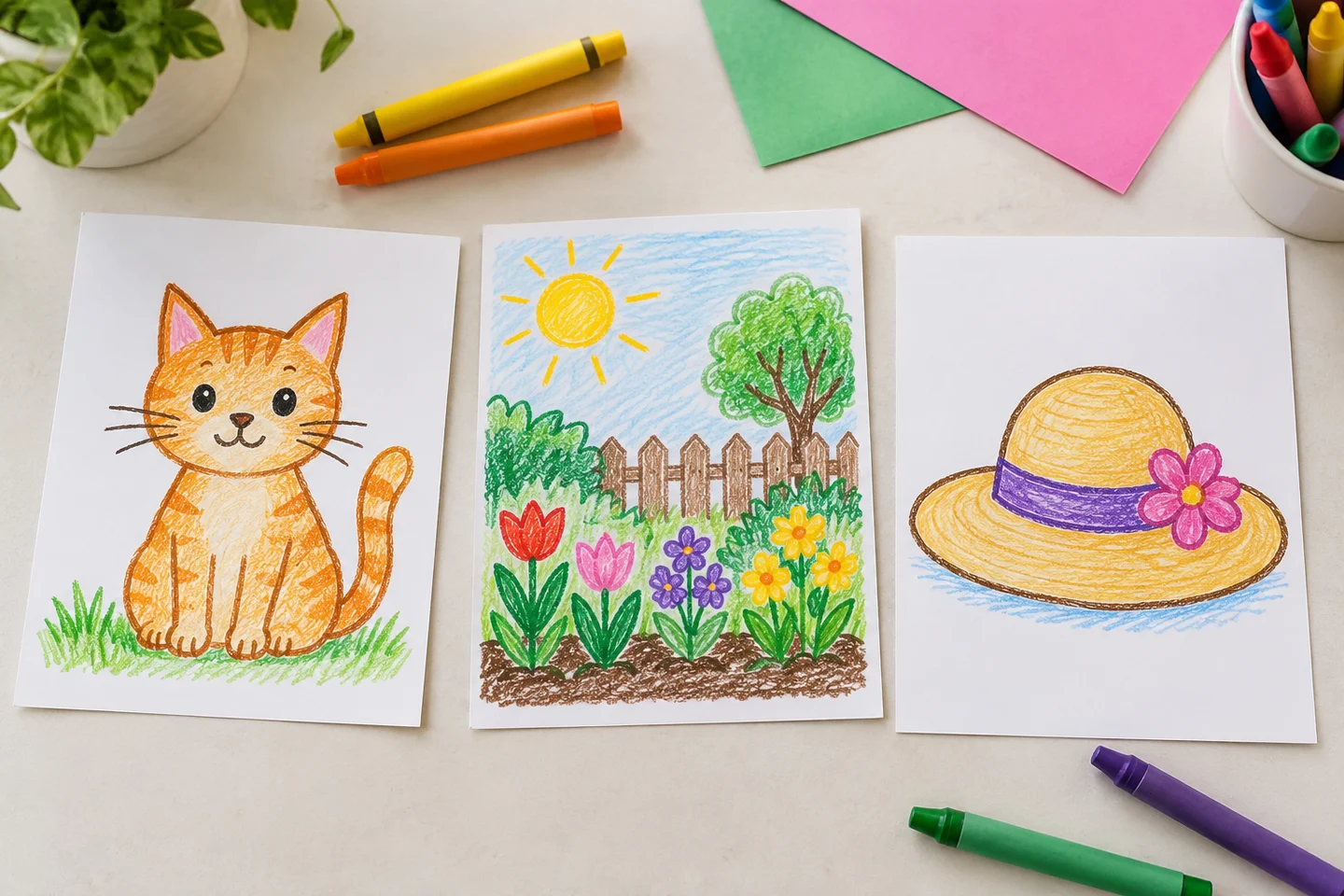
Draw clear, simple pictures. Characters might include a cat, a child, a bird, or a friendly robot. Places could be a park, home, library, or imaginary forest. Events might show an arriving parcel, a lost hat, a blocked path, or a new visitor. Check together what each picture represents.
Build a story together
1. Choose a character and place
Let the child select one card from each collection. Begin with a simple sentence: “A cat was walking through the park.” Choosing familiar ideas first makes the story easier to start.
2. Introduce an event
Pick an event card and ask what changes. “The cat found a parcel under a bench” gives the character something to investigate. Let children invent a different interpretation of the card if they prefer.
3. Decide on an action
Ask, “What does the cat do next?” Looking around, asking someone, or carrying the parcel to a nearby house could each continue the story. Offer two ideas if the storyteller wants help.
4. Connect the next part
Add another event or continue with the cards already chosen. A phrase such as “Then…” or “Because of that…” can help connect ideas. A partner can ask a question when a part is unclear.
5. Choose an ending
Ask where the adventure stops today. Perhaps the parcel reaches its owner, the cat finds a clue, or everyone decides to try again tomorrow. The child chooses the ending.
6. Retell and save
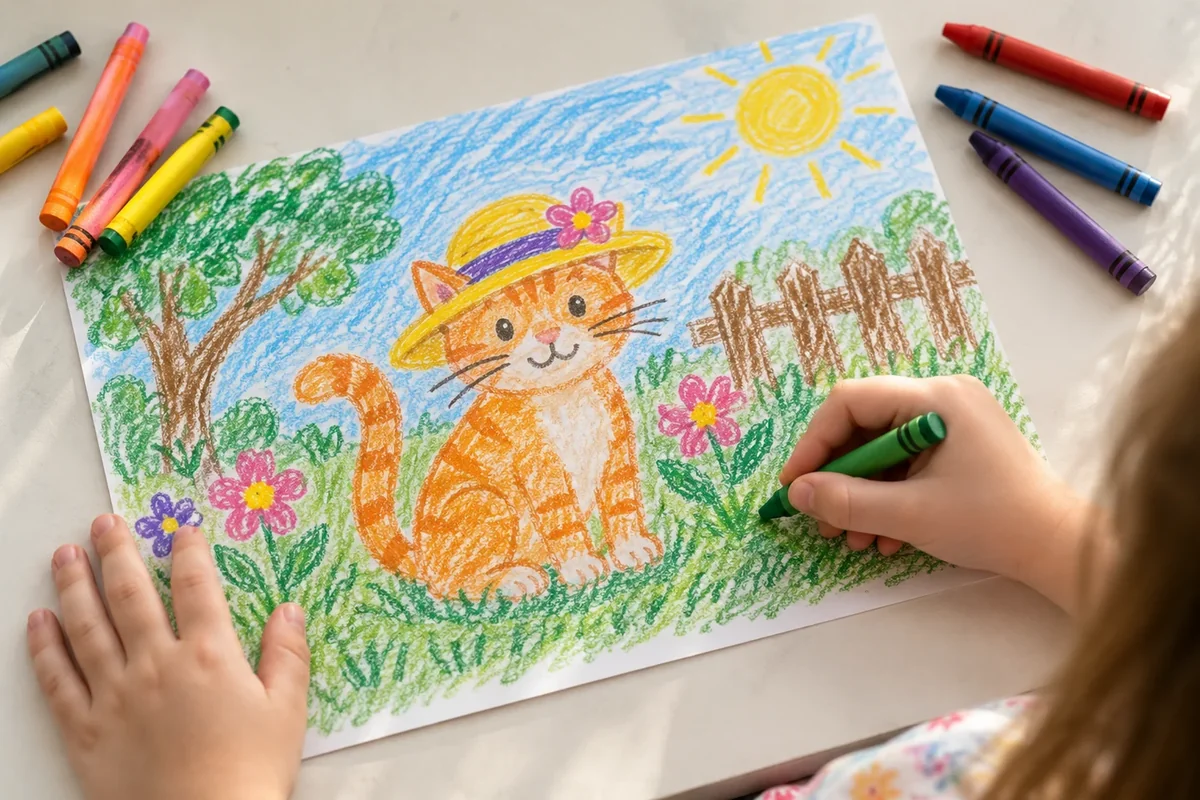
Arrange the cards in the order used and tell the story again. Draw three spaces for beginning, middle, and end, or let an adult write the child’s words. Read them back so the storyteller can add or change a detail.
What children can explore
Cards make characters, settings, and connected events visible. Ask, “What happened because the path was blocked?” or “How did the character find that out?” These questions help a listener follow the story without taking over its plot.
At home and in the classroom
At home, take turns adding a sentence. In class, try groups of three with a storyteller, card helper, and listener who can also illustrate, then swap roles. Keep the first story short so everyone gets a turn.
Make it work for your group
Start with two cards, offer pointing or acting, and welcome stories in a home language. Older children can use the same cards to tell two different versions or add speech for a character.
Helpful fixes and cleanup
If a story stalls, ask for one action rather than a whole new plot. If too many cards cause confusion, set some aside. If a picture is unclear, redraw it or agree on its meaning together. Save the cards by type and keep a favorite story for another telling.