Learning Through Play
Roll, Count, and Build: A Hands-On Math Game for Kids
 Facebook
 Pinterest
 X
X LinkedIn
 Reddit
 WhatsApp
 Telegram
 Bluesky
 Email
Email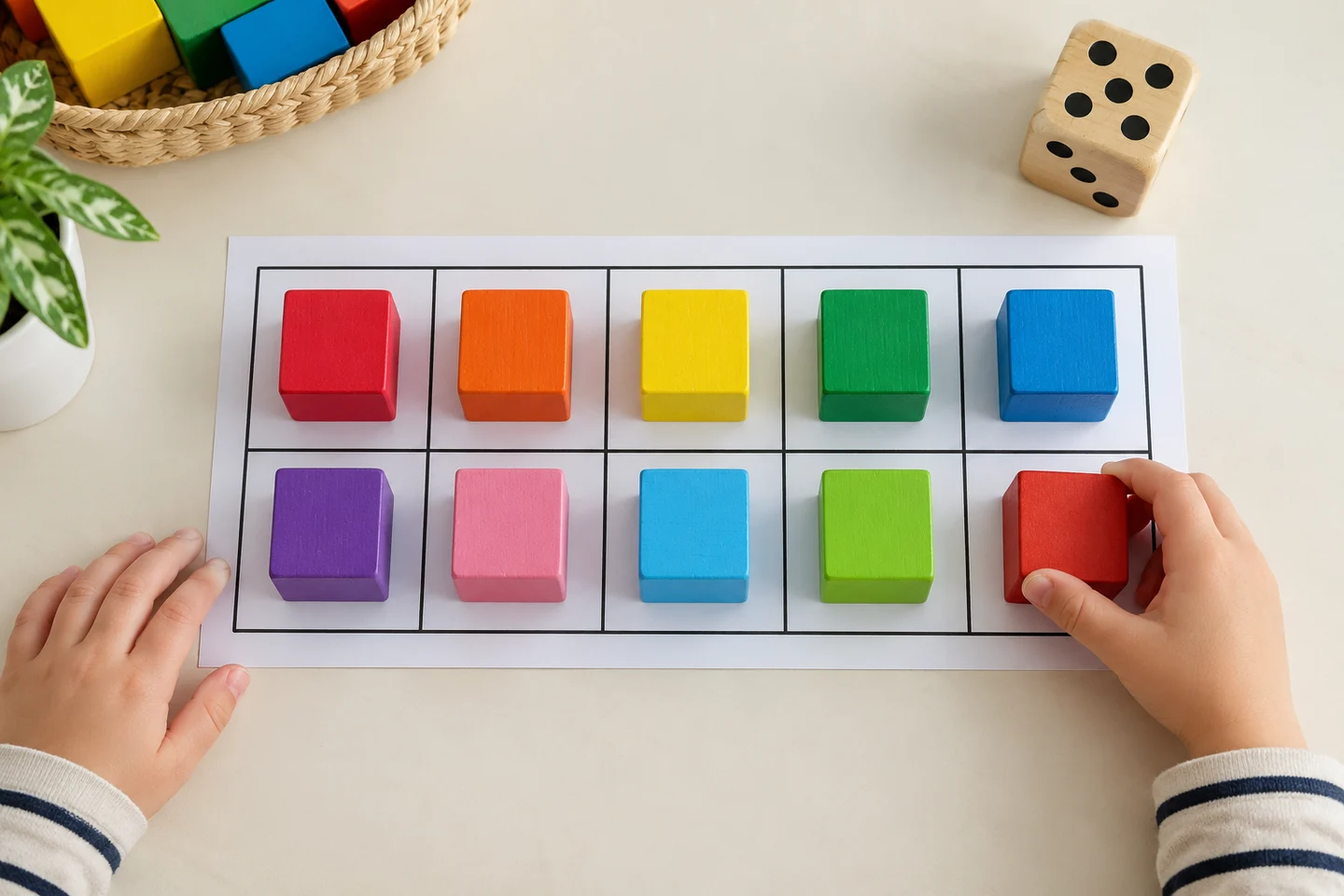
Roll a die, collect that many blocks, and watch a counting mat fill up. When ten spaces are full, the blocks become a shared building project. This simple game gives counting a cheerful purpose.
It works with one child and a grown-up or a small classroom group. Everyone helps collect the blocks, so there is no winner to chase and no need for a perfect final roll.
At a glance
| Detail | Plan |
|---|---|
| Suggested ages | 4–7, with quantities adjusted to current skills |
| Preparation | About 10 minutes |
| Playing time | 15–25 minutes |
| Group size | One child with an adult, or groups of four |
| Mess level | Low |
What you need
- One large dot die.
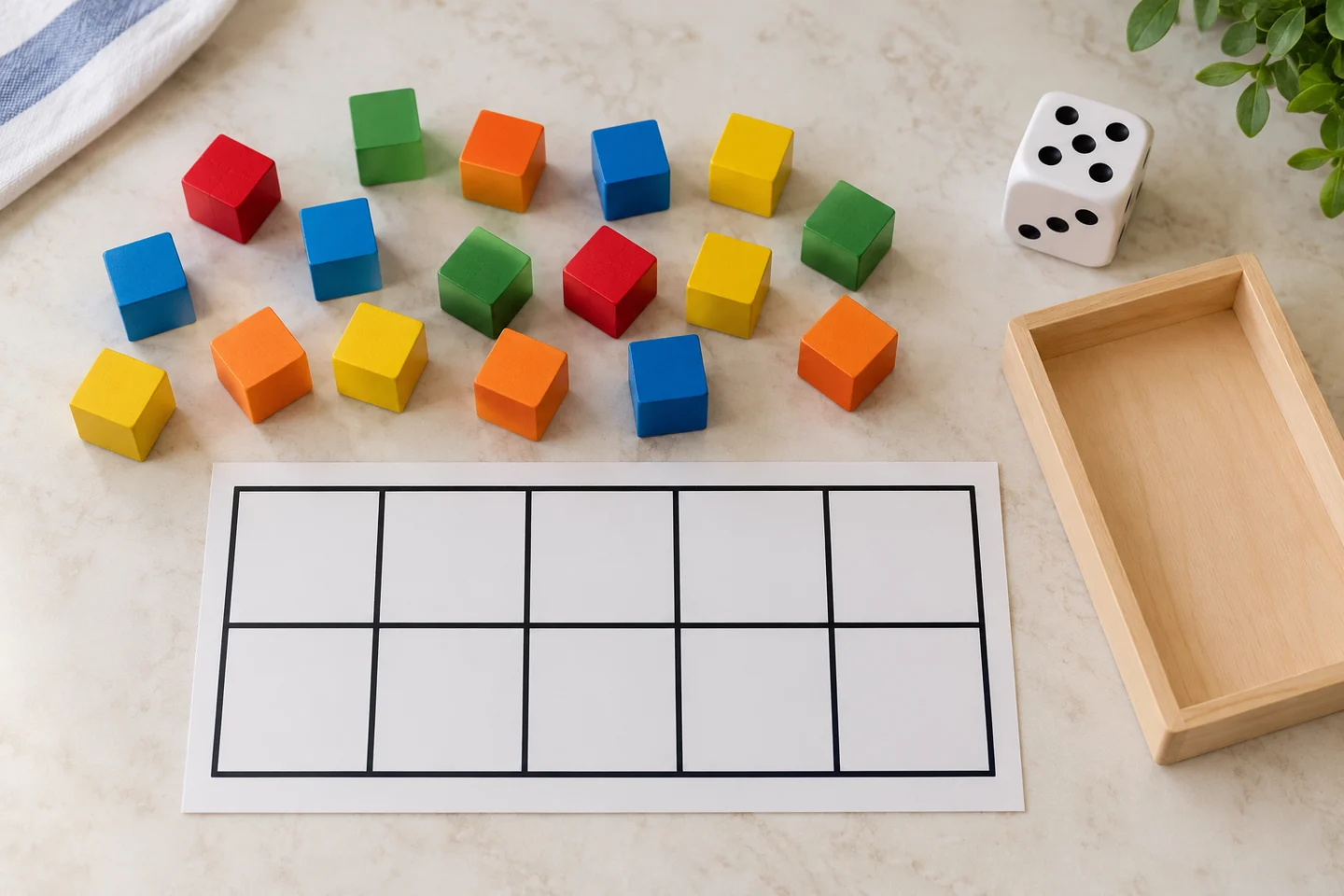
- Twenty age-appropriate building blocks.
- Paper and a marker for a counting mat.
- A shallow tray for rolling and a tray for blocks.
For 24 children in six groups, provide six dice, mats, and sets of 20 blocks: 120 blocks altogether. Ten blocks fill each mat; the others remain in the supply tray. Beginners can use cards showing one, two, or three dots instead of a six-sided die.
Get ready
Draw two rows of five spaces, each large enough for one block. Explain that the group will fill the ten spaces and then build something together. Agree that an oversized final roll adds only the blocks needed to fill the remaining spaces.
Roll, count, and build
1. Look at the mat
Count the spaces together and notice the two rows. Begin with an empty mat and the blocks in their tray.
2. Roll in the tray
Take a turn with the die. If it falls away or rests tilted, simply roll again so everyone can see one clear face.
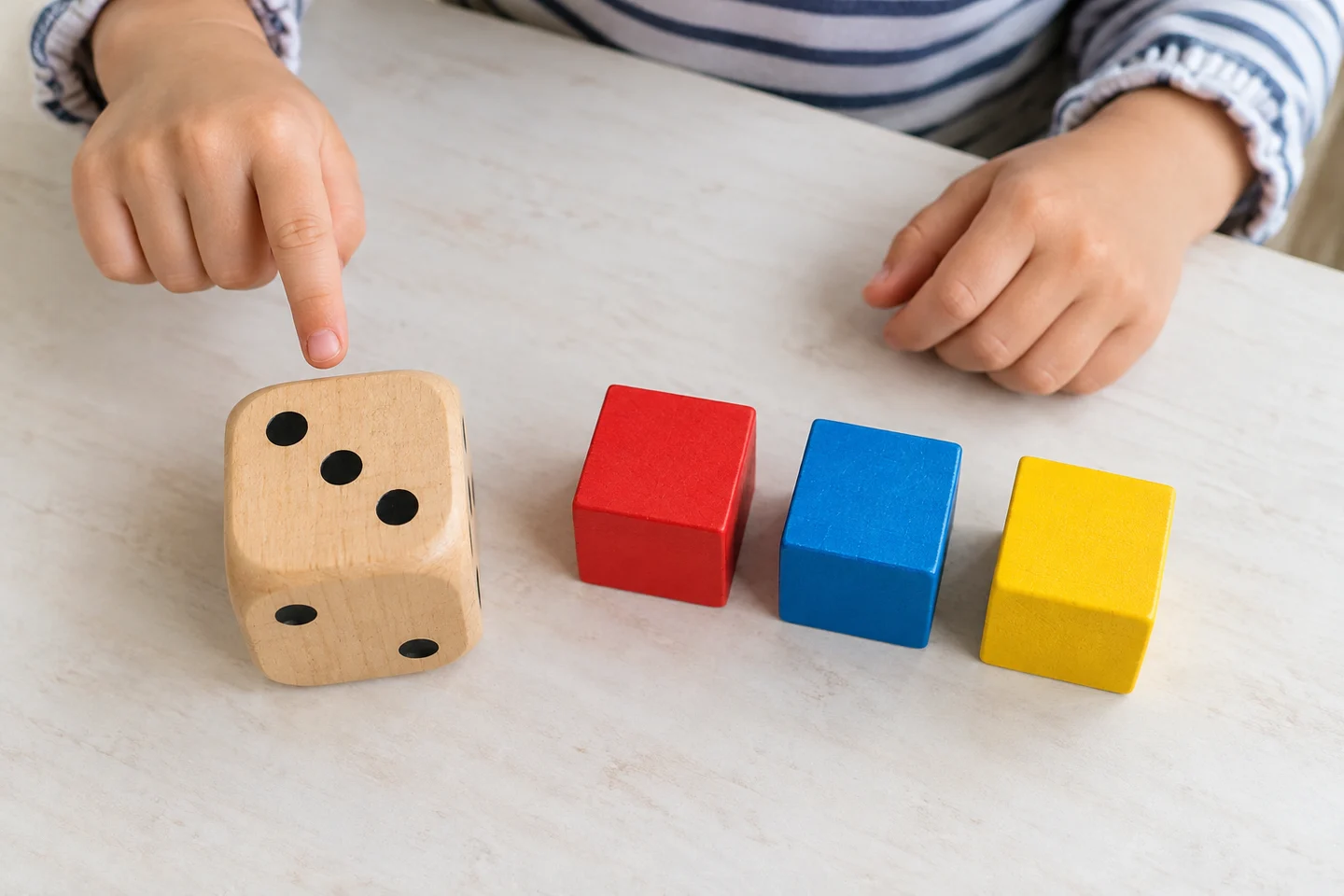
3. Read the dots
Ask how many dots are showing. A child may recognize the group or count each dot. Give them time to use either approach.
4. Collect the blocks
Move one block from the supply for each number spoken. Compare the blocks with the dots, then place one in each next empty space, working across the first row and then the second.
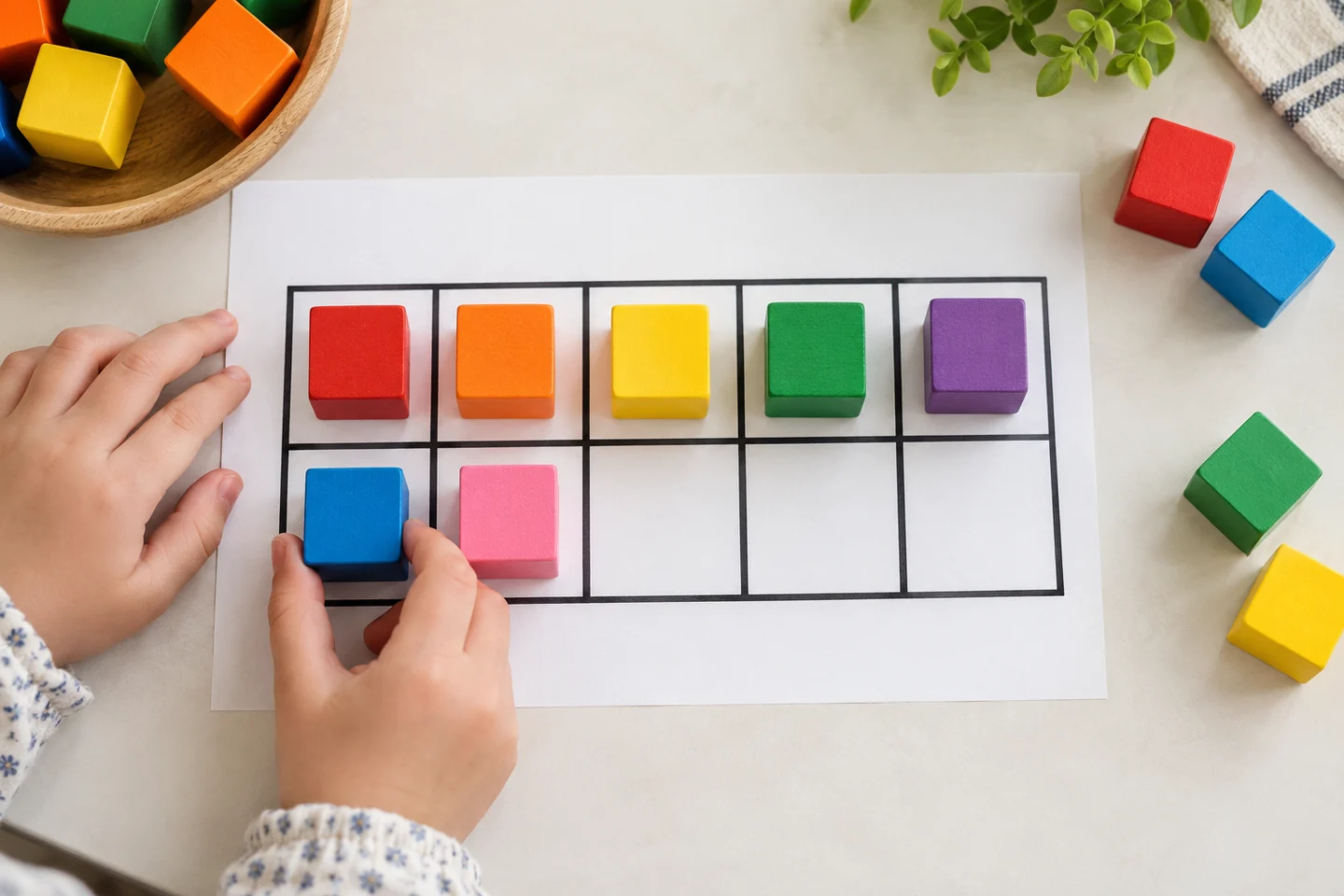
5. Notice what is left
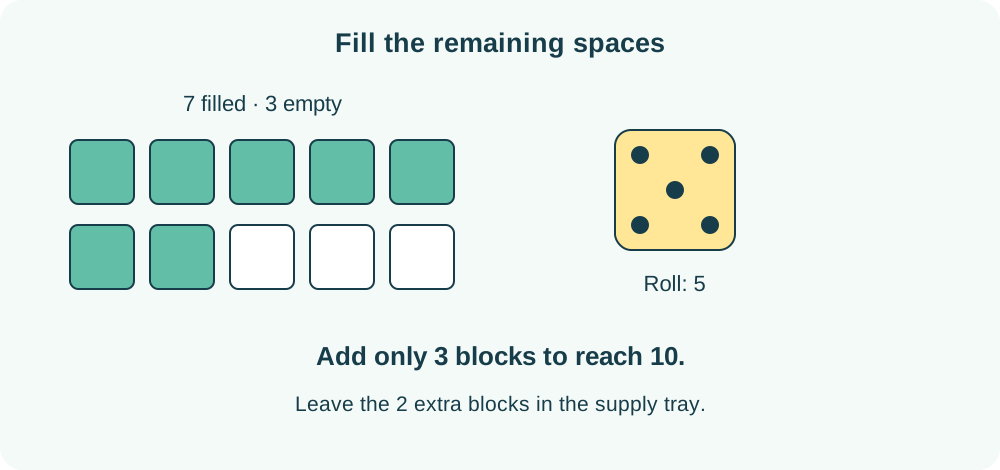
Ask how many spaces are still empty. Near the end, apply the agreed rule: if three spaces remain and the die shows five, add three blocks and leave the other two in the supply tray.
6. Build together
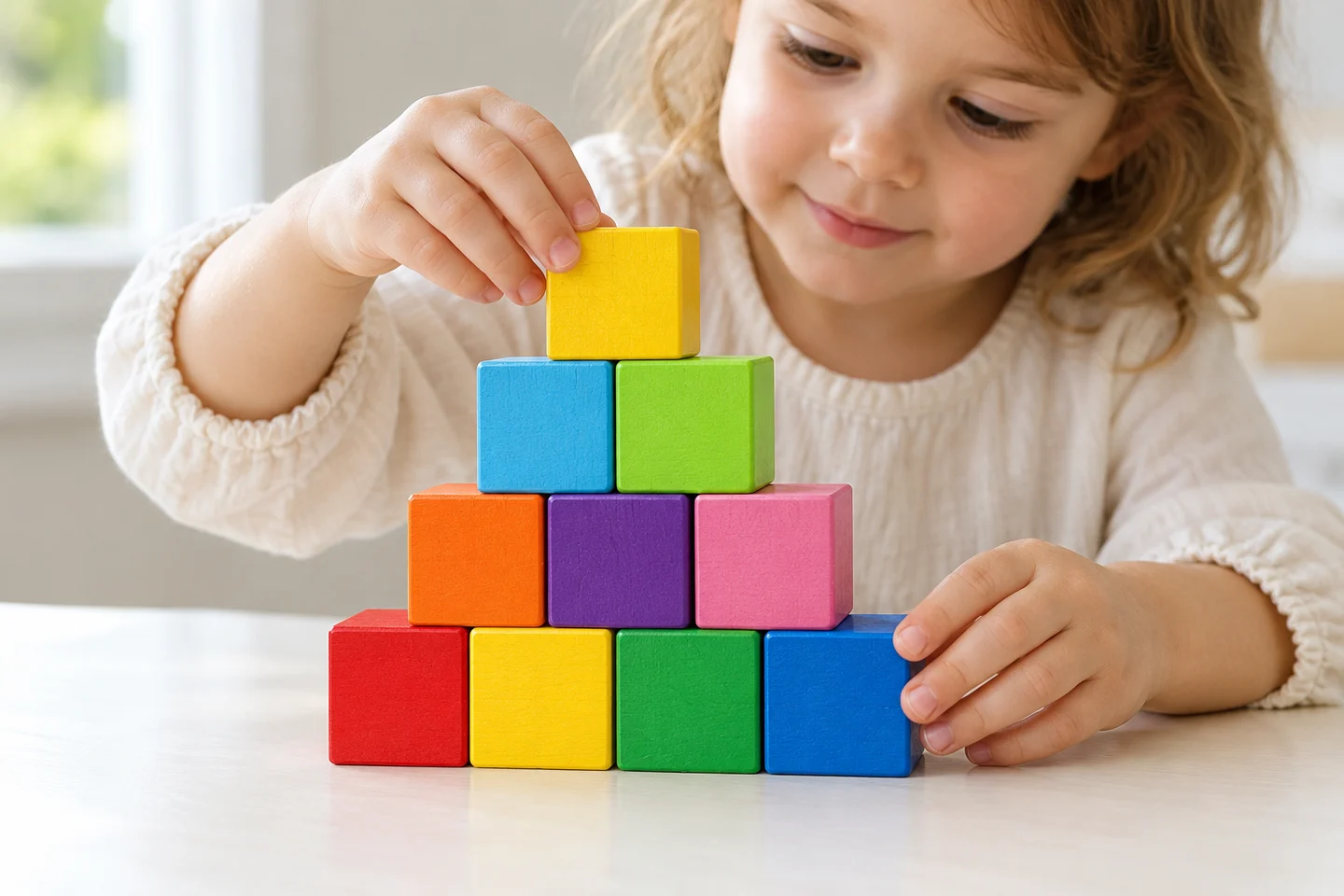
When the mat is full, move its ten blocks to a clear space. Build a low tower, a wall, a little arrangement, or another shared idea. Reset the mat when the group wants another round.
A turn to try together
If the first roll shows four, place four blocks. Six spaces remain. A later roll of three adds three more, making seven blocks on the mat with three empty spaces. Children can count the spaces directly rather than needing written subtraction.
What children can explore
Matching one spoken number with each block supports counting practice. The mat makes “how many” and “how many more” visible. Ask, “How do the blocks match the dots?” or “What would fill this row?”
At home and in the classroom
At home, share rolling and placing turns. In class, rotate rolling, collecting, checking, and building roles. Use the blocks for a joint design so every child remains part of the activity after counting.
Make it work for your group
Start with five spaces or dot cards showing one to three. Provide large blocks and let a partner place them when needed. Older children can predict the spaces remaining, then check by counting.
Helpful fixes and cleanup
Skipped spaces? Slow down and place one block in each. A crowded mat? Draw larger spaces. A long game? Reduce the target for the next round. Count blocks back into the tray and save the mat for another day.