Birthdays & Special Events
A Birthday Picture Scavenger Hunt
 Facebook
 Pinterest
 X
X LinkedIn
 Reddit
 WhatsApp
 Telegram
 Bluesky
 Email
Email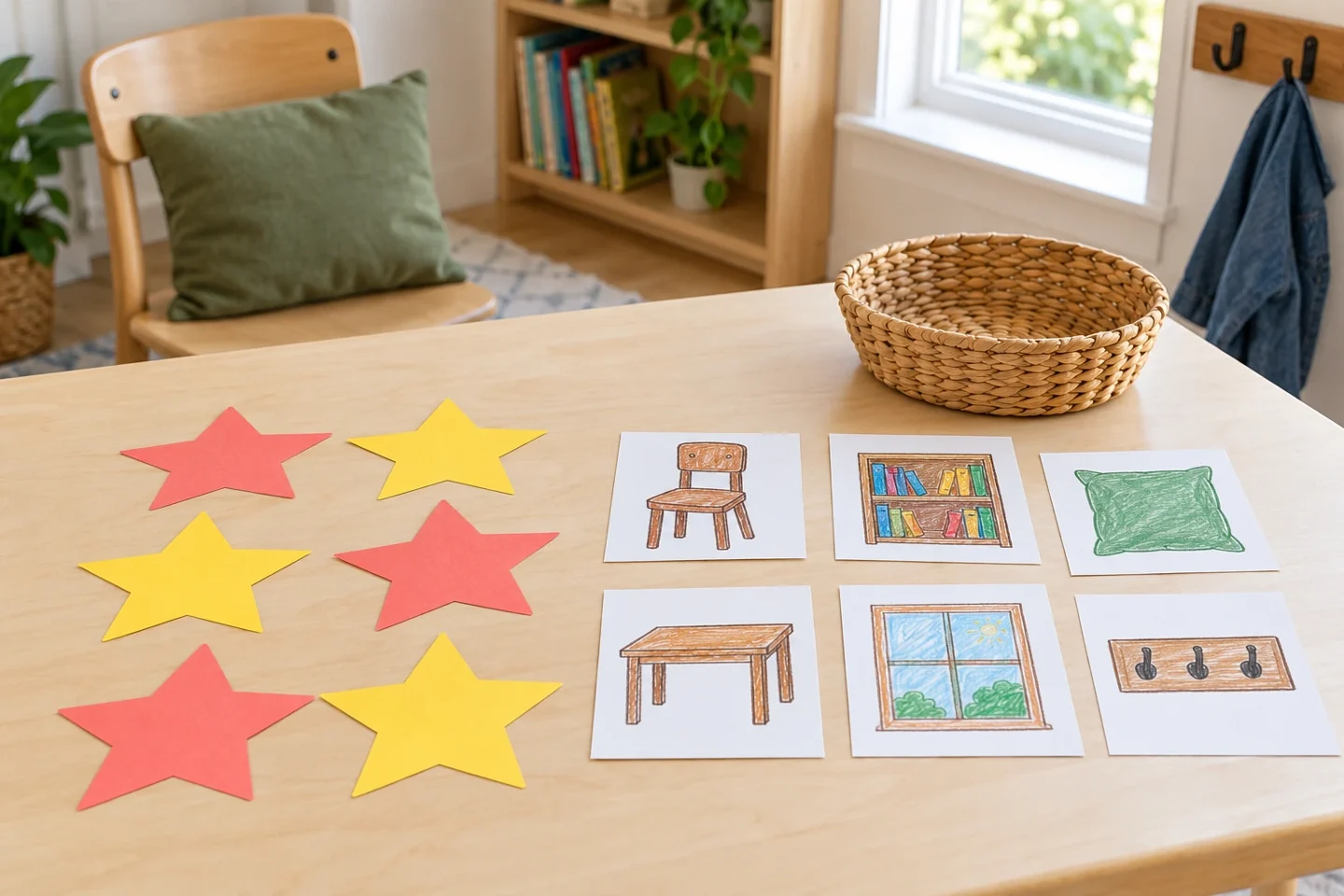
Your activity at a glance
| Suggested ages | 4–8 |
|---|---|
| Activity time | 30–40 minutes |
What you need
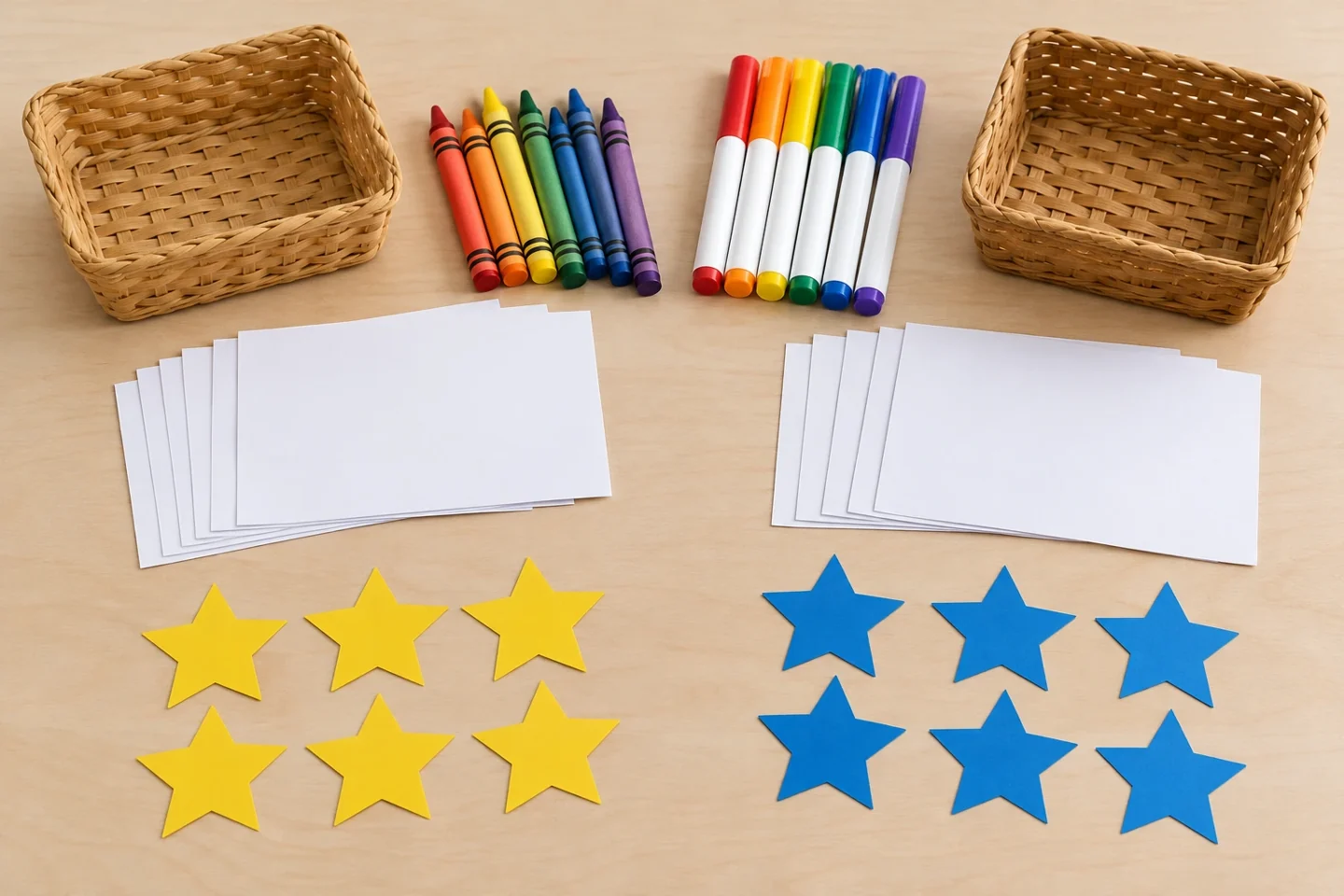
- Six index cards or quarter sheets of paper
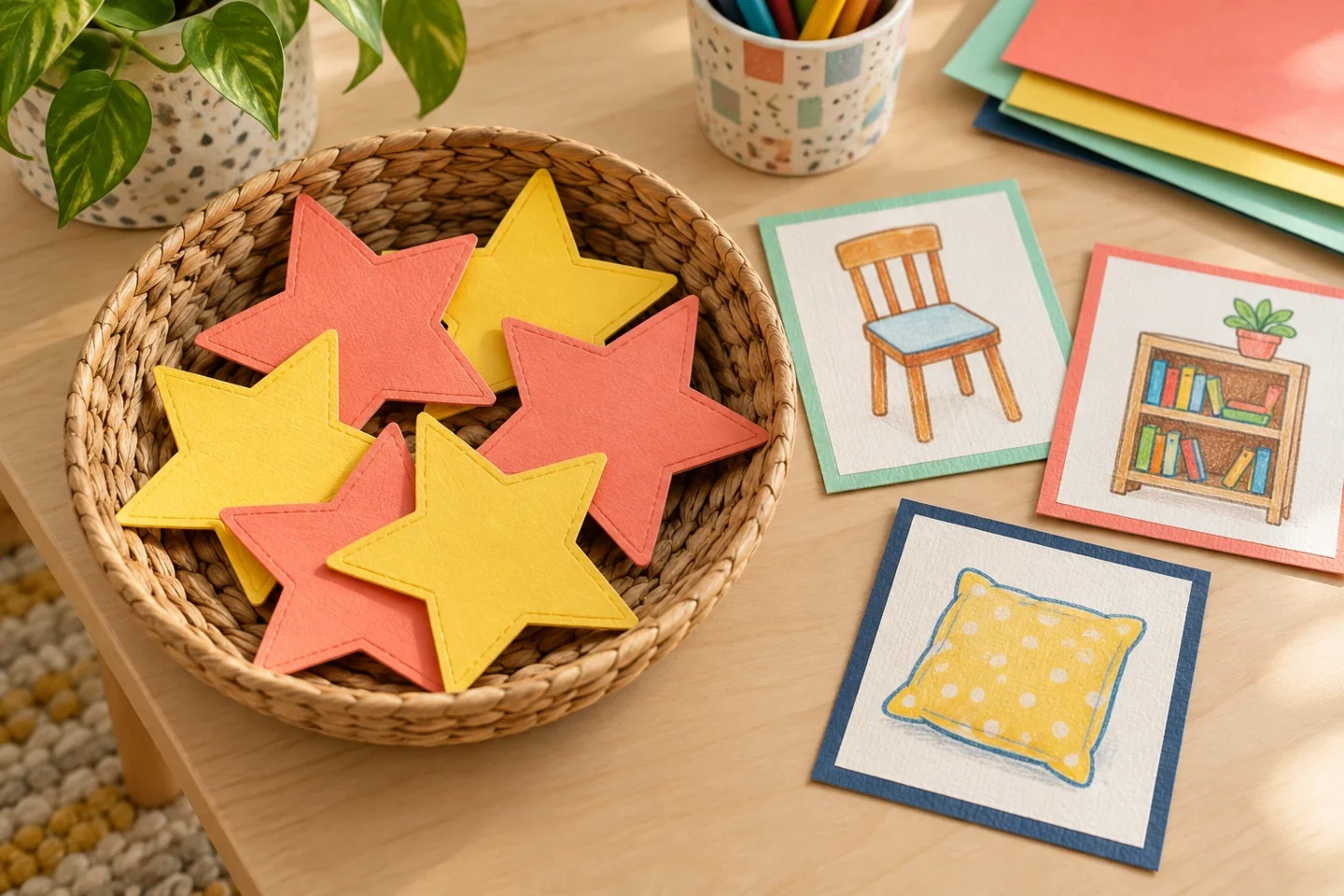
- Six large paper star tokens per team
- Crayons or markers
- A small basket or envelope for each team
- Two optional spare paper stars in each team’s color
A celebration made by children
A picture hunt turns familiar party spaces into a gentle discovery game. Children match drawings to real objects or locations, collect large paper tokens, and work together toward a shared finish. There is no reading requirement and no need to race.
The clues describe places children already know, so the challenge comes from noticing picture details rather than solving a riddle. A clear picture of a striped cushion is more useful than an elaborate drawing of the whole room. Keep the first round short enough that finding the final star still feels exciting.
Before you begin
Walk the planned route before drawing the clues. Check that every object stays in place and that tokens can be seen without opening cupboards or moving furniture. Draw the same distinctive chair, cushion, or shelf children will actually find. Keep a pencil map of the six token locations for the adult running the game.
For twelve children, make four teams of three and prepare twenty-four stars in four colors. You can share one six-card clue set by presenting the same clue to all teams, or make four sets for separate starts. Spread teams around the room to reduce crowding, and keep an adult where the route changes direction.
Make it step by step
- Pick six locations: Choose visible, reachable places in one room or a small supervised area: a chair, bookshelf, table, cushion, window, and coat hook. Skip kitchens in use, stairs, locked cupboards, and anything children would need to climb to reach.
- Draw the clues: Draw one recognizable object on each card. Keep backgrounds plain so the useful detail stands out. If two objects look alike, add a distinctive color or nearby feature. Test the pictures with one child before hiding the tokens.
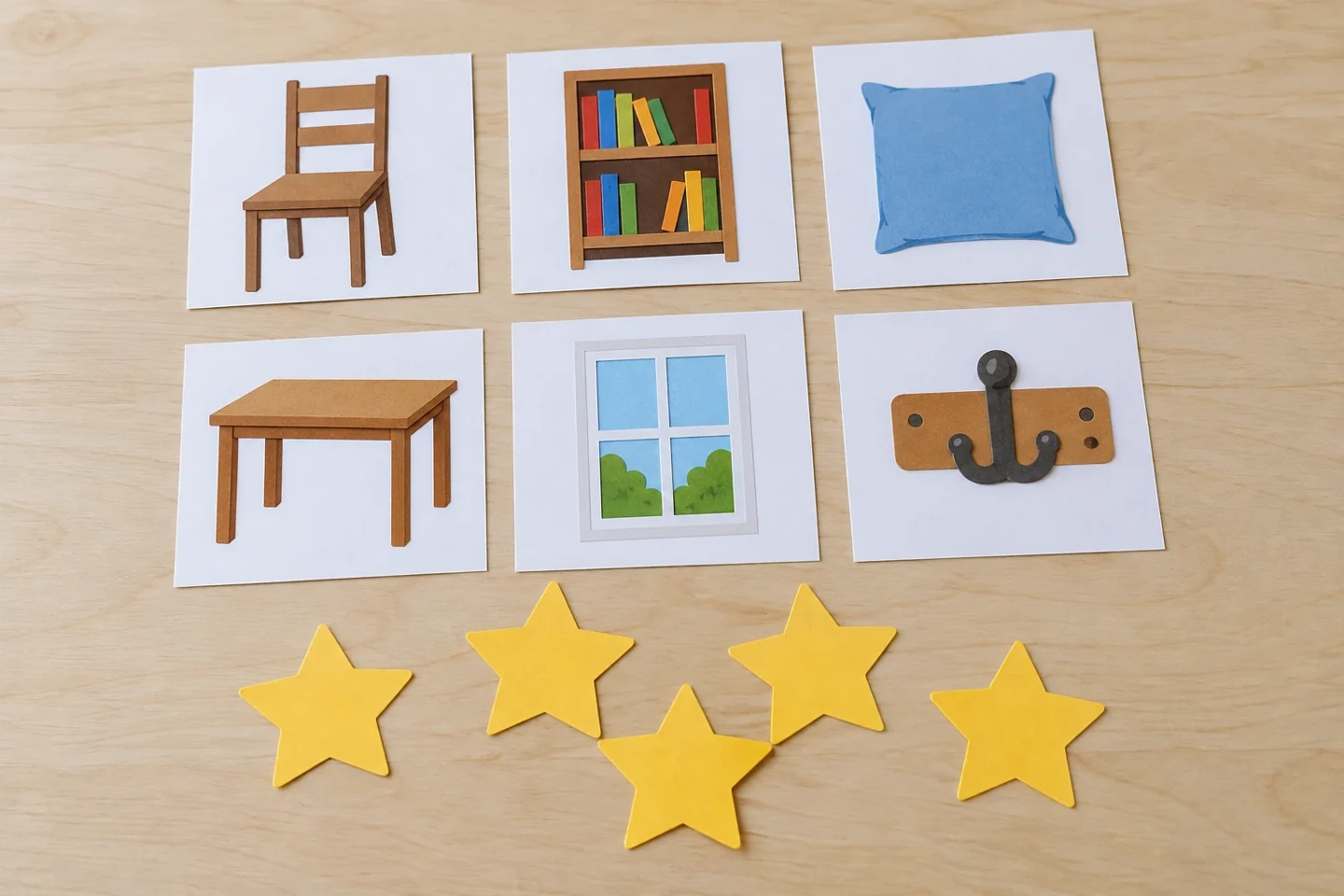
Draw the six clues before placing tokens along your route. - Set the tokens: Place a large paper star near each chosen object, in sight once a child reaches the right place. For several teams, use different token colors and tell each team which color to collect. Keep all token sets complete.
- Show how to play: Hold up one picture, name the object together, and demonstrate walking to find it. Explain that children collect only their team’s star and return for the next clue. Give one card at a time for younger players.
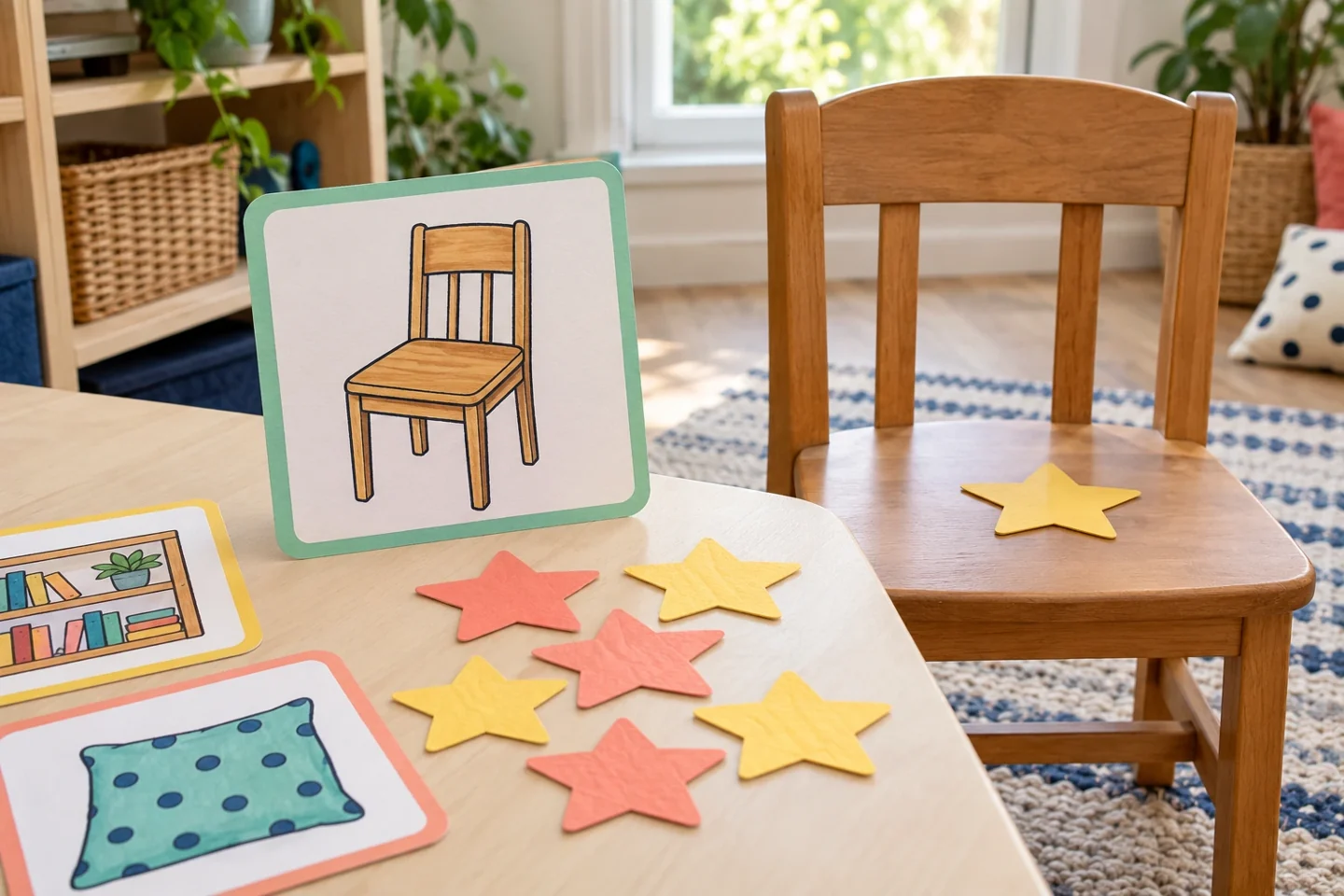
Compare the chair picture with the real chair to find its star. - Enjoy the discoveries: Let children compare the clue with the object and describe what helped them find it. Offer a location hint if needed. At the finish, count the six tokens together and invite the players to draw an extra clue for another round.
Talk, notice, and try another idea
Ask, “Which part of the picture told you where to go?” A child might notice the cushion’s stripes or a shelf’s height. Follow with, “What other object almost matched?” Comparing a near-match encourages careful observation without turning the hunt into a test.
After the hunt, invite a player to draw a new clue and explain where its token should go. Another person can test whether the drawing provides enough information. If two locations seem equally likely, add a feature rather than calling the guess wrong.
At home and with a group
At home, start with three locations in one room and add the remaining three on a second round. A child can help reset the stars for a grown-up to hunt. If siblings play together, let one carry the picture while the other collects the token, then swap roles.
For a classroom party, explain the boundaries before handing out clues. Give each team a basket labeled with its color and practice returning to the clue station. A child who does not want to search can hold the cards, count returned stars, or suggest the next hint. End with a shared token count rather than naming a fastest team.
Helpful adjustments and cleanup
If a clue causes confusion, bring the group back and point out the relevant drawing detail. If a token is missing, replace it from the spare set and check the adult location map. For children who find pictures difficult to interpret, show a real photograph of the object or walk together for the first clue.
Count all stars back into their sets after play. Store cards with the route map, but remove the tokens from their hiding places so nobody finds abandoned game pieces later. Make a note of the clue that needed the most explanation and redraw it before the next celebration.