Birthdays & Special Events
Build a Cardboard Party Toss Game
 Facebook
 Pinterest
 X
X LinkedIn
 Reddit
 WhatsApp
 Telegram
 Bluesky
 Email
Email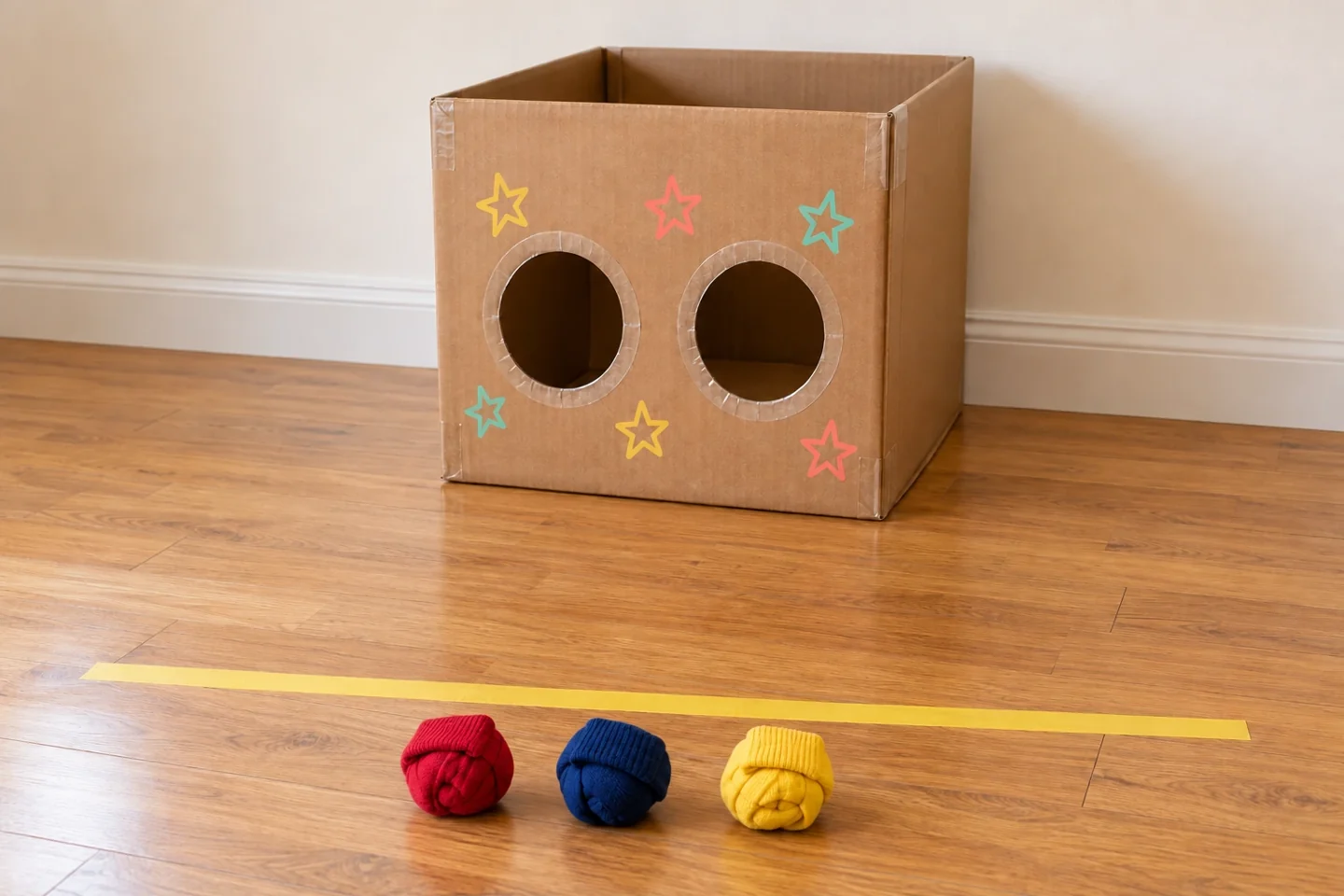
Your activity at a glance
| Suggested ages | 5–10 |
|---|---|
| Activity time | 45–60 minutes plus play |
What you need
- One clean sturdy box about 18 inches square
- Three rolled pairs of clean socks
- Pencil, ruler, markers, and wide tape
- Adult cutting tool; painter’s tape for the throwing line
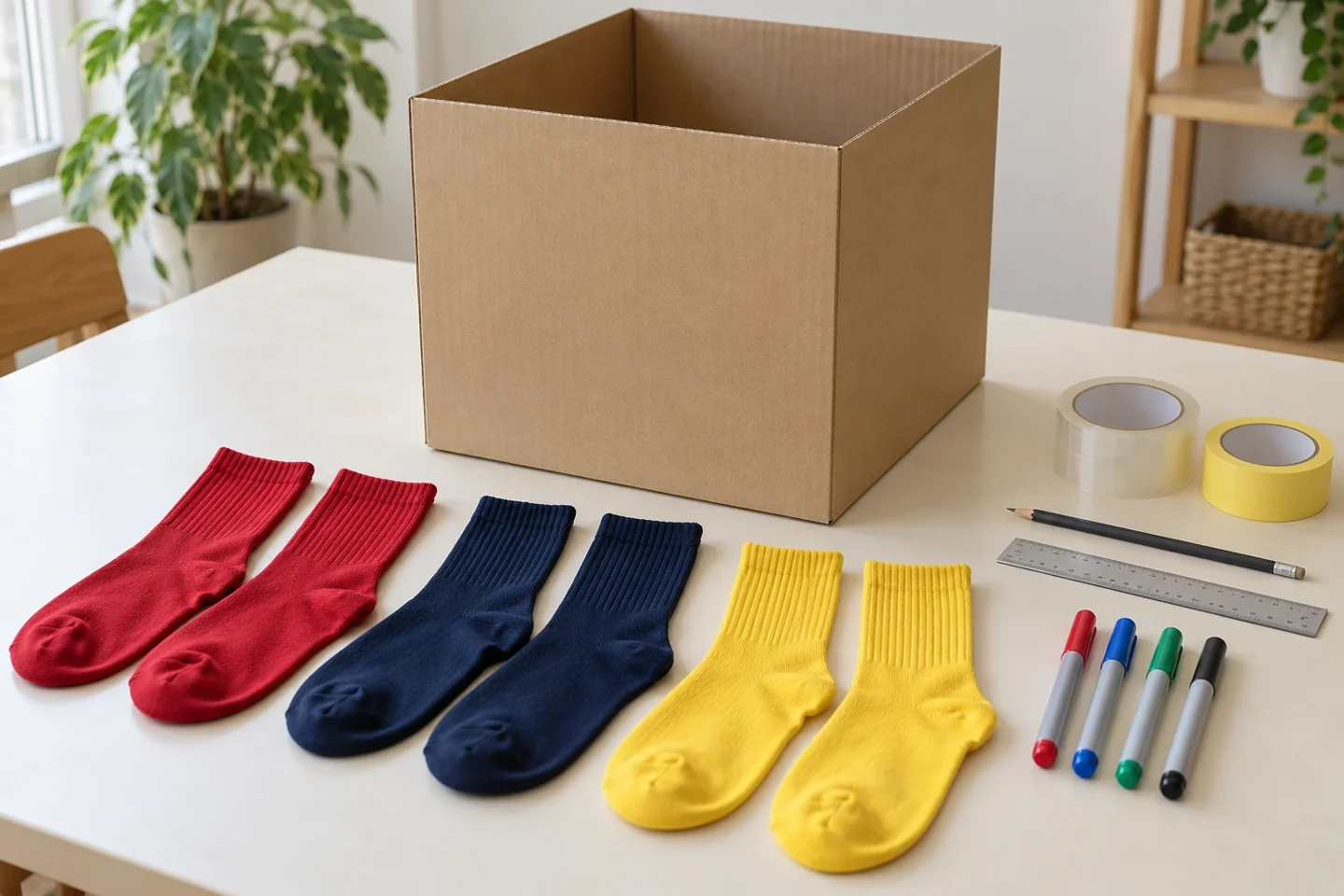
A celebration made by children
Turn a large cardboard box into a soft-toss target, then experiment with distance and aim. The best part is adjusting the game until it feels enjoyable: bigger openings, a closer line, or a cooperative target all count as good design decisions.
The target is a small engineering project as well as a game. Children decide how the box should look and help test the throwing distance, while the adult makes the openings. Using sock balls keeps equipment simple and makes it easy to retrieve every piece after each turn.
Before you begin
Choose a clean box with no staples, loose packing material, or crushed sides. The adult cutting station should be separate from the decorating space. Draw openings before cutting and check that they are large enough for the rolled socks to pass through easily. Tape rough edges before any play begins.
For twelve players, use two identical boxes and six sock balls, with six children waiting at each station. Give each target its own throwing line and retrieval area. A second adult can manage the other station, or run one station while the remaining children decorate paper score cards. Avoid a busy passageway behind either target.
Make it step by step
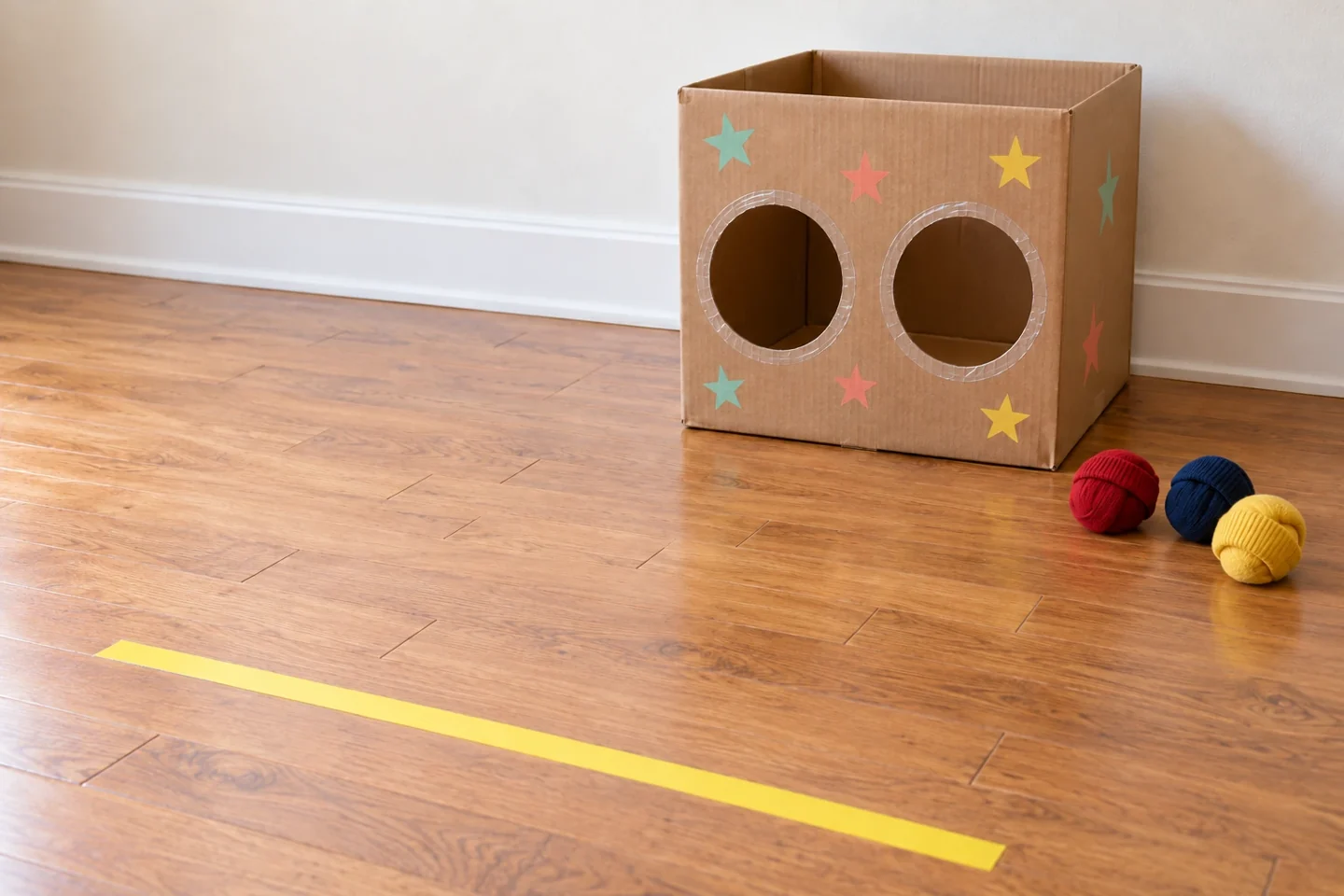
- Plan the targets: Stand the 18 inch square box with a broad face toward players. Mark two 6 inch circles side by side. Put their centers about 5 and 13 inches from the left edge and 9 inches above the bottom. This leaves about 2 inches between the openings and from each opening to the side edge. Children decorate the surrounding cardboard while an adult checks that the box is stable.
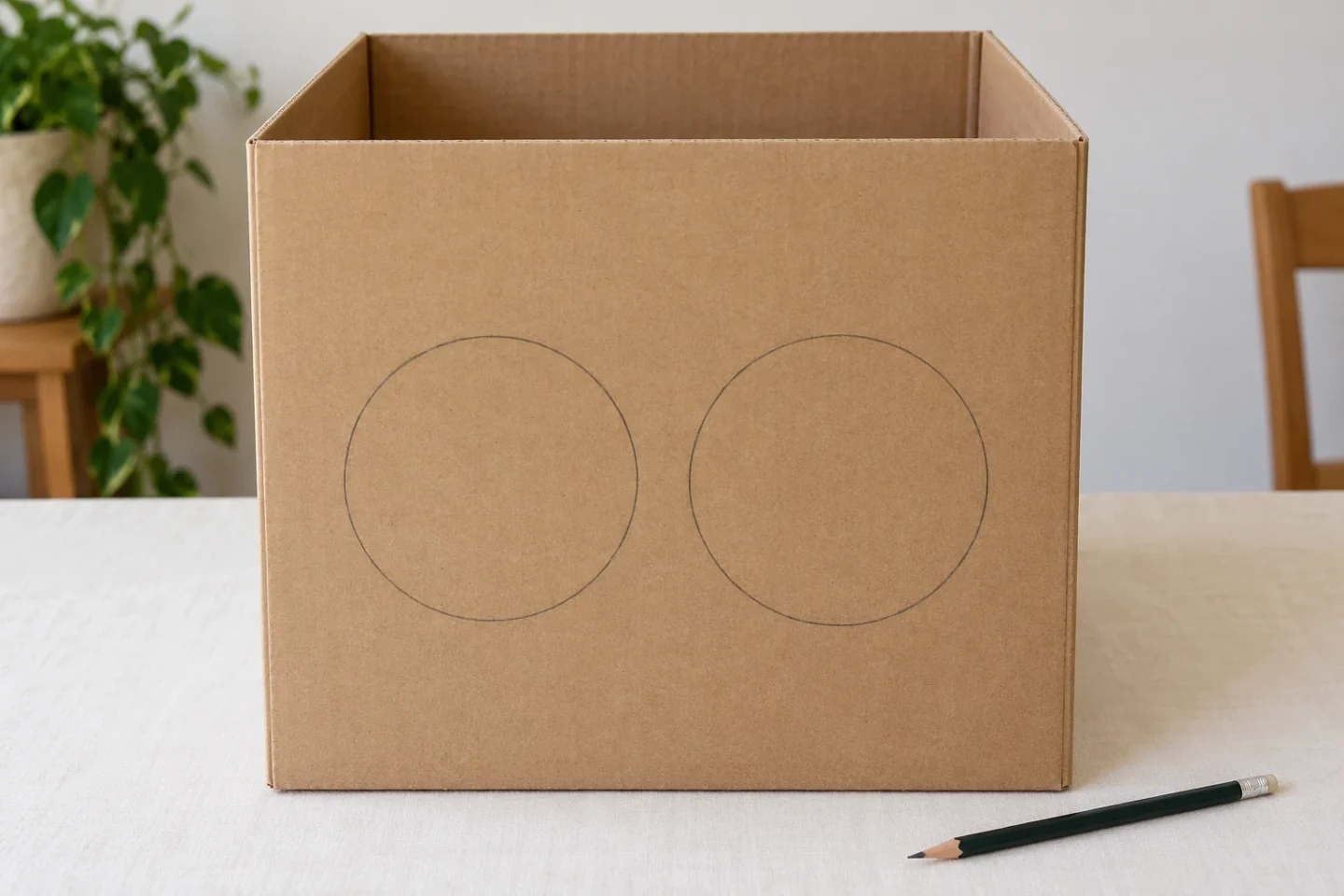
Mark both circles before the adult cuts either opening. - Make the openings: The adult cuts the circles with the box empty and children away from the work area. Cover rough edges with tape. Tape the bottom closed and leave the top open so socks can be retrieved easily.
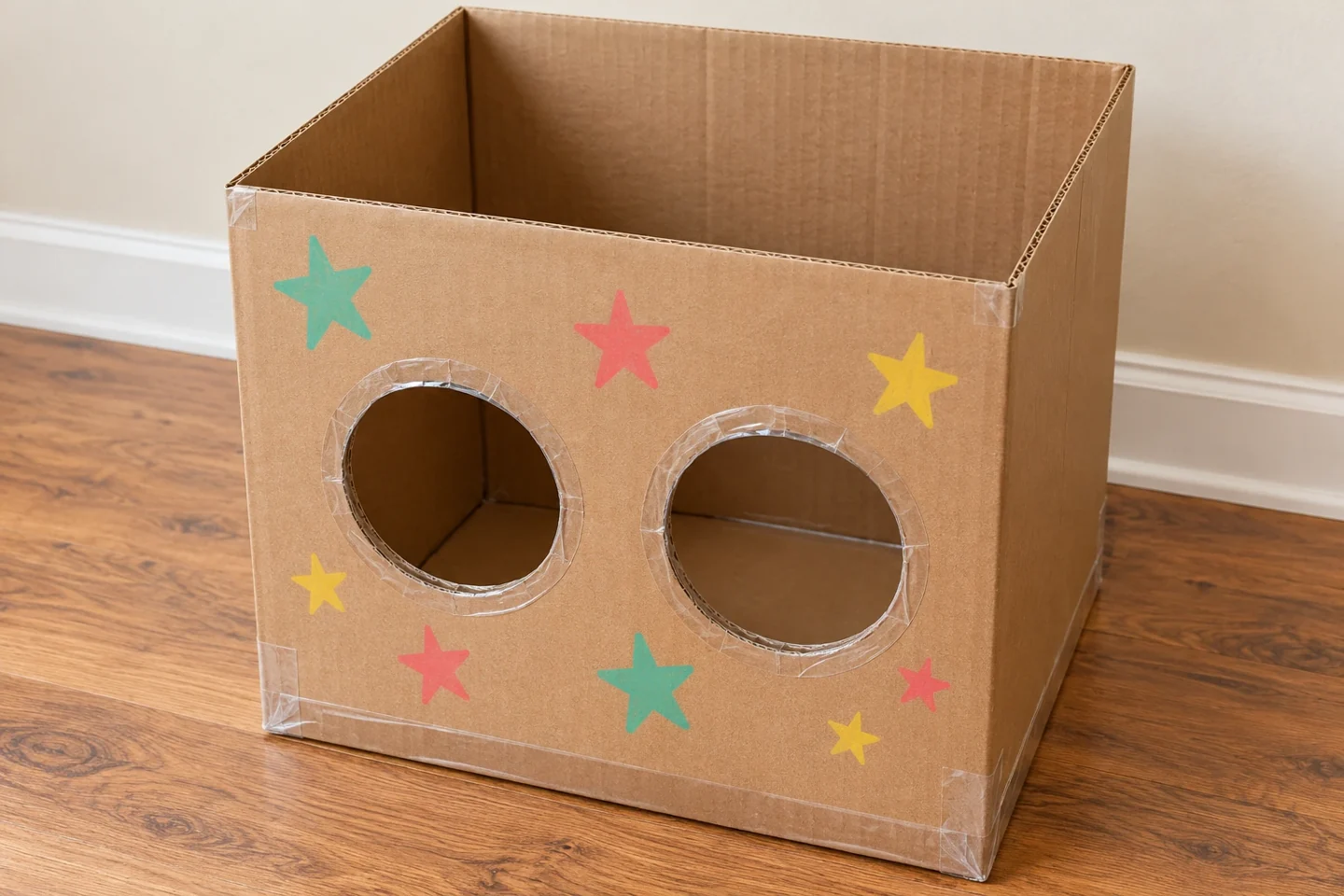
An adult tapes the cut edges and leaves the top open for retrieving socks. - Check the setup: Place the box against a wall or another stable surface away from walkways. Mark a starting line about 3 feet away. Test a gentle underhand toss yourself and adjust the distance before inviting players.
- Take turns: Each player gets three sock balls. Ask everyone else to wait behind the line, then collect socks only after the turn finishes. Count successful throws or try a shared goal, such as getting five socks through the openings together.
- Revise the game: Move the line closer for an easier round or sideways for a new angle. Let children suggest a fair change and test it. A seated player can use the same line or a comfortable distance chosen for their reach.
Talk, notice, and try another idea
Ask, “Which throw felt easiest to control?” Compare underhand throws from the same line rather than insisting on a particular technique. Children can notice whether a slower toss follows a different path and whether moving a little closer changes success.
Try a fair test: keep the same socks and openings, change only the line distance, and compare the results. Three attempts do not prove a universal rule, but they give children observations to discuss. Ask what they would like to try next and let them choose a manageable adjustment.
At home and with a group
At home, play a cooperative round where everyone adds to one shared total. A child can design a larger target opening after the first test. Put the box where it cannot knock into ornaments or furniture, and use a short distance if the playing space is small.
For a party or classroom, demonstrate the turn sequence: toss three socks, wait for the adult signal, collect, and hand the socks to the next player. Keep waiting players behind the line. Offer a seated turn and choose a distance that works for that player rather than requiring every participant to use an identical reach.
Helpful adjustments and cleanup
If the box tips, move it firmly against a wall and tape the base shut again. If socks bounce back out, make the openings larger or start closer. A child who prefers not to throw can count attempts, check that all socks have been collected, or suggest a new decoration for the target.
Count the sock balls after the final round and return them to their owner. Fold or recycle the box once it weakens; do not leave a damaged target in use. The adult collects cutting scraps and tools immediately after construction. Remove the floor tape slowly and check that no sticky edges remain in the walking area.
Keep the creativity going
Draw three small circles on paper to represent one turn, and color a circle for each sock that reached an opening. Compare two turns without changing the throwing distance. Kindergarten Math Prep offers more counting practice away from the game; browse our books and series for a next activity that suits the players’ interests.