Birthdays & Special Events
Make a Family Celebration Game Jar
 Facebook
 Pinterest
 X
X LinkedIn
 Reddit
 WhatsApp
 Telegram
 Bluesky
 Email
Email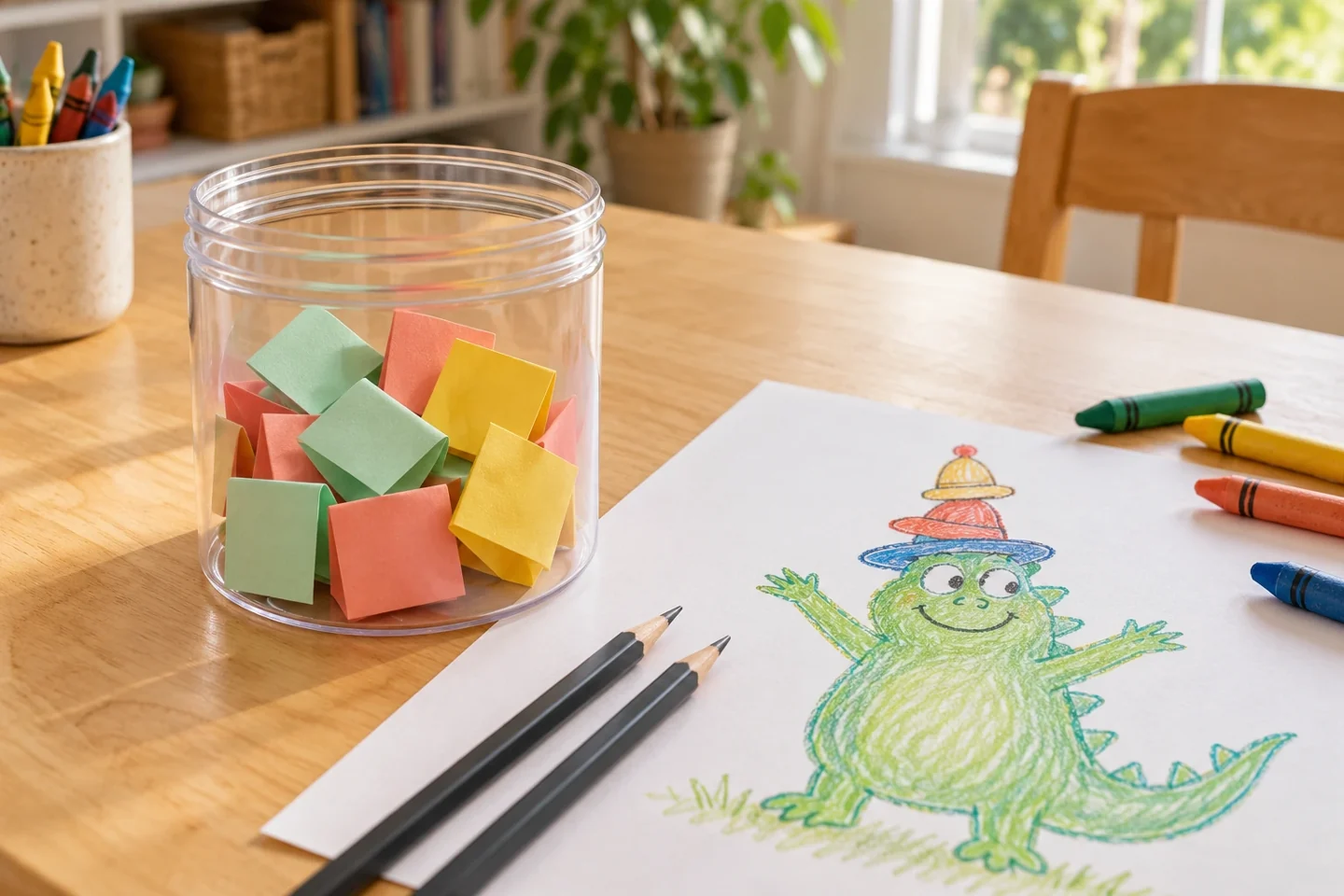
Your activity at a glance
| Suggested ages | 5–10 |
|---|---|
| Activity time | 35–45 minutes plus play |
What you need
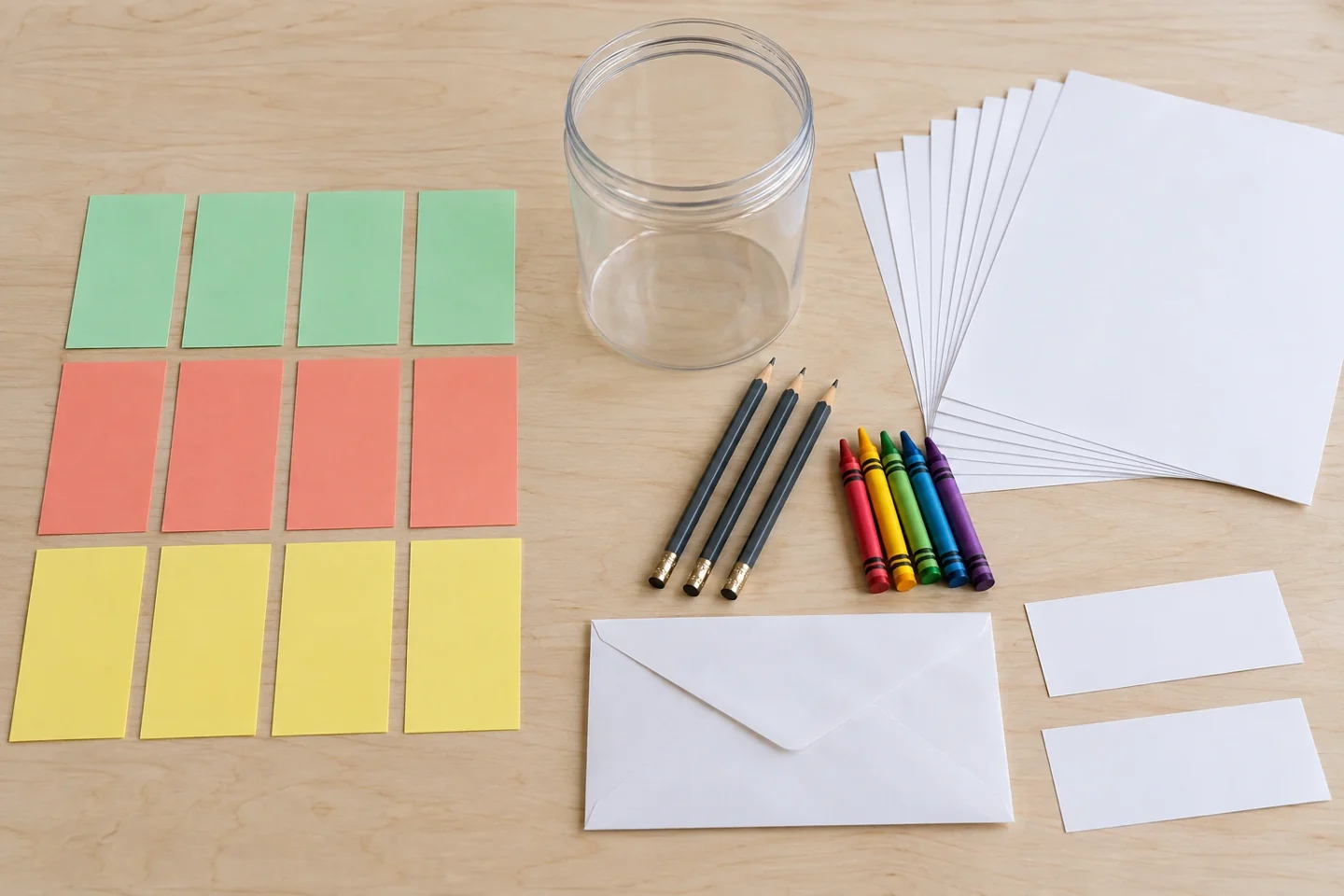
- One clean wide-mouth plastic container
- Twelve paper slips about 2 by 5 inches
- Crayons or markers
- Drawing paper and pencils for the games
- Optional envelope for keeping used prompts separate
- One extra blank paper slip per player for later ideas
A celebration made by children
Fill a container with quick games that use familiar materials and suit the people celebrating together. Pulling a prompt adds surprise, but players can always choose another. Children help invent the games, explain the rules, and adjust them after a practice round.
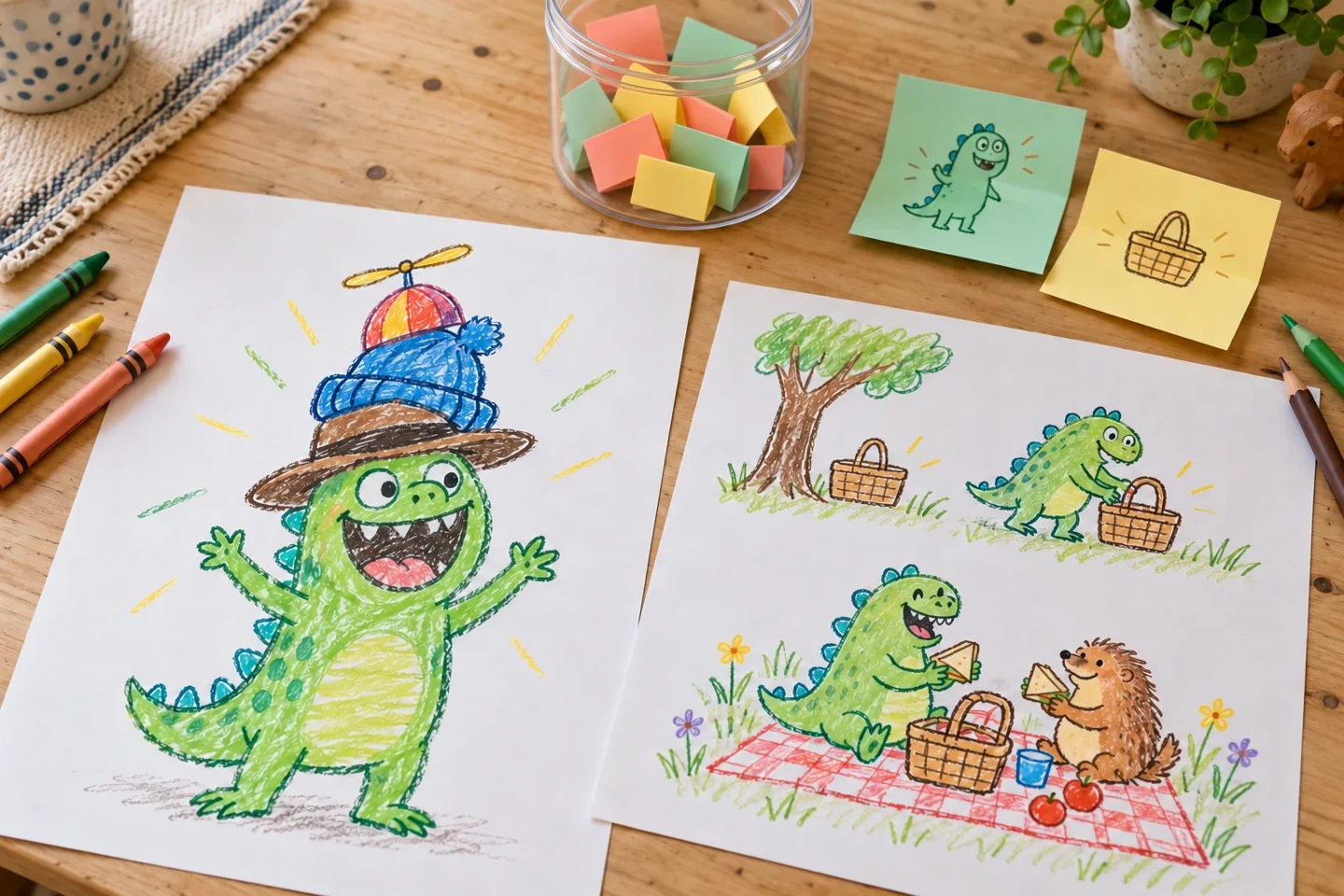
The jar works best when every slip contains an action people can start immediately. “Play something funny” is too open-ended for a quick round; “draw a dog carrying a very large sandwich” gives a clear beginning. Children can improve vague prompts themselves after testing them.
Before you begin
Use a wide-mouth plastic container that is easy to reach into, not a fragile glass jar. Place paper and pencils beside the play area. Decide whether rounds will be individual, paired, or shared before writing prompts. Keep acting choices suitable for the available space and avoid climbing, running, or physical contact.
For eight players, prepare twelve prompts and eight drawing sheets with pencils. Play around one table so supplies stay within reach. For twenty-four children, use four containers with twelve prompts each: forty-eight prompts total. Give every team of six at least six drawing sheets and six pencils. Share a first round aloud, then invite each team to choose a reader or ask an adult for help.
Make it step by step
- Pick three kinds of games: Choose drawing, acting, and storytelling. Plan four prompts in each group for twelve total. Avoid prompts that require personal disclosures, rough movement, or special supplies; the jar should be easy to use around a table.
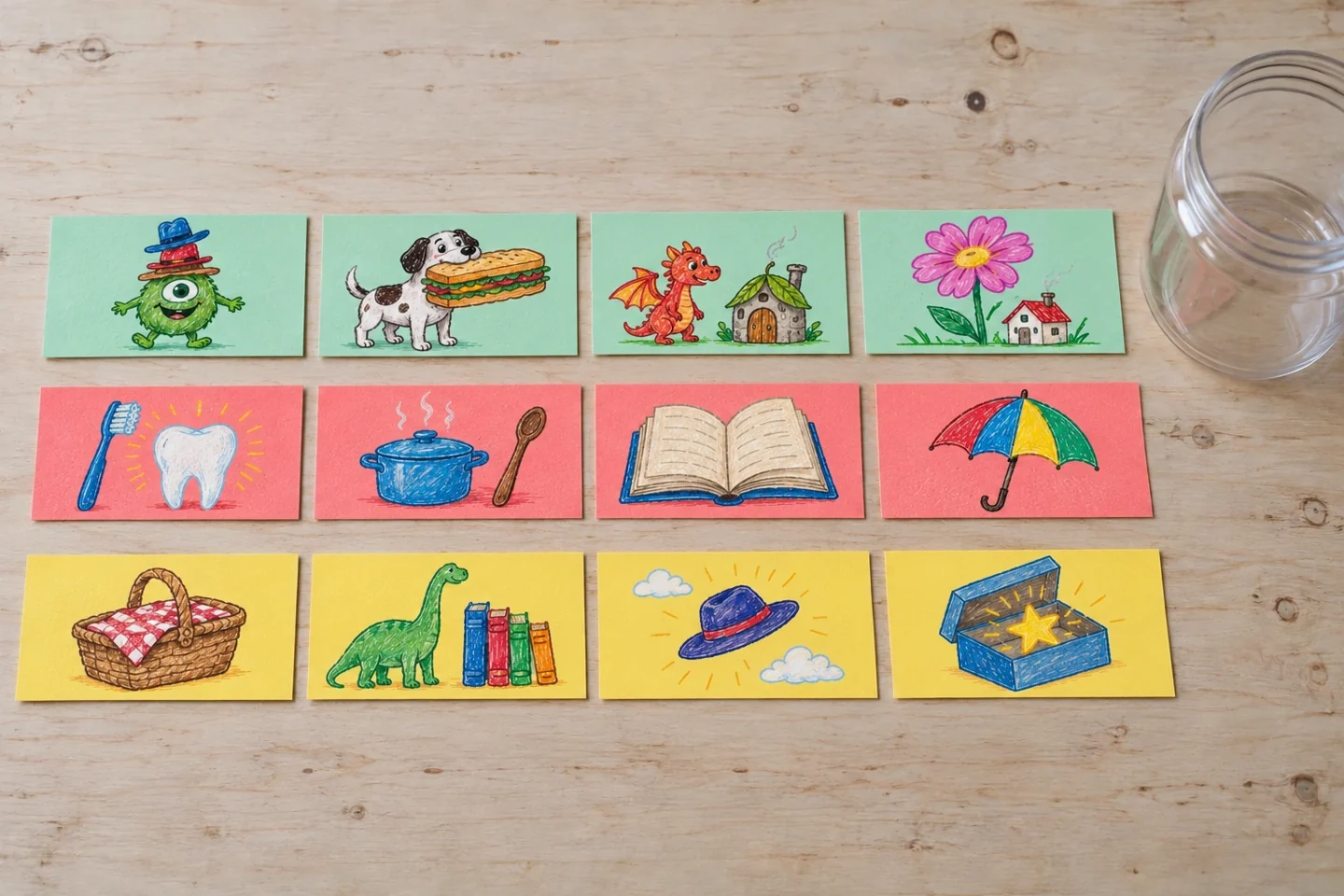
Four slips in each of three game groups make twelve prompts. - Write usable prompts: Use short actions such as draw a creature with three hats, act out brushing a giant’s teeth, or tell a story that starts with a lost picnic basket. Add simple pictures for children who do not yet read independently. For four drawing slips, try a creature with three hats, a dog carrying a giant sandwich, a tiny dragon’s home and a flower taller than a house. For four acting slips, try brushing a giant’s teeth, stirring imaginary soup, opening an enormous book and unfolding a pretend umbrella. For four story slips, begin with a lost picnic basket, a dinosaur at a library, a hat that floated away and a surprise inside a shoebox. Adjust any prompt to suit the people playing.
- Make the slips: Write or dictate one prompt per slip. Use a small color mark to identify the game group without making it a competition. Fold every slip once so each is easy to open and refold.
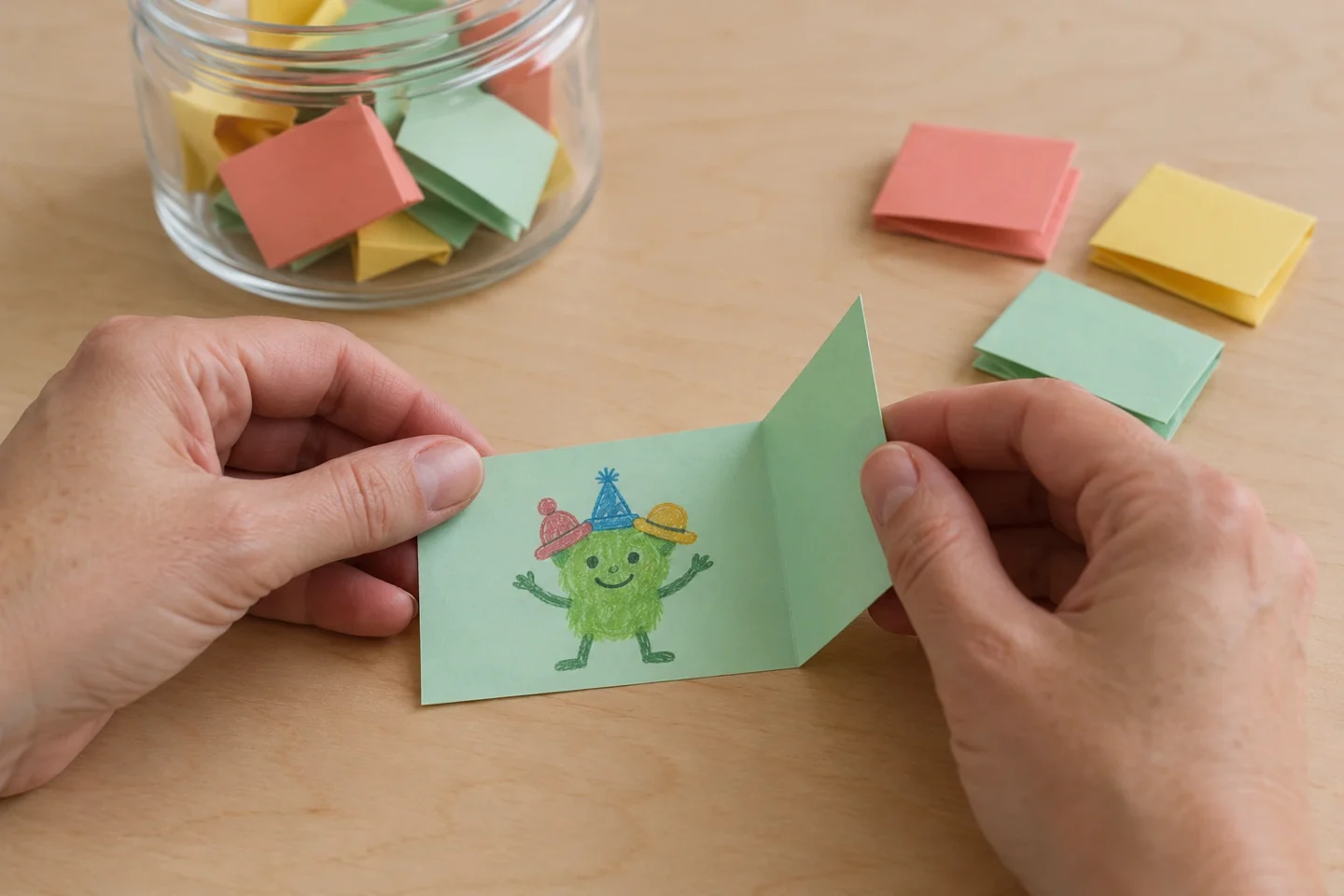
Fold every completed prompt once so it is easy to open. - Try a practice round: Pull a slip and read it aloud. Explain what players do and let them begin together. A drawing round might last two minutes; a story round can pass one sentence at a time around the group.
- Fill and refine: Place all the slips in the container. After a few games, ask which prompts were clear and which need changing. Replace a confusing prompt with a more specific one. Leave blank slips nearby for new ideas.
Talk, notice, and try another idea
Ask, “Does this slip tell us what to do?” Have a child explain a prompt in their own words before play starts. If people interpret it differently, decide whether that adds enjoyable variety or makes the rules confusing. Rewrite only the part that needs a clearer action.
After a round, ask which detail made it fun and what could make another turn easier to begin. Children might suggest a picture clue, a shorter story opening, or playing with a partner. Test the suggestion on the next round so their feedback changes the game in a visible way.
At home and with a group
At home, let each family member contribute a few prompts. Make a small mark on slips that need reading support so an adult can help without revealing the surprise early. Players can swap a prompt they dislike; choosing another keeps the celebration relaxed and preserves the shared game.
For a party, begin with one group drawing prompt to demonstrate the routine. Read the action, give everyone a little working time, and invite optional sharing. Use a simple signal to finish rather than a loud countdown. For a classroom, appoint a rotating prompt reader while adults check that rules remain clear.
Helpful adjustments and cleanup
If a prompt stalls, offer a concrete first step: draw the creature’s head, choose the first story character, or show one small action. Replace prompts that require unavailable materials. Younger children can choose from illustrated slips, while older children can invent a new constraint such as telling the story in four sentences.
Return used prompts to a separate envelope if you want to avoid repeats during the celebration. At the end, replace torn slips and store the paper and pencils beside the container. Keep favorite drawings in a folder and add a blank slip when someone has a new idea for the next gathering.
Keep the creativity going
Save a favorite creature prompt for another day. Children could give the creature a name, draw its home or turn it into the first character in a short story. The Big Dinosaur Activity Book is a cheerful next choice for children who love prehistoric creatures; our book catalog and series offer plenty of other sparks to explore.