Christmas
Make a Christmas Kindness Countdown
 Facebook
 Pinterest
 X
X LinkedIn
 Reddit
 WhatsApp
 Telegram
 Bluesky
 Email
Email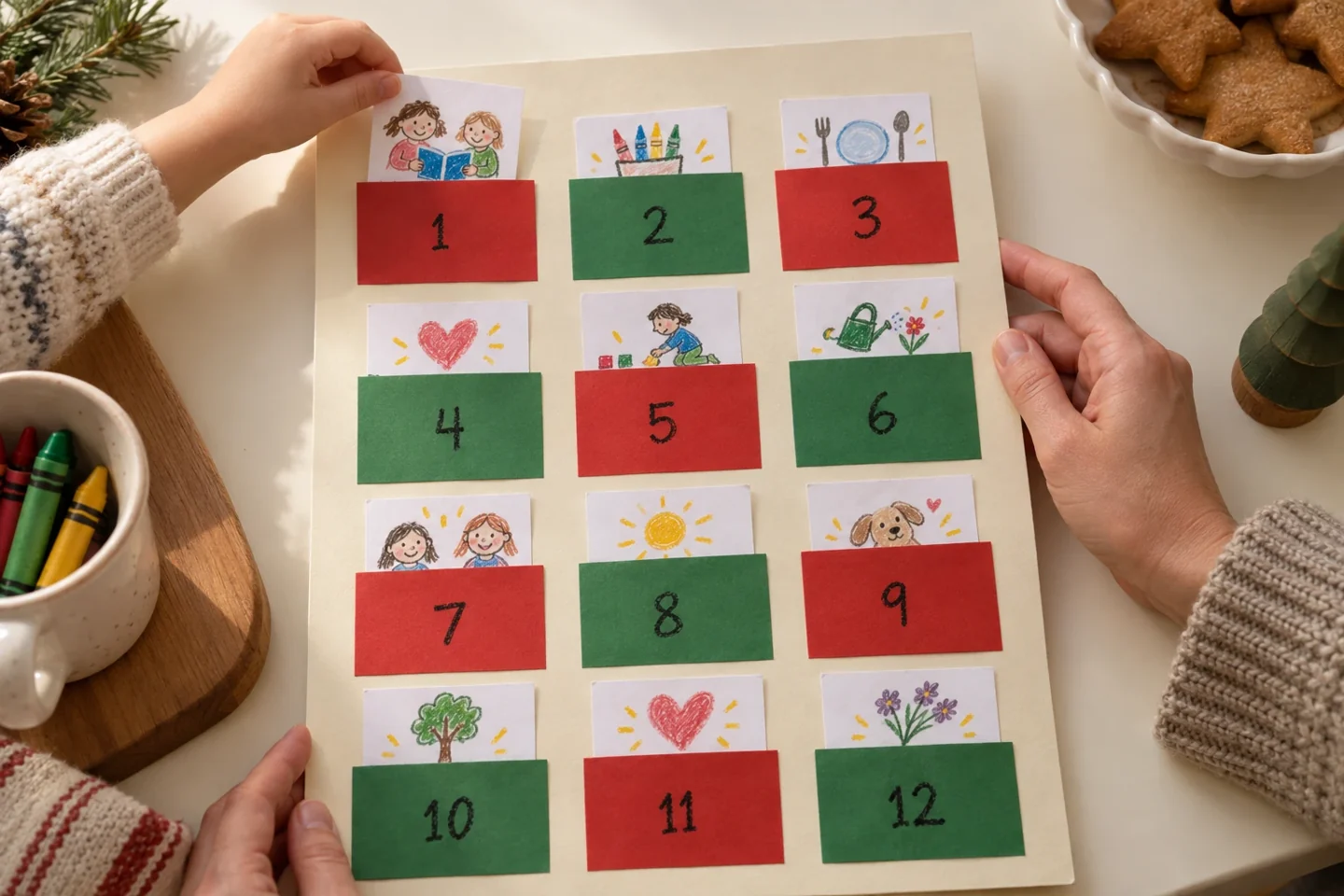
Your activity at a glance
| Suggested ages | 5–10 |
|---|---|
| Activity time | 40–50 minutes |
What you need
- 1 firm cardstock or cardboard backing approximately 12 × 18 inches
- 12 paper rectangles approximately 3 × 2 inches
- 12 paper slips approximately 2 × 1 inches
- Glue stick, crayons, and ruler
- Scissors and pencil
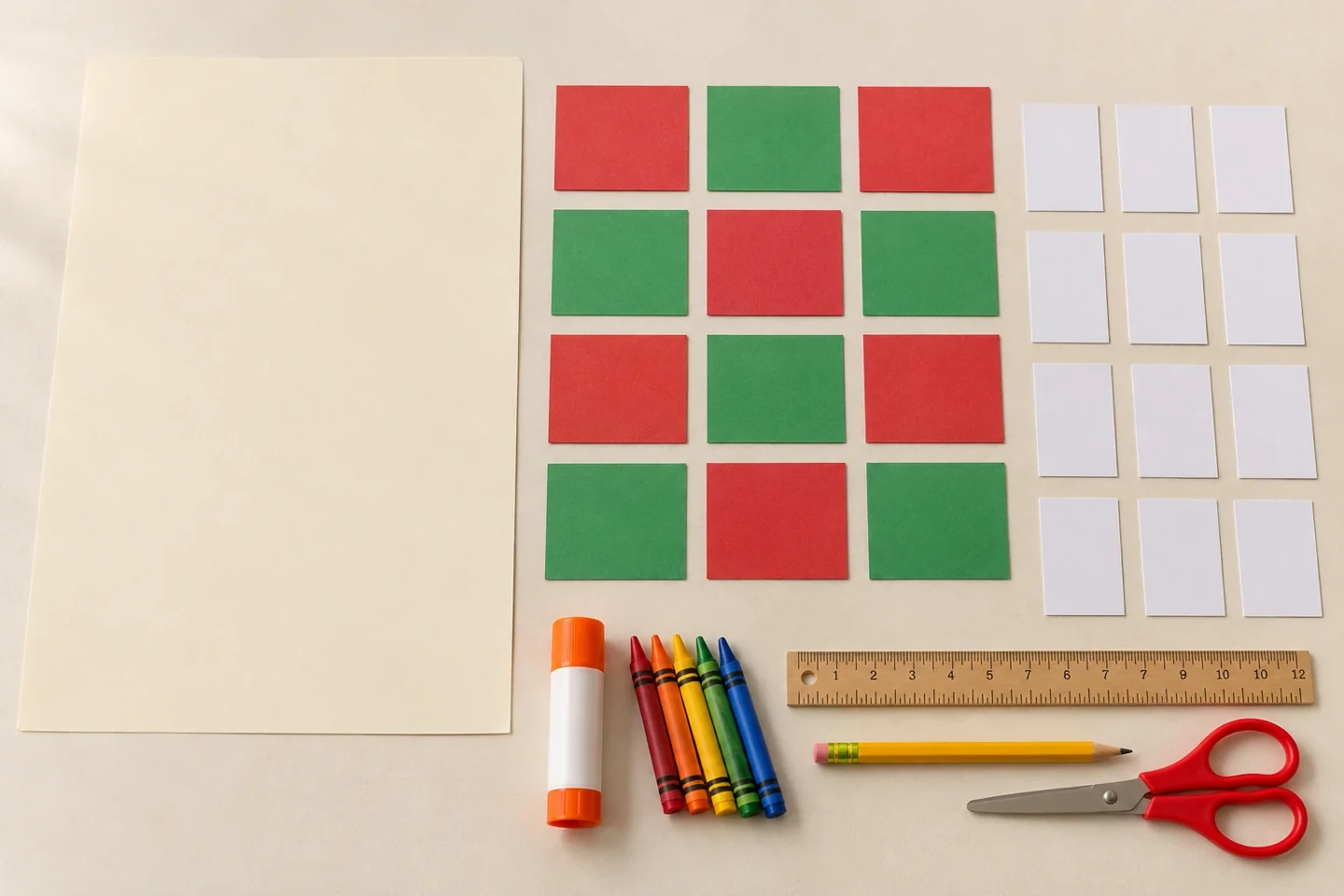
Make room for twelve small acts of kindness
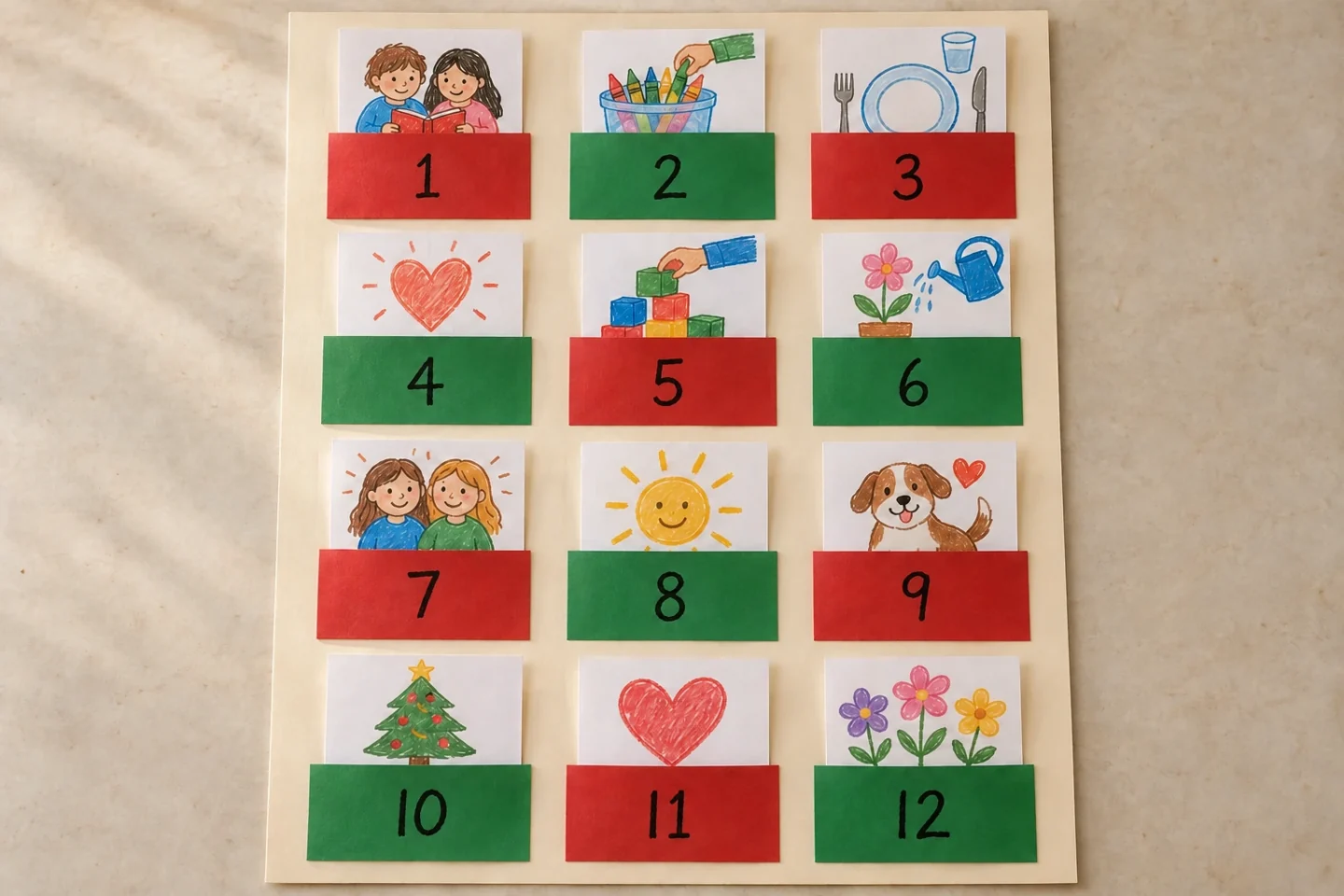
A kindness countdown gives children a small, realistic way to help during a busy Christmas season. This version uses twelve paper pockets, each holding one idea such as setting out napkins, making a card, or choosing a story to read together. Start it whenever it suits your family or class; it does not need a particular calendar date. Children help select the actions so the countdown reflects what they can actually do.
Before you begin
Choose twelve small actions the child can actually help complete, then make the pockets together. Use a twelve-by-eighteen-inch backing so three columns of three-inch pockets fit comfortably. Test one slip inside a loose pocket first. A countdown can begin whenever your family or class has room for it; there is no rush to make up missed days.
Let’s make it, step by step
1. Choose achievable actions
Brainstorm twelve tasks or gestures that fit your setting. Use specific ideas: put crayons back in their tub, thank a helper, draw a card, or help set the table. Avoid promises involving money, travel, strangers, or responsibilities beyond a child’s ability.
2. Make the pocket pieces
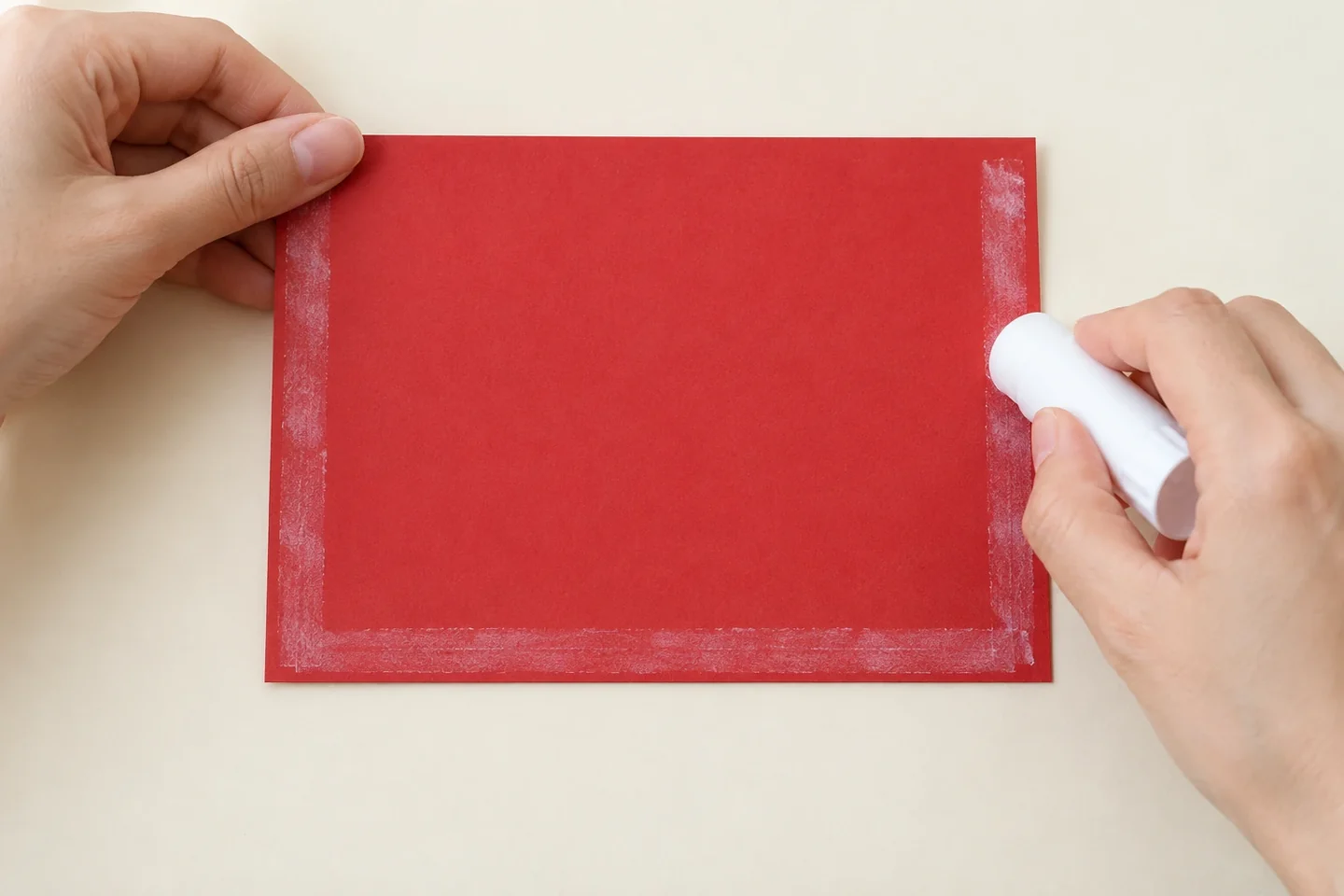
Cut twelve rectangles about 3 × 2 inches. On the back of each, mark a narrow border along both sides and the bottom. Leave the top edge unglued so it becomes the opening. Larger pockets may be easier for younger hands.
3. Plan the arrangement
Lay the pockets on the 12 × 18-inch backing in three columns and four rows. Leave about ½ inch between pockets and a clear border around the group. Number them from one to twelve. Test a 2 × 1-inch slip inside a loose pocket: its lower edge should stop above the glued bottom, with a little paper showing at the top for easy pulling.
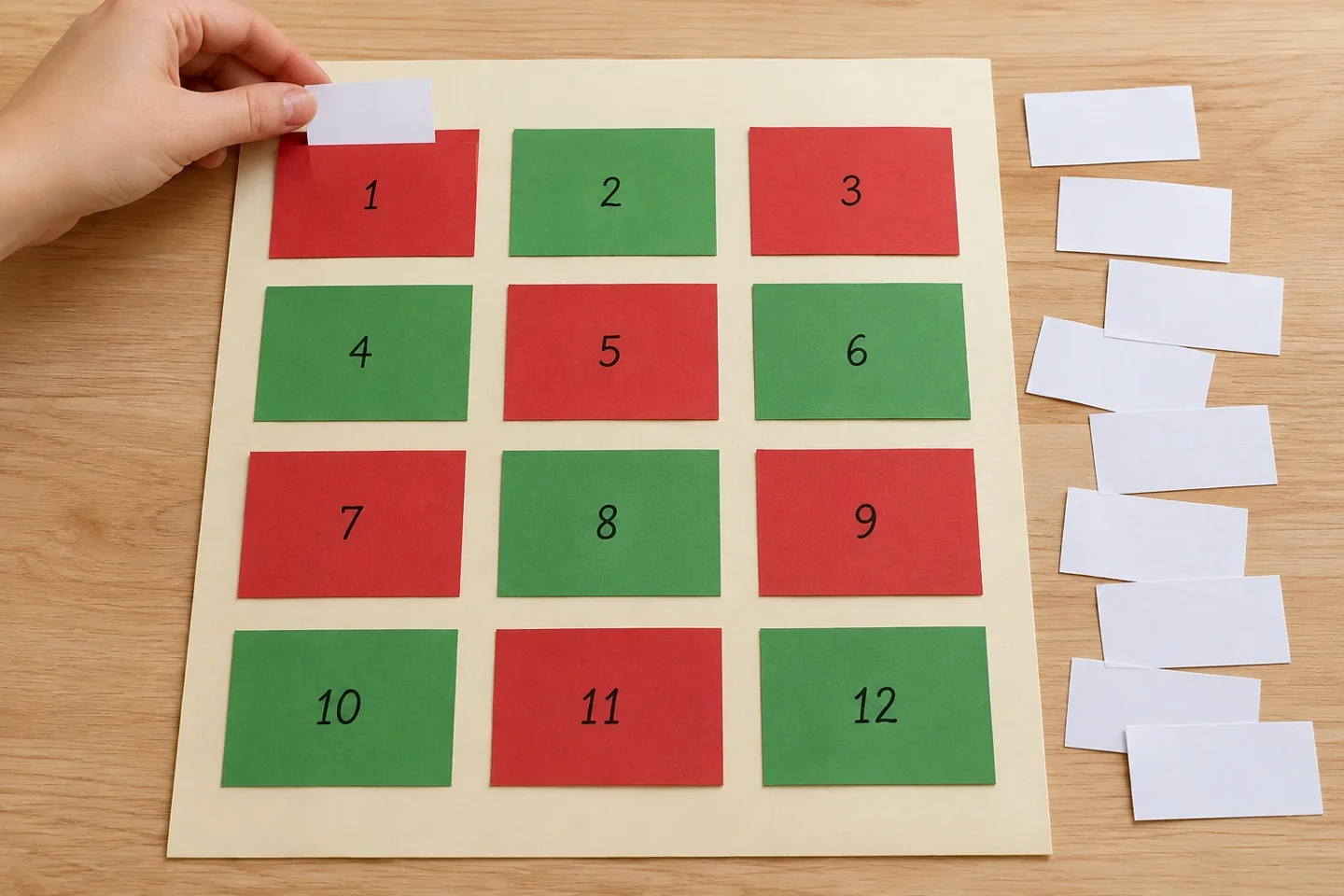
4. Glue the pockets
Apply glue only to the marked side and bottom borders. Press the pockets onto the backing, keeping their top edges loose. Slide a clean scrap slip into each opening briefly to check that the pocket has not accidentally sealed shut.
5. Prepare the action slips
Write or draw one selected action on each slip. Children can dictate while an adult writes. Add a small picture beside unfamiliar words. Keep each action short enough to read aloud and understand without a separate explanation.
6. Fill the countdown
Put one action in each pocket and discuss how you will use it. You might open one pocket on each activity day or let the child choose the next number when there is time. Agree that a missed day does not require catching up in a rush.
7. Try the first action
Open one pocket together and decide what completing that action looks like. Help if needed, then place the slip in a finished pile or turn it around in the pocket. Ask how the action helped, rather than treating it as a scored performance.
8. Keep it flexible
Replace an action that turns out to be impractical. Repeat a favorite if children want to. At the end, spread the slips out and remember a few moments together. Keep the backing for next year and store the slips separately.
Talk, notice, and learn together
Children practice planning and connecting an action with its effect: clearing a space helps the next person use it, while a thank-you names something appreciated. Ask, “What could we do that would help right now?” Keep the conversation grounded in everyday choices rather than broad claims about being a good person.
Make it work at home or in a classroom
Younger children can use six large picture pockets with an adult reading the slips. Older children can propose actions and explain what supplies they need. In a classroom, use shared tasks that never require purchases or personal disclosures, and let children choose a contribution within their comfort and ability.
Helpful fixes and cleanup
If pockets seal shut, reopen gently before the glue dries and reinforce the sides afterward. If the page bends under twelve pockets, attach it to a recycled cardboard backing. Keep scissors and glue stored separately from the finished countdown so it remains a simple daily activity.
A useful way to extend the activity
Keep actions tied to real opportunities. If a pocket says to help set the table but there is no shared meal planned, replace it with an available task rather than asking the child to manufacture a situation. Children can help make two spare slips with flexible ideas such as choosing a shared drawing activity or putting away materials after a craft session.