Fall & Halloween
Fall Shape Hunt for Kids
 Facebook
 Pinterest
 X
X LinkedIn
 Reddit
 WhatsApp
 Telegram
 Bluesky
 Email
Email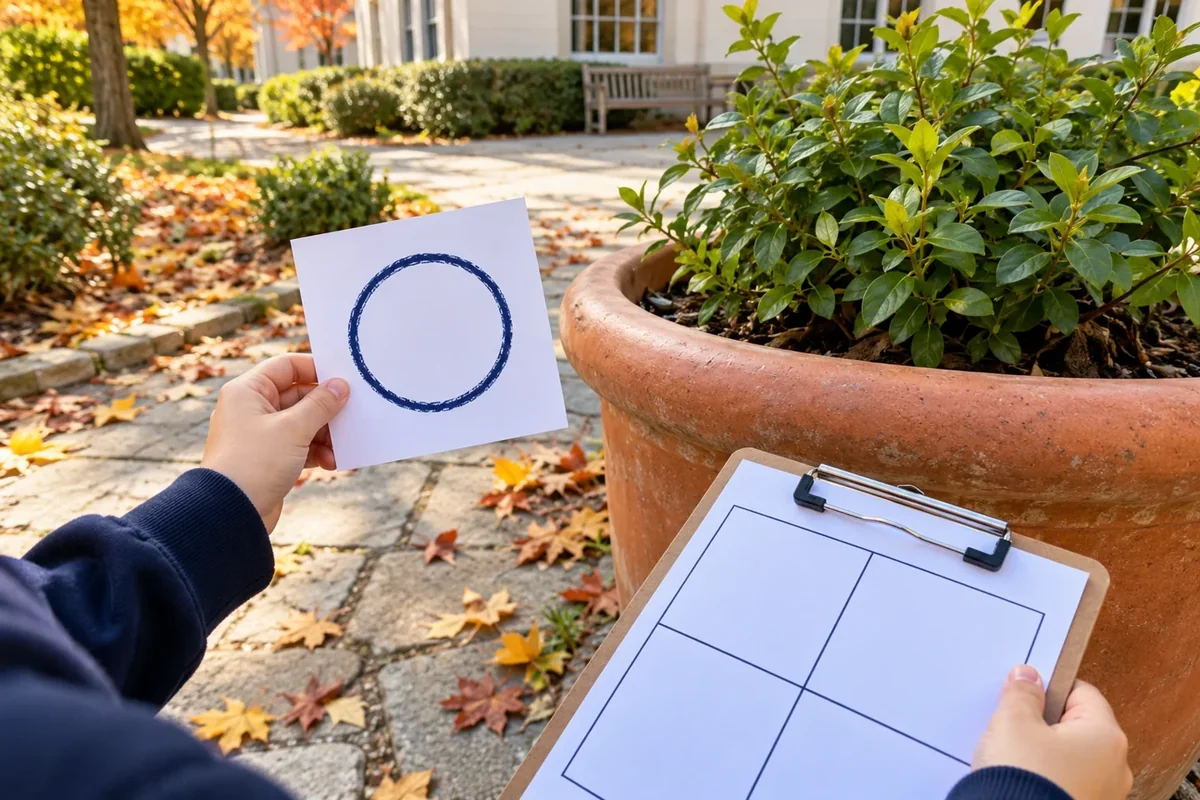
Your activity at a glance
| Suggested ages | 4–9 |
|---|---|
| Activity time | 25 minutes |
What you need
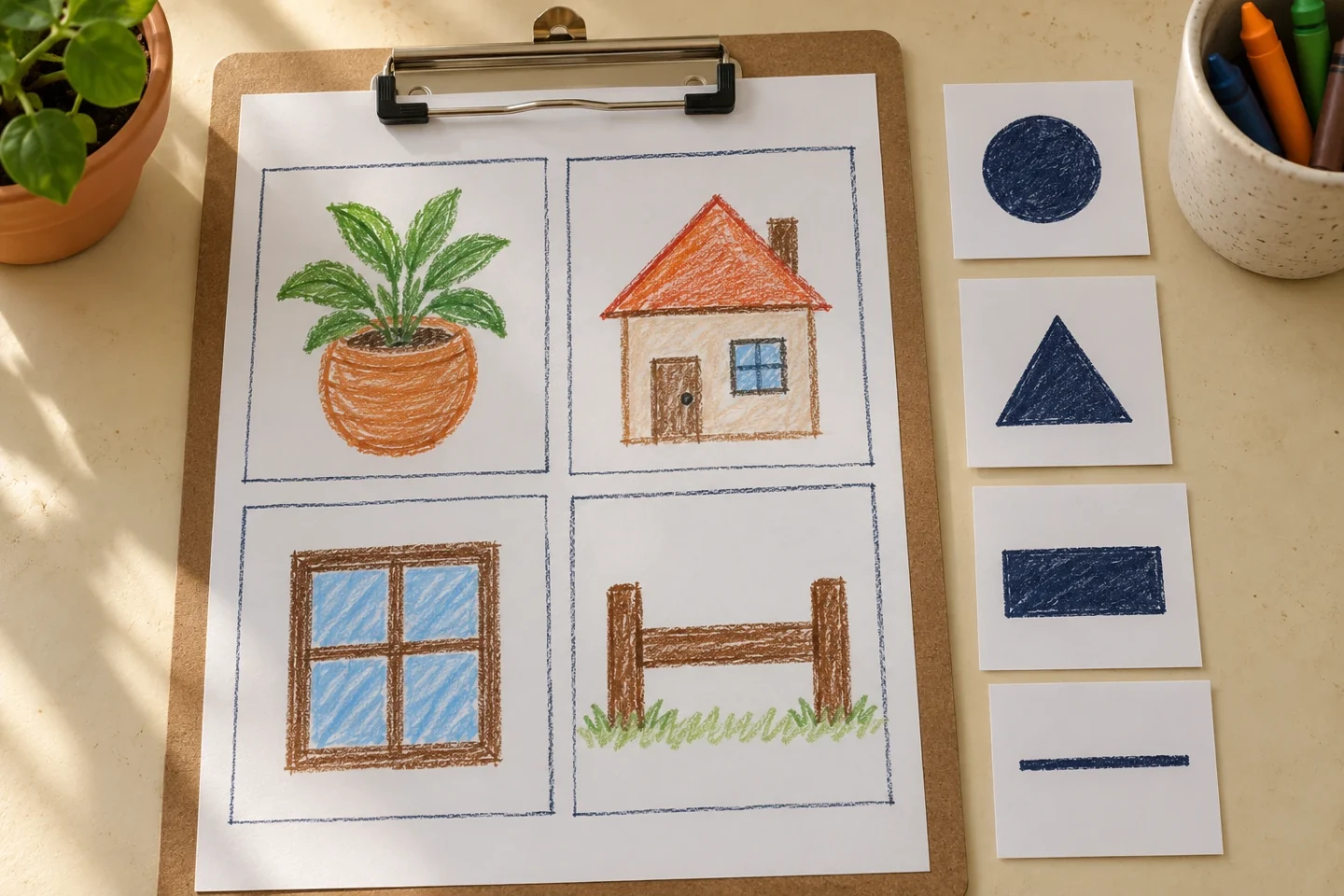
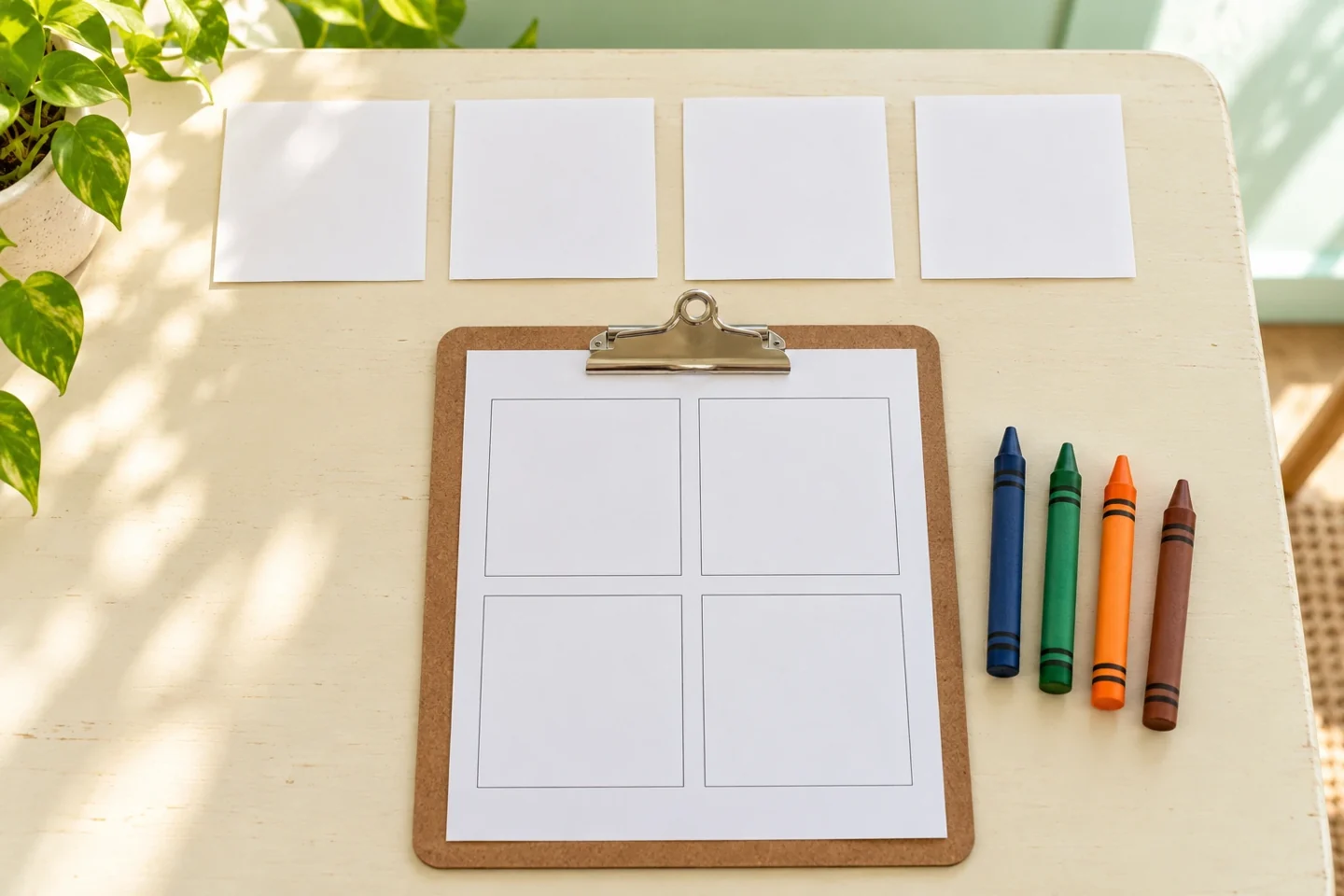
- Four blank paper cards about 10 cm square for drawing a circle, triangle, rectangle and straight line
- Clipboard or stiff backing
- One record sheet with four large drawing boxes
- Crayons
- Comfortable outdoor clothing
A little project with plenty to discover
Look for shapes in an ordinary outdoor place: a round planter, a rectangular sign, or a straight twig on the ground. This observation hunt works on a short route and does not require collecting anything.
Choose a short familiar route or one comfortable observation spot. A porch, garden path, school courtyard, or view from a bench can offer plenty of shapes without a long walk. Draw a circle, triangle, rectangle, and straight line on separate cards with bold strokes. Make the cards large enough to hold at arm’s length. Agree that children will look and draw rather than touch unknown plants, reach into gaps, or collect objects from the route.
Get the setup right
At the first stop, show one card and give everyone time to look. A round planter may suggest a circle even though its rim looks oval from the side; that difference is worth noticing rather than correcting harshly. Look for rectangles in signs and windows, triangles in roofs, and lines in fences or fallen twigs. Change the card only after discussing one or two possibilities. Asking for every shape at once can turn a quiet observation into a hurried scavenger race.
Make each shape card about 10 cm square and use a separate record sheet with four roomy drawing boxes. Call the straight-line card a line clue: unlike the circle, triangle, and rectangle, it is not a closed shape. A fence rail may match the clue even when no complete geometric outline is visible. On the record page, draw the object first, then point out the feature that matched. A leaf edge that only suggests a triangle is an interesting comparison, while a triangular roof outline offers a clearer example. Both can start a useful conversation.
Make it step by step
- Draw one large shape per card. Choose a familiar route with an adult and agree on boundaries before beginning.
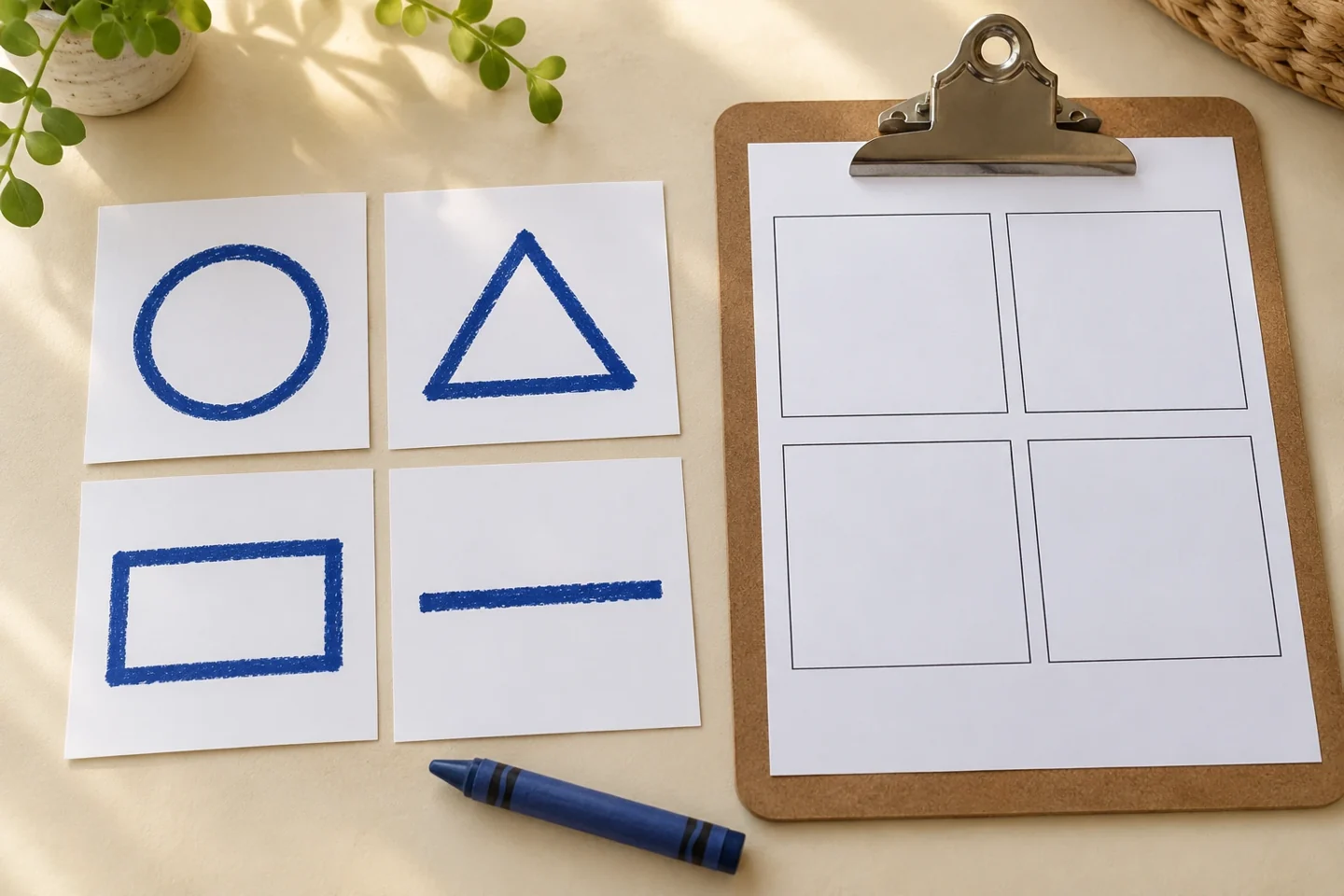
Draw one bold clue on each card and keep the recording boxes empty for your discoveries. - Show the circle card and look slowly around the first stopping place. Name possible matches without touching unknown plants or objects.
- Move to another stopping place and try a different card. Accept approximate shapes and discuss how real objects differ from drawn ones.
- Draw one discovered object for each shape on your record sheet. An adult can write the child’s description underneath.
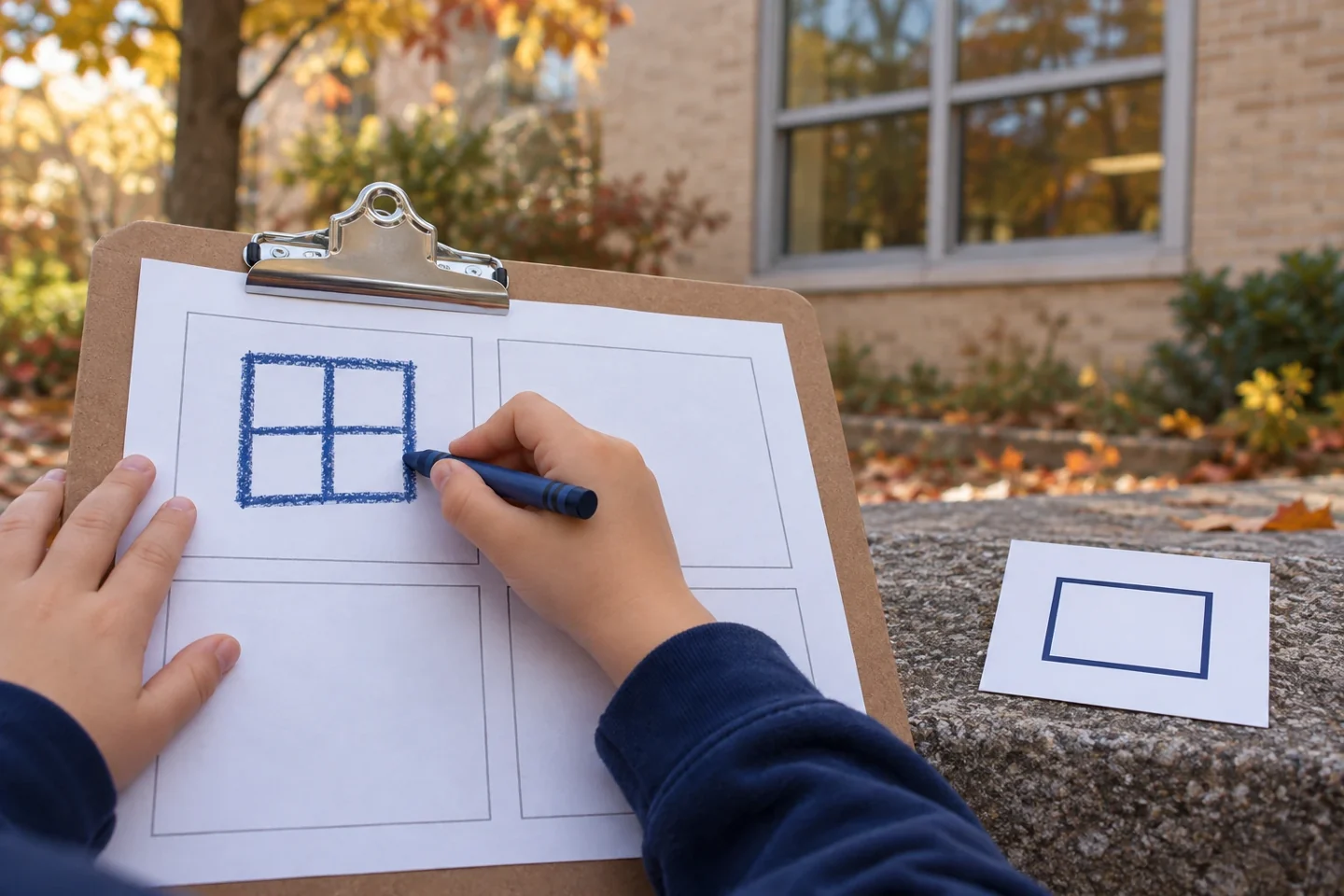
Sketch the object you found, then notice which part matches your clue. - Return indoors and compare the drawings. Choose one object that could match more than one shape depending on the viewing angle.
Make it work at home or in your classroom
Younger children can point to a match and let an adult sketch or write the discovery. Older children can draw the object, label the shape, and note whether it was exact or approximate. For a classroom group, stop together at agreed places and let pairs compare discoveries without leaving the adult’s view. If moving outdoors is impractical, use a window or photographs of the local setting. Keep the same observational questions rather than presenting the indoor version as a lesser activity.
Talk, notice, and learn together
Is this a perfect circle or nearly round? Can one object contain several shapes?
Try looking at one object from two safe positions. A cylindrical container may offer a circular top and rectangular-looking side. A fence panel can contain straight lines and a larger rectangle. Ask whether a natural leaf is a perfect geometric shape or only reminds us of one. This helps children use shapes as descriptions while noticing that real objects are more complicated than a drawing card. Record one especially interesting comparison on the back of the page.
Helpful fixes
Nothing matches: widen the search to shadows, building details, or familiar playground objects. The route is tiring: observe from one bench instead.
Return for a closer look
Make a second visit to the same spot with a different purpose: find one object that contains two of your card shapes. A window may have a rectangular frame and straight bars, while a play structure may combine triangular supports with circular openings. Let children sketch the whole object and circle the parts they noticed. Do not require every discovery to fit perfectly; discussing a nearly rectangular rock or a curved branch can sharpen observation. Compare the second drawing with the first visit’s record and ask whether the place changed or whether the children simply looked more closely this time.
Finish display and clean up
Return to the starting point and let each child choose a discovery to share. Put drawings beside the cards and review what was actually observed, including any card that had no match. An unfinished search is still useful; keep that card for a later walk. Wipe reusable clipboards if needed, store the cards flat, and check that everyone has their clothing and supplies. Wash hands after returning indoors and leave outdoor objects in the place where they were found.