Fall & Halloween
Roll and Draw a Silly Monster
 Facebook
 Pinterest
 X
X LinkedIn
 Reddit
 WhatsApp
 Telegram
 Bluesky
 Email
Email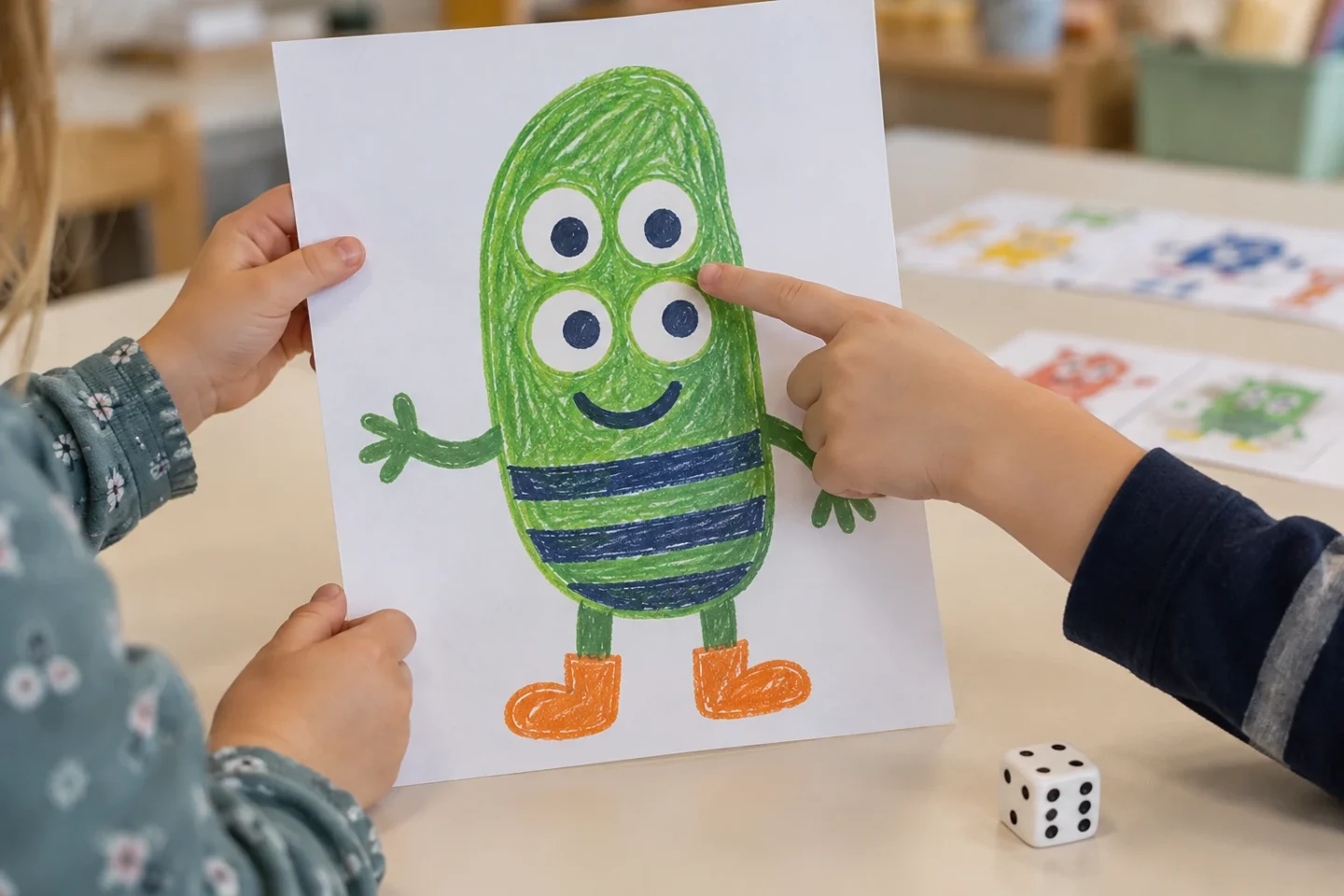
Your activity at a glance
| Suggested ages | 5–10 |
|---|---|
| Activity time | 25 minutes |
What you need
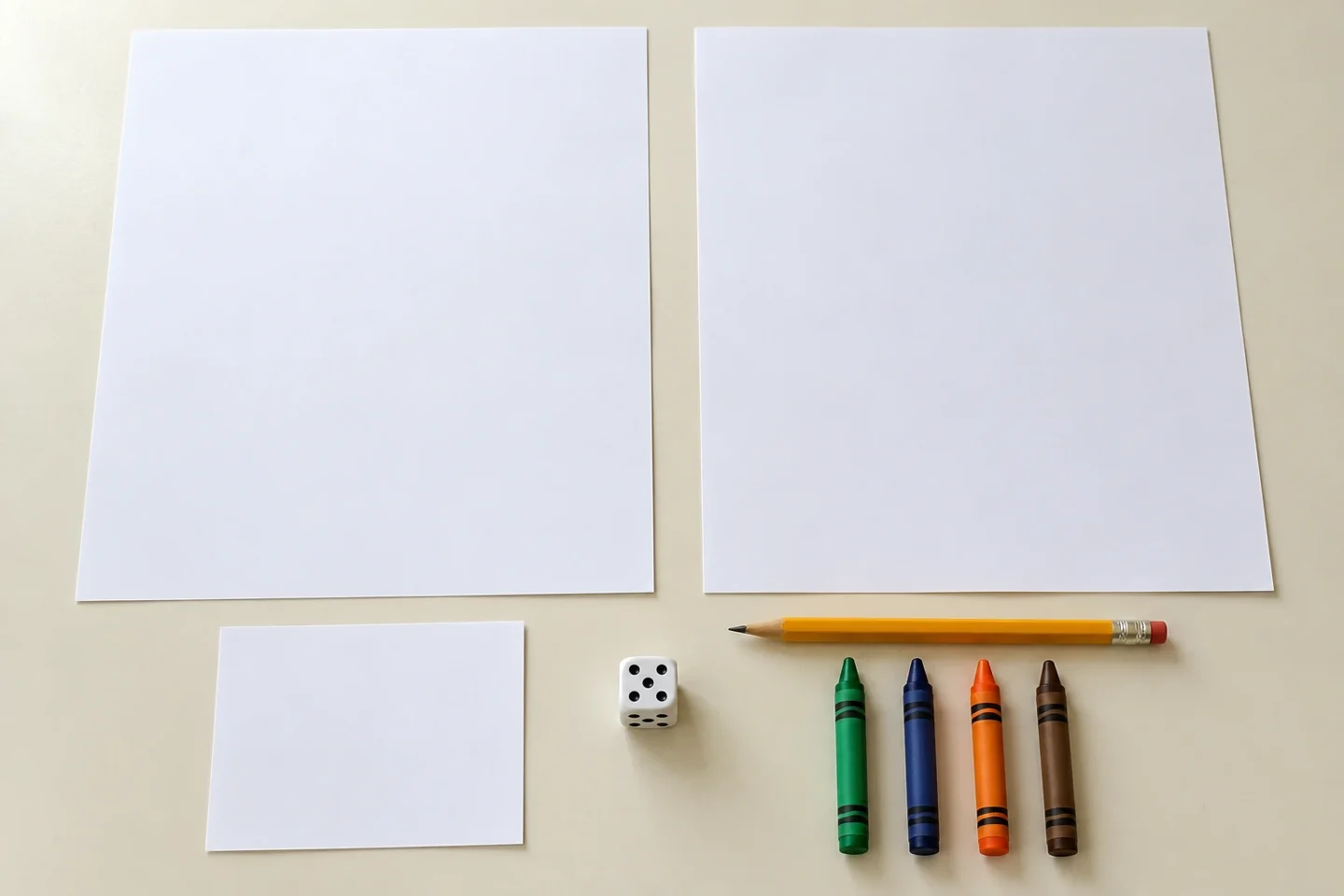
- One six-sided die
- paper
- crayons
- pencil
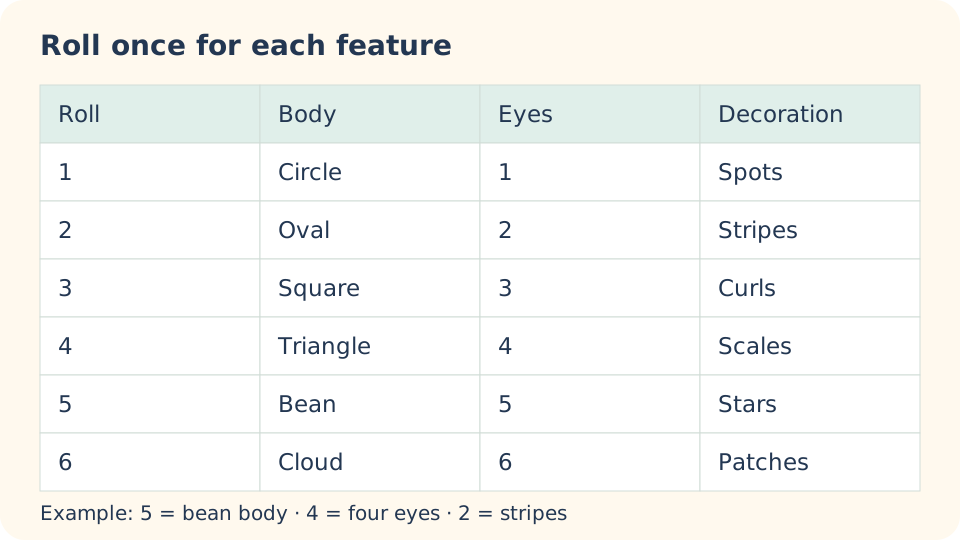
- a hand-drawn choice chart with six eye counts, six body shapes, and six decoration choices
- One spare scrap sheet for noting three rolled results
A little project with plenty to discover
Three rolls supply a starting point, but the character belongs to the child. This drawing game combines chance, counting, and imaginative decisions without ranking the results.
Prepare the choice chart before play so each roll has a clear meaning. Write or draw the six body options in one row, eye counts one to six in a second row, and six decoration ideas in a third. Number every option so the child can match a die face to the same number. Keep the chart visible beside the drawing paper. A large standard die is easier to read than a tiny game piece; supervise its use around younger siblings.
Get the setup right
Roll once for each row, working in the order body, eyes, decorations. The die determines only those three features. Children remain free to choose colors, mouth shape, arms, feet, and personality. A cloud body does not need perfect curves, and a six-eyed monster may have eyes on stalks or arranged in rows. If a choice makes the drawing feel frustrating, offer one reroll or a free choice. The game is meant to invite ideas, not enforce an unwelcome picture.
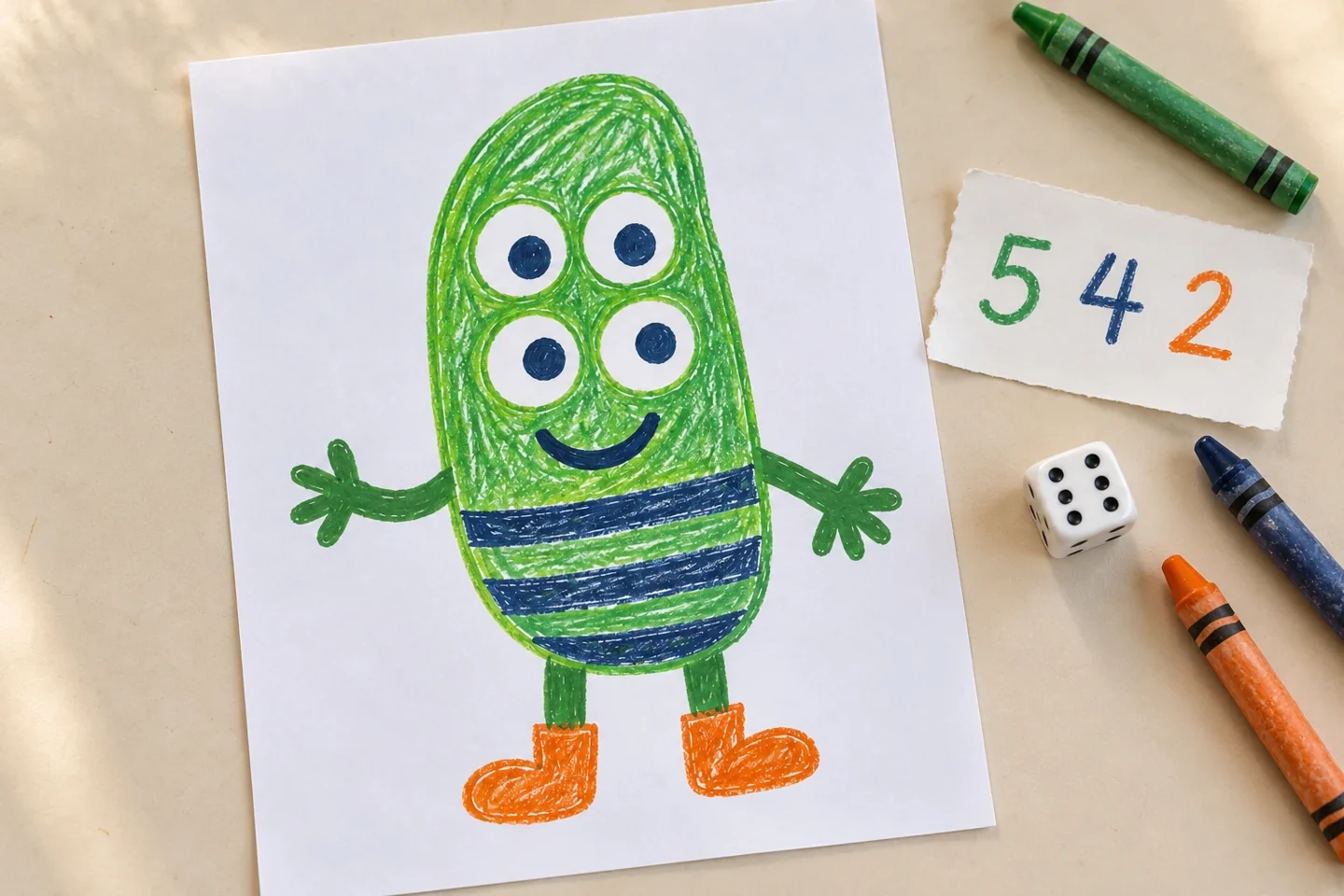
Number the chart columns 1 through 6, using the same order for every row. Under body, list circle, oval, square, triangle, bean, cloud. Under eyes, draw groups of one through six dots. Under decoration, list spots, stripes, curls, scales, stars, patches. The pictured example rolls 5 for a bean body, 4 for four eyes, and 2 for stripes. These are three separate rolls, so note each result on spare paper if the die gets moved. Children can keep the three rules while choosing every other detail, from orange boots to a wonderfully silly smile.
Make it step by step
- Prepare three choice rows: eyes from one to six; body shapes such as circle, oval, square, triangle, bean, and cloud; decorations such as spots, stripes, curls, scales, stars, and patches.
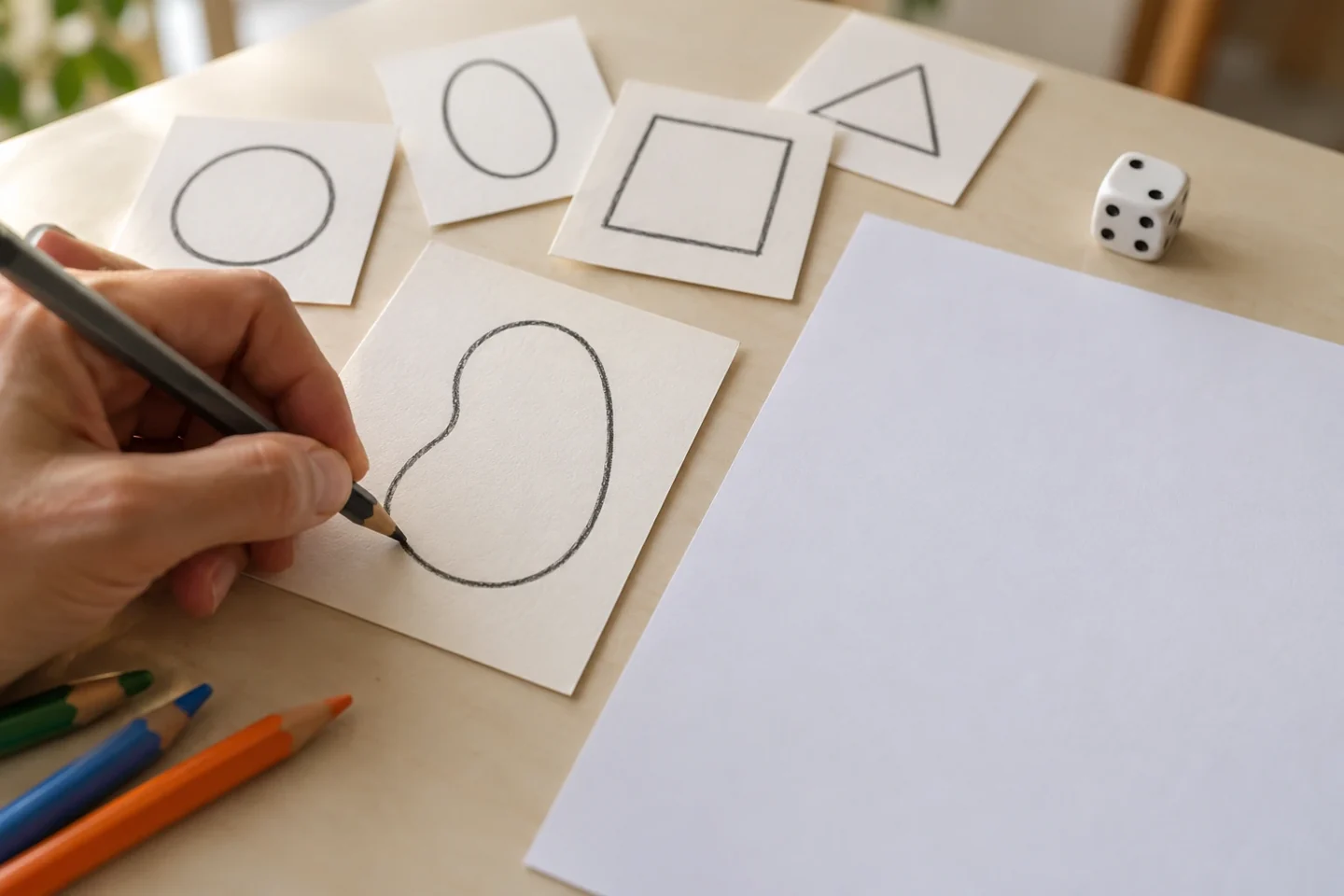
Prepare six choices for each feature before rolling; use the readable chart below as your guide. - Roll for the body shape. Draw it large enough to leave room for the eyes and decorations.
- Roll for the number of eyes. Count the rolled dots and add that many eyes inside or around the body.
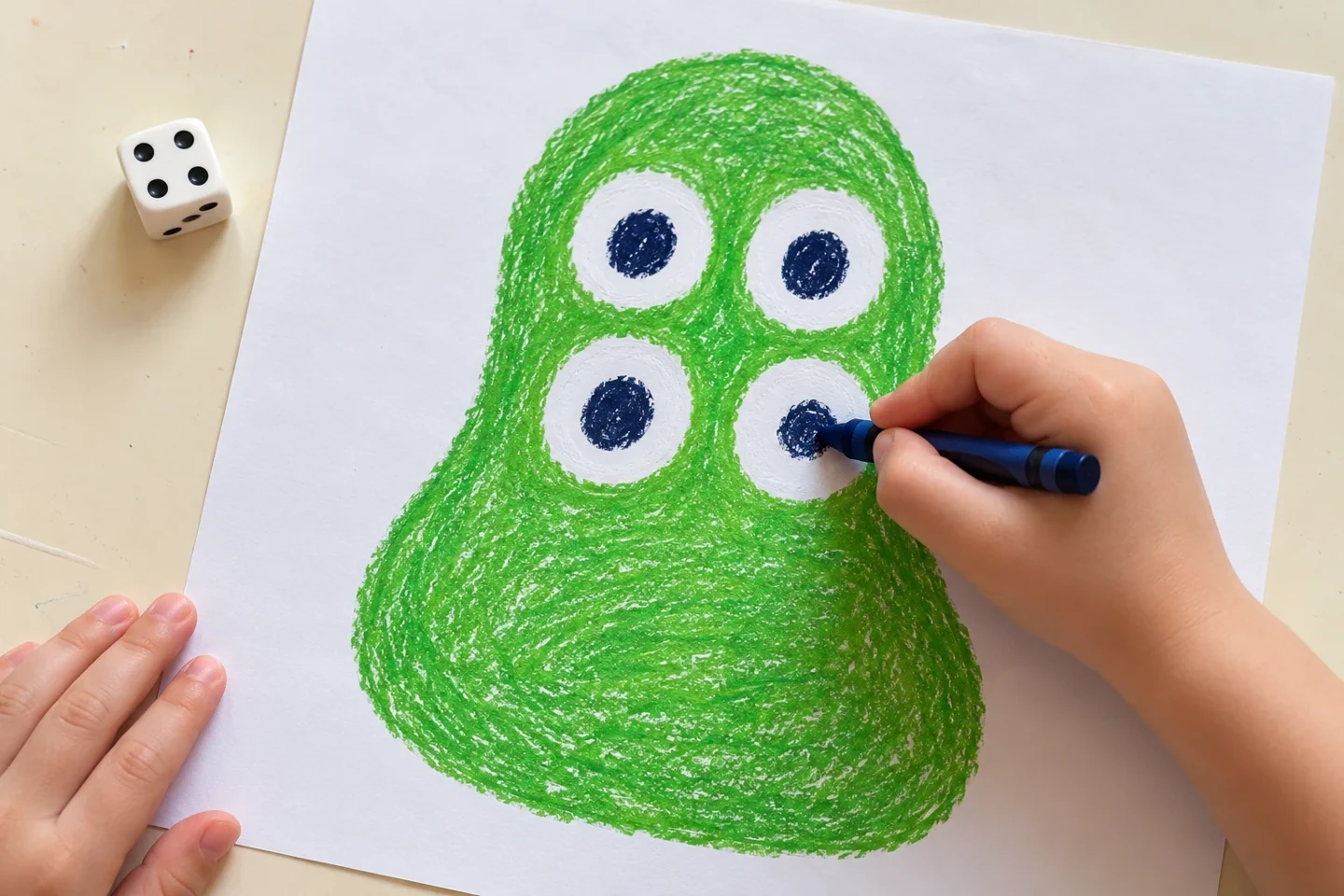
Count the rolled dots and add the same number of eyes before decorating. - Roll for decorations. Add the selected design, then choose your own mouth, arms, feet, and colors.
- Give the monster a name and tell one thing it enjoys. Draw another monster and compare the combinations rather than judging which is best.
Make it work at home or in your classroom
Younger artists can use only the body and eye rows, then decorate freely. Draw a large body outline for a child who wants help getting started, and let them add the features. Older children can design their own six-choice chart and exchange it with a partner. In a classroom, put one die and chart at each small table; children can share rolls but produce different drawings. Avoid comparing neatness or naming a winning monster, since the interesting part is each maker’s interpretation.
Talk, notice, and learn together
How many combinations might we get? What would this monster like to eat or play?
After drawing, ask the child to introduce the monster. What does it enjoy? Where would its many eyes be useful? What might make it laugh? Write a dictated sentence beneath the picture if requested. For a math variation, keep a tally of which eye counts appear across several rounds and compare the actual results. Do not expect all numbers to appear equally in a short game. The chance element gives variety, while repeated counting makes the quantities visible.
Helpful fixes
The chart feels crowded: show one row at a time. A child dislikes a roll: offer one reroll or let them choose; the chart is an invitation.
Try one shared set of rolls
Try a shared-roll round: everyone uses the same three rolled results but draws independently. Place the completed drawings together and look for the required features they share, then notice the differences in color, expression, and placement. This makes a useful point about creative interpretation: the same starting instructions can lead to many distinct pictures. Ask each artist to describe one detail they added freely. If a child wants another challenge, let them invent a chart for tails or hats and test it with one partner. Keep each extra chart to six choices so it continues to work with the same die.
Finish display and clean up
Keep the chart and die together in a shallow box or envelope for another round. Store drawings separately so the next game begins with a blank page rather than pressure to recreate the same monster. A child can add a new decoration option later, replacing one choice instead of expanding beyond the six die numbers. Collect crayons and check that the die has been put away. If a drawing is unfinished, leave its chosen options noted beside it so the maker can return easily.