Spring & Easter
Easter Egg Sorting and Counting Games
 Facebook
 Pinterest
 X
X LinkedIn
 Reddit
 WhatsApp
 Telegram
 Bluesky
 Email
Email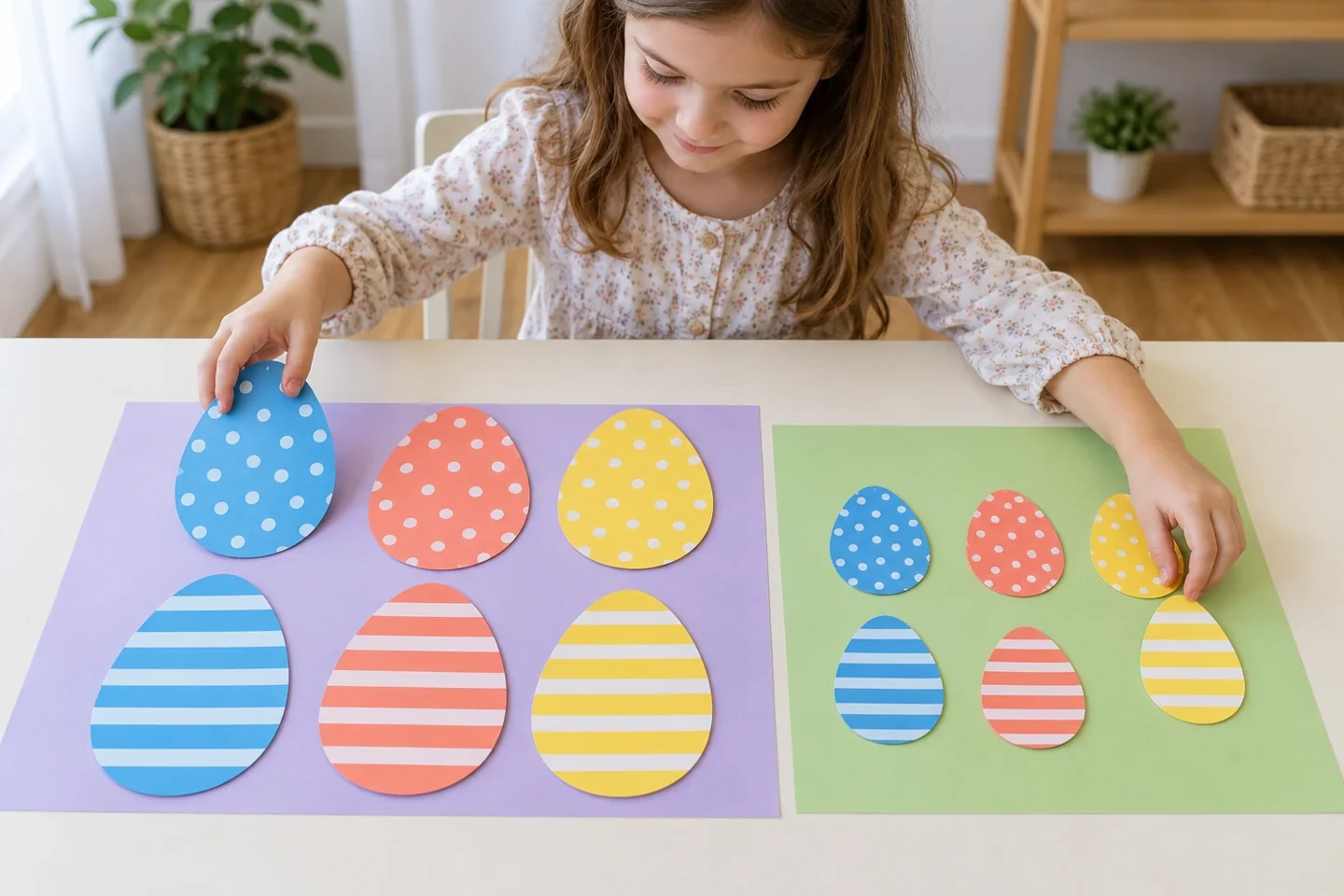
Your activity at a glance
| Suggested ages | 3–7 |
|---|---|
| Activity time | 20 minutes |
What you need
- Blue, coral, and yellow paper for 12 eggs: 4 per color
- For each color, 2 eggs 4 inches tall and 2 eggs 6 inches tall
- Crayons, pencil, ruler, and child-friendly scissors for adult preparation
- 3 plain sheets as sorting mats; optional numeral cards
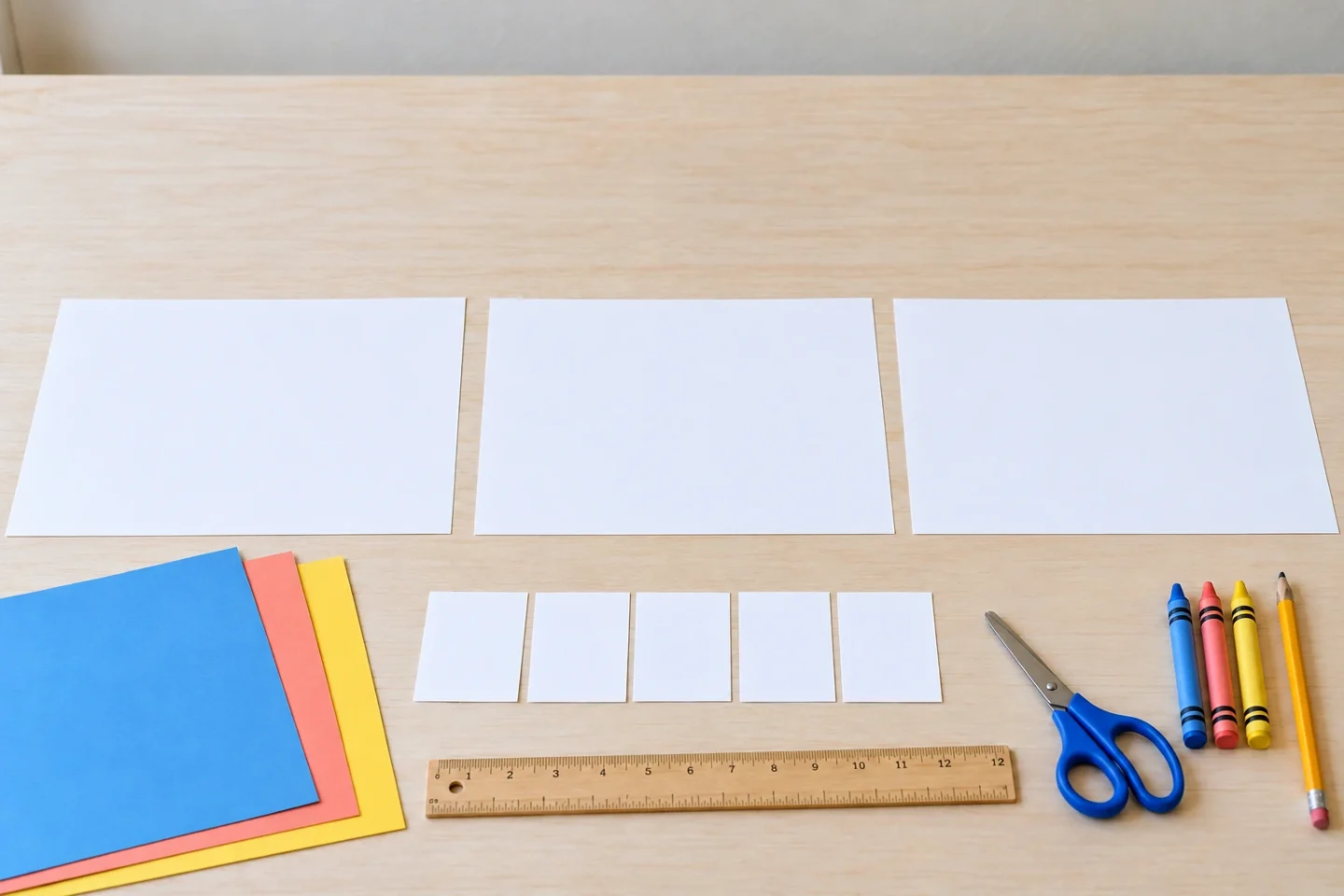
One set of eggs, three sorting games
A handful of paper eggs can become several different math games. Start by sorting one obvious feature, then rearrange the same pieces according to another rule. Children discover that the collection stays the same even when its groups change. Paper eggs avoid the little openings and hidden pieces of plastic eggs while keeping the activity easy to store.
Get ready together
Prepare twelve eggs at least 4 inches tall, with four in each of three colors. Across the collection, include two sizes and bold dot or stripe patterns. Exact combinations need not be evenly distributed; unequal groups create useful comparisons. Keep the three sorting mats blank at first and offer all pieces in one shallow tray. For children who are new to sorting, start with six eggs in two colors before introducing the full set. Paper pieces should be large enough to handle easily.
Make it step by step
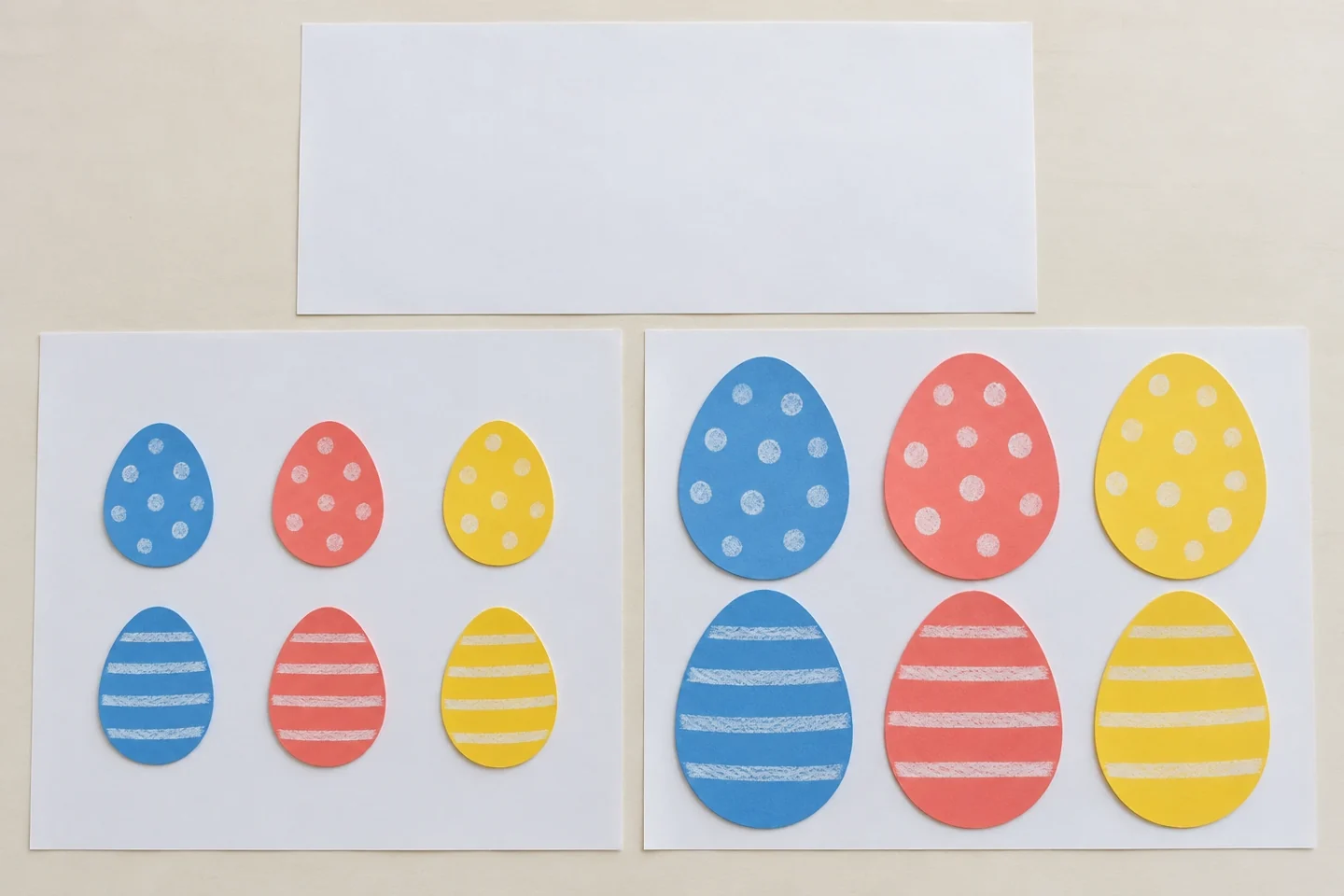
- Prepare twelve eggs: four blue, four coral, and four yellow. Within each color, cut two eggs 4 inches tall and two 6 inches tall. For each same-size pair, decorate one with dots and one with stripes. This gives six eggs of each size and six of each decoration, while keeping four of each color.
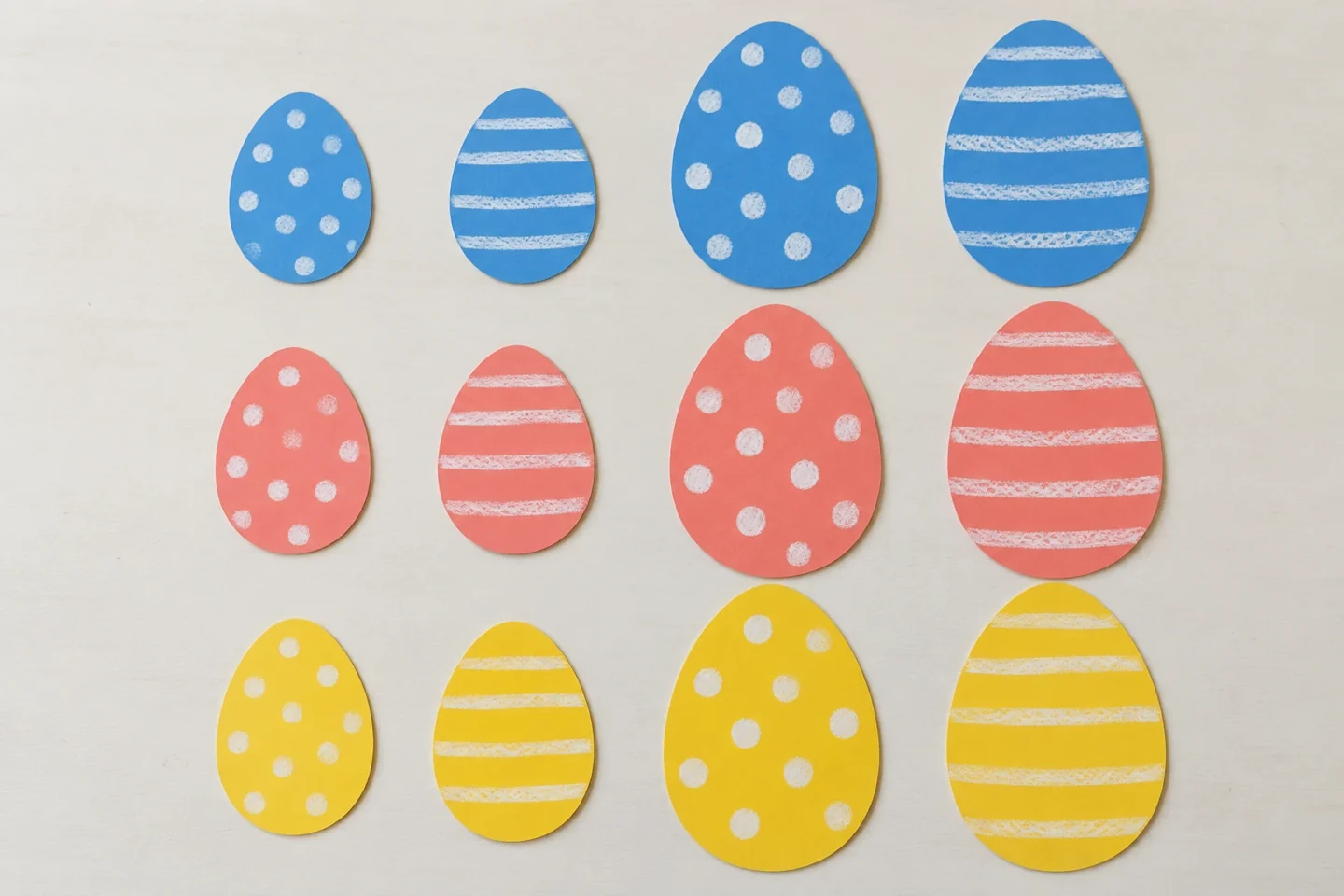
Each color has two small eggs and two large eggs, with dots and stripes in each pair. - Spread the eggs where every piece can be seen. Ask children what they notice before naming a sorting rule. Place three plain sorting mats on the table.
- Choose color for the first round. Move one egg at a time to its matching mat. Count each group by touching or pointing to every egg once, then compare the totals.
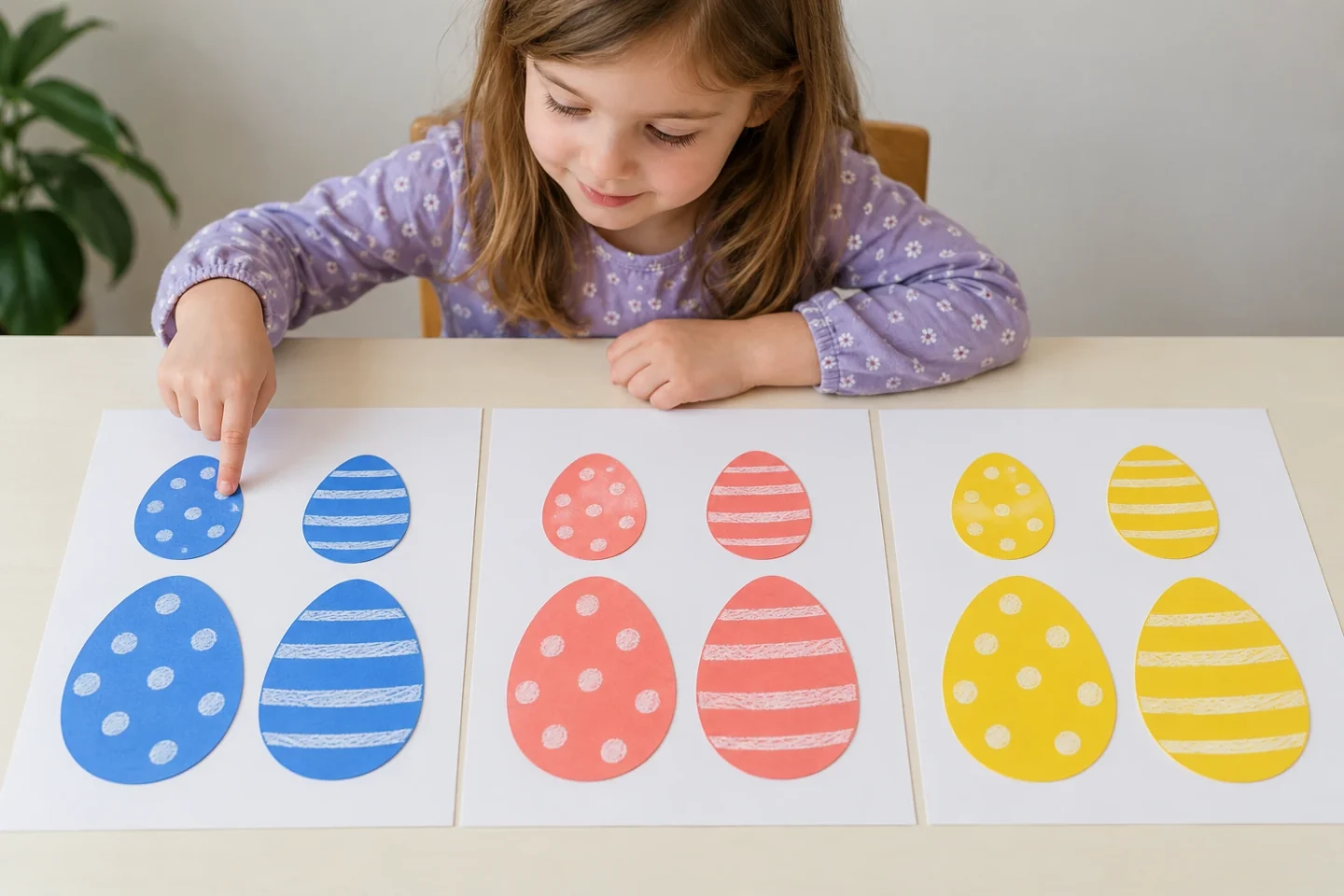
Touch each egg once as you count a four-egg color group. - Mix the eggs again and choose size. Use two mats and sort large and small eggs. Notice that the same egg may now sit beside a differently colored neighbor.
- Try dots and stripes for a third round, or invite children to invent a clear rule. Finish by counting all twelve eggs and checking whether rearranging changed how many there are.
Try it, notice it, talk about it
Let children inspect the collection before choosing the first rule. Agree on color, then place one sample on each mat. Count a finished group by pointing to every egg once; moving counted pieces into a line can help avoid repeats. Mix the pieces again before the size round so the change of rule is visible. A blue egg can belong to the blue group in one round and the small group in another. Explain that the feature being compared changed, while the egg itself did not.
Can an egg belong to the blue group and the small group at the same time? Which group has more, fewer, or the same number? How could we check a count without starting the whole game again?
Make it work for your children
A classroom pair can alternate sorting and checking roles, then invent a third round together. One child explains the rule while the other places a piece and asks whether it fits. At home, arrange two groups and invite a family member to guess the rule. If a decorated egg has both dots and stripes, discuss where it belongs or create a both group; a clear exception is an opportunity to refine the rule. Do not force an ambiguous design into a category simply to finish the game.
If a pattern is hard to see, redraw it boldly or use color alone. Begin with six eggs and two colors for a younger child, adding pieces when the game feels comfortable. Avoid speed races; careful matching and explaining the rule are more useful than finishing first.
Finish and tidy up
Finish by counting the entire collection after all the rearrangements. Compare the result with the starting total and ask why moving pieces did not create more eggs. Large numeral cards are optional and should follow a count rather than replace it. Store the eggs flat in an envelope with the mats folded separately. Replace damaged pieces using the same visible features, and keep a simple inventory of the twelve pieces so the next session starts with a complete collection.