Spring & Easter
Start a Seed Observation Journal With Kids
 Facebook
 Pinterest
 X
X LinkedIn
 Reddit
 WhatsApp
 Telegram
 Bluesky
 Email
Email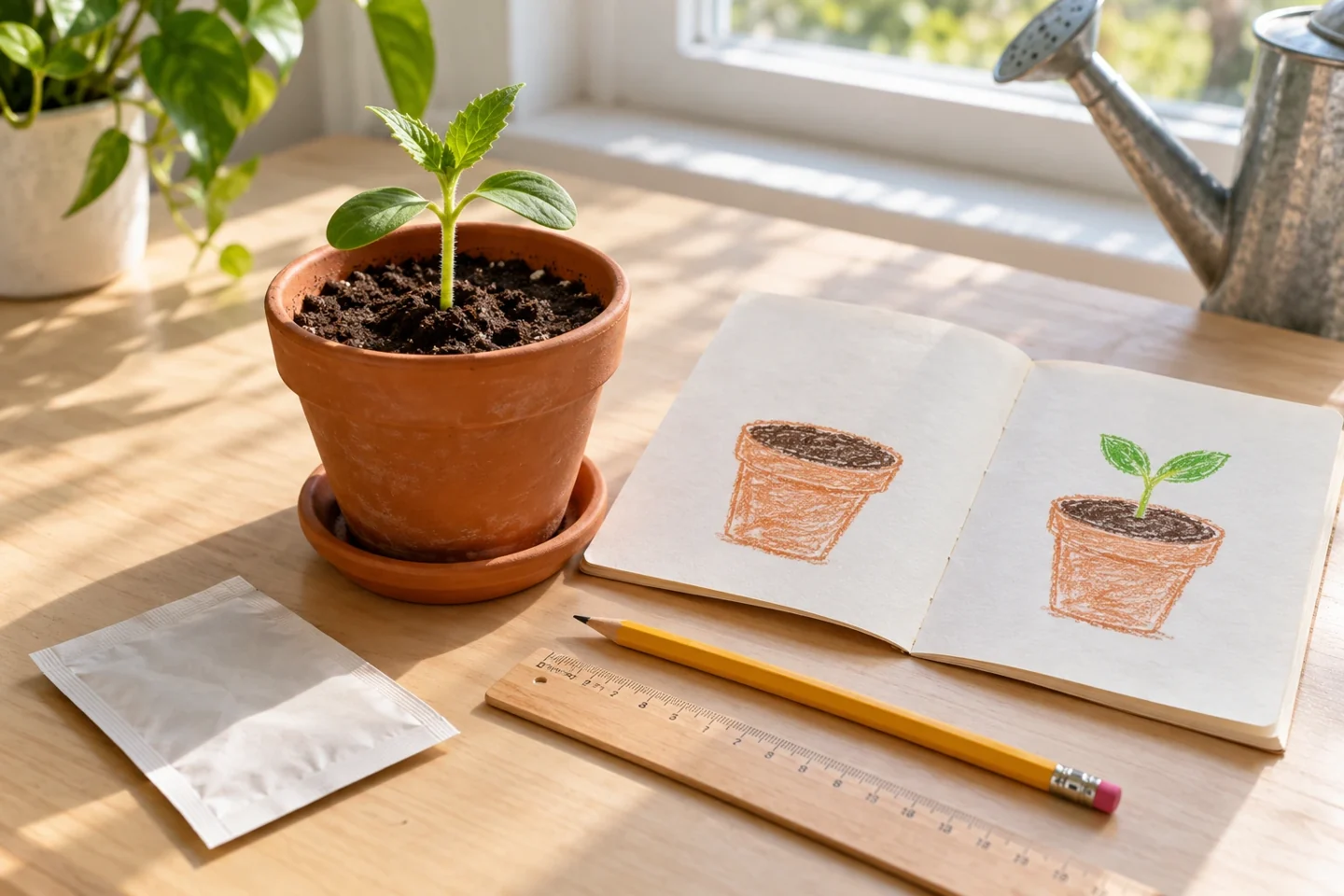
Your activity at a glance
| Suggested ages | 5–10 |
|---|---|
| Activity time | 25 minutes to plant, then brief daily observations |
What you need
- One clean small pot with drainage holes and a saucer
- Seed-starting mix sufficient to fill the pot
- 2 dwarf sunflower seeds and their seed packet
- Water, spoon, ruler, and a folded-paper journal
- Pencil and optional crayons for observation drawings
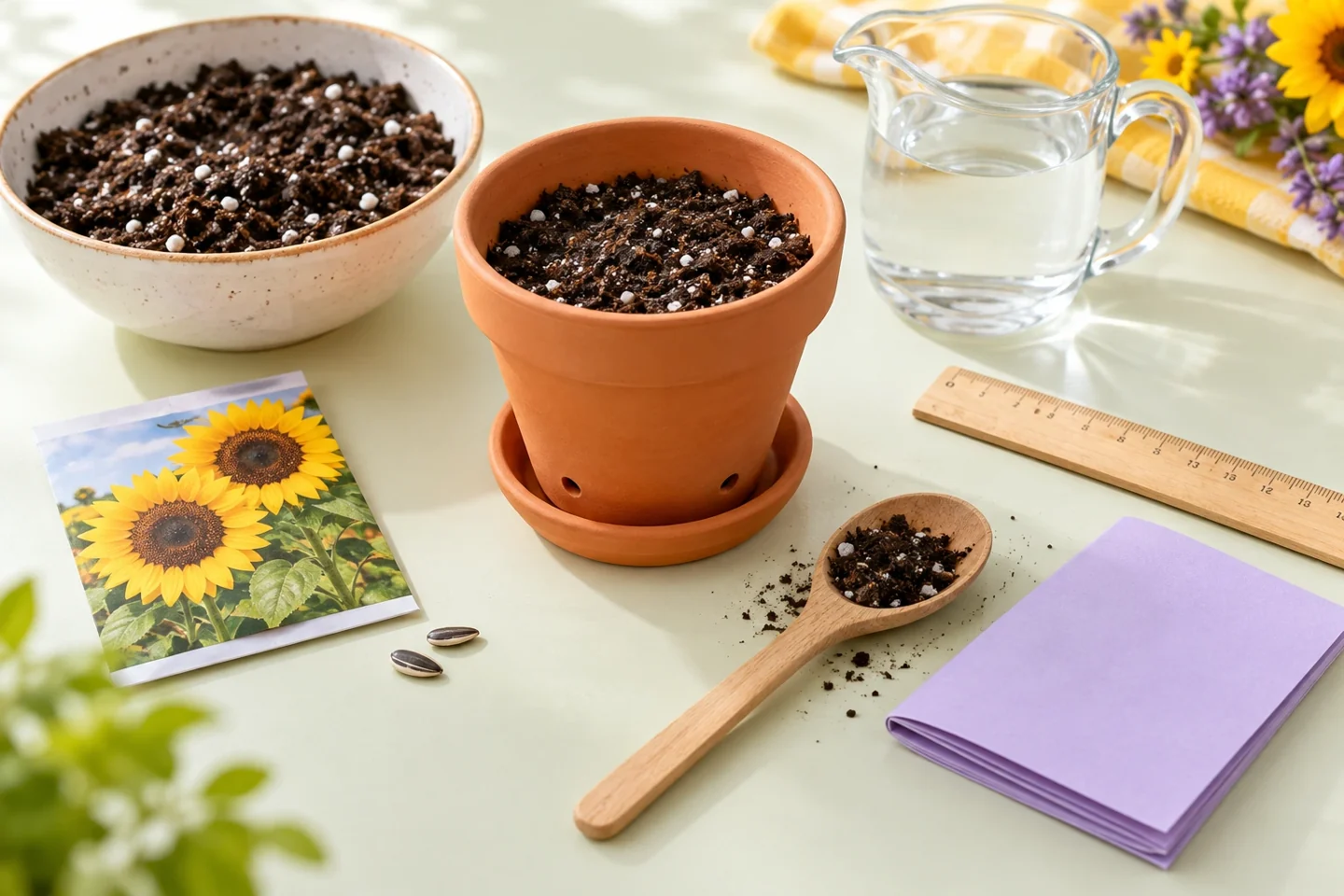
A little spring creativity
Planting is the beginning of this project; the story unfolds over the following days and weeks. Children draw what they actually see, including days when the surface appears unchanged. A seed journal offers a gentle introduction to observation, patience, and the difference between a prediction and a recorded result. Keep the packet because planting depth and expected germination time belong to the particular seed you use.
Get ready together
Read the actual seed packet before setting out the pot. Dwarf sunflower varieties differ in planting directions and expected size; the packet controls the depth, spacing, and suggested germination range for this project. An adult checks that the container has working drainage holes and that its saucer protects the table. Moisten the mix separately, then offer a small quantity for filling the pot. Put a spoon and the journal nearby so the planting and recording stages are connected. Seeds and mix are gardening materials, not tasting ingredients.
Make it step by step
- Choose a clean draining pot and place it on a saucer. An adult moistens the seed-starting mix until it feels evenly damp, not dripping, then helps fill the pot leaving a little space below the rim.
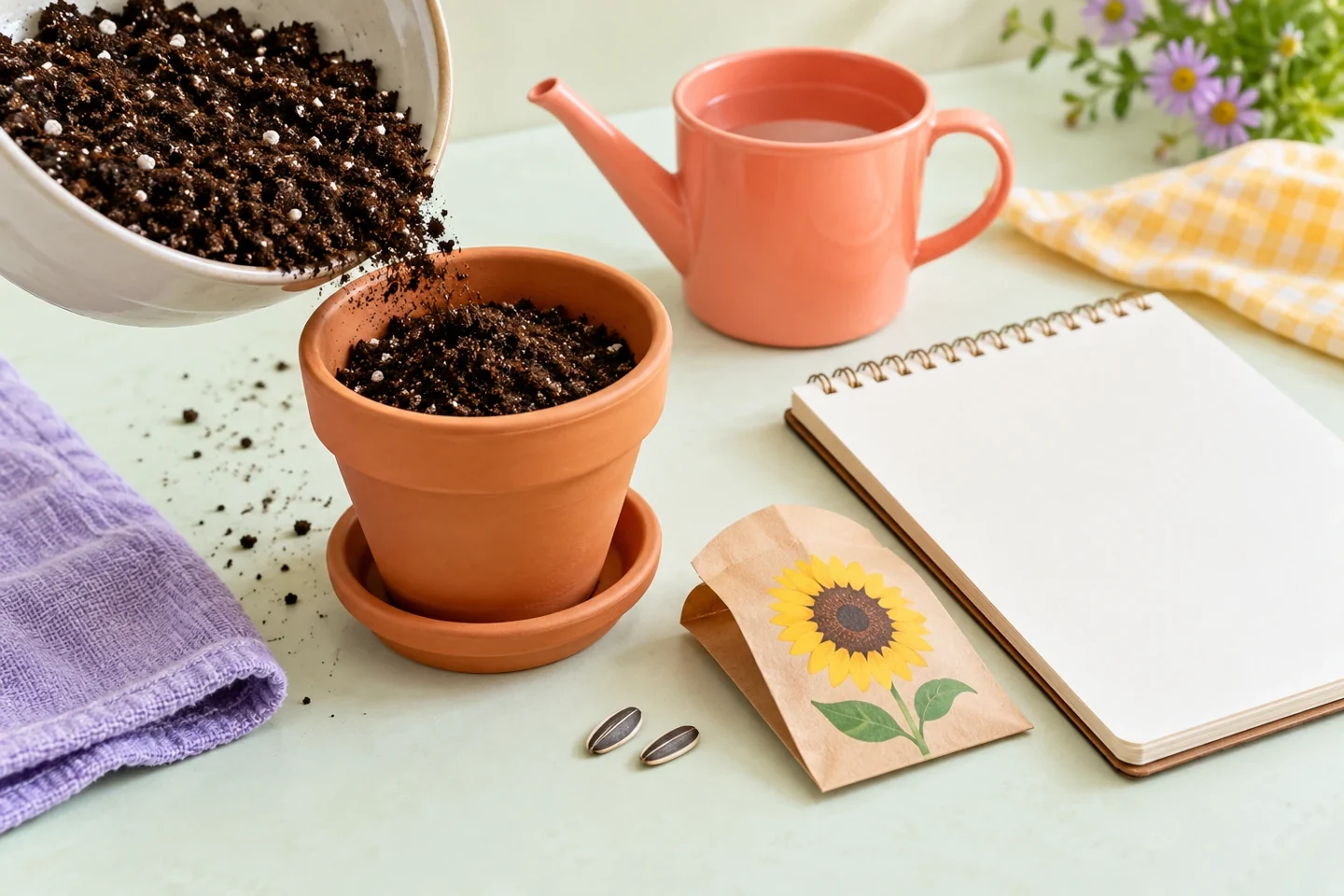
Fill the pot with damp mix, leaving room below its rim. - Read the dwarf sunflower packet together. Plant two seeds at its stated depth and spacing. Cover them gently and water just enough to settle the mix without flooding the saucer.
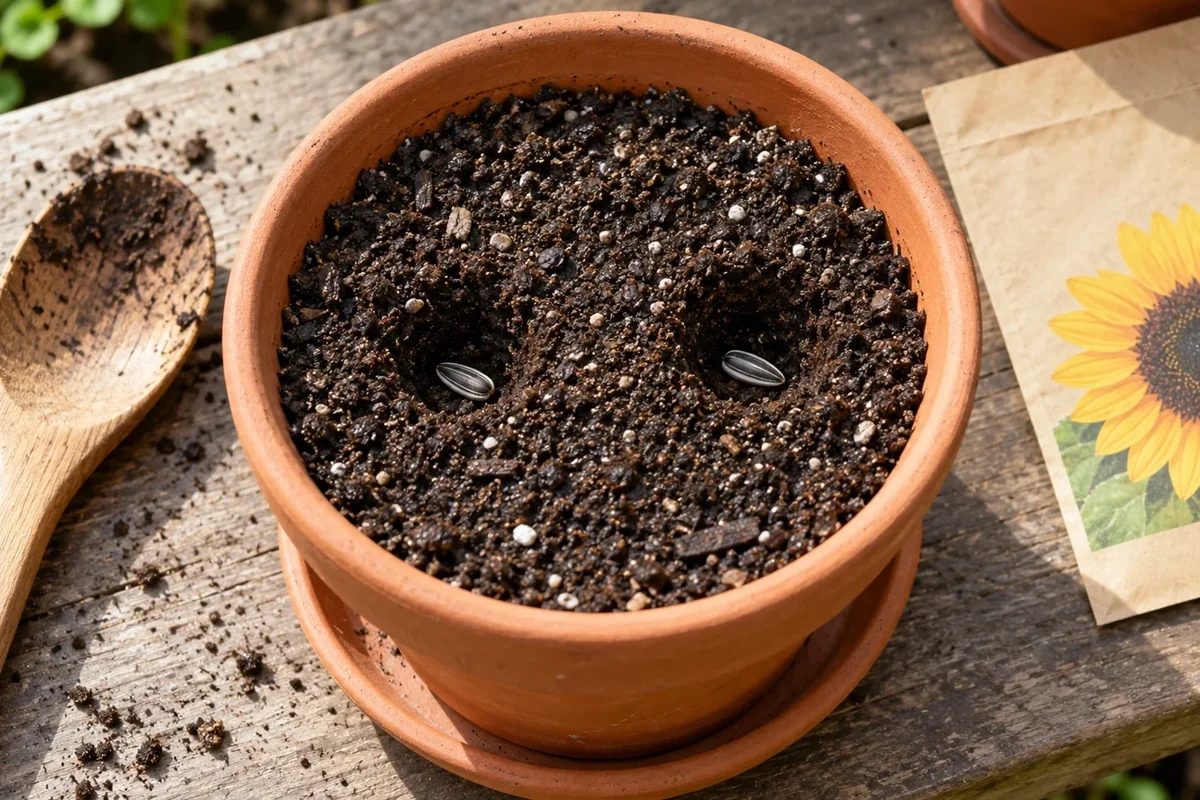
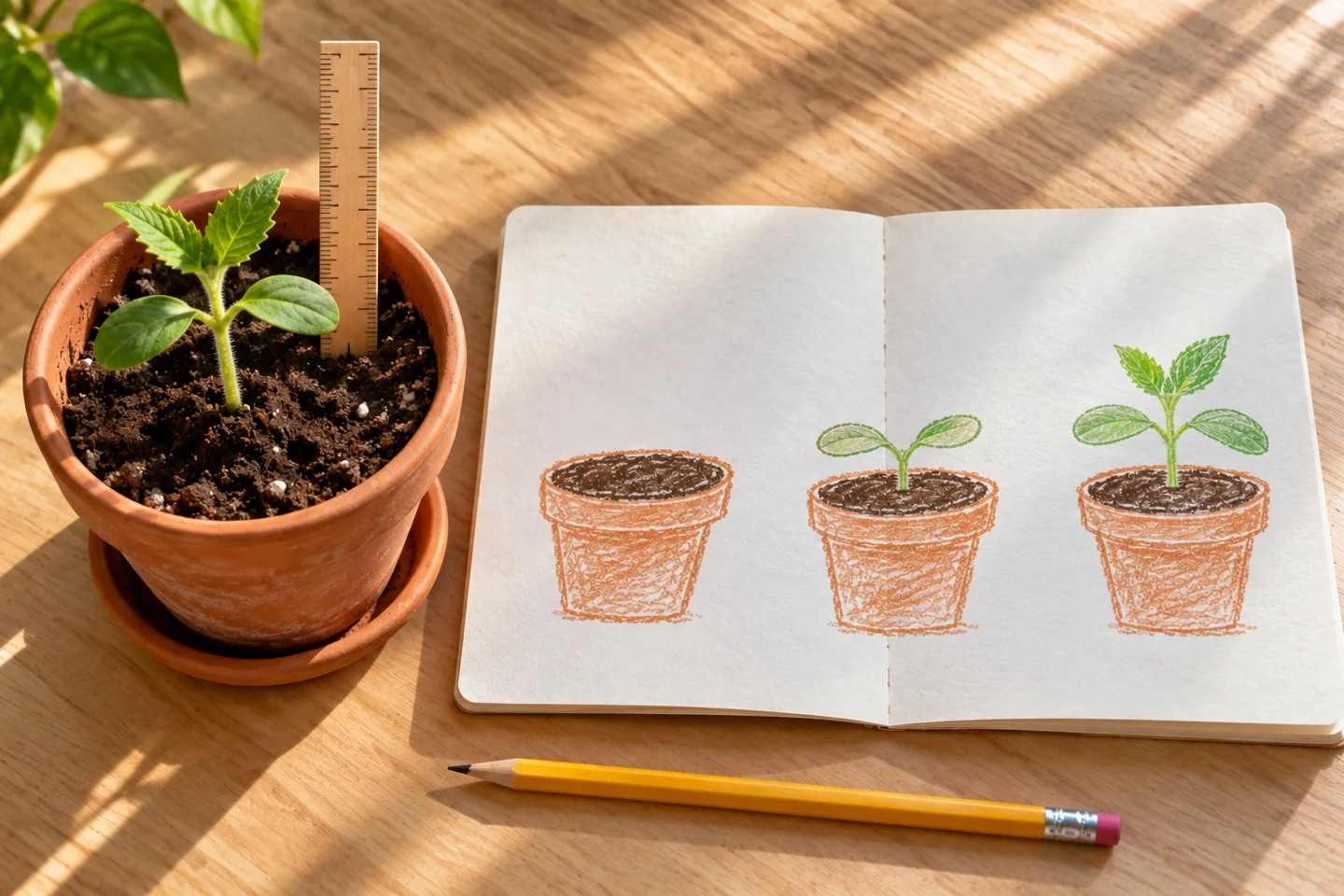
Follow the packet’s depth and spacing, then gently cover both seeds. - Make the first journal entry with a drawing of the pot and a note about what was planted. Add a prediction separately: what might appear first, and how long might the packet suggest waiting?
- Check moisture daily and follow the packet’s temperature guidance. Once seedlings emerge, provide suitable bright growing light. Do not expect a full-size flowering sunflower during this short observation project.
- Draw visible changes every day or two. Measure height from the mix surface to the highest point without pulling the plant upright. If both seeds grow, follow packet guidance for thinning and later planting outdoors.
Try it, notice it, talk about it
Draw the unplanted pot first if the child wants to record the complete sequence. After planting, record the actual planting day in the private journal and write any prediction in a separate box. A journal can contain personal observation dates even though this evergreen website guide is undated. Check the pot at a similar time each day and write what is visible. The seed packet’s range is an estimate under suitable conditions, not a guarantee. Avoid digging the seed up to check it; that disturbs the developing root.
Compare a prediction with the observation without calling either child a winner. Which part emerged first? Are the first leaves shaped like later ones? Describe a day with no visible change as an observation too.
Make it work for your children
Once the seedling emerges, compare its first leaves with later leaves as they appear. Measure from the mix surface to the highest point, keeping the ruler beside the plant without pressing against the stem. Photographing from a similar angle can support comparison, but a drawing is enough. In a classroom, use one shared pot per small group and rotate the observer role. At home, keep the plant in a suitable growing-light location and bring the journal to it. A window may not provide enough light for a sturdy seedling; monitor stretching and follow growing guidance.
If the mix is soggy, let excess water drain and empty the saucer. If there is no sprout yet, compare the elapsed time with the packet before assuming failure. Leggy seedlings may need better light. Wash hands after handling mix, and keep seeds and gardening materials away from mouths.
Finish and tidy up
Plant care continues beyond the first observation session. Empty standing water from the saucer and check moisture before adding more. If both seeds emerge, follow packet directions for thinning rather than allowing two crowded plants to compete indefinitely. Wash hands and wipe the work surface after handling mix. Keep the packet with the journal for future reference, including outdoor planting advice. The final photo in this guide shows a modest young seedling with early leaves, a later observation stage rather than a result expected immediately after planting.