Thanksgiving
Family Recipe Memory Page
 Facebook
 Pinterest
 X
X LinkedIn
 Reddit
 WhatsApp
 Telegram
 Bluesky
 Email
Email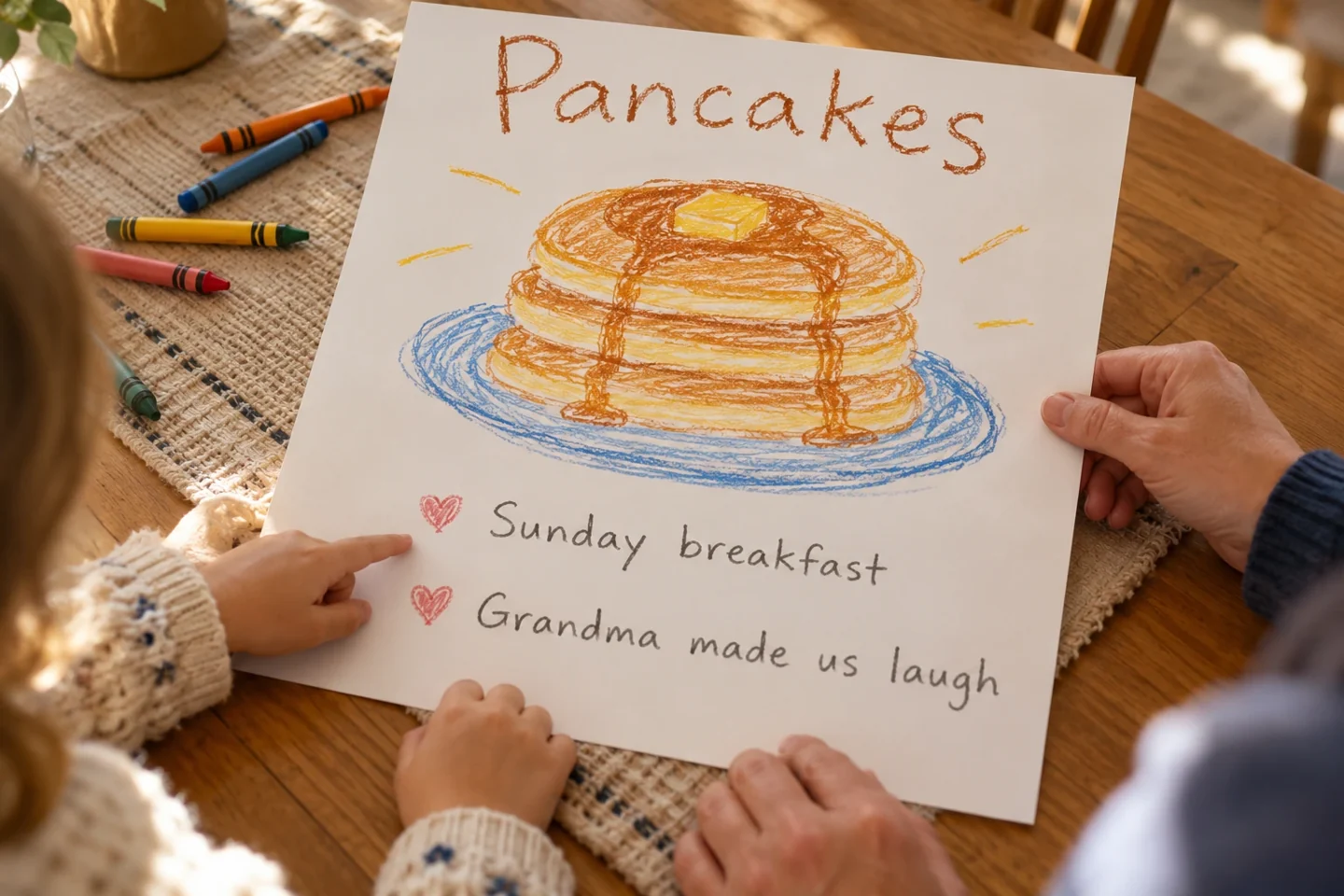
Your activity at a glance
| Suggested ages | 5–12 |
|---|---|
| Activity time | 30 minutes |
What you need
- One large sheet of paper
- crayons
- pencil
- a favorite family recipe or a willing person to interview
- optional photograph copy
- glue stick
A little project with plenty to discover
A recipe memory page records the story around a dish rather than asking children to cook it. The dish might be a holiday favorite, an everyday meal, or something a relative remembers.
Choose a willing storyteller and a dish they know well. It can be an everyday sandwich or soup rather than a special holiday recipe. Explain that the page records a memory; it does not require cooking, tasting, or sharing a private recipe. Set out one large sheet with space for a picture, dish name, and two short answers. If you use a photograph, make a copy rather than gluing an irreplaceable original. Let the storyteller choose what details they are comfortable including.
Prepare and introduce the activity
Begin with the name of the dish and when it was enjoyed. Ask one question at a time and allow the storyteller to think. A child can draw while listening or make the drawing afterward. Keep ingredient pictures approximate unless the person wants to explain the actual recipe. An adult may write the child’s dictated words, but check the wording with them before adding it to the page. Names and relationships are worth checking so the keepsake remains understandable later.
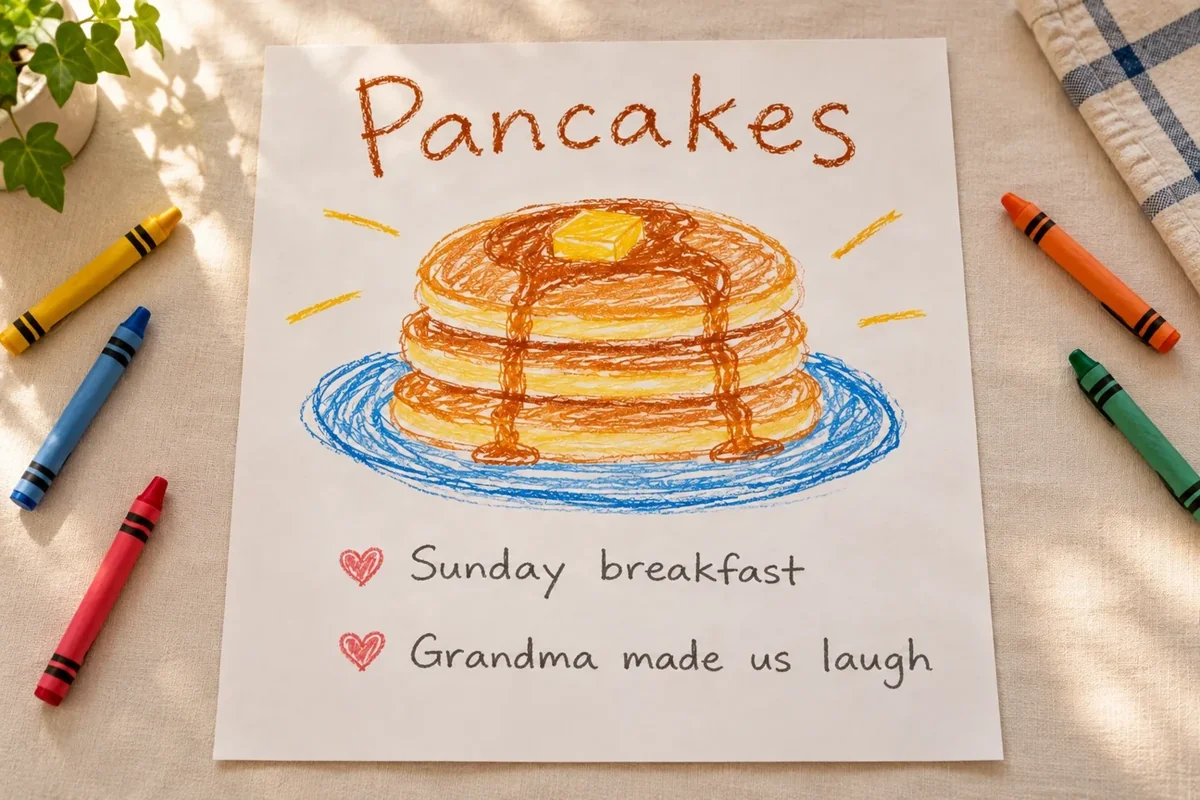
A friendly interview can be just three questions: “What do you call this dish?”, “When do you remember enjoying it?”, and “What detail should we put in the picture?” Choose a pancake breakfast for the example page, then draw a plate of pancakes in the large picture area and record two short memories underneath. Leave ingredient amounts out unless the storyteller volunteers an actual recipe. A classroom child can use a meal they remember at home or school; the page works equally well with a trusted adult’s story or their own.
Make it step by step
- Choose a dish with someone who knows it. Ask what it is called and when they remember eating or making it.
- Divide the page into a large drawing area and a smaller space for notes. Write the dish name as a heading.
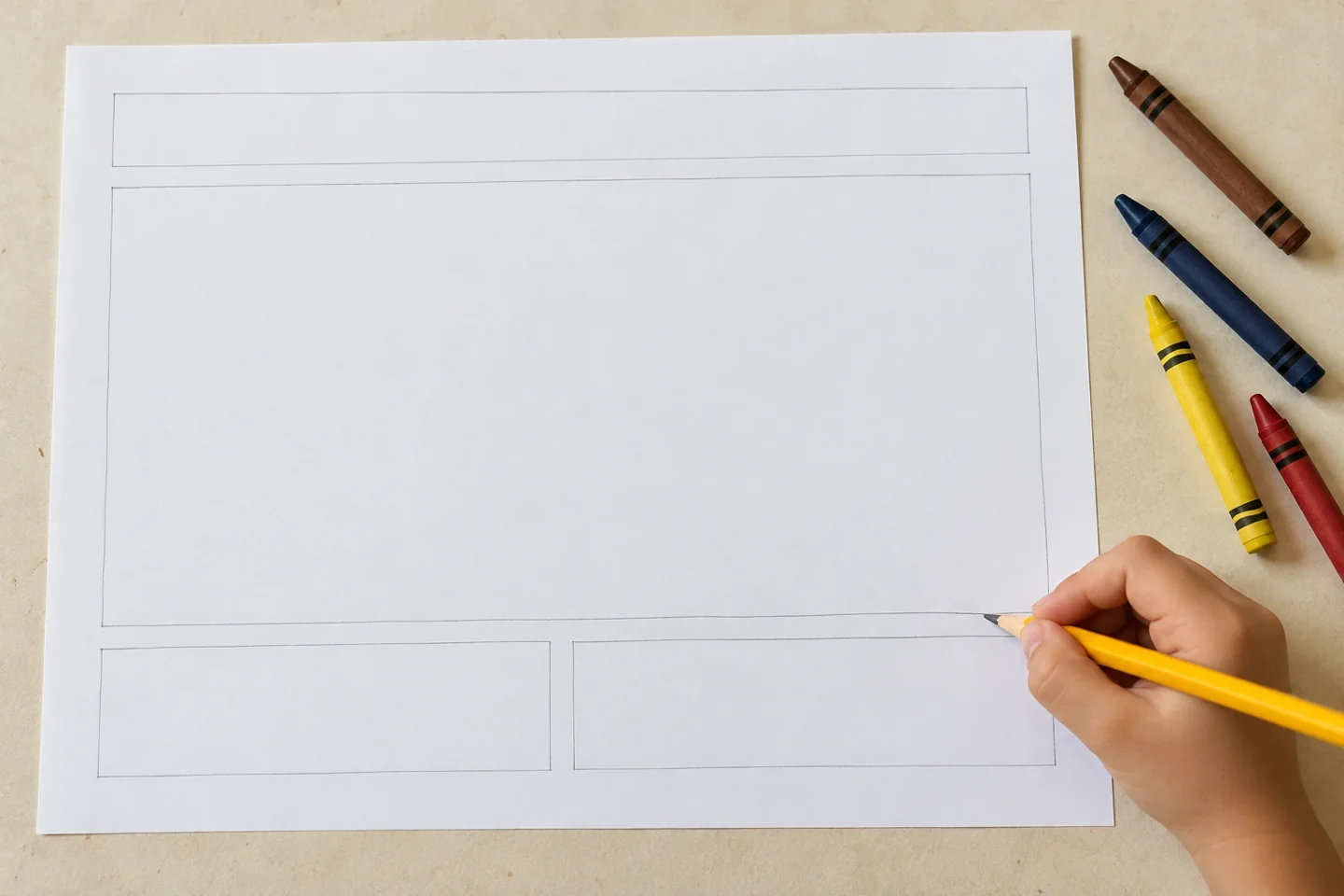
Leave plenty of room for the picture and a small space for each memory. - Draw the finished dish or a remembered scene at the table. Add a few recognizable ingredients around the picture if desired.
- Ask two questions: Who taught you about this dish? What do you especially remember? Write brief answers or let the child dictate.
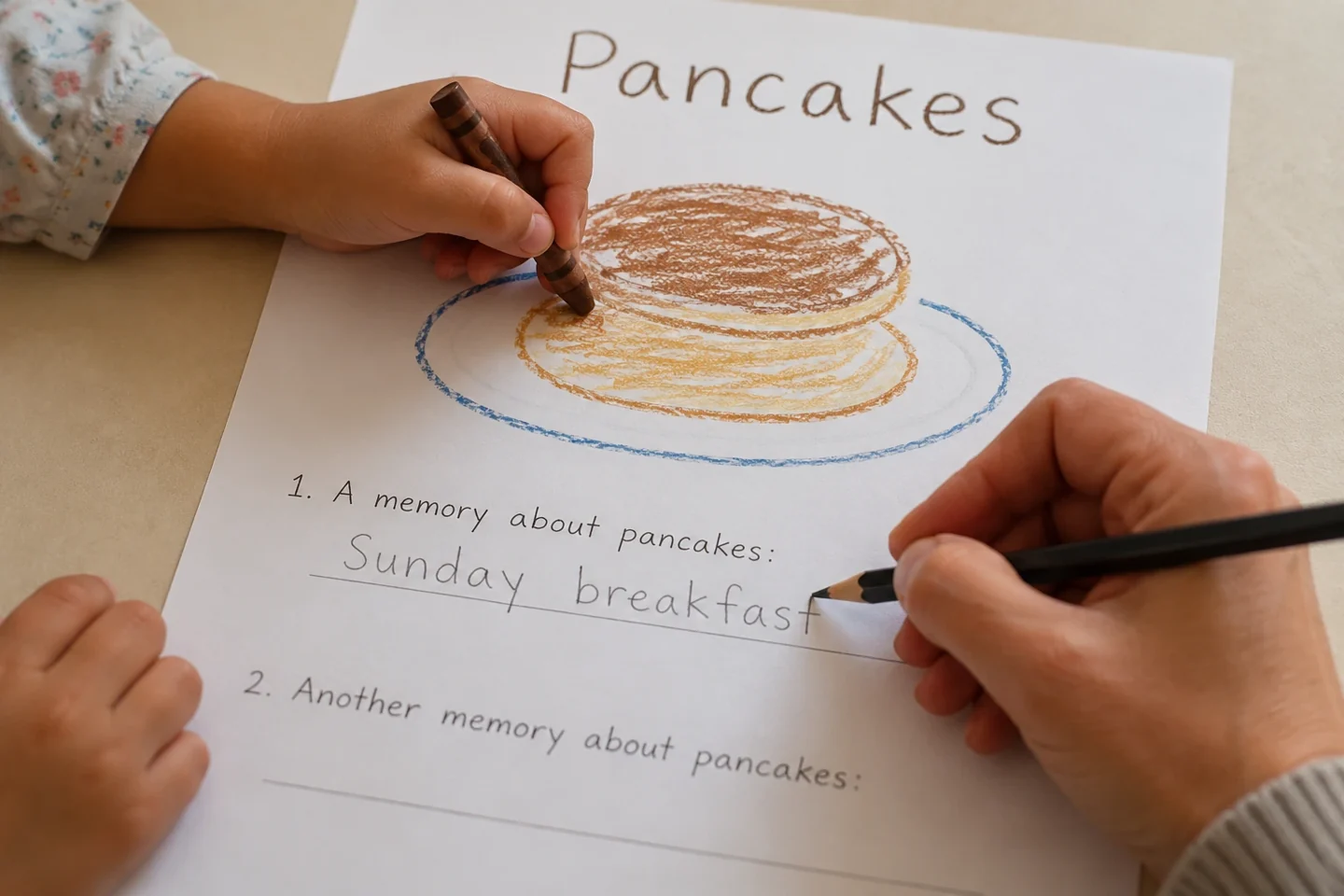
Write the child’s words, then check the wording together before adding another memory. - Read the page together and check names and details with the storyteller. Keep it with other family pages or share a copy with the person interviewed.
Make it work at home or in your classroom
Younger children can draw their favorite part of the meal and share one sentence. Older children can conduct a short interview, choose two quotations, and organize the page themselves. In a classroom, offer a familiar-food memory without requiring family photographs or personal background details. A child may interview a school cook, another trusted adult, or use their own memory. Someone who prefers not to discuss a meal can draw a pretend dish and label the page as an invented food story.
Talk, notice, and learn together
What makes this dish memorable? What would you like someone to remember about our meals together?
Ask what made the occasion memorable: the taste, the people, the place, or something funny that happened? Compare the finished drawing with the storyteller’s explanation and add a detail if the child wants to. This activity connects listening, illustration, and recording information for an audience. It does not need claims about nutrition or authenticity. Read the page aloud together and ask whether a person who was not there would understand the scene. A simple additional caption may be all that is needed.
Helpful fixes
The recipe is private: record only the memory, not ingredient amounts. A child cannot remember details: invite a simple favorite-food drawing.
Collect another person’s memory
Make a second page for a different person’s memory of the same dish. Their accounts may emphasize different details, and both can belong in the collection. Children can notice what stays the same and what changes without deciding that one memory must be wrong. Another variation is to record a new family meal soon after it happens, when details are fresh. Add a title such as Our Picnic Soup or Grandma’s Sunday Pancakes so the pages can be found later; the article itself remains an evergreen guide.
Finish and clean up
Keep the finished page in a folder or simple scrapbook after glue has dried. Give the storyteller a copy if the child would like to share it, and ask permission before displaying personal photographs publicly. Put the original recipe or photograph back where it belongs. Save spare paper for another memory rather than leaving it near food preparation. Since this is a drawing and conversation activity, any later cooking should be planned separately with an adult and the actual recipe instructions.