Thanksgiving
Thanksgiving Picture Conversation Cards
 Facebook
 Pinterest
 X
X LinkedIn
 Reddit
 WhatsApp
 Telegram
 Bluesky
 Email
Email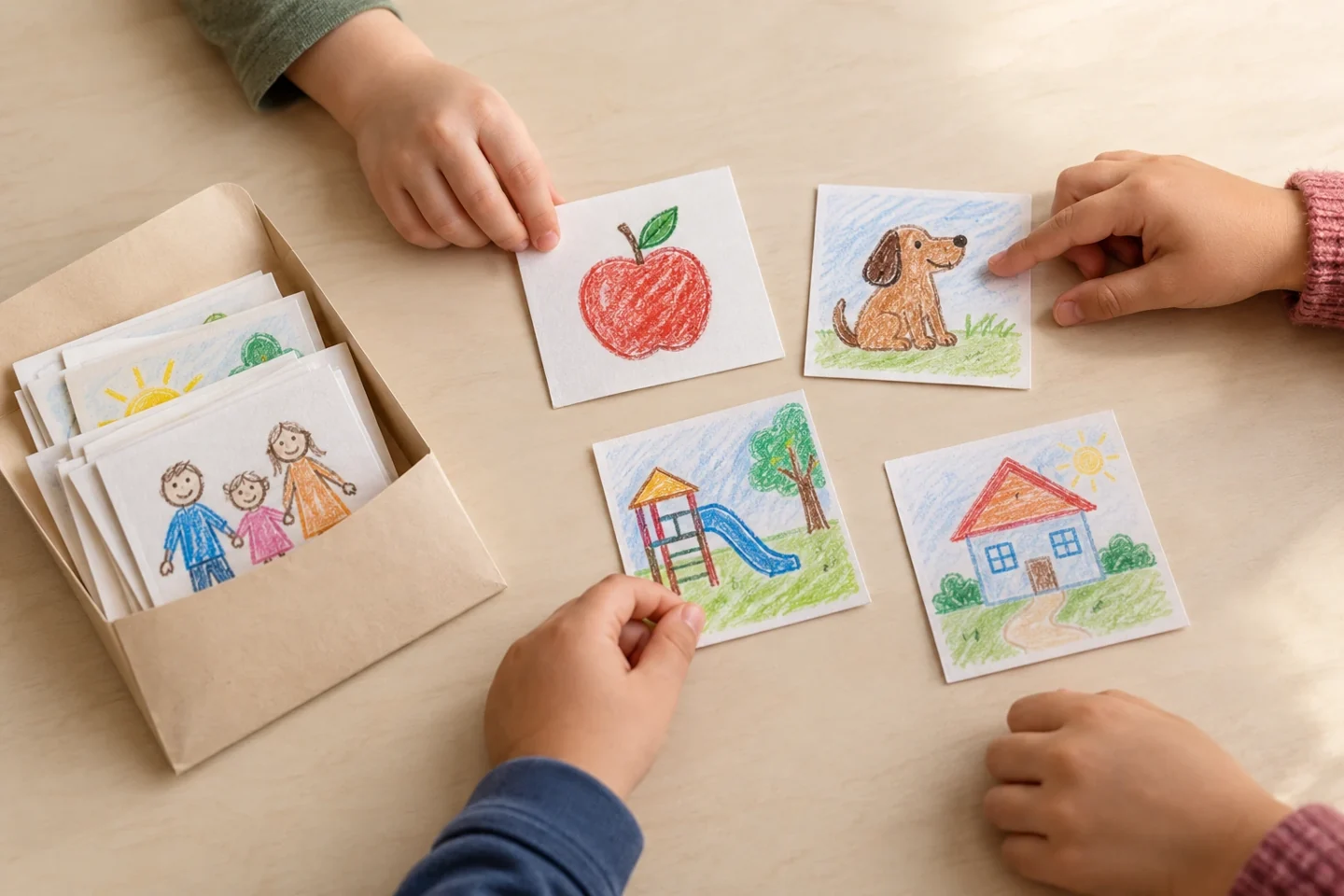
Your activity at a glance
| Suggested ages | 4–11 |
|---|---|
| Activity time | 25 minutes |
What you need
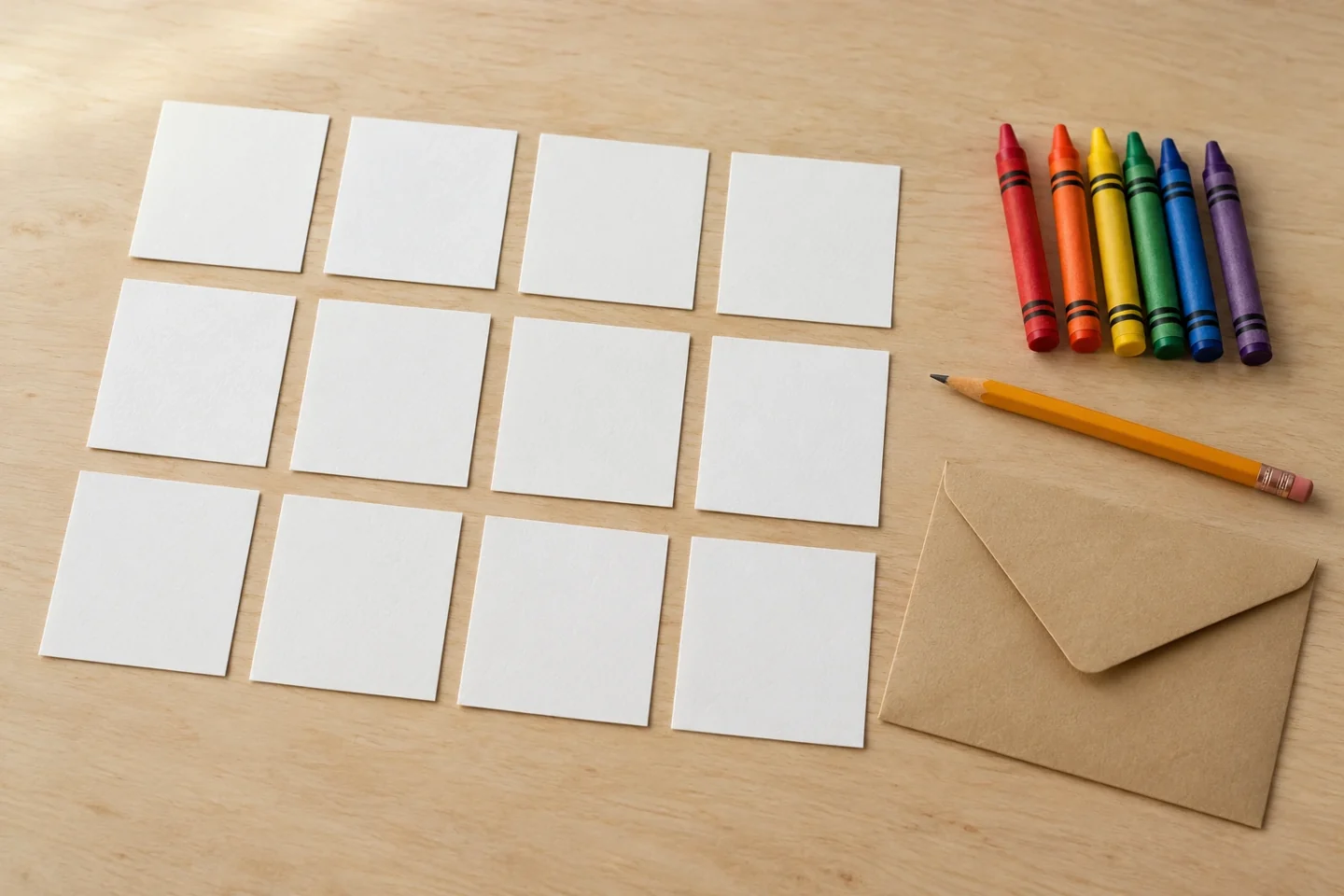
- Twelve cardstock squares approximately 8 × 8 cm
- crayons
- pencil
- small envelope or box
A little project with plenty to discover
Picture cards give a group gentle starting points for conversation. A drawing of a helping hand or shared meal can invite a story without demanding a polished answer.
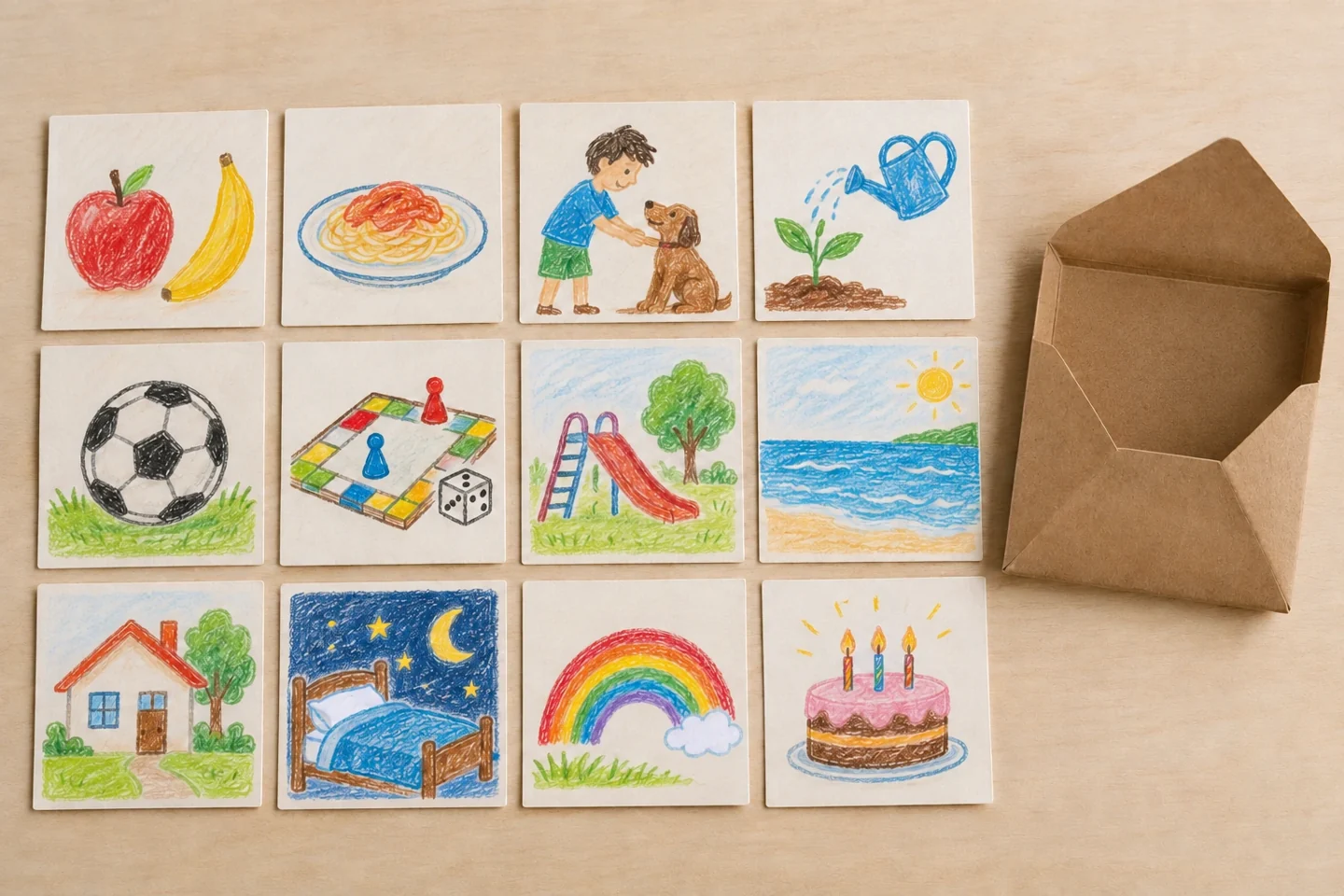
Prepare twelve cards about 8 cm square so pictures have enough room to be recognizable. Choose six themes and make two cards for each: a meal, helping hands, a game, a familiar place, a shared routine, and a pleasant moment. Children can interpret the themes in their own way. Keep one picture per card rather than filling it with several unrelated scenes. A small spoken explanation can accompany an unclear drawing; artistic realism is not necessary for a useful conversation prompt.
Prepare and introduce the activity
Make the cards before the gathering or turn their creation into a small drawing activity. Ask each maker what the picture shows and add a brief caption only if they want one. Spread the cards face up so people can choose a starting point. Picking a card is more comfortable than being assigned a personal question unexpectedly. Explain that anyone can pass, choose another picture, or respond with a drawing. A friendly conversation depends on listening, not on everyone producing a long answer.
For the sample set, draw two pictures in each theme: a meal, helping hands, a game, a place, a routine, and a pleasant moment. They do not need to be identical matching pairs: a bowl of soup and a pancake plate can both belong to meals. Begin the conversation with four cards and add more only if the group wants them. Try, “Tell me about a game you enjoy,” or “What might the people in this picture say?” A child can answer from memory or invent a scene; listen for their idea before choosing the next card.
Make it step by step
- Choose six everyday themes, such as food, helping, games, places, family routines, and appreciated moments. Make two cards for each theme.
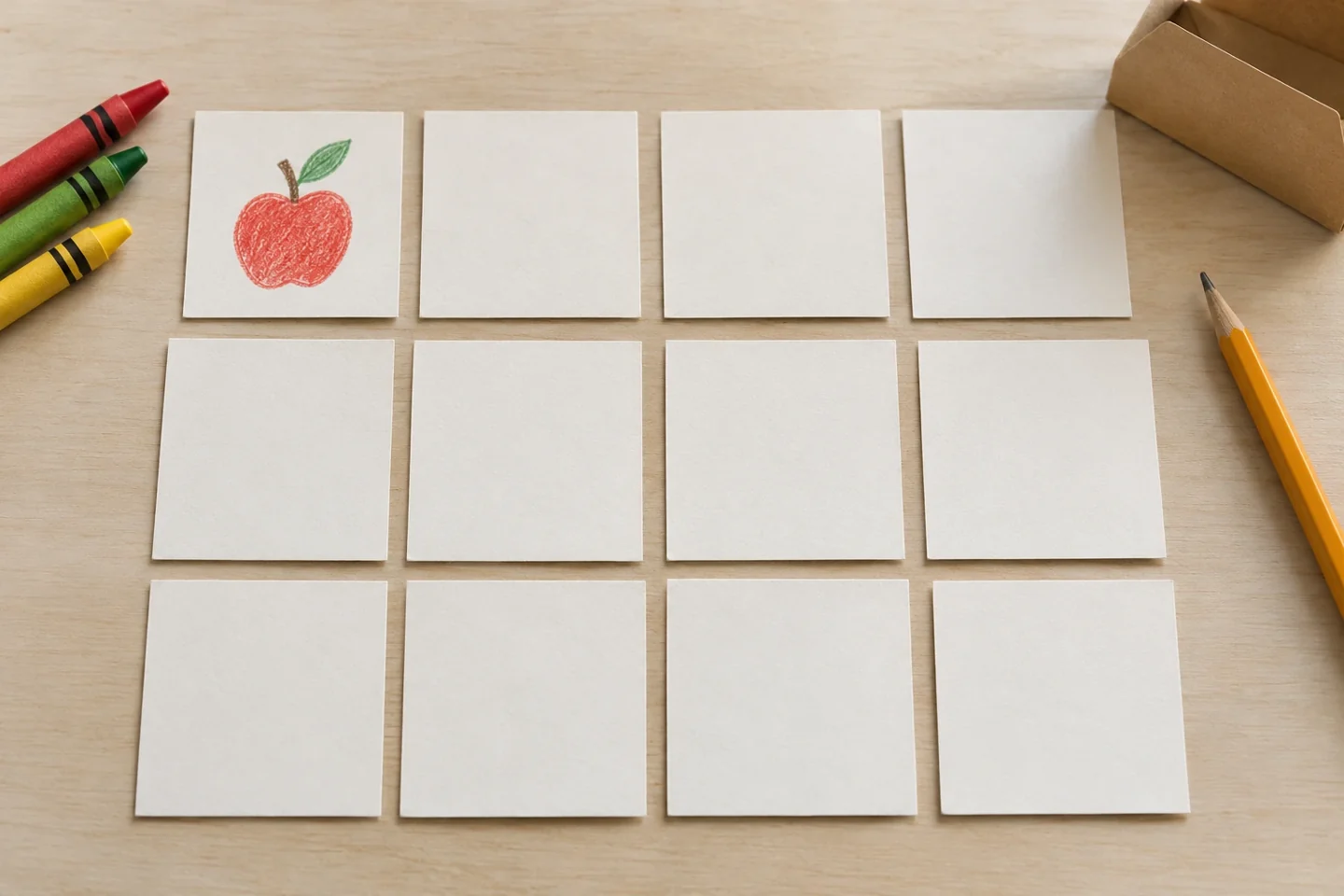
Plan two cards for each everyday theme and draw one clear picture on each. - Draw one clear picture per card. Use familiar scenes rather than abstract symbols whenever possible.
- Gather a small group and spread the cards face up. Let each person choose a picture that suggests something they would like to talk about.
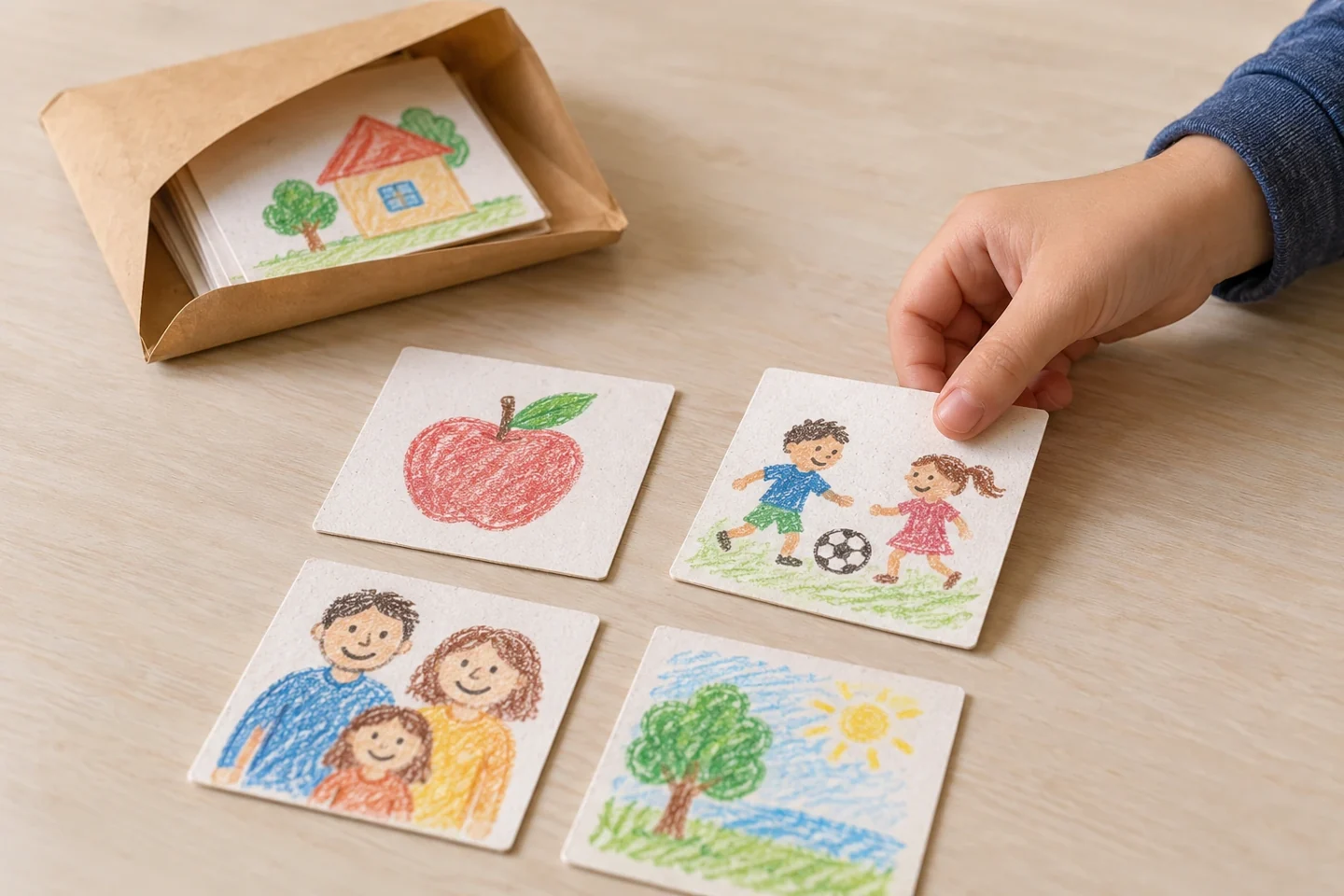
Choose a game picture, ask an open question and give everyone time to respond. - Ask an open question about the selected card: What does this remind you of? Give time for an answer and allow passing or drawing instead.
- Store the cards in an envelope. Add new pictures after the gathering, using ideas children suggest themselves.
Make it work at home or in your classroom
For younger children, use three or four large clear pictures and ask what they notice before asking for a memory. Older children can create open questions to accompany their own cards. In a classroom, begin in pairs or a small group rather than asking for personal stories in front of a large audience. At a family gathering, keep the cards available on a side table or use a few after the meal. Avoid turning the activity into a quiz about family facts or a competition over whose story is funniest.
Talk, notice, and learn together
What does this picture remind you of? What question would you like to ask someone else?
Follow the child’s answer with a genuine question connected to what they said. If a game picture reminds them of a picnic, ask what happened at the picnic rather than steering them back to the original theme. Describe what you heard and give the next person time. Children can practice asking another speaker a question, but they do not need to interrogate anyone. A brief exchange with attentive listening is more valuable than rushing through all twelve cards to declare the activity finished.
Helpful fixes
A picture is unclear: invite its maker to explain it and add a short caption. The group gets restless: choose just three cards for a shorter round.
Use three pictures to tell a story
Try a story-building variation using three selected cards. One person begins a fictional story inspired by the first picture, a partner adds an event from the second, and the final picture suggests an ending. Make it clear that this version is invented rather than a memory someone must confirm. Another variation is sorting the cards into groups chosen by the children, such as outdoors, indoors, things we do together, or things we make. Different sorting rules can be discussed without treating one grouping as the only correct answer.
Finish and clean up
Store the cards in an envelope or small box with room for future additions. If a card includes a private family detail, ask before using it in another setting. Replace bent cards only when they become difficult to handle; a worn handmade set can still be useful. Put crayons away and save blank cards for another occasion. Before the next gathering, select a few pictures suited to the group rather than bringing out the whole collection automatically. The bank should support conversation, not overwhelm it.