Winter & New Year’s
Snowman Counting and Number Games
 Facebook
 Pinterest
 X
X LinkedIn
 Reddit
 WhatsApp
 Telegram
 Bluesky
 Email
Email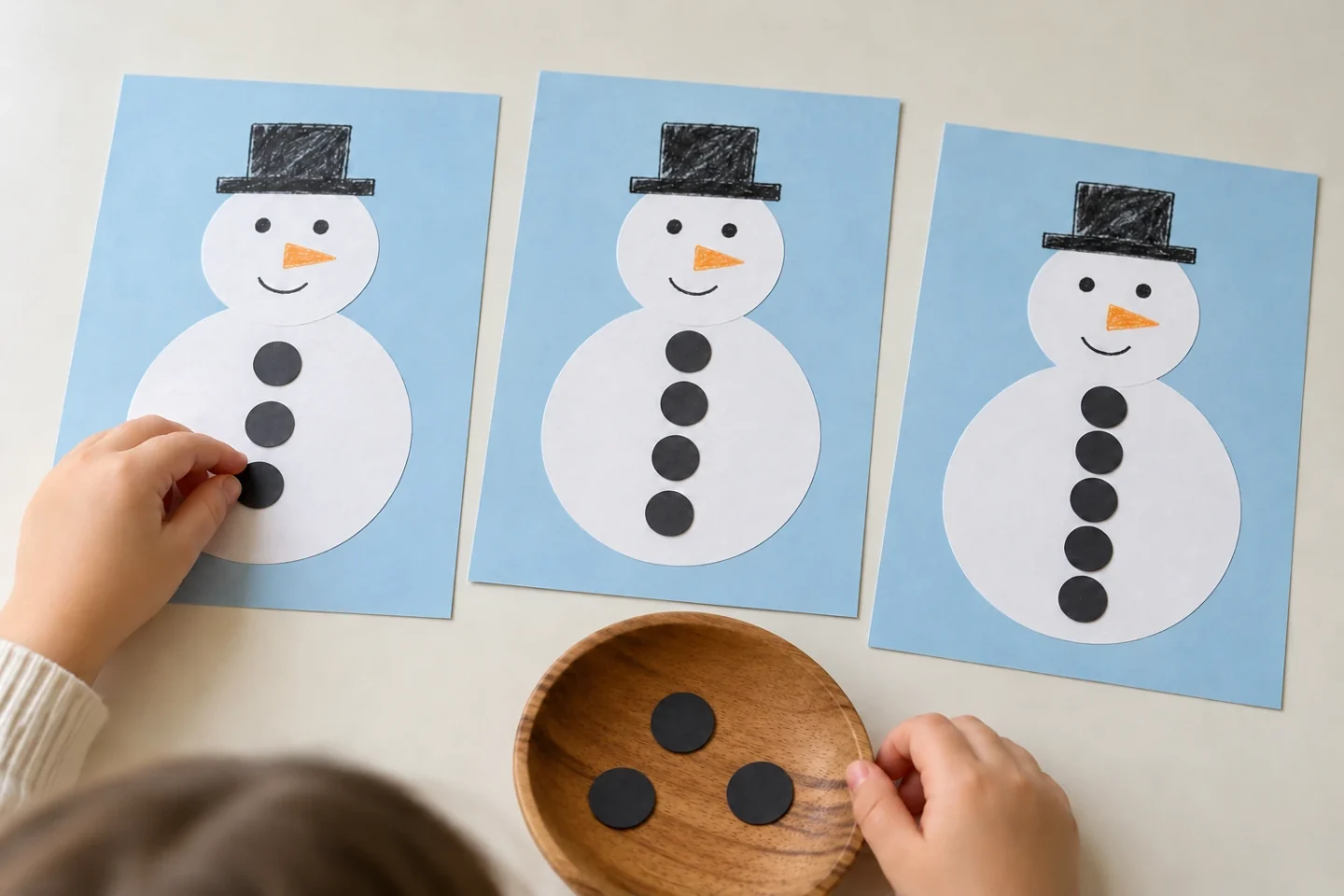
Your activity at a glance
| Suggested ages | 3–7 years |
|---|---|
| Activity time | 20–30 minutes |
What you need
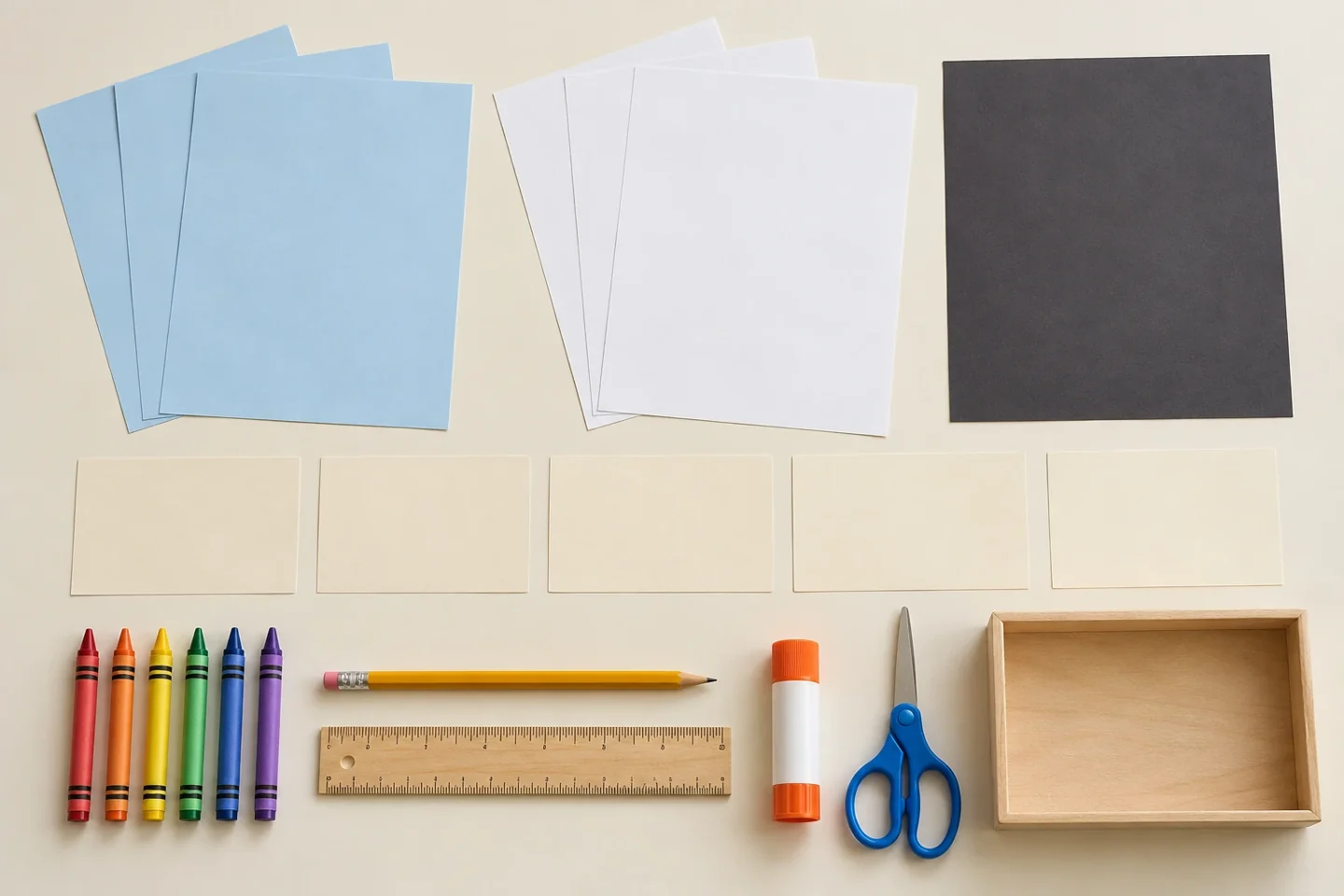
- 3 sheets of pale blue paper for snowman mats
- 3 sheets of white paper for six large snowman circles
- 1 sheet of dark paper for 15 circle counters, each at least 3 cm across
- Five card rectangles for numerals 1–5
- Crayons, pencil, ruler, glue stick, and scissors for adult preparation
- One small tray for loose paper counters
Give your snowmen a counting challenge
Paper snowmen turn a handful of circles into a game that children can arrange, recount, and change. Instead of gluing buttons permanently, players move large paper circles onto each snowman to match a chosen quantity. Start with one to five and expand only when counting those sets feels comfortable.
Before you begin
Draw snowmen directly on the blue mats so no glue is required. Make each lower circle roughly 15 cm wide, with enough room for five separate counters. Leave that circle undecorated; the buttons should be the most noticeable features in the counting area.
An adult prepares fifteen large paper circles and checks that they can be picked up easily. Set aside a tray for unused counters and begin with one mat, bringing out the others when comparison becomes useful. Use only the number cards that fit the child’s current counting experience.
Make it step by step
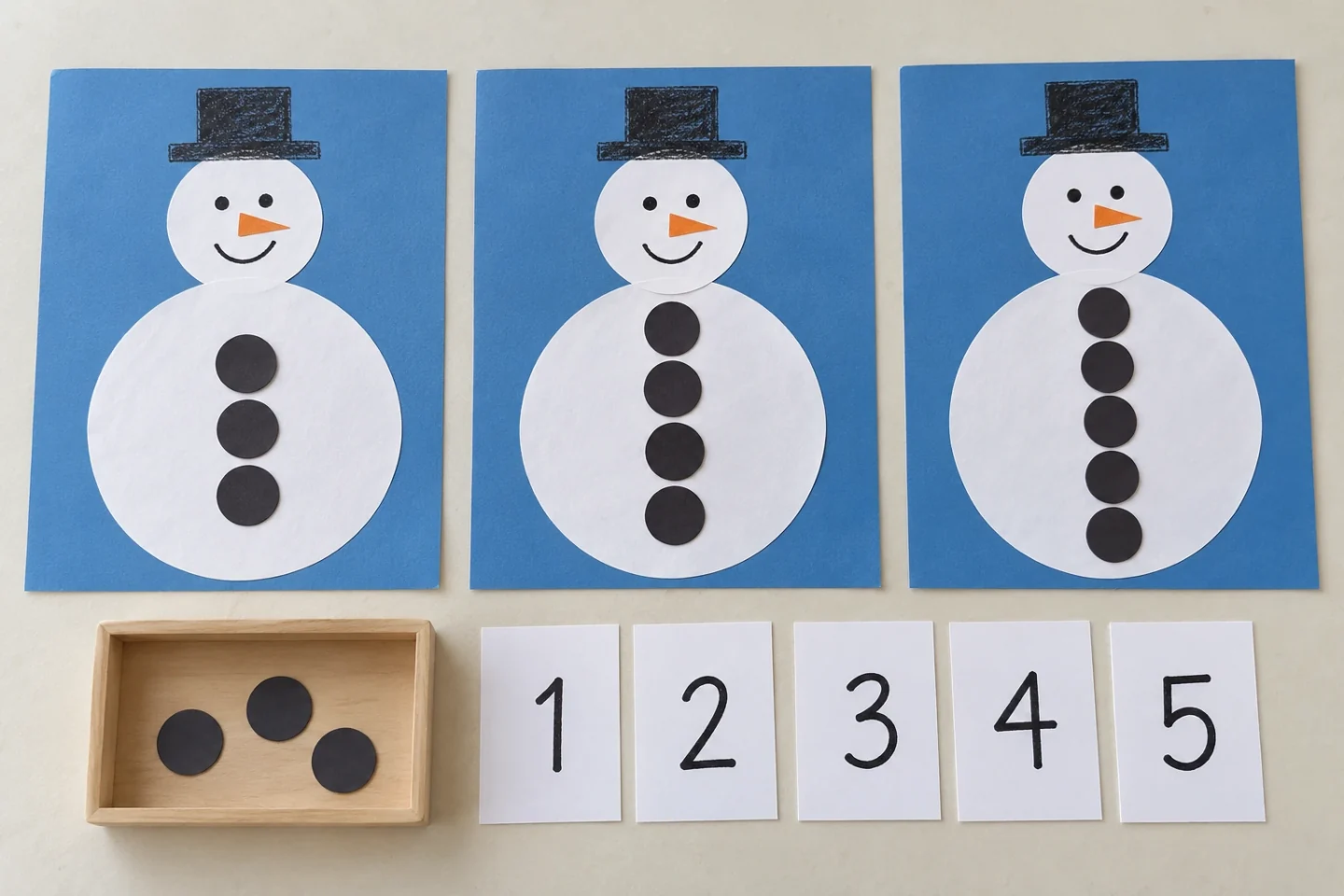
- Make three snowman mats. Draw or glue two large white circles on each blue sheet, leaving a wide lower circle for the counters. Add a simple face and hat. Keep the decoration modest so the counting area remains easy to see. Three mats are enough for useful comparisons without filling the table with competing choices.
- Prepare large paper buttons. Cut fifteen dark paper circles at least 3 cm across. These are picture counters, not real buttons or beads. Put them in a tray, and invite children to move one at a time. Draw a few number cards from one to five or show a quantity with fingers if written numerals are not familiar yet.
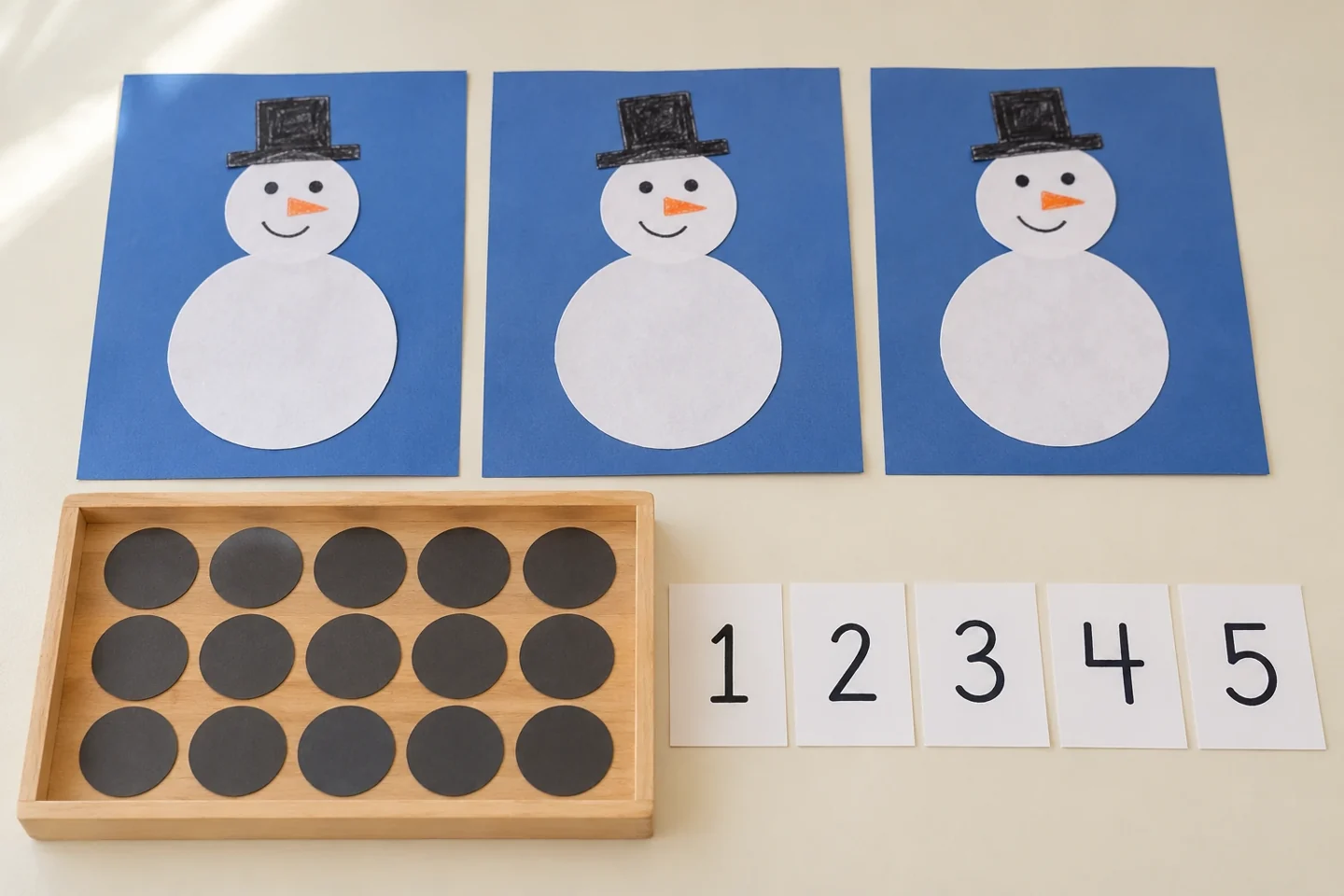
Keep fifteen counters in a tray beside the three snowman mats. - Match one quantity. Choose a card and say the quantity together. Place one paper circle on the lower snowman circle for each spoken number, moving from top to bottom to avoid losing track. After placing the last circle, repeat the total: four counts, for example, means four paper buttons on this snowman. Recount if the child wants to check.
- Compare two snowmen. Build a second snowman quantity and place the mats side by side. Ask which has more buttons and how they could check. Line the circles into paired rows to make a comparison visible. Equal sets are worth exploring too: ask what changes when one extra circle is added to just one mat.
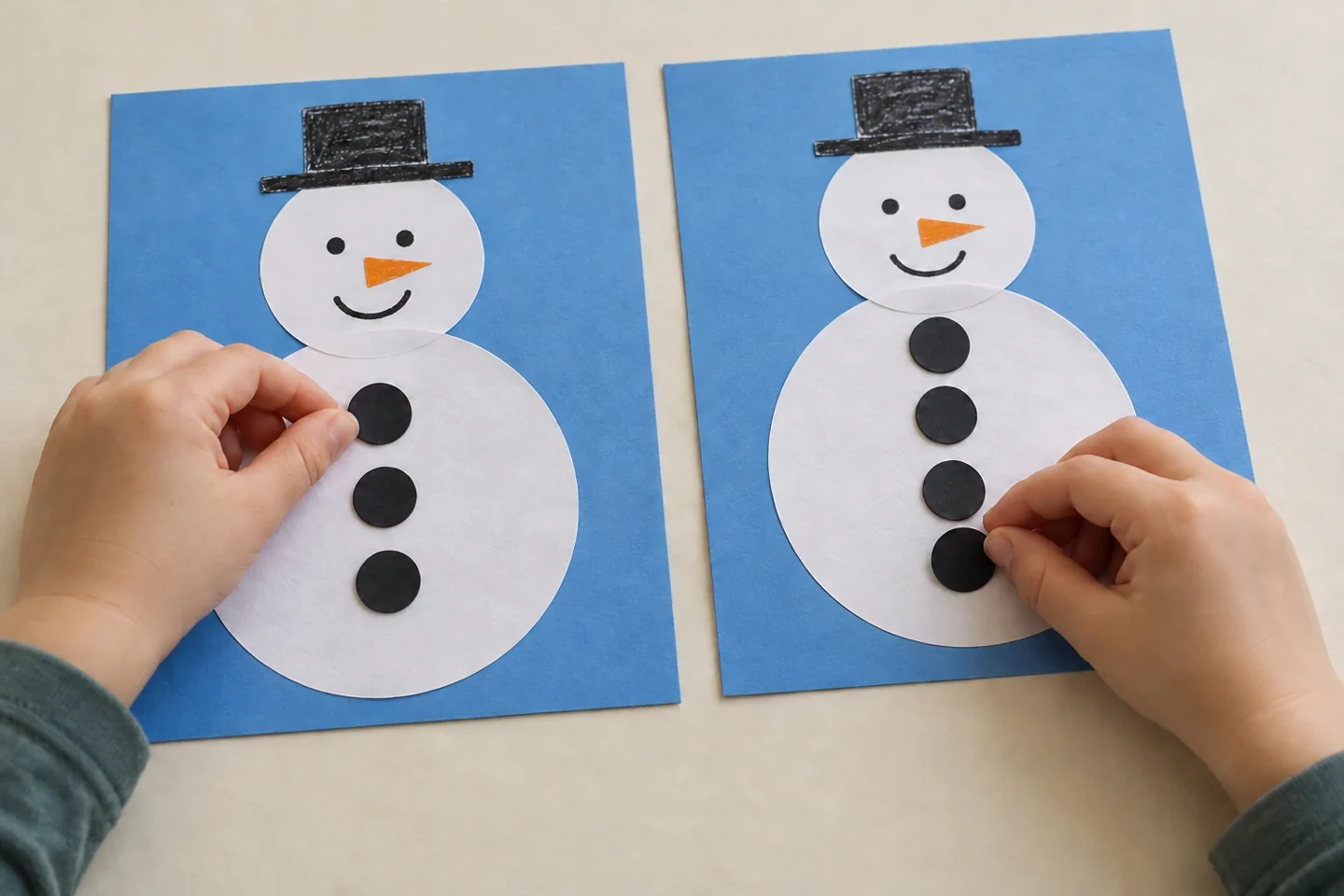
Pair the circles to see that four has one more than three. - Try a missing-button puzzle. Make a set of three or four buttons, then remove one while the child watches. Ask how many remain, and let them recount rather than expecting instant recall. Reverse the game by adding one. Finish with a child-created challenge in which the adult builds the quantity the child chooses.
Talk, notice, and explore
Ask, “How could we arrange these buttons so none gets counted twice?” Try a vertical line, then a small separated group. Count both arrangements and notice that moving the pieces does not change how many there are. Let children check by sliding each piece to a counted area.
With two mats, ask, “How many buttons would we add to make these equal?” Children can pair one button from each set and look at the unmatched pieces. They may solve it by moving counters rather than using subtraction language; the visible comparison is the important part.
Try a final rearrangement challenge with one mat. Put four buttons close together, count them, then spread the same four far apart. Ask whether the snowman gained any buttons. Moving the pieces back into a line lets children check that a set keeps its quantity even when its spacing changes.
Make it work at home or in a classroom
For younger children, use quantities up to three and count together slowly. Older children can combine the buttons from two mats and explain the total. At school, keep a complete kit in each small tray and let partners alternate arranging and checking. Children who find circles fiddly can use larger paper squares instead.
Helpful fixes, cleanup, and keeping the result
If circles overlap, spread them out before counting. If a child counts the same circle twice, touch or slide each counted piece to a new position. There is no need to hurry the answer. Return dry counters to a paper envelope and stack the mats flat; replace torn pieces before the next game.